Wikipedia doesn’t accept press releases as direct sources. But if you’ve ever noticed a company’s Wikipedia page suddenly change after a news story broke, you’ve seen the quiet power of press coverage. It’s not the press release itself that edits the page-it’s how journalists turn it into something Wikipedia trusts.
Wikipedia’s Rules Are Clear, But Its Sources Are Human
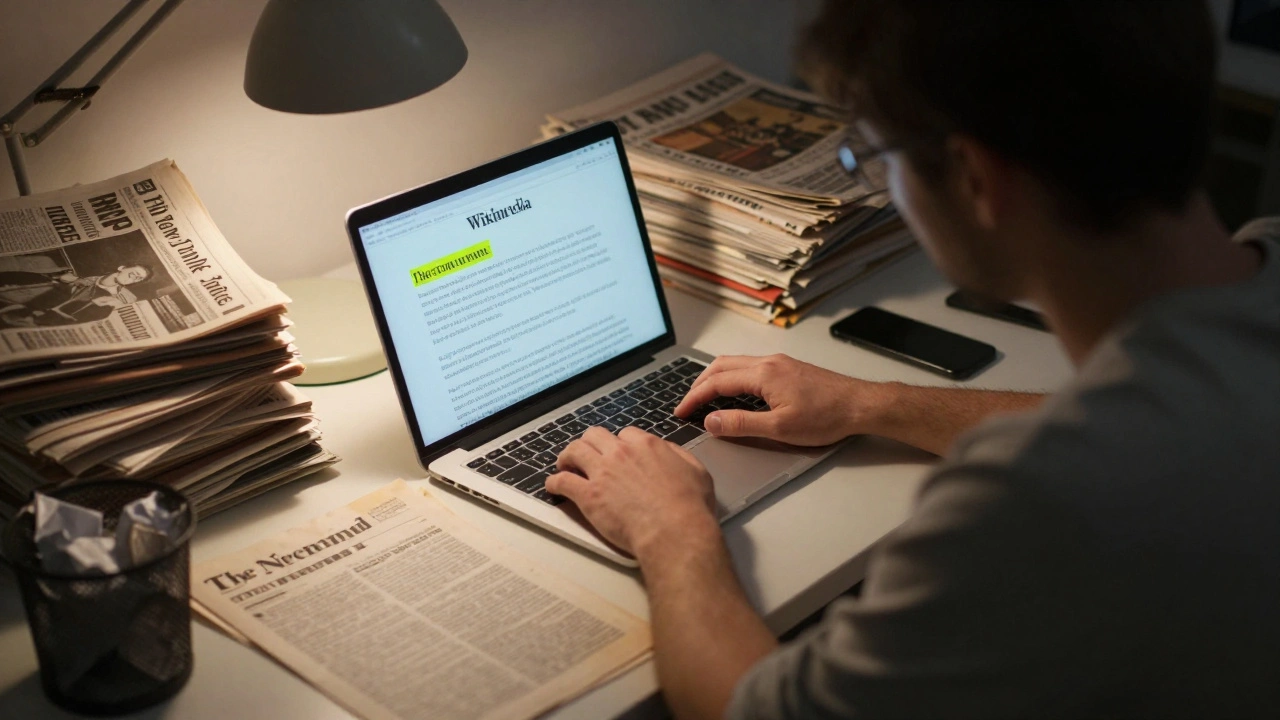
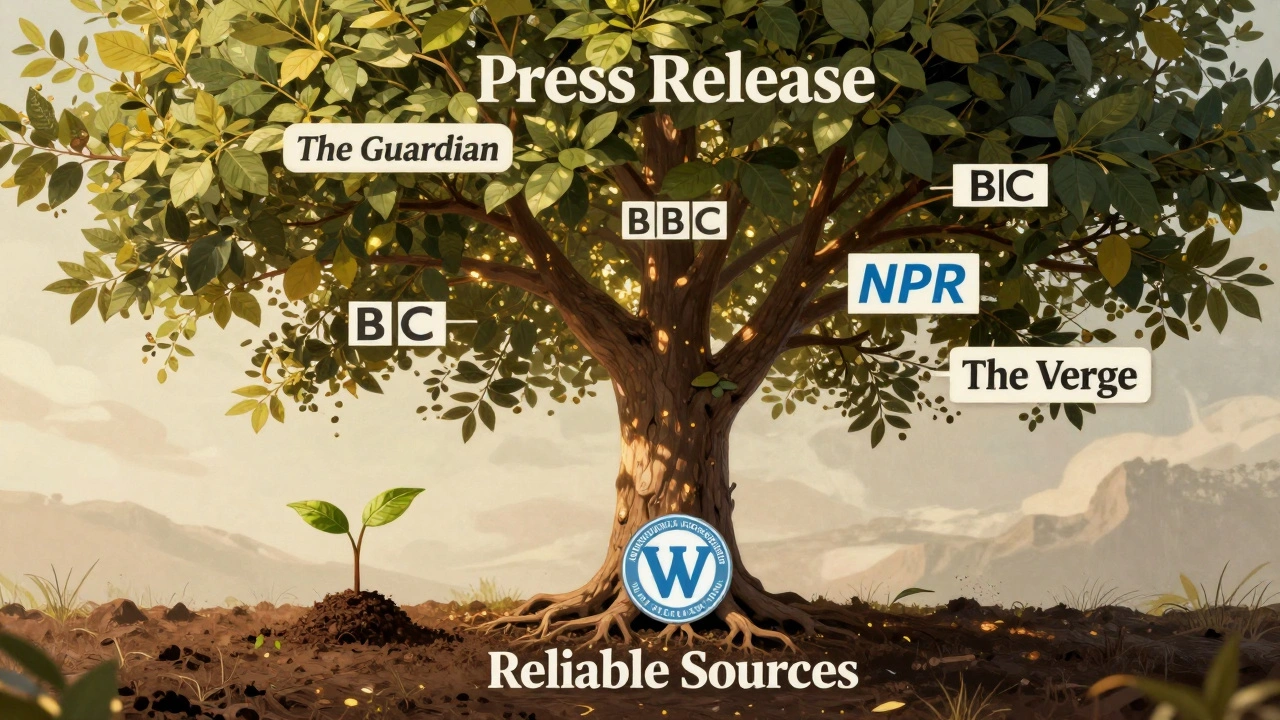
Wikipedia’s policy on reliable sources is strict: no company blogs, no press releases, no paid promotions. The encyclopedia only accepts content backed by independent, third-party reporting. That means a press release announcing a new product? It’s useless on its own. But if The New York Times, Reuters, or The Verge writes about that same product using details from the release? Now you’ve got something Wikipedia editors will use.Editors don’t copy-paste press releases. They look for consistency. If three different news outlets report the same fact-say, a company’s CEO stepped down or a product hit $1 billion in sales-that’s when the Wikipedia page updates. The press release started the chain. It gave journalists the raw material. But only after those journalists verified and expanded on it did Wikipedia take notice.
How a Press Release Becomes a Wikipedia Edit
Think of it like this: a press release is a seed. It doesn’t grow into a Wikipedia article by itself. It needs soil, sunlight, and time-those are the news stories, interviews, and follow-up reports that turn a corporate announcement into public knowledge.Here’s how it usually plays out:
- A company issues a press release announcing a merger, funding round, or product launch.
- A journalist at a major outlet reads it, calls sources, checks public records, and writes a story.
- Other outlets pick up the story, sometimes adding new context-like financial data or regulatory filings.
- Wikipedia editors, who monitor recent changes in credible media, notice the pattern.
- They update the article with the new information, citing the news articles, not the original press release.
That’s why you’ll often see Wikipedia pages lag behind news by a few days. It’s not a glitch. It’s the system working as designed. Wikipedia waits for consensus, not speed.
What Happens When Press Coverage Is Missing
Many organizations send out press releases hoping their Wikipedia page will update automatically. It doesn’t. And when nothing changes, they assume Wikipedia is broken-or biased.But here’s the truth: if no independent media covers your announcement, Wikipedia won’t add it. Not because it’s hostile, but because it’s careful. Consider this: in 2023, a startup claimed to have raised $50 million. They sent out a press release. No major outlet reported it. Within two weeks, a Wikipedia editor removed the claim from the company’s page. Why? Because no reliable source supported it.
Wikipedia editors are volunteers. They don’t have time to chase down every press release. They rely on signals-like multiple reputable news outlets repeating the same claim. If only one blog mentions it? Ignored. If five newspapers cover it? That’s when the edit happens.
Real Examples: When Press Coverage Made the Difference
Take the case of a small AI startup called NeuralPath. In early 2025, they issued a press release about partnering with a major university. No one picked it up. Their Wikipedia page stayed unchanged.Then, The Economist published a deep-dive article on emerging AI research hubs. They mentioned NeuralPath’s collaboration as a case study. Within 48 hours, Wikipedia editors added the partnership to the company’s page. They cited The Economist. Not the press release.
Another example: a local Wisconsin-based nonprofit, GreenRoots, announced a new climate initiative. Their press release went to 12 local radio stations. Only one-Wisconsin Public Radio-turned it into a full report. Within a week, Wikipedia editors added the initiative to the nonprofit’s page. They cited the public radio transcript. Not the press release.
These aren’t exceptions. They’re the rule.
What You Can Do (And What You Can’t)
If you’re trying to get your organization’s Wikipedia page updated, here’s what works:- Build relationships with journalists who cover your industry.
- Make sure your press release includes verifiable data: names, dates, dollar amounts, official titles.
- Follow up with reporters. Don’t just send and hope.
- Encourage coverage in outlets that Wikipedia recognizes as reliable-The Washington Post, Bloomberg, The Guardian, BBC, etc.
And here’s what doesn’t work:
- Editing Wikipedia yourself to add info from your press release. That’s a banable offense.
- Asking friends or employees to edit the page. Editors track IP addresses and editing patterns.
- Expecting instant updates. Wikipedia moves slowly by design.
Wikipedia isn’t a marketing channel. It’s a historical record. It doesn’t care how loudly you shout. It cares how many credible voices echo your claim.
Why This Matters for PR and Journalism
This dynamic reveals something important: press releases aren’t dead. But their power has shifted. They’re no longer the final word. They’re the starting point.Journalists are the gatekeepers now. If you want your news to stick in the public record, you need to make it worth covering. That means more than just writing a polished announcement. You need to offer context, data, access to experts, and angles journalists can build stories around.
For PR professionals, this means moving beyond distribution lists. You need to think like a reporter. What’s the story behind the announcement? Who does it affect? Why should readers care? Answer those questions, and Wikipedia will notice-even if you never touch the page yourself.
What Editors Look For
Wikipedia editors don’t just check if a source exists. They check if it’s trustworthy and independent.They avoid:
- Company-owned blogs or websites
- Press release aggregators like PR Newswire (unless a major outlet republishes it)
- Forums, Reddit threads, or personal blogs
They prefer:
- Major newspapers and magazines
- Academic journals
- Government or university publications
- Documented interviews with primary sources
And they always ask: Did this information come from someone with no stake in the outcome?
Final Thought: It’s Not About the Release. It’s About the Reaction.
Wikipedia doesn’t update because you announced something. It updates because someone else verified it. That’s the core truth.Press releases still matter. But only as the first step in a longer process. The real power lies in the media’s decision to cover your story-not in the release itself. If you want your Wikipedia page to change, focus less on crafting the perfect press release, and more on making sure the right journalists care enough to write about it.
Can I edit my own Wikipedia page after sending a press release?
No. Editing your own Wikipedia page-even if the information is true-is against Wikipedia’s conflict-of-interest policy. Editors will revert your changes and may block your account. Instead, use the article’s talk page to suggest edits with citations from independent news sources.
Why do some companies get Wikipedia pages quickly while others don’t?
It’s not about how big the company is-it’s about how much independent media coverage they get. A small nonprofit with coverage in The Guardian and NPR is more likely to get a page than a startup with only a press release and a website. Wikipedia follows public attention, not corporate size.
Do press releases from major outlets like Bloomberg count?
Bloomberg News articles count-they’re independent journalism. But Bloomberg PR or Bloomberg LP press releases do not. The distinction matters. Wikipedia accepts reporting, not promotional material-even from reputable organizations.
How long does it usually take for a Wikipedia page to update after press coverage?
It varies. If multiple reputable outlets cover the news within a few days, edits can happen in under a week. If coverage is slow or scattered, it might take months-or never happen. Wikipedia editors work in their spare time, and they prioritize topics with broad public interest.
What if my press release gets picked up by a small blog? Will that help?
Unlikely. Wikipedia requires sources with editorial oversight-meaning fact-checking, named authors, and accountability. Most blogs don’t meet that standard. A single blog mention won’t trigger an edit. But if five or more reputable outlets pick it up? That’s when the change happens.