Quick Takeaways
- Cross-wiki collaboration teaches students how to verify information across different languages.
- It reduces systemic bias by filling content gaps in underrepresented languages.
- Students develop critical digital literacy by navigating the complex rules of the Wikimedia ecosystem.
- Global partnerships turn a static assignment into a real-world contribution.
The Magic of the Multilingual Classroom
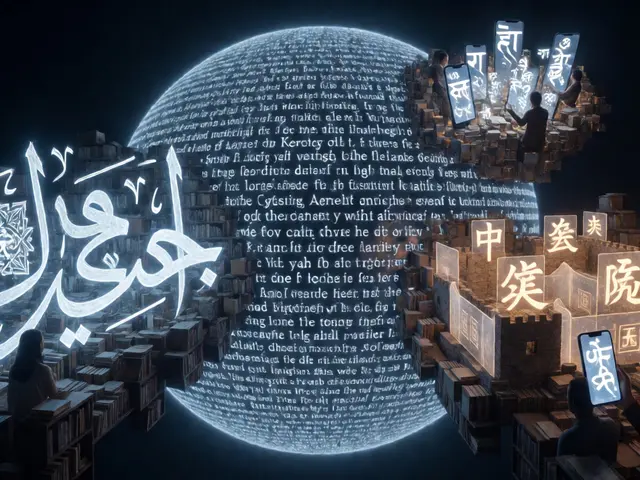
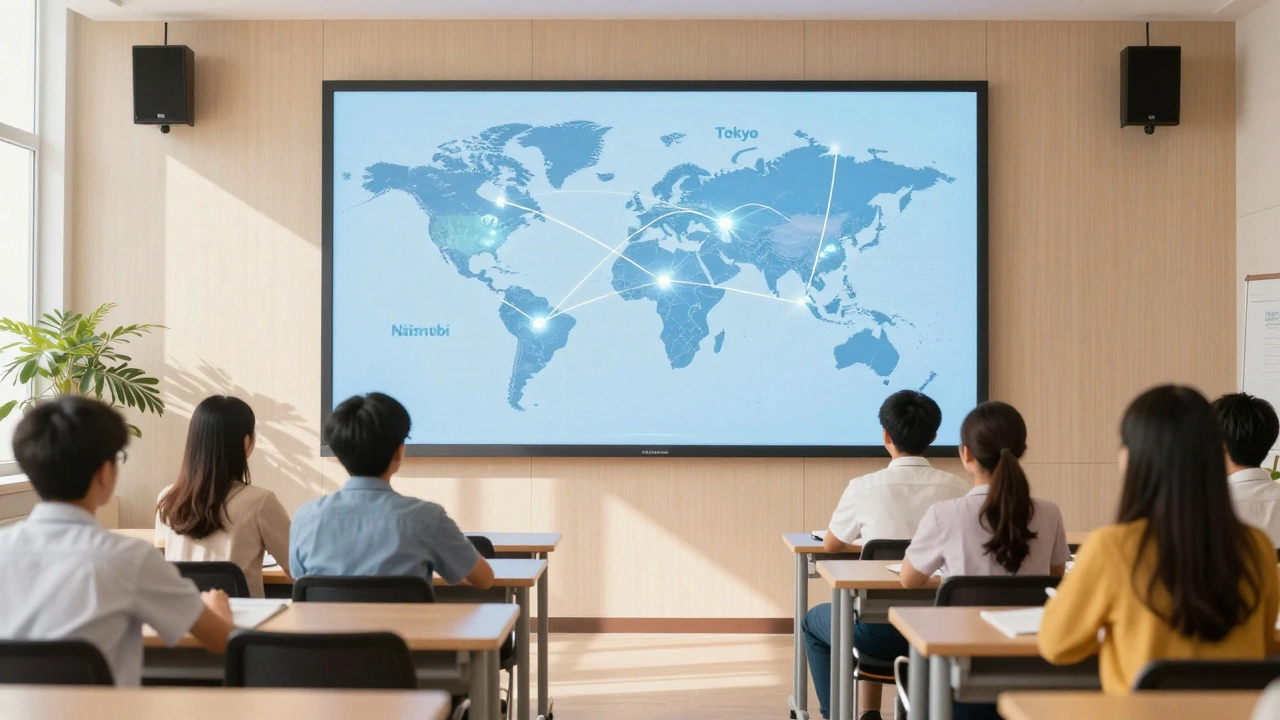
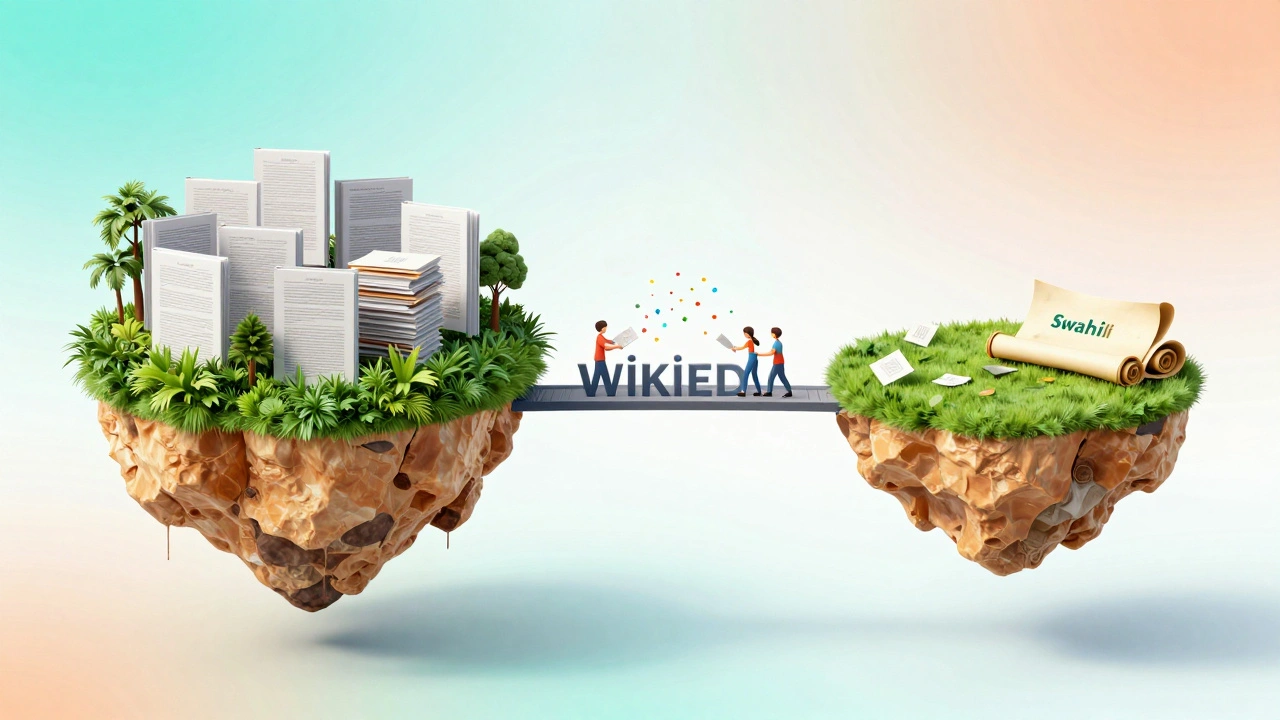
When we talk about a Global Classroom, we aren't just talking about a Zoom call. We're talking about a pedagogical shift where students use Wikipedia as a living textbook. Wikipedia is more than just a website; it's a collection of over 300 language editions. A student writing about the "Industrial Revolution" in English might find a wealth of detail, but a student in the Swahili Wikipedia might find a stub with only two sentences.
This is where the collaboration kicks in. When students from different linguistic backgrounds pair up, they perform a "content transplant." The English speaker helps the Swahili speaker structure the article using reliable sources, while the Swahili speaker ensures the translation is culturally accurate and relevant to their local audience. This process moves beyond simple translation-it's about contextualization. For example, a project on climate change might involve students in the Netherlands sharing data on sea-level rise with students in Bangladesh, creating a comprehensive global perspective that a single-language article could never achieve.
Mapping the Knowledge Gap
To make this work, educators first have to identify what's missing. This is often done through a process called "gap analysis." Students look at a topic-say, female scientists from the 19th century-and compare the depth of coverage across the English Wikipedia and the Spanish Wikipedia. They might find that while a scientist is well-documented in one, she's completely absent in the other.
| Feature | Single-Language Project | Cross-Wiki Collaboration |
|---|---|---|
| Source Variety | Limited to one language | Multilingual and diverse |
| Perspective | Mono-cultural | Pluralistic / Global |
| Student Role | Consumer of info | Knowledge curator |
| Impact | Grade-based (Internal) | Public utility (External) |
By using the Wikimedia Commons repository for images, students also realize that visuals are a universal language. A student in Brazil might upload a high-quality photo of a local landmark, which then becomes the primary image for that landmark's page in Japanese, German, and Arabic. This creates a tangible sense of contribution that transcends borders.
The Technical Hurdles and How to Clear Them
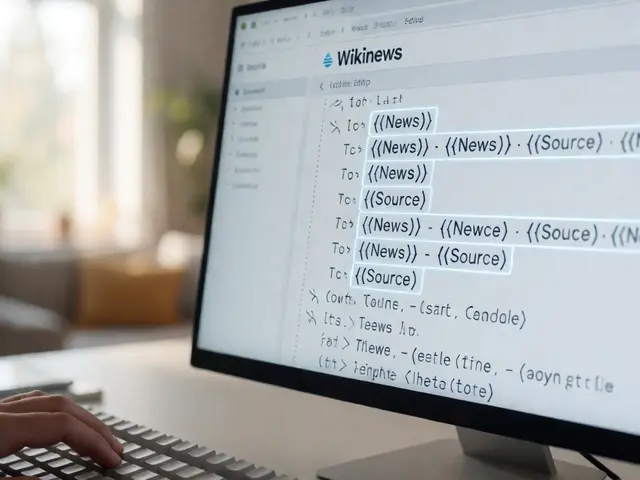
It sounds great, but it isn't as simple as just hitting 'Edit.' The Wikimedia Foundation has strict rules about verifiability and neutral point of view (NPOV). For a beginner, the "Edit War" can be a terrifying experience. Imagine a student spends three hours writing a section on local history, only for an experienced editor to delete it because the source wasn't "reliable" enough. It can be a crushing blow to a teenager's confidence.
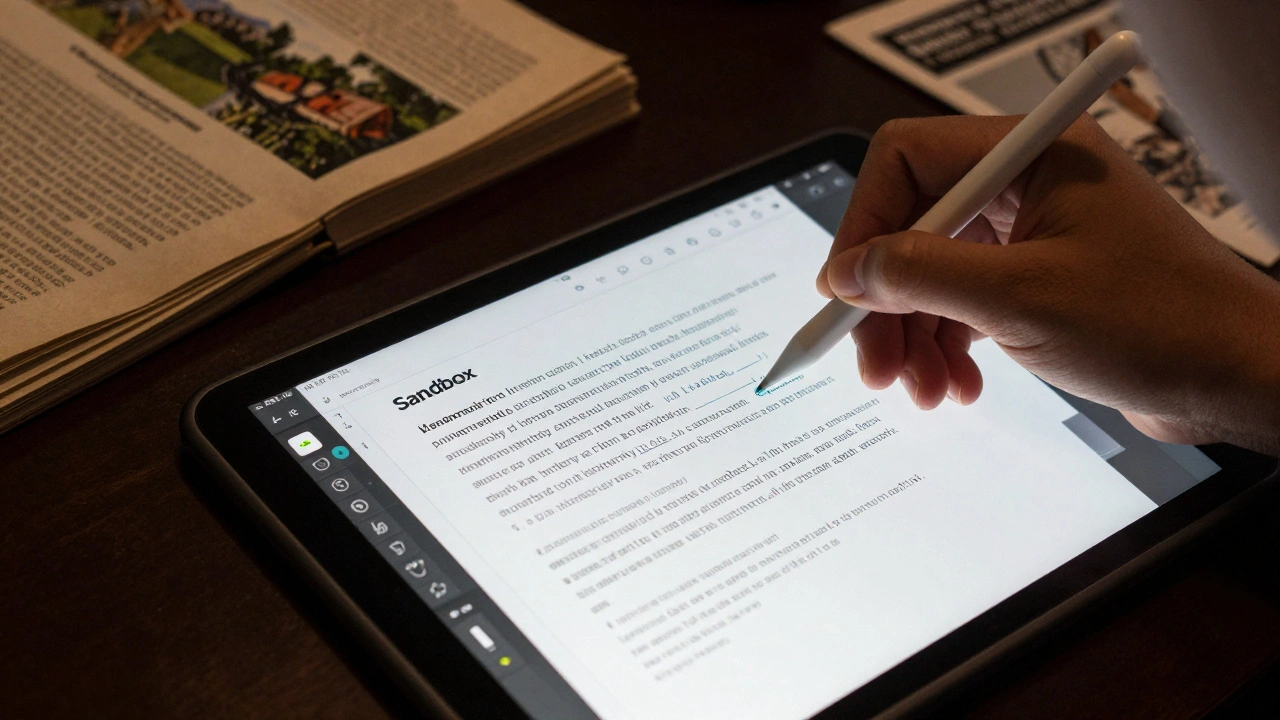
The secret to success here is the "Sandbox." Every user has a Wikipedia Sandbox-a private drafting area where they can experiment without the fear of immediate deletion. Teachers act as the first layer of peer review, checking citations before the work goes live. This mirrors the actual scientific process: hypothesis, drafting, peer review, and publication. When students eventually move their work from the sandbox to the main page, they do so with a level of confidence and academic rigor that traditional essays rarely require.
Developing a New Kind of Digital Literacy
Most schools teach digital literacy as "don't trust everything you read online." But cross-wiki collaboration teaches a more advanced version: "trust, but verify using multiple independent sources." When students compare how a historical event is described in the Russian version of an article versus the Polish version, they aren't just learning history-they are learning about propaganda, bias, and the sociology of knowledge.
This approach transforms the student from a passive recipient of information into an active participant in the Open Educational Resources (OER) movement. They start to ask: Why is this person not mentioned? Why is this event framed this way? These are the questions of a critical thinker. By the time they finish a semester of global collaboration, they've developed a mental toolkit for dissecting any piece of information they encounter on the web.
Turning Local Knowledge into Global Assets
One of the most powerful aspects of this model is the elevation of "marginalized knowledge." For decades, global knowledge has been centered around the Global North. By encouraging classrooms in the Global South to document their own heritage, geography, and science, the entire ecosystem becomes more balanced. For instance, a biology class in Vietnam documenting endemic plant species in their local language, and then collaborating with a class in the US to translate that into English, creates a permanent, public record of biodiversity.
This process requires students to master the art of the "citation." They can't just say "my grandfather told me this." They have to find a way to prove it through a secondary source-perhaps a local museum record, a government archive, or a scholarly journal. This push for evidence-based writing is where the real academic growth happens. They are no longer writing for a teacher who is forced to grade them; they are writing for the world.
Do students need to be fluent in multiple languages to participate?
No, that's the beauty of the collaboration. The project pairs students who speak different languages. One student provides the content and cultural context in Language A, while the partner helps translate and format it for Language B. They use translation tools as a starting point, but the human collaboration ensures the nuance and accuracy are maintained.
How do teachers prevent students from just copying and pasting from other sites?
Plagiarism is a major concern, but Wikipedia's community is ruthless about it. Teachers use this as a teaching moment by showing students the "Copyright Violation" warnings they get from automated bots. By requiring students to use a variety of citations and the "Sandbox" for drafting, teachers can track the evolution of the writing and ensure it's original synthesis rather than a copy-paste job.
Is it safe for students to edit a public site?
Yes, provided they follow privacy guidelines. Students are encouraged to create accounts without using their full real names. Teachers also set up "Educational Improvement Programs" where the community is aware that students are contributing, which often leads to more patient and supportive mentorship from veteran editors.
What happens if an editor deletes a student's work?
This is actually a key part of the learning process. When a section is deleted or changed, the student is tasked with reading the "Talk Page" to understand why. Was it a lack of sources? Was the tone not neutral? Learning to negotiate and iterate based on critical feedback is a core skill in the modern professional world.
Which subjects work best for cross-wiki projects?
While any subject can work, history, environmental science, and sociology are the most effective. These subjects often have regional variations or local data that are missing from the English version of Wikipedia, providing a clear "gap" for students to fill with their own localized research.
Next Steps for Educators
If you're a teacher looking to start a global collaboration, don't try to boil the ocean. Start small. Pick one narrow topic-like a specific local artist or a regional ecological phenomenon-and find a partner classroom via teacher networks or the Wikimedia Education Program. Begin with a "Read-a-thon" where students simply compare three different language versions of the same page. Once they see the gaps, the desire to fill them usually becomes the primary motivator for the entire project.