Wikipedia doesn’t just want you to add facts-it wants you to prove them. And when you’re citing a book, that means more than just dropping the title. You need the right edition, the exact page number, and a clear link to where the information came from. If you skip any of these, your edit might get removed. Worse, it could mislead readers who trust Wikipedia as a reliable source.
Why Editions Matter
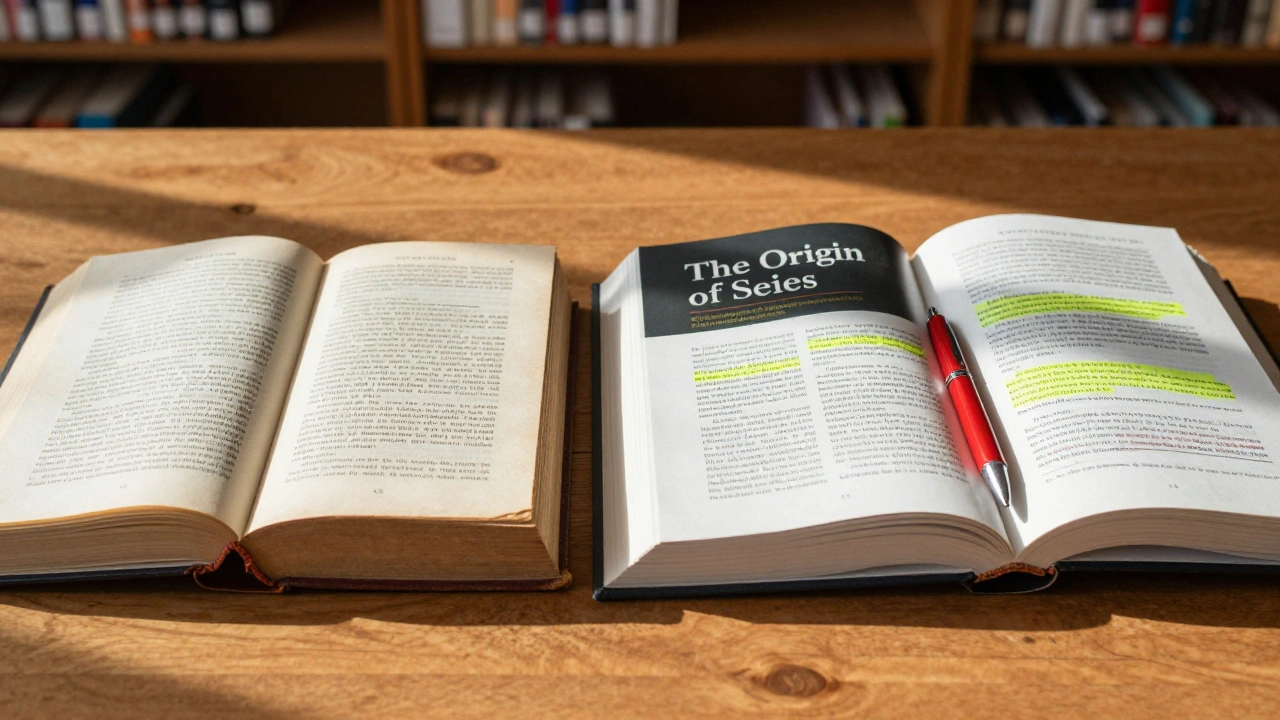
Not all copies of a book are the same. A 1998 edition of The Origin of Species might have different footnotes, corrections, or even chapter ordering than the 2020 annotated version. If you cite the wrong edition, you’re not just giving bad information-you’re making it impossible for someone else to find the source.
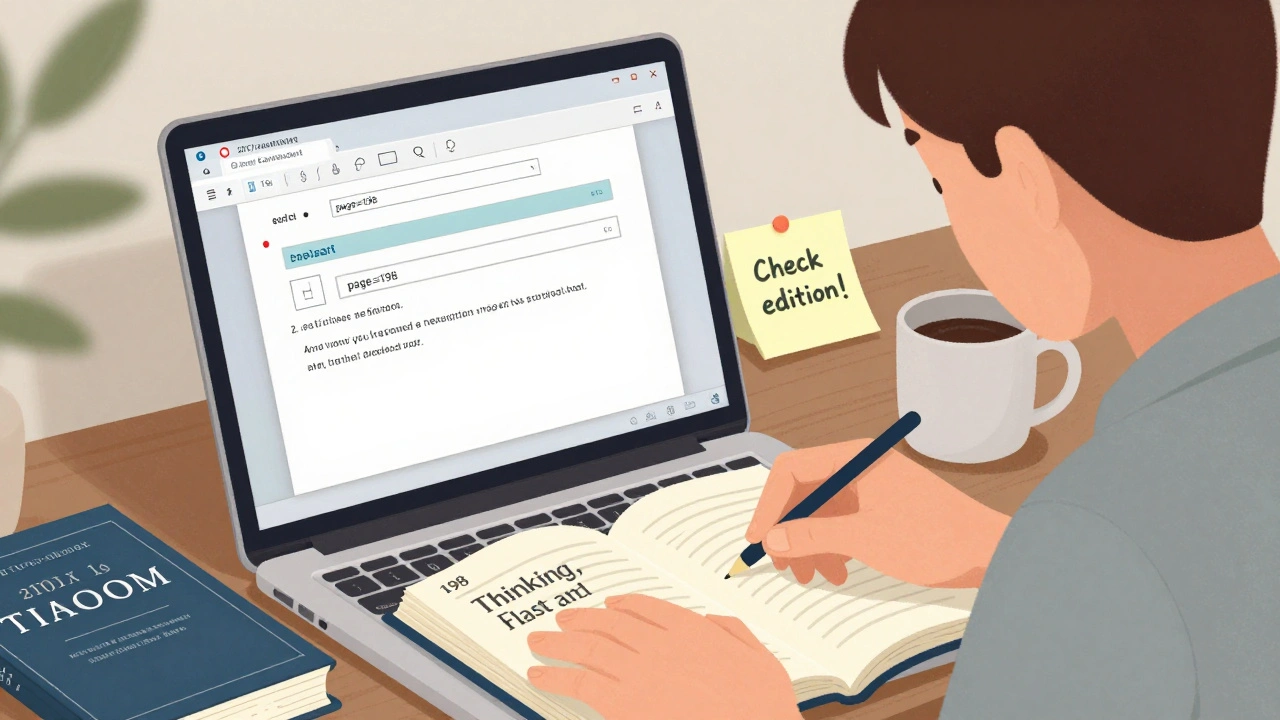
Take Thinking, Fast and Slow by Daniel Kahneman. The original 2011 hardcover has 416 pages. The 2012 paperback edition has the same content but different pagination. If you say the idea is on page 210 without specifying the edition, someone might look at the paperback and find nothing on page 210 because it’s actually on page 198.
Wikipedia’s citation guidelines require you to specify the edition. That means including the year, publisher, and format if it’s not the first edition. If you’re quoting from a revised edition, say so: 2nd ed., Revised edition, or Updated 2023. This isn’t just pedantry-it’s what makes your citation usable.
Page Numbers Are Non-Negotiable
Wikipedia’s verifiability policy says every claim must be backed by a source. But a source without a page number is useless. Imagine someone reads your edit and says, “Show me where it says that.” You reply, “It’s in Capital in the Twenty-First Century.” Now they have to flip through 700 pages to find one sentence. That’s not helpful. That’s lazy.
Every time you cite a book, include the page number. Even if the idea seems obvious, even if the book is short, even if you’re paraphrasing. Page numbers let others check your work. They also help editors spot when someone’s misrepresenting a source.
Here’s a real example: An edit claimed that “income inequality has doubled since 1980” based on Piketty’s book. Without a page number, another editor removed it. When the original editor added “p. 45,” it turned out the book said “income inequality rose sharply,” not “doubled.” The page number caught the exaggeration.
Use the format: Author, Title, Year, p. X. For multiple pages: pp. 45-47. Don’t say “the book says” or “on page somewhere.” Be specific. Precision is the currency of credibility on Wikipedia.
Verifiability: The Core Rule
Wikipedia isn’t a place for opinions, summaries, or personal interpretations. It’s a place for verifiable facts. That means every sentence you add must be traceable to a published, reliable source. Books qualify-if they’re published by academic presses, reputable publishers, or peer-reviewed institutions.
But here’s the catch: not every book is reliable. A self-published memoir, a blog turned into an ebook, or a book from a vanity press won’t pass muster. Editors will ask: Is this author credible? Is the publisher known for accuracy? Has this book been cited by other scholars?
For example, citing a book by a historian from Oxford University Press carries weight. Citing a book from Amazon’s Kindle Direct Publishing doesn’t-even if the content is accurate. The issue isn’t the truth of the claim. It’s whether others can verify it independently.
Always ask: Could a reader with access to a library or online database find this exact edition and page? If the answer is no, the citation fails.
How to Format Book Citations in Wikipedia
Wikipedia uses a simple citation system called Cite book. You don’t need to know HTML. You just fill in the template.
Here’s the basic structure:
{{Cite book | last=Smith | first=John | title=The History of Cities | year=2020 | edition=3rd | publisher=Harvard University Press | isbn=978-0-674-05678-9 | page=112}}Key fields:
- last and first: Author’s name
- title: Full book title in italics
- year: Publication year
- edition: “2nd ed.”, “Revised”, etc.
- publisher: Name of the publisher
- isbn: Optional but helpful for verification
- page: The exact page number
For multiple pages: use pages=112-115. For books with no ISBN, leave it out. Don’t guess. If you can’t find the ISBN, search the publisher’s website or WorldCat.
Wikipedia’s citation tool will auto-format this into a clean footnote. You don’t need to worry about style guides like APA or MLA. Wikipedia has its own rules-and they’re designed for clarity, not academic pretense.
What Happens When You Get It Wrong
Wikipedia editors are volunteers, but they’re sharp. They’ve seen every trick. If you cite a book without a page number, your edit will likely be tagged with “citation needed” or “no page number”. If you cite the wrong edition, someone will compare your citation to the actual book and revert your change.
Worse, if you cite an unreliable source-say, a self-published book with no peer review-your entire contribution might be flagged as “unverifiable.” That means your edit gets deleted, and you might get warned for violating content policies.
One editor in 2024 added a claim about medieval trade routes using a self-published book from a blog author. Within hours, three editors flagged it. One found the same claim had been removed from the article three times before. The user was blocked for persistent policy violations.
It’s not about being punished. It’s about maintaining trust. Wikipedia’s value comes from its reliability. If readers can’t trust the citations, they stop trusting the whole site.
Pro Tips for Getting It Right
- Use Google Books or HathiTrust to preview the exact edition you’re citing. Many older books are digitized and searchable.
- If you’re using an ebook, check if it has stable page numbers. Some Kindle editions reflow text and change pagination. If so, cite the print edition instead.
- Always double-check the ISBN. A wrong number means someone can’t find the book.
- Don’t cite books you haven’t read. If you’re paraphrasing from a secondary source, cite that source, not the original.
- Use Wikipedia’s Citation Tool (the “Cite” button in the edit toolbar). It guides you through the fields and prevents mistakes.
And here’s a quick trick: if you’re unsure whether a book is reliable, check if it’s listed in WorldCat or has been cited in peer-reviewed journals. If it’s only on Amazon and has no academic reviews, think twice.
What to Do When You Can’t Find the Source
Sometimes, you find a great fact-but you can’t access the book. Maybe it’s out of print. Maybe you’re in a country without library access. What then?
You don’t just drop it. You find a substitute. Look for a different, reliable source that says the same thing. If you can’t, leave it out. Wikipedia doesn’t need every fact. It needs only the ones you can prove.
There’s a myth that Wikipedia should include everything. It shouldn’t. It should include only what’s verifiable. That’s why it works.
If you’re writing about a rare book, and you’re the only one who’s read it, you can’t cite it on Wikipedia. Not unless you publish your own peer-reviewed analysis first. That’s the rule. It’s frustrating sometimes. But it’s what keeps the site honest.
Why This All Matters
Wikipedia gets over 500 million visits a month. People use it to check facts for school papers, news articles, and even court cases. If your citation is sloppy, someone might base a decision on a mistake.
Think of yourself as a librarian-not a blogger. Your job isn’t to share interesting ideas. It’s to ensure every idea is backed by something real. That’s why editions, page numbers, and verifiability aren’t optional. They’re the foundation.
When you cite a book properly, you’re not just helping Wikipedia. You’re helping everyone who uses it. You’re making sure knowledge stays accurate, not just popular.
Do I need to include the ISBN when citing a book on Wikipedia?
No, the ISBN is optional but recommended. It helps others find the exact edition, especially if the book has multiple printings. If you don’t know the ISBN, you can still cite the book using the author, title, edition, publisher, year, and page number. The ISBN just makes verification easier.
Can I cite an ebook from Kindle or Google Books?
Only if the ebook has stable, fixed pagination that matches a print edition. Many ebooks reflow text and change page numbers based on screen size. If you can’t confirm the page matches the print version, cite the print edition instead. Always prefer the original published version over a digital format that may not be consistent.
What if the book has no page numbers at all?
If the book truly has no page numbers-like some PDFs or very old public domain texts-you can use a chapter title or section heading instead. For example: “Chapter 4: The Rise of Urban Trade.” But this is rare. Most published books, even older ones, have page numbers. If you can’t find any, look for a scanned version on archive.org or HathiTrust.
Can I cite a book I found on a personal blog or website?
No. Wikipedia requires sources to be published by reputable publishers-universities, academic presses, or established commercial publishers. A blog post, personal website, or self-published PDF does not count as a reliable source, even if the content is true. You need a third-party publisher that has editorial oversight.
Why does Wikipedia care so much about editions?
Different editions can have different content-new forewords, corrected errors, updated data, or even changed arguments. Citing the 1972 edition of a book when the 2020 edition says something completely different misleads readers. Editions ensure accuracy and traceability. It’s not about being picky-it’s about being correct.