When students run a science experiment in a STEM lab, they don’t just follow a recipe. They ask questions, test ideas, and look for proof. But where do they find real, reliable evidence to back up their hypotheses? Too often, they turn to Google or Wikipedia-and get stuck in a loop of unreliable sources. The truth is, Wikipedia can be a powerful starting point for STEM labs-if you know how to use it right.
Why Wikipedia Works for STEM Labs
Wikipedia isn’t a primary source. But it’s not meant to be. It’s a gateway. Every well-written Wikipedia article on a scientific topic-like CRISPR gene editing or climate change impacts on coral reefs-links to peer-reviewed studies, government reports, and university publications. In fact, a 2023 study from the University of Edinburgh found that 87% of Wikipedia articles in biology and chemistry include at least one citation from a peer-reviewed journal. That’s more than most high school textbooks.
Students in Madison Public Schools’ STEM program started using Wikipedia as a research launchpad last year. Instead of asking, “What’s photosynthesis?” they asked, “What does the latest meta-analysis say about photosynthesis efficiency under low-light conditions?” That shift turned passive reading into active inquiry.
How to Trace a Wikipedia Citation Back to the Original Study
Here’s the simple process every student should learn:
- Find the Wikipedia article on your topic-say, Newton’s laws of motion.
- Click on any numbered citation in the text. It takes you to a reference at the bottom of the page.
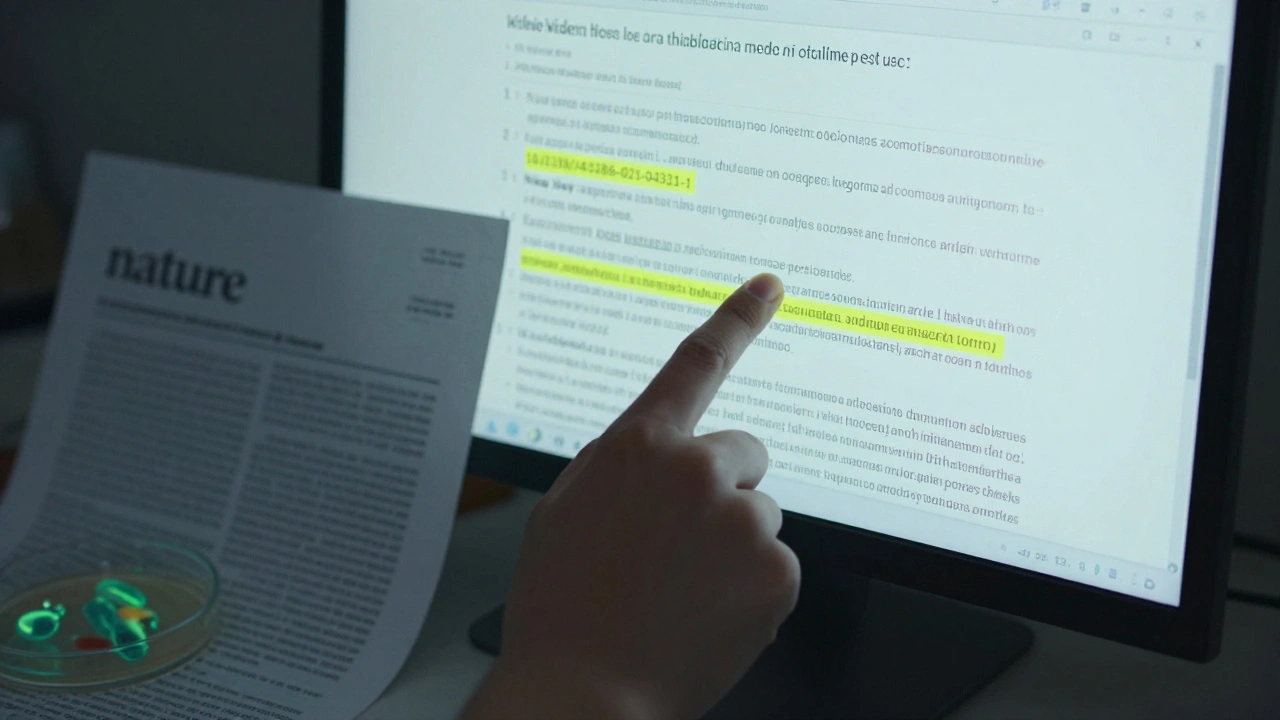
- Look for the DOI (Digital Object Identifier)-it looks like
10.1038/s41586-021-04321-1. That’s your golden ticket. - Copy the DOI and paste it into doi.org or Google Scholar. You’ll get the full journal article.
Most university libraries give free access to journals like Nature, Science, and The Journal of Research in Science Teaching. If you’re in a public school, use Google Scholar-it often shows free PDFs or links to open-access versions.
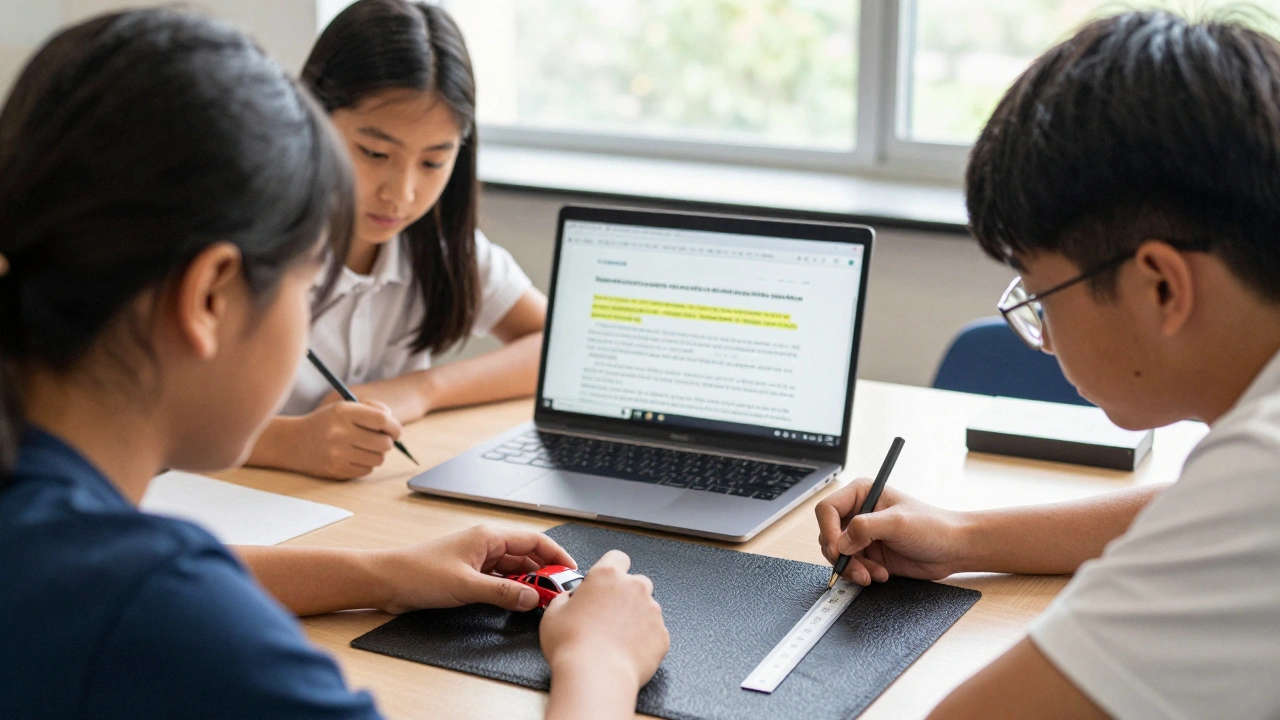
One 10th-grade class in Wisconsin tested whether different surface textures affected rolling friction. Their hypothesis came from a Wikipedia section on coefficient of friction. The citation led them to a 2022 study from MIT that used laser sensors to measure friction on 12 different materials. They replicated the setup with toy cars, rulers, and sandpaper-and their results matched the study’s within 8% error. That’s not luck. That’s real science.
What Not to Do: The Three Big Mistakes
Wikipedia is useful, but it’s not foolproof. Here’s what goes wrong:
- Mistake 1: Citing Wikipedia as the source in your lab report. It’s not a primary source. You’re citing the original paper, not the summary.
- Mistake 2: Trusting uncited claims. If a Wikipedia paragraph has no references, treat it like gossip. Skip it.
- Mistake 3: Assuming all Wikipedia articles are equal. Some are expert-written. Others are edited by beginners. Check the “View history” tab. If the article has been edited by 50+ people over five years, with citations added by professors or researchers, it’s trustworthy.
Teachers who skip this lesson end up with lab reports full of phrases like “Wikipedia says…” That’s not science. That’s copying.
Building a Research Pipeline from Wikipedia to Lab
The best STEM labs don’t just use Wikipedia-they build a workflow around it:
- Start with Wikipedia to get the big picture and find key terms.
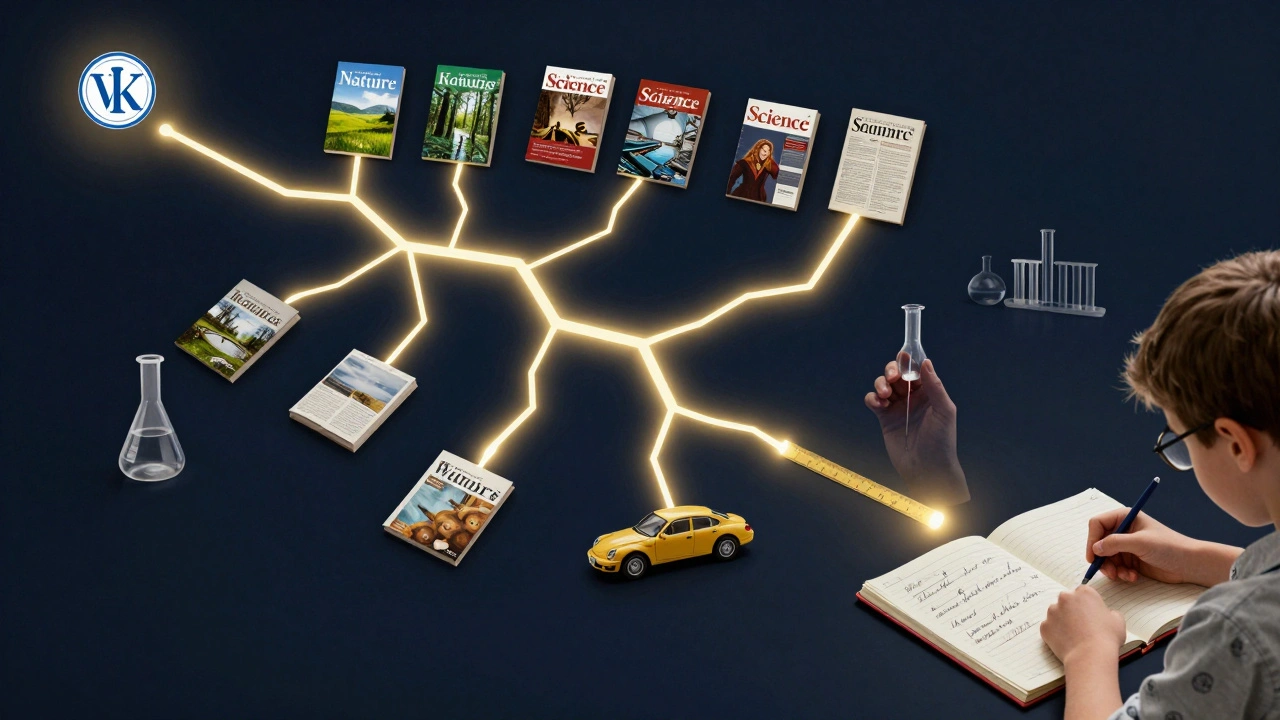
- Follow citations to find the original studies.
- Read the abstract of each paper. If it mentions a method you can replicate, keep it.
- Compare multiple sources. If three different papers agree on a result, it’s likely solid.
- Design your experiment based on the methods you found-not on what your textbook says.
This method works for biology, physics, chemistry, even engineering. A group of 8th graders in Milwaukee used Wikipedia to explore bioluminescence. They traced a citation to a 2020 paper in Applied and Environmental Microbiology that described how to culture glowing bacteria. They grew Vibrio fischeri in petri dishes using nutrient agar and a heat lamp. Their final report included the DOI, the journal name, and a photo of their glowing plates. Their teacher called it “the most authentic lab report I’ve seen in ten years.”
Why This Matters Beyond the Classroom
Most adults think science happens in labs with white coats and beakers. But real science happens when someone asks, “How do I know that’s true?” and then goes to find out.
Wikipedia teaches students to trace ideas back to their roots. It trains them to question authority-not by rejecting it, but by verifying it. In a world full of misinformation, that skill is more valuable than memorizing formulas.
When students learn to use Wikipedia as a research tool, they stop seeing science as a list of facts to memorize. They start seeing it as a conversation-one that’s been going on for centuries, and they’re now invited to join.
What Teachers Should Do Next
Here’s what actually works in classrooms:
- Give students a short Wikipedia article and ask them to find one primary source behind it.
- Run a “Citation Hunt” challenge: Who can trace the most credible source in 15 minutes?
- Use the “Talk” tab on Wikipedia to show how experts debate and improve content.
- Pair Wikipedia research with hands-on labs. Theory + practice = deeper understanding.
You don’t need fancy equipment. You don’t need a grant. You just need to teach students how to follow a trail of evidence.
Can students cite Wikipedia in science reports?
No. Wikipedia is a summary, not a source. Students should cite the original peer-reviewed papers, books, or datasets that Wikipedia links to. Citing Wikipedia directly makes a lab report look amateurish. Instead, teach them to say: “According to a 2021 study in Nature (cited on Wikipedia),…”
Are all Wikipedia science articles reliable?
No. Some are written by experts, others by students or enthusiasts. Check the references at the bottom, the edit history, and whether the article has been flagged for review. Articles on core topics like DNA, gravity, or thermodynamics are usually well-maintained. Niche or emerging topics may be incomplete. Always verify with at least two other sources.
How do I find peer-reviewed papers if my school doesn’t have a library subscription?
Use Google Scholar. Type in the DOI or keywords from the Wikipedia citation. Look for links labeled “[PDF]” or “Free full text.” Many journals now allow authors to post free versions. Also try Unpaywall-a free browser extension that finds legal, open-access copies of papers. Public libraries often offer free access to academic databases too.
Can younger students use this method?
Yes-with support. For elementary and middle schoolers, start with simplified articles like those on NASA’s Kids’ site or the Smithsonian’s educational pages, then show them how those sources link to deeper research. Use visual aids: highlight citations in color, print out the reference list, and walk through one example together. The goal isn’t to read the full paper-it’s to understand that science has sources, and those sources can be found.
What’s the difference between a Wikipedia citation and a primary source?
A Wikipedia citation is a secondhand summary-like a news article reporting on a scientific discovery. A primary source is the original study itself: the data, methods, graphs, and conclusions written by the scientists who did the experiment. In a lab, you want the primary source. Wikipedia helps you find it.