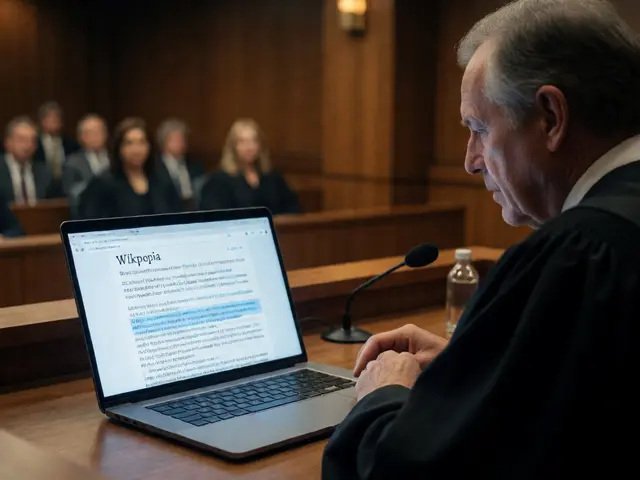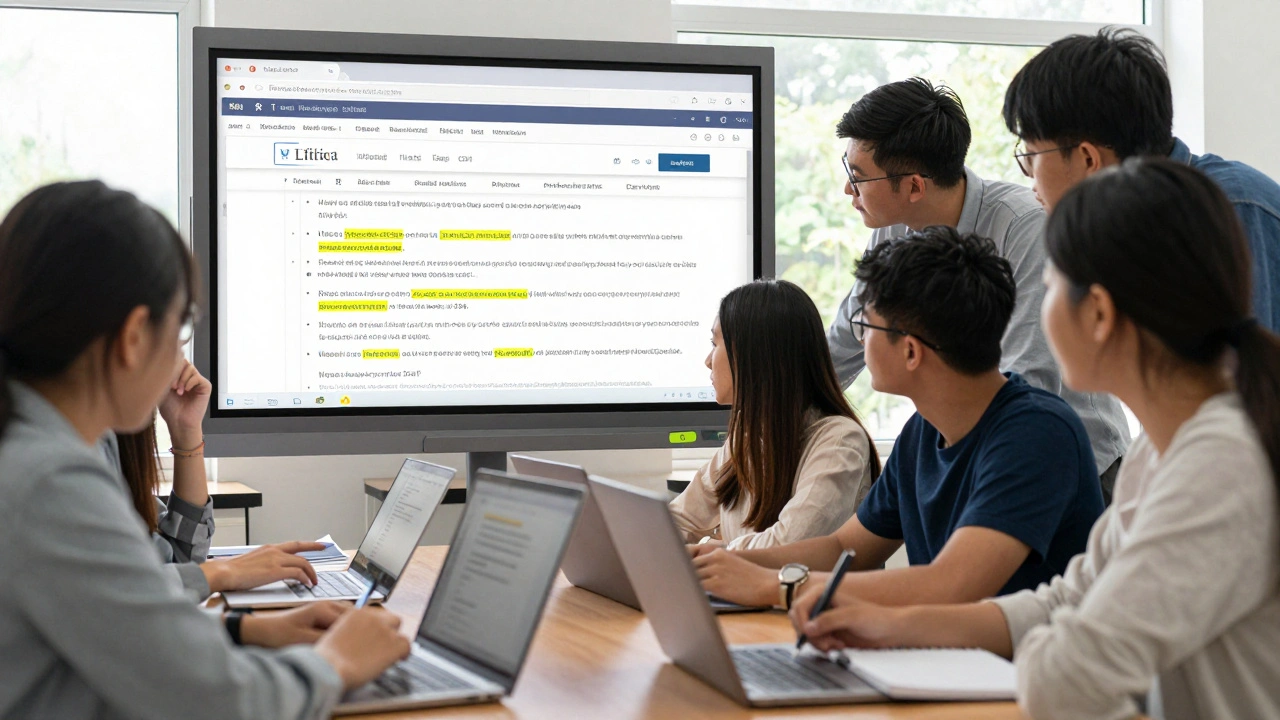
Most students think Wikipedia is just a place to copy-paste facts. But if you’ve ever read the talk page behind an article, you know it’s where real debate happens-raw, messy, and full of insight. In classrooms, turning students loose on these talk pages isn’t about teaching them to edit Wikipedia. It’s about teaching them to think critically about information before they believe it. And it works.
Why Talk Pages Are Better Than the Articles Themselves
The main Wikipedia article is polished. It’s the final product, cleaned up by editors who agree on the version you see. But the talk page? That’s the construction site. That’s where editors argue over sources, flag bias, question citations, and sometimes even call each other out for bad faith edits.
For example, look at the talk page for Wikipedia:Global warming. You’ll find threads from 2008 where editors debate whether to call climate change a "consensus" or a "theory." One editor cites a peer-reviewed paper from Nature. Another links to a blog post from a retired physicist. Someone else points out the paper was retracted. You don’t need to be a scientist to see the tension. You just need to know how to read between the lines.
When students read the article alone, they see a conclusion. When they read the talk page, they see the process-the fights, the compromises, the evidence that didn’t make the cut. That’s where learning happens.
What Students Learn by Reading Talk Pages
There are five core skills students build by analyzing talk pages:
- Identifying bias-Who’s pushing a certain viewpoint? Are they anonymous? Do they cite sources or just opinions?
- Tracing source reliability-Is that "study" a real journal or a self-published PDF? Is the source reputable, or does it come from a think tank with a political agenda?
- Recognizing consensus vs. minority views-How many editors agree? How many are outliers? Are they repeating the same argument?
- Understanding edit wars-Why do some topics get locked? What happens when two sides refuse to budge?
- Seeing how knowledge changes-Compare the talk page from 2015 to 2024. What was added? What was removed? Why?
One high school teacher in Madison had her class compare the talk pages of two articles: Abortion and Climate change. The students found that both had long-running disputes, but the Abortion talk page had over 300 edits in 2023 alone, while Climate change had fewer edits but more citations to peer-reviewed journals. The difference wasn’t just topic-it was how each community handled evidence.
How to Set Up a Talk Page Debate in Class
Here’s a simple, proven method that works with middle schoolers and college students alike:
- Choose a controversial topic-Pick something with real debate on Wikipedia: gun control, vaccination, AI ethics, or historical events like the Vietnam War.
- Assign students to read the article and its talk page-Tell them to look for at least three edits that changed the article’s tone or content. Highlight the usernames, dates, and sources cited.
- Divide the class into two sides-One side defends the current version of the article. The other defends the most common opposing viewpoint from the talk page.
- Require evidence from the talk page-No personal opinions allowed. Every claim must be backed by a specific edit, comment, or citation referenced on the talk page.
- Debrief with a reflection-Ask: "Did the article change your mind? Did the talk page make you more skeptical? What would you add if you could edit?"
This isn’t about winning. It’s about understanding how knowledge gets made-and how easily it can be distorted.
Common Pitfalls (And How to Avoid Them)
Teachers who try this for the first time run into the same issues:
- Students get overwhelmed-Talk pages can be long. Start with short, recent threads (last 6 months). Use the "Older revisions" filter to skip decades of noise.
- They think "edit war" means "both sides are right"-Clarify that Wikipedia doesn’t value balance over truth. If 90% of editors cite peer-reviewed science, the minority view doesn’t deserve equal space.
- They confuse anonymity with credibility-Many editors use usernames like "User:Conservative23" or "LiberalFan1992." Teach students to ignore the username and focus on the evidence.
- They assume Wikipedia is neutral-It’s not. It’s a reflection of who edits it. Most editors are white, male, and from Western countries. That shapes what gets included-and what doesn’t.
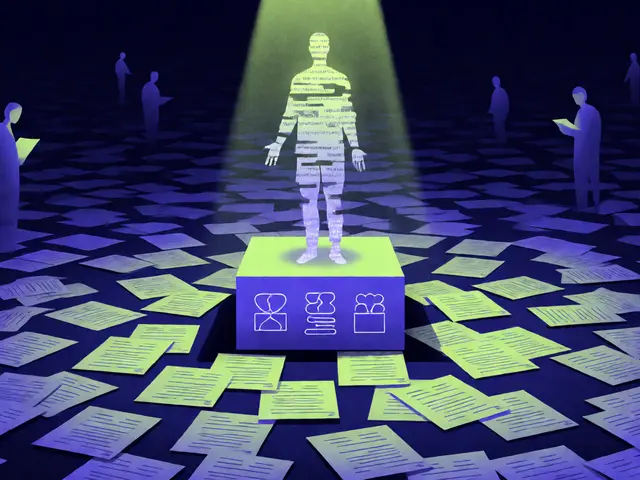
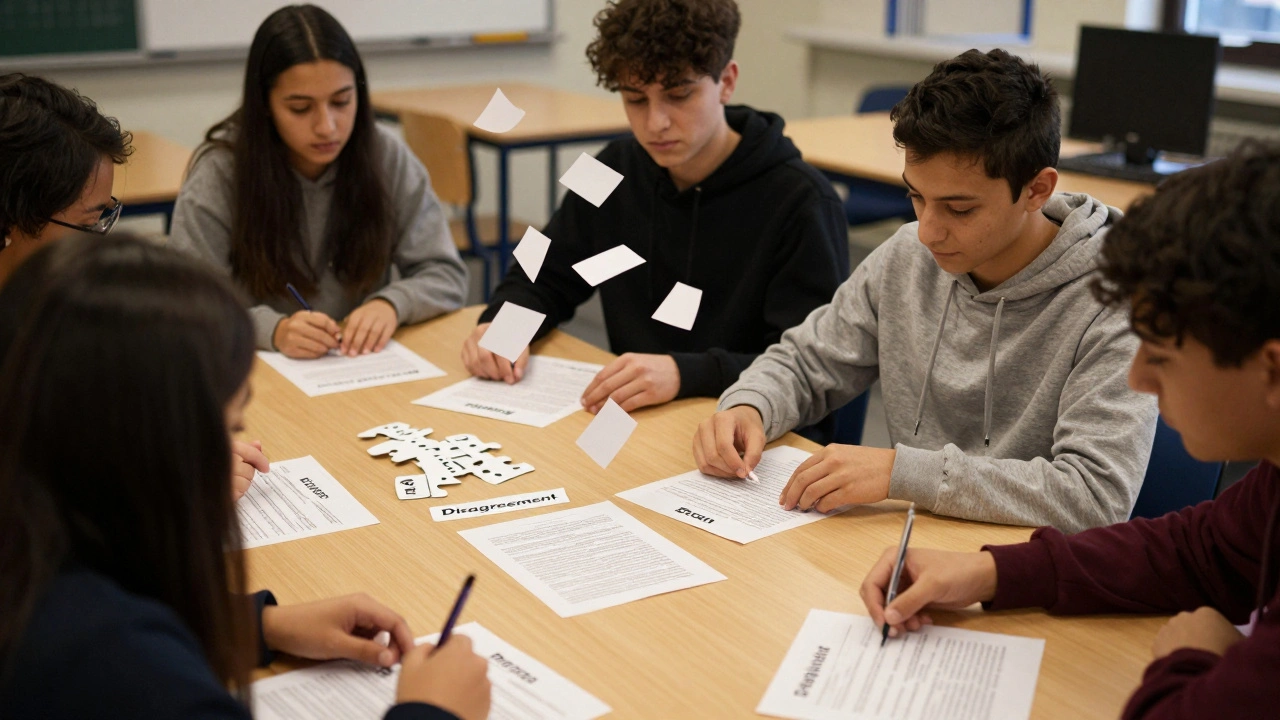
One trick: Print out a talk page and cut out individual comments. Hand them to students like playing cards. Let them group them by theme: "Evidence," "Bias," "Disagreement," "Resolution." It turns abstract debate into a tactile exercise.
Real Examples That Changed How Students Think
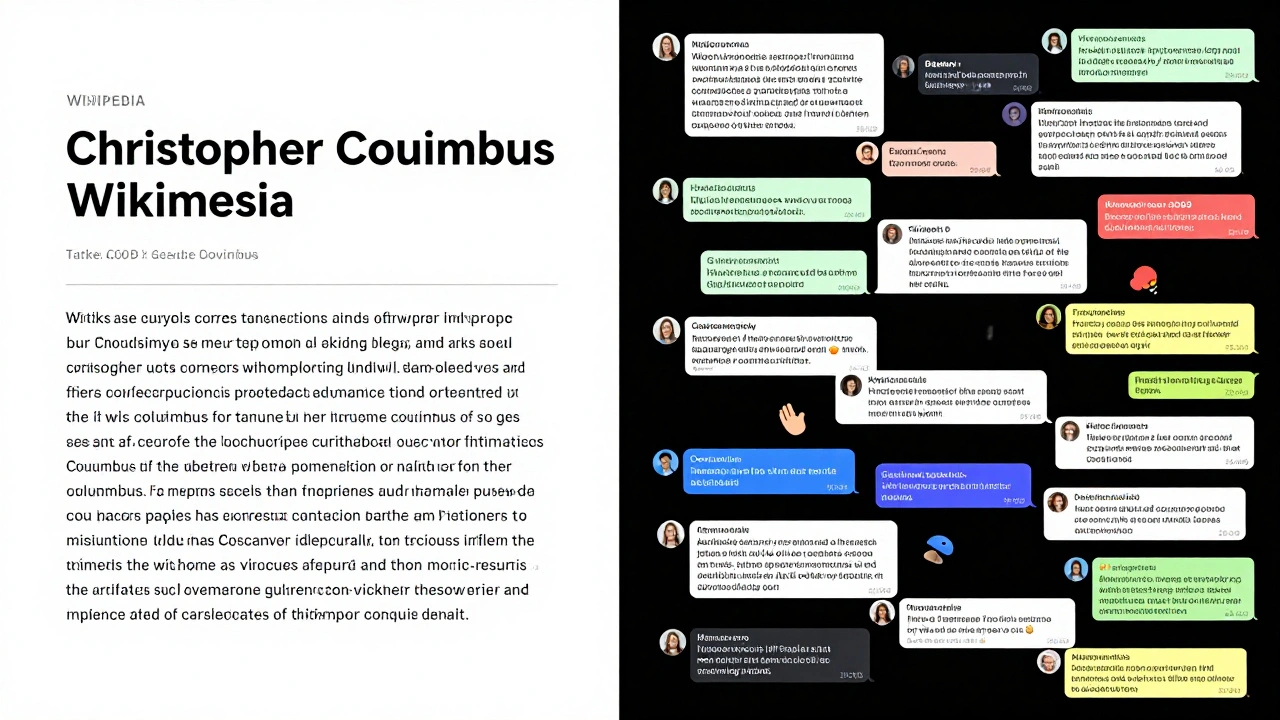
In 2023, a group of 9th graders in Ohio studied the talk page for Christopher Columbus. The article had been edited dozens of times to soften his role in colonization. One editor wrote: "Calling him a "genocidal maniac" is inflammatory. We should use "controversial figure."" Another replied: "The UN recognizes the genocide of Indigenous peoples. We can’t sanitize that."
The students found that the article’s tone shifted dramatically after 2020. Before that, it focused on exploration. After 2020, it included sections on forced labor and disease spread. The talk page showed exactly why: student activists had started editing, citing academic papers from Native studies journals.
One student said: "I thought Wikipedia was just facts. Now I see it’s a living argument. And if I don’t read the argument, I don’t know what the facts really mean."
Why This Matters More Than Ever
By 2026, AI-generated summaries and chatbots are feeding students simplified versions of complex topics. They’re getting answers without context. They’re being told what to believe without seeing how it was decided.
Wikipedia talk pages are one of the last public spaces where the process of knowledge-building is visible. You can see who disagrees, why, and what evidence they use. No algorithm hides it. No corporate policy sanitizes it.
Teaching students to read these pages isn’t about making them Wikipedia editors. It’s about making them critical thinkers who can spot manipulation, demand proof, and understand that truth isn’t handed to you-it’s fought for, piece by piece, edit by edit.
What Comes Next
Once students can read talk pages, the next step is to contribute. Not to change the world-but to understand what it takes to change a single line of text on Wikipedia. That’s when they realize how hard it is to make a claim stick. And how easy it is to get it wrong.
Some teachers have students write a proposed edit to a talk page, then defend it in class. Others have them track how long it takes for a well-sourced edit to be accepted-or rejected. The goal isn’t to get their edit published. It’s to understand the system.
Wikipedia isn’t perfect. But it’s transparent. And in a world full of hidden algorithms and opaque sources, that transparency is a gift. The talk pages are where the truth is made, not just delivered. Learning to read them is learning how to think for yourself.
Can students really understand Wikipedia talk pages?
Yes-even middle schoolers can grasp the basics. Start with short, recent threads on topics they care about, like video games, social media trends, or pop culture. Focus on identifying who’s arguing, what they’re citing, and whether the argument is based on evidence or opinion. You don’t need to understand every rule to see the pattern.
Are Wikipedia talk pages biased?
They reflect the biases of their editors. Most active editors are from North America and Europe, and many are male. That means topics like colonial history, gender, or global health often have gaps or skewed emphasis. But the talk page makes those biases visible. That’s the point. You can’t fix what you can’t see.
Do I need to teach Wikipedia editing too?
No. Reading talk pages is enough. Editing adds complexity, but the core skill is critical analysis. Once students learn to trace claims back to sources and recognize when an argument is weak, they’ve gained the most valuable part. Editing can come later, if they’re interested.
What if a talk page is too long or confusing?
Use filters. Click "Newer changes" or "Older changes" to narrow the timeline. Look for threads labeled "Archive"-they’re often cleaned-up summaries of past debates. Or pick just one section: "Sources," "Neutral point of view," or "Dispute resolution." You don’t need to read everything.
Is this method only for social studies classes?
No. Science classes can use talk pages for topics like evolution, climate change, or vaccines. English classes can analyze how language changes in edits. Even math classes can look at how statistics are cited and disputed in articles about economics or public health. The skill-evaluating evidence-is universal.