Wikipedia doesn’t just exist in English. It’s one of the few websites where you can read about quantum physics in Swahili, learn about medieval history in Bengali, or find out how to fix a bicycle in Arabic. But none of that happens by accident. Behind every non-English article is a real person who translated it - often working alone, without pay, and sometimes without formal training.
Why Translation Matters for Wikipedia
Wikipedia has over 300 language editions. But not all of them are equal. The English version has more than 6 million articles. The Swahili version? Around 120,000. The Tagalog version? Just under 500,000. Why the gap? It’s not because people in those countries don’t care. It’s because translating content takes time, skill, and support.
When a Wikipedia article is translated poorly, it can spread misinformation. A mistranslated medical article could lead someone to take the wrong dosage. A botched history translation might distort cultural memory. That’s why trained translators are critical. They don’t just swap words. They adapt tone, context, and cultural nuance.
Organizations like Wikimedia Foundation and local Wikimedia chapters have spent years building programs to train these volunteers. They don’t hire professionals. They empower people who already love knowledge and languages.
How Translation Volunteer Programs Work
Most Wikipedia translation programs start with a simple idea: give people the tools, not the pressure.
Take the Wikipedia Translation Program run by the Wikimedia Foundation. It doesn’t require you to be fluent in five languages. You just need to be fluent in two - your native language and one other. You pick an article you care about - maybe one about local agriculture in your region - and translate it. The system guides you step by step.
Here’s how it usually goes:
- You sign up on the Translation Portal on meta.wikimedia.org
- You choose a "high priority" article - one that’s well-written in English but missing in your language
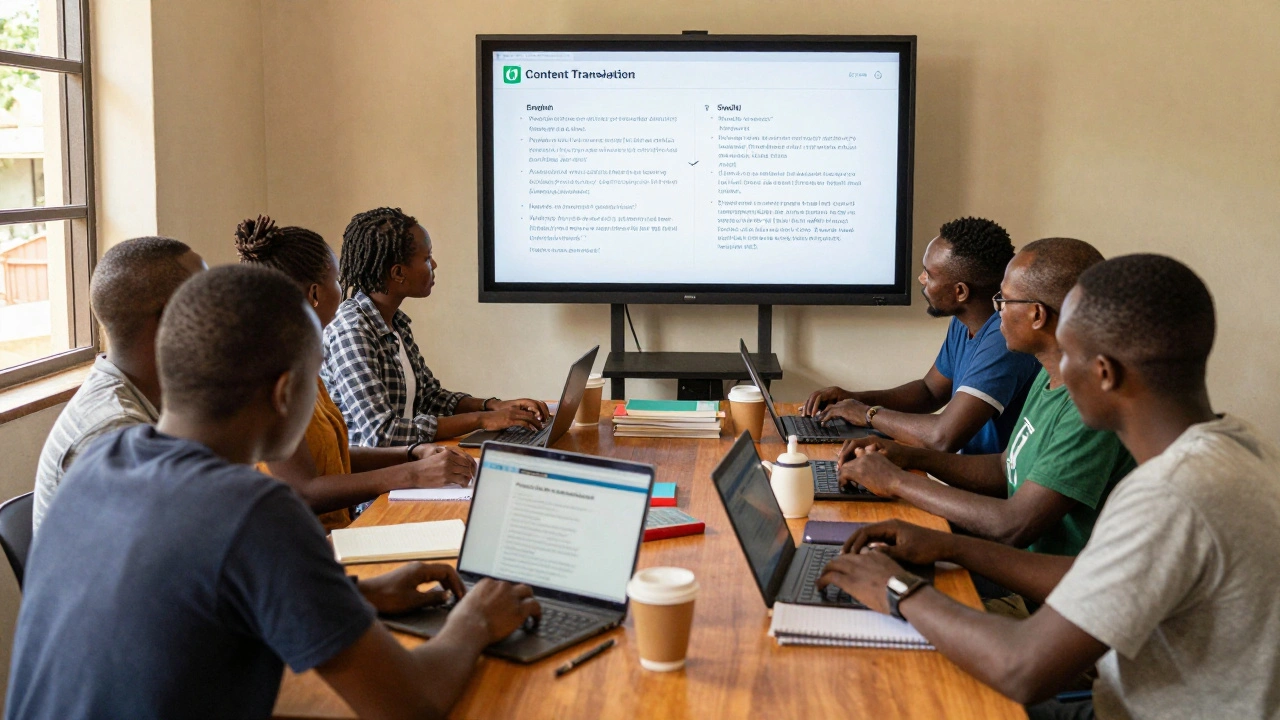
- You use the Content Translation tool, which auto-suggests translations and helps format the article
- You submit your draft, and a reviewer checks it for accuracy and clarity
- If approved, your translation goes live
There’s no test. No application fee. No deadline. Just a community of fellow volunteers who answer questions, give feedback, and celebrate when someone publishes their first article.
Since 2017, over 150,000 articles have been translated using this system. About 40% of them were done by people who had never edited Wikipedia before.
Courses That Actually Teach Translation Skills
Volunteer programs help people get started. But to do high-quality work, you need more than enthusiasm. You need skills.
That’s where formal training comes in. Several universities and nonprofit groups now offer free online courses specifically for Wikipedia translators. These aren’t general language classes. They’re focused on the unique challenges of translating for an open encyclopedia.
For example, the University of Madrid runs a six-week course called "Translating Knowledge: Wikipedia Edition." It covers:
- How to handle citations when the original source isn’t available in your language
- When to paraphrase instead of translate word-for-word
- How to avoid cultural bias - like assuming "democracy" means the same thing everywhere
- How to use Wikipedia’s style guides for different languages
- How to work with references that only exist in print
Over 8,000 people have taken this course since 2020. More than half of them went on to translate at least five articles. Many became regular editors.
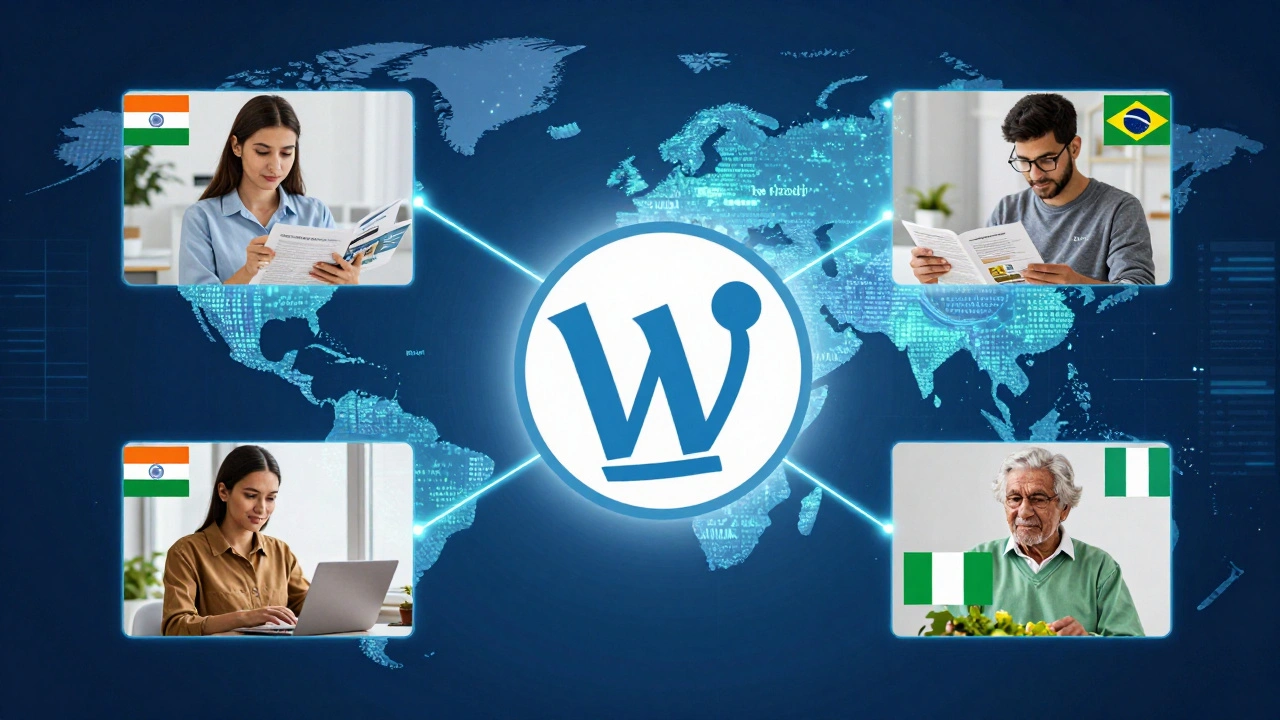
Similar courses exist in India (through the Wikimedia India Chapter), Brazil (via Wikimedia Brasil), and Nigeria (through the Wikimedia Nigeria User Group). All of them are free. All of them are open to anyone with internet access.
What Makes a Good Wikipedia Translator?
You don’t need to be a professional linguist. But you do need certain traits.
First, you must care about accuracy over speed. A rushed translation that gets the facts wrong is worse than no translation at all.
Second, you need to be comfortable with ambiguity. Wikipedia articles change constantly. A source you use today might be deleted tomorrow. You have to learn how to verify information independently.
Third, you must understand that translation isn’t just language. It’s context. For example, translating "federal system" into a language spoken in a country without federal government requires explanation - not just a direct word swap.
One volunteer from Indonesia shared that she spent three weeks translating an article about U.S. public schools. She didn’t just translate the text. She added footnotes explaining how U.S. school funding works, because her readers had never encountered that system before.
That’s the gold standard.
Real Impact: Stories from the Field
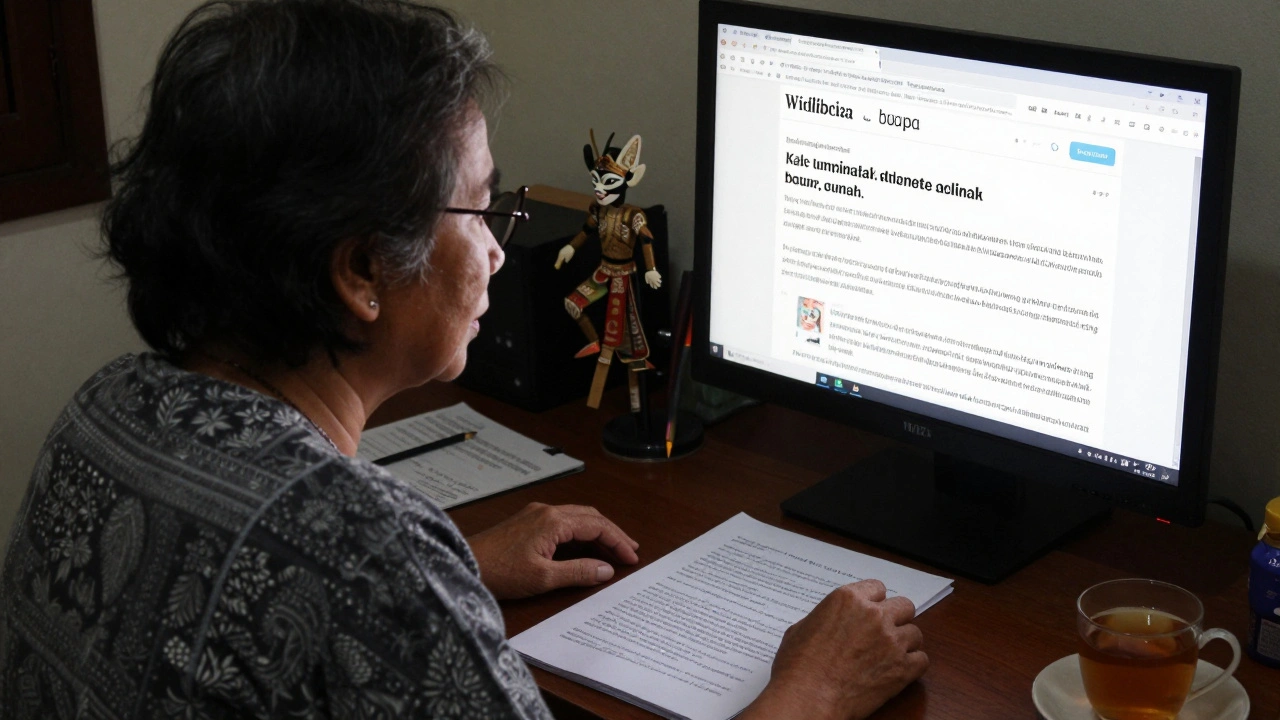
There’s a Wikipedia article on traditional Javanese puppetry in Indonesian. It’s detailed, well-sourced, and cited local experts. Before 2021, it barely existed. A retired teacher from Yogyakarta, who had never edited Wikipedia, took a translation course and spent six months translating the English version. Today, it’s one of the most viewed articles in the Indonesian edition.
In Ukraine, after the 2022 invasion, volunteers rushed to translate medical guides, evacuation maps, and mental health resources into Ukrainian. Many of them had no prior translation experience. They learned on the job, using Wikipedia’s tools and community support. Within six months, over 2,000 new articles were published - all translated by volunteers.
These aren’t exceptions. They’re the norm.
Wikipedia’s strength isn’t its servers or its algorithms. It’s its people. And those people - from rural Kenya to urban Montreal - are being trained, supported, and empowered to share knowledge in their own languages.
How to Get Started
If you speak two languages and want to help, here’s how to begin:
- Go to meta.wikimedia.org/wiki/Translation (no login needed to browse)
- Find your language under "Translation Programs"
- Click on "Content Translation Tool" and pick an article
- Start translating. The tool will help you format it correctly
- Join your language’s Wikipedia community - most have Telegram groups or Discord channels
- Attend a free training session if one is offered in your region
You don’t need to translate 100 articles. One matters. A single well-translated article about local medicine, history, or environmental policy can change someone’s life.
Common Misconceptions
Some people think Wikipedia translation is just copying and pasting. It’s not. The Content Translation tool doesn’t do the work for you. It just helps you avoid formatting mistakes.
Others believe you need to be a certified translator. You don’t. Wikipedia doesn’t require credentials. It requires care.
And some think only native speakers should translate. That’s false. Many of the best translators are bilingual immigrants who understand both cultures deeply. A person who grew up speaking Spanish at home and English at school might be the perfect person to translate a U.S. immigration article into Spanish - because they know what terms confuse newcomers.
What’s Next for Wikipedia Translation?
The goal isn’t to make every article available in every language. That’s impossible. The goal is to make sure no community is left behind because they lack the tools or training.
Now, AI tools are being tested to help translators. But they’re assistants, not replacements. An AI can suggest a word. But only a human can decide if that word fits the local context.
By 2026, Wikimedia plans to launch translation mentorship hubs in 15 countries. These will be physical spaces - libraries, community centers, universities - where volunteers can meet, train, and translate together. The first one opened in Nairobi in late 2025.
Wikipedia’s future isn’t written by algorithms. It’s written by people. And those people are being trained, one translation at a time.
Do I need to be fluent in English to translate for Wikipedia?
No. You need to be fluent in the language you’re translating into - not necessarily English. Many volunteers translate from their native language into another language they’ve learned. For example, someone fluent in Hindi and French can translate an English article into Hindi for Hindi speakers, or into French for French speakers. The Content Translation tool supports over 200 language pairs, and you can choose any source and target language combination.
Can I get paid to translate for Wikipedia?
Wikipedia translation is done entirely by volunteers. There is no direct payment. However, some local Wikimedia chapters offer small stipends for translators who complete large projects - like translating entire book-length articles or training others. These are rare, and always tied to specific initiatives, not regular editing. The reward is impact: your work helps millions of people access knowledge in their own language.
How long does it take to translate one Wikipedia article?
It varies. A short article (under 500 words) might take an hour. A longer, complex one (over 2,000 words) could take weeks - especially if you need to verify sources or add local context. Most volunteers work slowly and carefully. Quality matters more than speed. On average, experienced translators complete one article every 3-5 days.
What if I make a mistake in my translation?
It’s okay. Wikipedia is built on collaboration. Every translation is reviewed by other volunteers. If something’s wrong, someone will fix it - or leave a comment asking for clarification. You’ll get feedback, not criticism. Many translators say their first few articles were messy, but they learned more from the edits than from any course.
Are there age limits for Wikipedia translators?
No. Volunteers range from teenagers to retirees. The youngest active translator we know of is 13 years old - she translates science articles from English to Korean. The oldest is 82 and translates historical documents from French to Arabic. All you need is access to a computer, a willingness to learn, and respect for accuracy.