
Most people think of Wikipedia as a giant database of facts. But behind the scenes, it runs on a complex web of money, local chapters, and voting rights that most editors never see. The Wikimedia Foundation is a non-profit organization that provides infrastructure and funding for free knowledge projects, but it doesn't write the rules alone. Instead, it relies on a decentralized system where local groups and individual contributors have real power over how the ecosystem grows. This isn't just corporate bureaucracy; it's a living experiment in digital democracy.
The Money Behind the Mission: Understanding Grants
You can't build a global encyclopedia without cash. The Wikimedia Foundation manages a massive budget, but it doesn't keep it all in New York. A significant portion flows out through the Grants Program is a mechanism that distributes funds to individuals and groups to support specific community initiatives. Think of it as the fuel for the engine. If you want to organize a wiki conference in Nairobi or translate an article into Swahili, you don't ask the board directly. You apply for a grant.
There are two main types of grants that matter here. First, there are Individual Grants, which give small amounts (usually under $5,000) to single editors for things like photography trips or editing sprints. Second, there are Community Grants, which fund larger group projects. These aren't just charity checks; they are tools of governance. By deciding who gets funded, the foundation subtly shapes what kind of content gets created and where the community focuses its energy. If more grants go to STEM topics, you'll likely see more science articles improve. If they go to translation, you'll see more multilingual growth.
Affiliates: The Local Arms of Global Knowledge
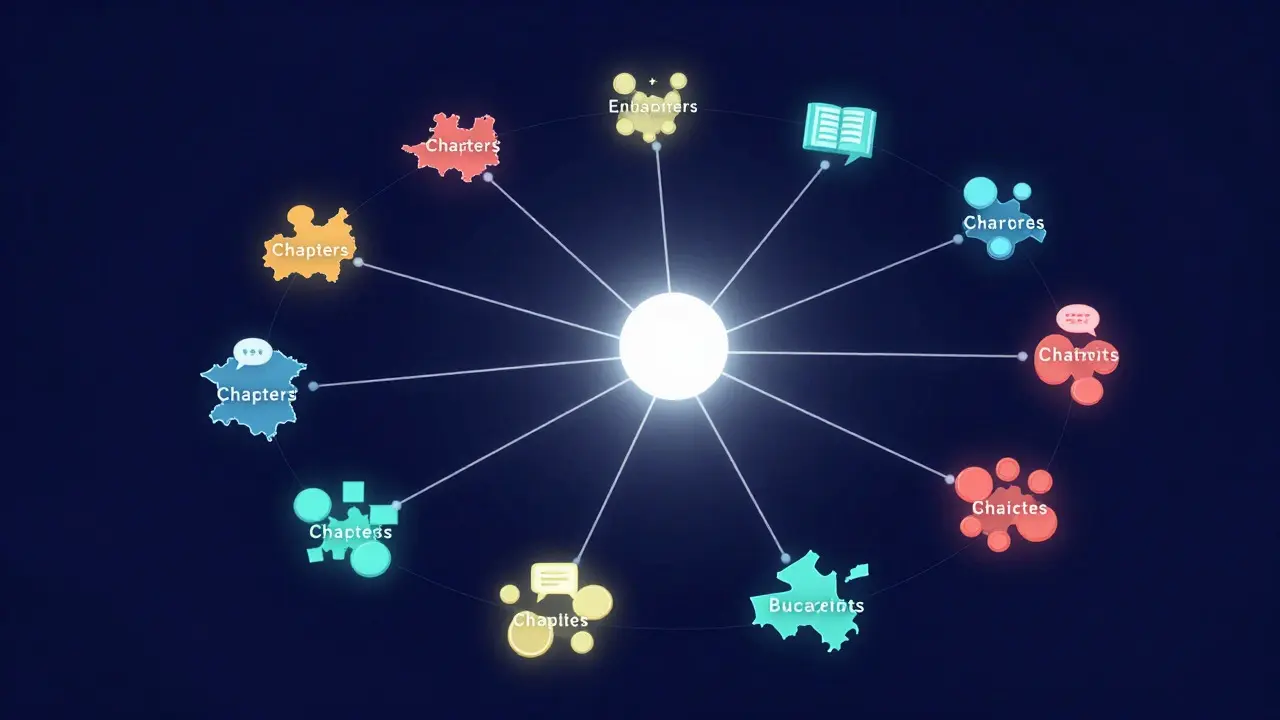
If grants are the fuel, Affiliates are legally recognized organizations that operate under the umbrella of the Wikimedia movement to promote free knowledge locally. There are three main types: Chapters, User Groups, and Thematic Organizations. A Chapter is usually country-based (like the German Wikimedia Chapter). A User Group is topic-based (like the Wiki Education Foundation). A Thematic Organization focuses on a specific area, such as women in science or indigenous languages.
These groups do the heavy lifting that the central foundation can't do alone. They host meetups, lobby governments for data privacy laws, and manage local servers. Because they are legally separate entities, they can sign contracts, hire staff, and own property in their respective countries. This legal independence is crucial for governance. It means the movement isn't just a website; it's a network of real-world organizations with local accountability.
How Governance Actually Works: The Council System
So, who makes the big decisions? For years, the Board of Trustees held almost all the power. But that model was changing rapidly. In recent years, the movement has shifted toward a multi-council structure. The key player here is the Global Council is an elected body composed of representatives from various communities that advises the Board on strategic direction. Unlike the Board, which handles legal and financial oversight, the Global Council represents the voices of the community. Its members are elected by the broader membership, including editors from around the world.
This setup creates a check-and-balance system. The Board ensures the foundation stays solvent and follows the law. The Global Council ensures the strategy aligns with what the actual users want. For example, if the community wants to change how user accounts work globally, the Global Council reviews the proposal and gives its recommendation to the Board. It’s not a direct vote on every technical detail, but it’s a powerful voice that can steer the ship.
The Role of Stewards and Bureaucrats
Governance doesn't stop at the high-level councils. On the ground, day-to-day moderation is handled by volunteers known as Stewards are experienced editors with global administrative privileges across all language versions of Wikipedia. They handle account bans, protect pages, and resolve disputes that cross language barriers. Below them are Bureaucrats, who appoint other admins on specific language Wikipedias. This hierarchy of trust is essential. Without these volunteer roles, the site would be paralyzed by vandalism or edit wars. Their power comes from peer review, not appointment by a CEO. If a Steward abuses their power, the community can remove them through a public process called a Recall Vote.
Comparing the Power Centers
To understand how these pieces fit together, it helps to look at who controls what. The table below breaks down the primary entities involved in Wikimedia governance and their specific responsibilities.
| Entity | Primary Role | Selection Method | Scope of Authority |
|---|---|---|---|
| Board of Trustees | Legal & Financial Oversight | Appointed by existing trustees | Global / Legal Entity |
| Global Council | Strategic Advice & Representation | Elected by community members | Advisory / Strategic |
| Chapters (Affiliates) | Local Promotion & Fundraising | Local General Assemblies | National / Regional |
| Stewards | Global Moderation & Account Management | Peer Review / Application | All Language Wikis |
| Grants Committee | Fund Allocation | Volunteer Appointments | Financial / Project-Based |

Why This Model Matters for Digital Commons
The Wikimedia governance model is often studied by political scientists because it solves a hard problem: how do you govern a global community without a government? Traditional corporations use top-down management. Open-source software often uses meritocracy based on code contributions. Wikimedia blends both with a democratic layer. The use of Consensus Building is a decision-making method that seeks broad agreement rather than simple majority voting is central to this culture. Before a major policy change happens, there are months of discussion on talk pages. This slows things down, yes. But it prevents hasty decisions that could alienate half the user base.
Critics argue that the system is too slow and dominated by English-speaking editors. That’s a valid point. However, the rise of the Global Council and the expansion of grants to non-English communities are direct responses to that criticism. The goal is to make the governance as diverse as the content itself. When a contributor from Brazil or India sees that their voice can influence the direction of the project, they are more likely to stay engaged. That engagement is what keeps the encyclopedia accurate and up-to-date.
Practical Implications for Contributors
If you’re an active editor, you don’t need to be a lawyer to participate in governance. Here is how you can get involved:
- Join a User Group: Find a local chapter or thematic group near you. Attend their meetings. This is the easiest way to understand the affiliate side of things.
- Apply for a Grant: Even a small grant application forces you to articulate your project clearly. It puts you in touch with the grants committee and other applicants.
- Vote in Elections: Every year, elections are held for the Board and the Global Council. Your vote, even if you’re a casual editor, counts. Turnout is low, so your participation matters more than you think.
- Participate in Discussions: Major policy changes are proposed on meta.wikimedia.org. Reading these threads gives you insight into what the stewards and bureaucrats are debating.
Future Challenges and Adaptations
The landscape is shifting. As AI tools become more common, questions arise about how to govern automated edits. Who is responsible when an AI bot messes up an article? Currently, the burden falls on human stewards, but the scale might outstrip their capacity. Additionally, the relationship between the Foundation and Affiliates is evolving. Some large chapters are pushing for more autonomy in fundraising and spending. This tension between centralization and decentralization will define the next decade of Wikimedia governance. The success of the model depends on whether it can adapt to these new pressures without losing its core value of openness.
Who elects the Wikimedia Board of Trustees?
The Board of Trustees is currently selected through a mixed process. Some members are appointed by the outgoing board, while others are elected by the community through a structured nomination and voting process. The exact composition has evolved to include more community-elected seats to ensure broader representation.
What is the difference between a Chapter and a User Group?
A Chapter is typically a geographic organization, such as the UK or Japan Chapter, focused on promoting Wikimedia projects in a specific region. A User Group is thematic, focusing on a specific interest like education, technology, or language preservation, regardless of geography. Both are affiliates but serve different organizational purposes.
Can anyone apply for a Wikimedia Grant?
Generally, yes, provided you are a registered user of a Wikimedia project and your project aligns with the Foundation's mission. However, there are eligibility criteria regarding residency and tax status, especially for larger grants. Individual grants are easier to obtain than large institutional ones.
Do Stewards have the power to delete articles?
Stewards have global administrative powers, which include protecting pages and banning users. While they can intervene in deletion discussions, the final decision to delete an article is usually made by the local community of that specific language Wikipedia through a consensus process, though Stewards can enforce stability during disputes.
How does the Global Council differ from the Board?
The Board of Trustees has legal fiduciary responsibility for the Foundation's assets and compliance. The Global Council is an advisory body that represents the diverse communities within the movement. The Council advises the Board on strategy, but the Board retains final decision-making authority on legal and financial matters.