You might think Wikipedia is one giant, uniform encyclopedia. But scroll through the German Wikipedia and then the Japanese Wikipedia, and you’ll notice something strange. The tone changes. The sources cited change. Even what counts as a "reliable source" shifts depending on where you are in the world. This isn’t just translation lag; it’s deep-seated cultural programming baked into how people write, argue, and edit.
If you’ve ever wondered why an article about history looks so different in English versus French, or why deletion debates get heated in some languages but stay polite in others, you’re touching on cultural dimensions. These are measurable traits of societies-like how much they value individual achievement versus group harmony-that directly shape online behavior. Understanding these differences helps explain the persistent global knowledge gap and why simply translating articles doesn’t fix bias.
The Myth of a Neutral Global Voice
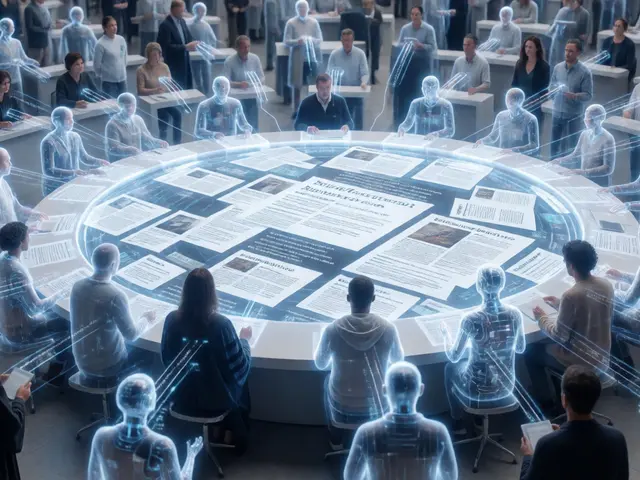
We tend to assume that if we strip away language barriers, truth remains constant. But research suggests that culture acts like a filter for what we consider important, true, or worth documenting. When a user from a high-context culture (where communication relies heavily on implicit understanding) edits an article alongside someone from a low-context culture (where explicit clarity is prized), friction is inevitable.
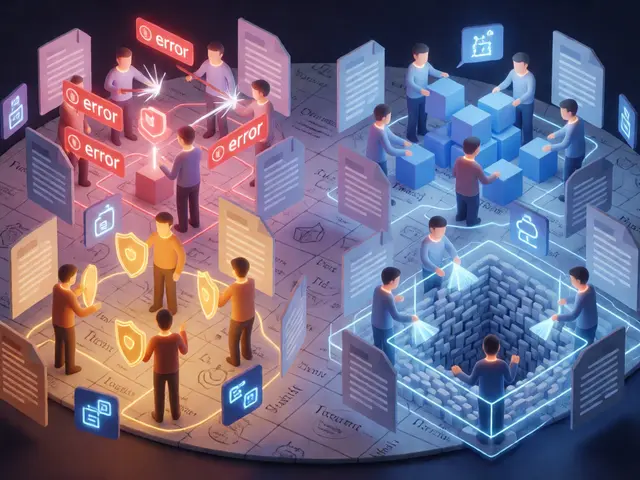
This isn’t about right or wrong. It’s about different operating systems for knowledge. For instance, in many East Asian Wikipedia communities, consensus is often reached through quiet negotiation and seniority respect before any public edit happens. In contrast, English-language Wikipedia thrives on adversarial debate. You see this in the talk pages. One side wants to resolve issues privately or via established hierarchy; the other wants to air every disagreement publicly until the "best" argument wins.
Hofstede’s Lens on Editing Behavior
To make sense of this chaos, sociologists often use Geert Hofstede’s Cultural Dimensions Theory. While originally designed for corporate management, it maps surprisingly well onto wiki dynamics. Let’s look at two key dimensions: Power Distance and Individualism vs. Collectivism.
Power Distance measures how comfortable a society is with unequal power distribution. In high-power-distance cultures (common in parts of Latin America, Asia, and the Middle East), editors may defer to experienced users or administrators without challenge. Newcomers might hesitate to correct an error made by a long-time contributor because questioning authority feels rude. Conversely, in low-power-distance cultures (like Scandinavia or Germany), editors feel empowered to challenge anyone, regardless of tenure. If you see a new account reverting an admin’s edit instantly, that’s likely low power distance in action.
Individualism vs. Collectivism dictates whether people prioritize personal expression or group cohesion. Individualistic cultures (US, UK, Australia) encourage strong, opinionated editing. You’ll see more aggressive revert wars and distinct authorial voices. Collectivist cultures (Japan, South Korea, many African nations) prioritize the group’s agreement. Edits here are often smoother, less confrontational, but potentially slower because reaching that unified consensus takes time.
| Cultural Dimension | High Score Characteristics | Low Score Characteristics | Typical Wiki Behavior |
|---|---|---|---|
| Power Distance | Acceptance of hierarchy; deference to experts/admins. | Questioning authority; egalitarian structure. | High: Fewer challenges to admins. Low: Frequent reverts of senior edits. |
| Individualism | Personal responsibility; direct communication. | Group loyalty; indirect communication. | High: Aggressive debate. Low: Consensus-building, quieter talk pages. |
| Uncertainty Avoidance | Strict rules; need for certainty. | Comfort with ambiguity; flexible rules. | High: Rigid adherence to guidelines. Low: Pragmatic rule-bending. |
Language-Specific Case Studies
Let’s move from theory to reality. Look at the French Wikipedia. France scores relatively high on Uncertainty Avoidance. This shows up in their strict enforcement of style guides and sourcing rules. French editors are famously rigorous about citations. They treat Wikipedia almost like a scholarly journal, demanding precise references. This contrasts sharply with the English Wikipedia, which, while also strict, allows for more interpretive flexibility in what constitutes "notability."
Now compare that to the Russian Wikipedia. Russia has a complex relationship with historical narratives. Editors there often engage in intense ideological battles over historical events, reflecting a society where history is deeply politicized. Unlike the German community, which tends to focus on technical accuracy and neutrality, Russian discussions can become emotionally charged and politically nuanced. The norm isn’t just "cite a source," but "cite a source that aligns with accepted national historiography," unless challenged effectively.
In the Chinese Wikipedia, censorship plays a unique role. Due to external constraints, certain topics are handled with extreme caution. Editors develop unwritten codes about what can be said explicitly and what must be implied. This creates a high-context editing environment where reading between the lines is essential. A seemingly neutral edit might actually be a subtle political statement understood only by those within the cultural loop.
The Gender and Demographic Gap
Culture also intersects with demographics. Globally, Wikipedia editors skew heavily male-estimates suggest around 80-90% across most language editions. However, the reasons for this gap vary culturally. In some Western communities, the issue is framed as a lack of diversity in tech spaces. In others, particularly in conservative societies, social norms restrict women’s participation in public online debates. Women may contribute significantly to content creation offline but hesitate to sign their names to controversial edits online due to fear of harassment or social stigma.
Furthermore, age demographics differ. In countries with younger populations and rapid digital adoption (like India or Nigeria), you see a surge of young, energetic editors who challenge traditional encyclopedic styles. They bring slang, pop culture references, and a faster pace. In aging European societies, the core editing community is older, more academic, and resistant to rapid stylistic changes. This generational clash often mirrors broader societal tensions about tradition versus modernity.
Why Translation Fails to Bridge the Gap
A common misconception is that machine translation or human translation solves these cultural disparities. It doesn’t. Translating text moves words, not context. If an English article assumes a reader understands the US Constitution’s separation of powers, translating it literally into Japanese might confuse readers who operate under a parliamentary system. The cultural assumption embedded in the source text gets lost or misunderstood.
Moreover, systemic bias persists because the "default" worldview on Wikipedia is largely Anglo-American. Concepts like "democracy" or "human rights" carry specific Western baggage. When translated into Arabic or Swahili, these terms don’t always map neatly onto local philosophical traditions. Editors in non-English wikis often have to rewrite concepts entirely rather than translate them, leading to richer but divergent articles.
Practical Tips for Cross-Cultural Contributors
If you want to contribute effectively across borders, you need cultural agility. Here is what works:
- Read the Talk Pages First: Before editing, spend ten minutes reading recent discussions. This reveals the current mood and unspoken rules of that specific community.
- Adjust Your Tone: If you are entering a high-context, collectivist wiki, soften your language. Use phrases like "Perhaps we could consider..." instead of "This is wrong."
- Respect Local Sourcing: Don’t dismiss local newspapers or blogs as "unreliable" just because they aren’t The New York Times. Understand what sources hold credibility in that region.
- Avoid Ethnocentric Assumptions: Ask yourself: Am I assuming my country’s definition of "notable" applies globally? Often, it doesn’t.
The Future of Global Knowledge
As AI tools become better at translation, will cultural differences disappear? Probably not. AI can translate words, but it struggles with nuance, irony, and cultural subtext. We are moving toward a model where Wikipedia isn’t one book, but a network of interconnected, culturally distinct encyclopedias. Recognizing this helps us appreciate the diversity of human knowledge rather than trying to flatten it into a single, Western-centric mold.
The goal shouldn’t be to make all Wikipedias identical. It should be to foster mutual respect between them. When an editor from Brazil cites a local sociologist, and an editor from Sweden cites a Scandinavian study, both add value. The richness comes from the variation, not despite it.
Do all Wikipedia language editions follow the same policies?
No. While core principles like Neutral Point of View (NPOV) exist globally, each language edition has its own local policies and interpretations. For example, the German Wikipedia has stricter rules on biography length than the English version. Local communities self-govern based on their cultural norms and legal environments.
Which language has the most active editors relative to population?
Smaller, highly educated communities often punch above their weight. Languages like Dutch, Swedish, and Czech have very high rates of per-capita engagement compared to larger populations like Chinese or Hindi, where internet access and digital literacy vary widely across regions.
How does religion influence editing norms?
In religiously homogeneous societies, edits related to faith can be highly sensitive. Disputes over theological details may trigger strong emotional responses. In secular societies, religion is often treated as a historical or sociological topic, allowing for more detached analysis. This affects how quickly conflicts escalate.
Can cultural bias be removed from Wikipedia?
It cannot be fully removed, only mitigated. Bias is inherent in any selection of facts. The solution is transparency and diverse representation. By acknowledging that every perspective is partial, editors can work toward a mosaic of truths rather than a single, flawed objective narrative.
What is the biggest barrier for new editors in non-Western wikis?
Often, it is the technical learning curve combined with social intimidation. In high power-distance cultures, newcomers may feel unable to ask questions without losing face. In low-resource languages, the lack of localized help documentation exacerbates this, making the platform feel exclusive to tech-savvy elites.