
Ever tried to read a Wikipedia article about a major tech merger or a central bank's interest rate decision, only to feel like the text is arguing one side? You are not alone. In Economic and Business Topics on Wikipedia, achieving true neutrality is often harder than in history or science. This is because economics involves values, predictions, and competing theories that don't always have a single "fact" to settle them. The goal of this guide is to help you understand how editors handle these tricky subjects, what counts as biased language, and how to spot when an article drifts away from a neutral point of view (NPOV).
The Core Challenge: Facts vs. Interpretations
At its heart, Wikipedia Neutrality means presenting all significant points of view fairly, with due weight given to each. In hard sciences, if two studies contradict each other, we usually look at sample size, methodology, and peer review to decide which is more reliable. In economics, however, the "contradiction" is often theoretical. For example, does a minimum wage increase cause job losses? Some economists say yes, citing labor supply curves; others say no, citing market power dynamics. Neither is "wrong"-they just start from different assumptions.
This creates a specific type of bias risk known as Interpretive Bias. It happens when an editor presents one school of thought as the definitive truth rather than one perspective among many. To combat this, Wikipedia relies heavily on consensus building and strict sourcing rules. If an article claims that "inflation is always bad," it needs a source that supports that absolute statement. If most mainstream economists agree that moderate inflation is manageable but high inflation is damaging, the article should reflect that nuance.
Common Pitfalls in Business Articles
When editing or reading articles about companies, markets, or financial instruments, watch out for three common traps. First is Promotional Language. Words like "revolutionary," "groundbreaking," or "flawless" are red flags. They signal opinion, not fact. Second is Recency Bias, where recent news events overshadow long-term trends. A stock price drop today shouldn't define a company's entire history unless that drop fundamentally changed the firm's trajectory. Third is Selection Bias, where only positive press releases are cited while negative audits or lawsuits are ignored.
Consider the case of a fictional tech company, "TechNova." If an article cites five sources praising TechNova's AI strategy but ignores two credible reports questioning its data privacy practices, the article lacks balance. Neutrality doesn't mean giving equal space to every minor opinion-it means giving proportional weight to views held by significant experts or groups. If 90% of analysts agree on one point, the article should reflect that majority view clearly, while still noting the dissenting minority if it is notable.

The Role of Reliable Sources
You cannot judge neutrality without looking at the sources. In economics and business, Reliable Sources are the backbone of NPOV. What counts as reliable? Academic journals like the American Economic Review, major financial news outlets like Bloomberg or The Wall Street Journal, and official government reports from agencies like the U.S. Bureau of Labor Statistics. These sources undergo their own editorial processes, making them more trustworthy than blogs or corporate press releases.
However, even reliable sources can be biased. A newspaper might have a political lean that influences how it frames a tax policy change. Editors must recognize this. If a left-leaning paper criticizes a deregulation move and a right-leaning paper praises it, the Wikipedia article should synthesize both viewpoints rather than picking one. This process is called Synthesis. It is the skill of combining multiple sources into a coherent, neutral narrative without letting any single source dominate the tone.
How to Evaluate Balance Yourself
Want to check if an article is neutral? Use this simple checklist. First, read the lede (the first paragraph). Does it state facts or opinions? Second, scan the citations. Are they diverse in origin? If all sources are from one country or one political spectrum, the article might be skewed. Third, look for loaded adjectives. Replace words like "aggressive" with "rapid" or "controversial" with "debated" and see if the meaning changes. Finally, check the talk page. Often, disputes over neutrality are documented there, showing you exactly where editors disagreed and how they resolved it.
It is also helpful to compare the article with similar ones. If the article on "Monopoly" is dry and factual, but the article on a specific monopolistic corporation is full of emotional language, the latter likely has issues. Consistency across related topics is a key indicator of good editorial practice.
| Aspect | Neutral Approach | Biased Approach |
|---|---|---|
| Company Performance | "Revenue increased by 15% year-over-year." | "The company crushed expectations with explosive growth." |
| Economic Policy | "Critics argue the tax cut reduces public services; supporters claim it stimulates investment." | "The tax cut was a disastrous mistake that gutted public funds." |
| Market Trends | "Analysts predict a slowdown in Q3 due to supply chain disruptions." | "The market is doomed to fail because of inevitable supply chain collapse." |
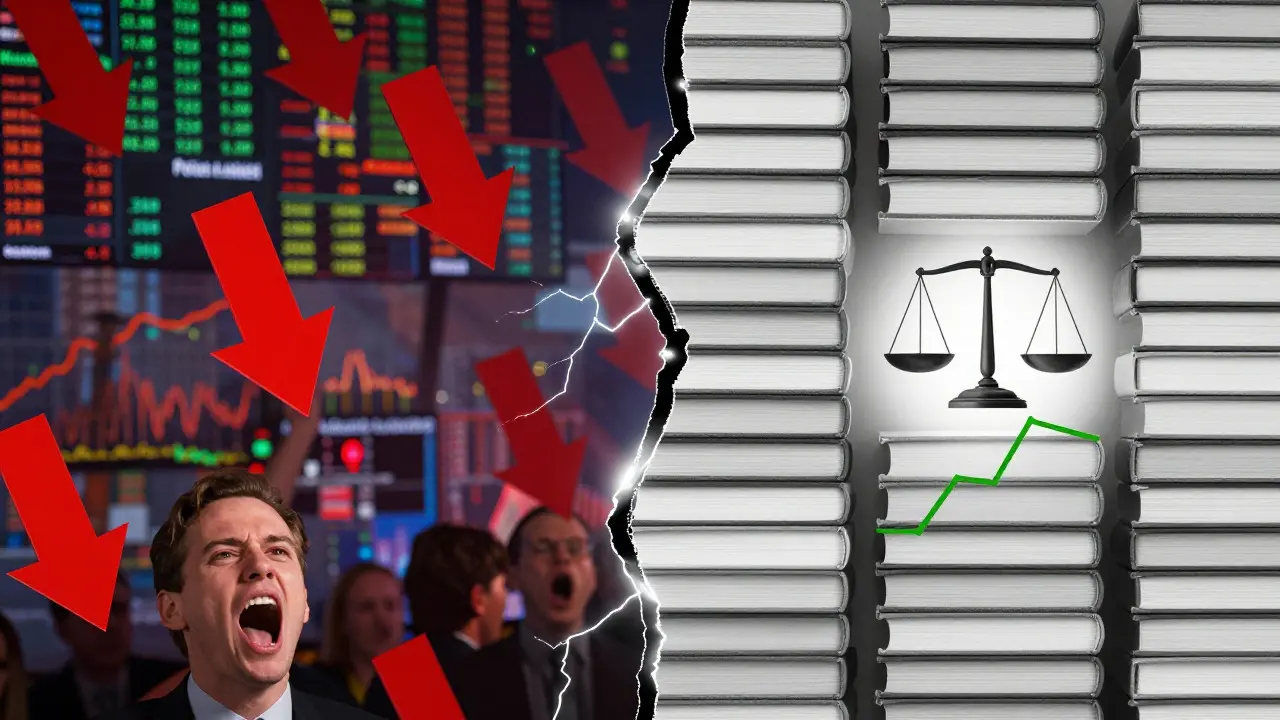
Handling Controversial Topics
Some economic topics are inherently controversial, such as universal basic income, cryptocurrency regulation, or global trade wars. Here, neutrality requires acknowledging the debate explicitly. Instead of trying to find a middle ground that satisfies no one, the article should present the arguments for and against, along with the evidence supporting each side. Use phrases like "Proponents argue..." and "Opponents contend..." to attribute claims to their holders. This technique, known as Attribution, keeps the encyclopedic voice objective while allowing readers to form their own judgments.
Also, be mindful of Structural Bias. Sometimes, the structure of an article itself creates bias. For example, if an article on "Free Trade" spends 80% of its word count on benefits and only 20% on drawbacks, the structure implies a preference. Balancing section lengths and ensuring that counter-arguments have their own dedicated sections helps mitigate this effect.
Best Practices for Editors and Readers
If you edit Wikipedia, follow these best practices to maintain neutrality. Always cite primary sources for data points (like GDP figures) and secondary sources for interpretations. Avoid using your personal blog or social media posts as references. When in doubt, ask for feedback on the talk page before making major changes. For readers, remember that Wikipedia is a starting point, not a final authority. Cross-reference key claims with other reputable sources, especially for high-stakes decisions like investments or policy analysis.
Finally, keep in mind that neutrality is a continuous process. As new data emerges and societal values shift, articles need updating. An article that was neutral in 2020 might become outdated or biased by 2026 if it fails to reflect new consensus or emerging risks. Staying informed and engaging with the community helps ensure that the encyclopedia remains a trusted resource for understanding the complex world of economics and business.
What is the difference between bias and neutrality on Wikipedia?
Bias occurs when an article favors one viewpoint, group, or outcome without fair representation of alternatives. Neutrality, or NPOV, requires presenting all significant points of view fairly, with weight given based on the prominence of those views in reliable sources. It is not about being "middle-of-the-road" but about accuracy and proportionality.
Why are economic topics harder to make neutral than scientific ones?
Economics deals with human behavior, policy choices, and value judgments, which are often debated and lack a single empirical answer. Science typically aims to describe natural phenomena through reproducible experiments, whereas economics often predicts outcomes based on models that can vary significantly depending on assumptions.
How do I know if a source is reliable for a business article?
Look for sources with established editorial standards, such as major newspapers, academic journals, or government publications. Check if the author has expertise in the field and if the outlet has a track record of correcting errors. Avoid promotional content, personal blogs, and sources with obvious conflicts of interest.
Does neutrality mean giving equal space to all opinions?
No. Neutrality requires "due weight." If 95% of experts agree on a fact, the article should reflect that consensus strongly. Minority views should be included if they are notable, but they do not get equal space to the majority view. Pseudoscience or fringe theories generally do not meet the threshold for inclusion unless specifically discussing the controversy itself.
What should I do if I find bias in an article?
First, check the citations to see if the bias comes from the sources or the editor's synthesis. Then, discuss your concerns on the article's talk page, proposing specific edits with better-sourced, neutral language. Be polite and constructive, as collaborative editing is key to resolving disputes on Wikipedia.