Imagine trying to organize a party with 300 million guests across 195 countries, where nobody has a boss, and the only rule is that everyone agrees on what to eat. That is essentially how Wikipedia is a free online encyclopedia created and edited by volunteers around the world, launched in 2001 by Jimmy Wales and Larry Sanger. Yet, despite this chaotic potential, it successfully executes massive, structured movements like Art+Feminism is a global campaign aimed at reducing gender gaps in knowledge representation through editing and event hosting. How does a project without a central command center pull off coordinated global action? The answer lies not in top-down management, but in a unique blend of local autonomy, shared digital infrastructure, and a culture of consensus-building that turns individual editors into a synchronized global force.
The Governance Model: No Bosses, Just Consensus
Traditional organizations rely on hierarchy. You have managers, directors, and CEOs who make decisions. Wikipedia flips this model on its head. It operates on a principle known as Consensus-based decision making is a group decision-making process that seeks agreement among all members. There is no single leader for the entire project. Instead, governance is distributed. The Wikimedia Foundation provides legal protection and technical infrastructure, while the actual content decisions are made by the community of editors through discussions on talk pages and formal votes on specific proposals.
This structure creates a challenge for large-scale campaigns. If you want to start a global movement, you can't just email the CEO. You have to convince thousands of independent volunteers that the cause matters. For initiatives like Art+Feminism, this means building a coalition of interest groups, student chapters, and local user groups. The "governance" here isn't about enforcing rules; it's about aligning incentives. Editors join because they care about the topic, not because they are paid or ordered to do so. This voluntary alignment is the engine that drives participation.
Anatomy of a Global Campaign: The Art+Feminism Example
Art+Feminism started in 2014 as a small edit-a-thon focused on adding women artists to Wikipedia. Today, it is one of the largest recurring events in the Wikimedia universe. But how does it scale from a few dozen participants to hundreds of events in dozens of countries simultaneously?
The key is modularization. The campaign doesn't try to run one giant global event. Instead, it provides a toolkit. Central organizers create templates, guidelines, and promotional materials. Local hosts then adapt these tools to their specific context. A university in Berlin might host an evening session after a lecture, while a library in New York might hold a weekend workshop. Each local event is self-contained, meaning if one fails, it doesn't crash the whole system. This decentralization allows for rapid experimentation and adaptation to local cultures and languages.
The Role of Digital Infrastructure
You cannot coordinate a global volunteer army without robust tools. Wikipedia’s success relies heavily on its underlying technology stack, which includes MediaWiki is the open-source web application used to power Wikipedia and other wikis. MediaWiki handles the heavy lifting of version control, user accounts, and discussion threads. But for campaigns, additional layers are critical.
- Mailing Lists and Mailing Archives: Before social media dominated, mailing lists were the primary way for editors to discuss changes. They remain vital for serious governance debates and campaign planning.
- Wikimedia Commons: This repository of freely usable media files is crucial for campaigns like Art+Feminism. Many edits require uploading images of artworks. Coordinating these uploads requires understanding copyright laws and file formats, a task simplified by centralized guidance.
- Meta-Wiki: Often called the "meta-site," this platform hosts cross-project discussions. It is where global campaigns announce themselves, share best practices, and recruit international partners. It acts as the headquarters for meta-level coordination.
Building Community: From Lone Editors to Chapters
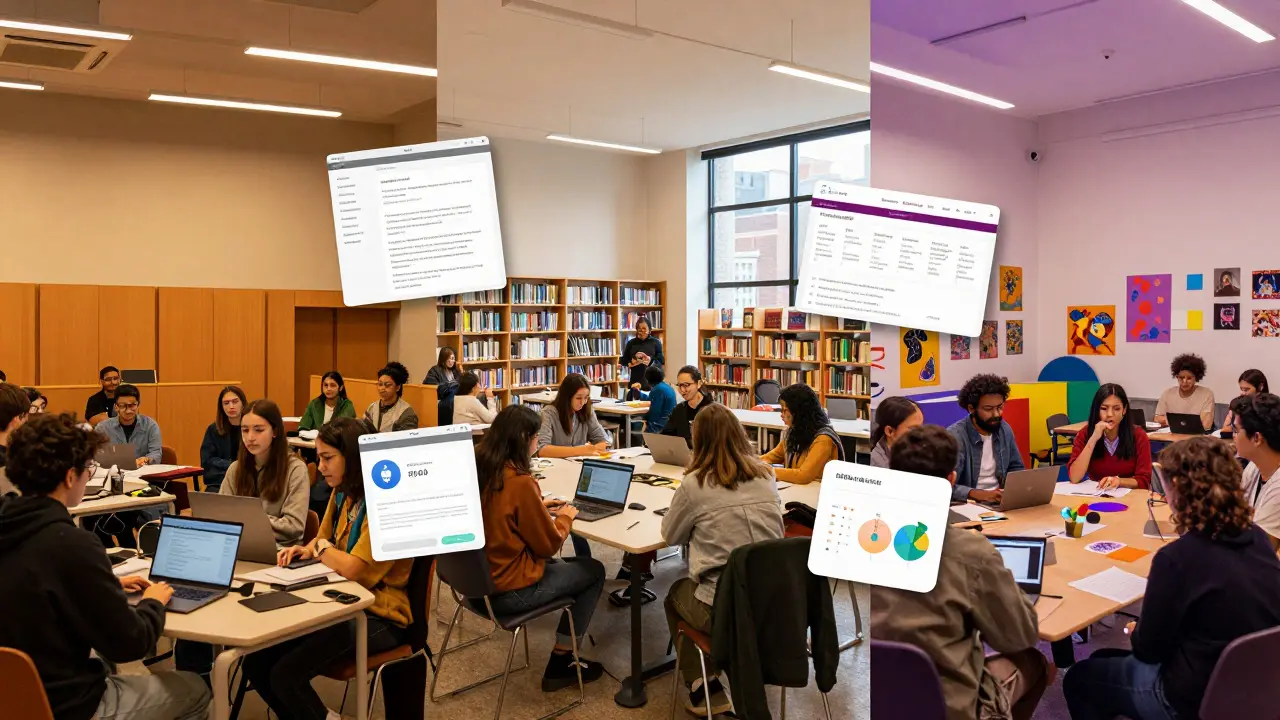
Individual editors are powerful, but organized communities are unstoppable. Over the years, Wikipedia has seen the rise of User Groups are organized communities of Wikipedians who share common interests or goals. These are informal, non-profit associations that operate under the umbrella of the Wikimedia Foundation. Examples include WikiProject Women in Red (focused on creating articles about women) and local national chapters like Wikimedian User Group Germany.
These groups provide the human glue for campaigns. They organize meetups, handle logistics, and mentor new editors. When Art+Feminism launches a new year's push, it doesn't start from zero. It taps into the existing networks of these user groups. A coordinator in Madrid knows exactly who to contact to get the word out to Spanish-speaking editors. This pre-existing social capital reduces the friction of mobilizing people, turning a theoretical call to action into a practical reality.
Challenges and Pitfalls in Coordination
Despite its successes, coordinating global campaigns on Wikipedia is not without pain points. The most significant challenge is cultural translation. What works in the United States may not resonate in Japan or Brazil. Guidelines written in English often need nuanced adaptation. Misunderstandings can arise when local norms clash with global expectations, leading to edit wars or frustration.
Another hurdle is burnout. Since there is no salary, coordinators rely on passion. Managing the workload of organizing multiple events across time zones can be exhausting. To mitigate this, successful campaigns rotate leadership roles and encourage shared responsibility. They also focus on low-barrier entry points, such as simple text additions, to keep newcomers engaged without overwhelming them with complex citation requirements.
Best Practices for Future Initiatives
If you want to launch your own global campaign on Wikipedia, learn from the playbook of established efforts. First, start small. Test your concept in one language or region before scaling globally. Second, leverage existing structures. Don't build a new forum; use Meta-Wiki and existing mailing lists. Third, invest in documentation. Clear, concise guides reduce the cognitive load on new participants. Finally, celebrate wins publicly. Highlighting successful edits and active contributors reinforces the value of the work and attracts more allies.
| Method | Strengths | Weaknesses | Best For |
|---|---|---|---|
| Centralized Announcements | High visibility, clear message | One-way communication, limited feedback | Launch phases, major milestones |
| Local User Groups | High trust, contextual adaptation | Slow to form, geographically limited | Sustained engagement, regional events |
| Meta-Wiki Discussions | Permanent record, cross-project reach | Can be slow, bureaucratic tone | Policymaking, long-term strategy |
Frequently Asked Questions
Who actually runs Wikipedia?
No single person runs Wikipedia. The Wikimedia Foundation provides legal and technical support, but content decisions are made by the community of editors through consensus. Specific projects or campaigns may have volunteer coordinators, but they have no official authority over the encyclopedia itself.
What is the difference between a User Group and a Chapter?
A Chapter is a legally recognized non-profit organization affiliated with the Wikimedia Foundation, usually operating in a specific country or region. A User Group is a less formal association of editors with shared interests, which may be thematic (like art) or geographic. Both play crucial roles in organizing events and supporting editors.
How do I start a global campaign on Wikipedia?
Start by defining a clear, achievable goal. Identify existing user groups or projects related to your topic. Use Meta-Wiki to propose your idea and gather initial support. Create a dedicated page with resources and guidelines. Finally, invite local hosts to take ownership of regional aspects of the campaign.
Why is consensus important in Wikipedia governance?
Consensus ensures that decisions reflect the broadest possible agreement among volunteers. This reduces conflict and increases buy-in from the community. While not always unanimous, consensus-seeking encourages compromise and dialogue, which is essential for maintaining harmony in a large, diverse volunteer base.
What role does MediaWiki play in campaign coordination?
MediaWiki provides the core platform for editing and discussion. Its features like talk pages, user pages, and revision history allow editors to collaborate transparently. Extensions and templates built on MediaWiki further facilitate structured data collection and event tracking for campaigns.