
You have likely stumbled upon a Wikipedia article about something that sounds suspiciously like magic. Maybe it is Homeopathy, which claims water remembers substances even after they are gone, or perhaps Flat Earth theory, which insists our planet looks like a frisbee. These topics sit in the awkward middle ground of what editors call fringe science. They are not mainstream consensus, but they are not completely made up either. The real challenge for any editor is not just deleting them out of spite, but figuring out if they deserve a place in an encyclopedia at all.
The core issue here isn't whether the science is "good." It's whether the topic meets Wikipedia's strict standards for inclusion. If you try to write about fringe theories without understanding the rules, your work will get deleted faster than you can hit save. This guide breaks down how to handle these tricky subjects by focusing on two pillars: notability and sourcing.
Understanding Fringe Science vs. Pseudoscience
Before you type a single word, you need to know what you are dealing with. Editors often use terms loosely, but there is a distinct difference between fringe science and pseudoscience. Pseudoscience refers to beliefs presented as scientific but lacking empirical support, such as astrology or crystal healing. These fields often ignore the scientific method entirely.
Fringe science, on the other hand, exists on the edges of established disciplines. Think of cold fusion or certain interpretations of quantum mechanics used to explain consciousness. These areas might have some peer-reviewed papers, but they haven't achieved broad acceptance within the scientific community. Why does this distinction matter? Because Wikipedia treats them differently. A well-sourced article on a fringe theory can exist if it documents the debate itself. An article on pure pseudoscience usually needs to prove it has had a significant cultural impact to survive.
The Notability Trap: Does It Matter?
Wikipedia is not a dictionary, and it certainly isn't a repository for every idea someone has ever had. The General Notability Guideline (GNG) states that a topic must be covered significantly by multiple independent reliable sources. For fringe science, this is where most articles fail.
If you are writing about a new theory proposed by a single researcher, ask yourself: Has anyone else written about it? Not their blog, not their press release, but actual journalism or academic review. If the only sources are from people who already agree with the theory, you have a circular reference problem. Wikipedia requires independence. A source is independent if it was created by someone with no financial or professional stake in the outcome.
- Significant Coverage: The source must discuss the topic in depth, not just mention it in passing.
- Multiple Sources: One newspaper article is rarely enough. You need a pattern of coverage.
- Independence: Avoid self-published books or websites run by the proponents themselves.
Consider the case of Intelligent Design. It survived deletion debates because major news outlets like The New York Times and scientific journals covered it extensively during the legal battles of the early 2000s. Contrast this with a random YouTube channel claiming aliens built the pyramids. Unless that channel sparked a viral news cycle covered by reputable media, it lacks notability.
Sourcing: Finding Reliable Evidence
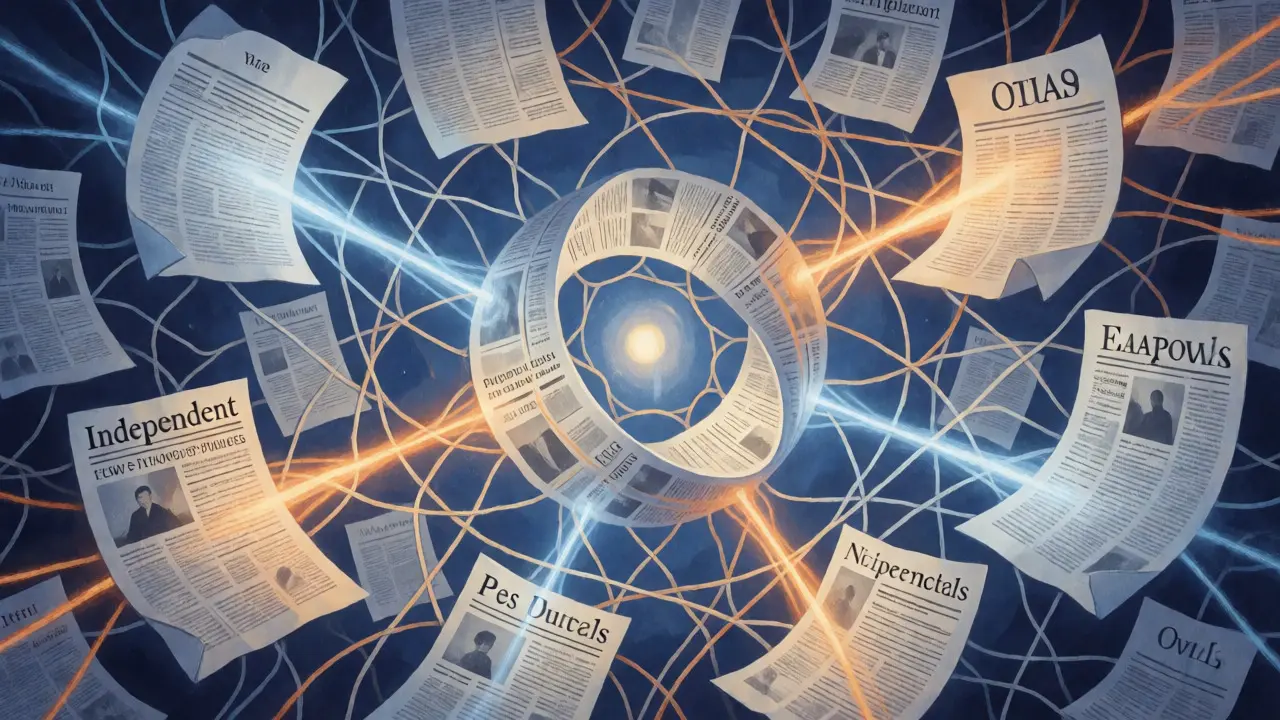
Finding sources for fringe topics is harder than finding them for standard history or science. Mainstream textbooks often ignore fringe ideas entirely. So, where do you look? You need to hunt for secondary sources that analyze the primary claims.
A primary source might be a paper published in a low-impact journal supporting a fringe claim. A secondary source would be a review article in a high-impact journal critiquing that paper, or a book by a historian of science discussing why the theory failed to gain traction. Wikipedia prefers secondary sources because they provide context and evaluation.
| Source Type | Reliability Rating | Usage Context |
|---|---|---|
| Peer-reviewed Scientific Journals | High | Best for establishing scientific consensus or lack thereof. |
| Mainstream News Outlets (NYT, BBC) | Medium-High | Good for demonstrating public interest and notability. |
| Specialist Magazines (Scientific American) | High | Excellent for nuanced explanations of scientific disputes. |
| Self-Published Books | Low | Use only to describe the proponent's own views, never for facts. |
| Blogs and Forums | Very Low | Rarely acceptable unless part of a larger documented movement. |
When you cite a source, make sure it actually supports the claim you are making. Editors often see citations that say "See Smith et al. 2010" when the paper actually refutes the claim. Always read the abstract, and if possible, the conclusion. If the paper says "more research is needed," do not cite it as proof that the theory is true.
Navigating Bias and Neutrality
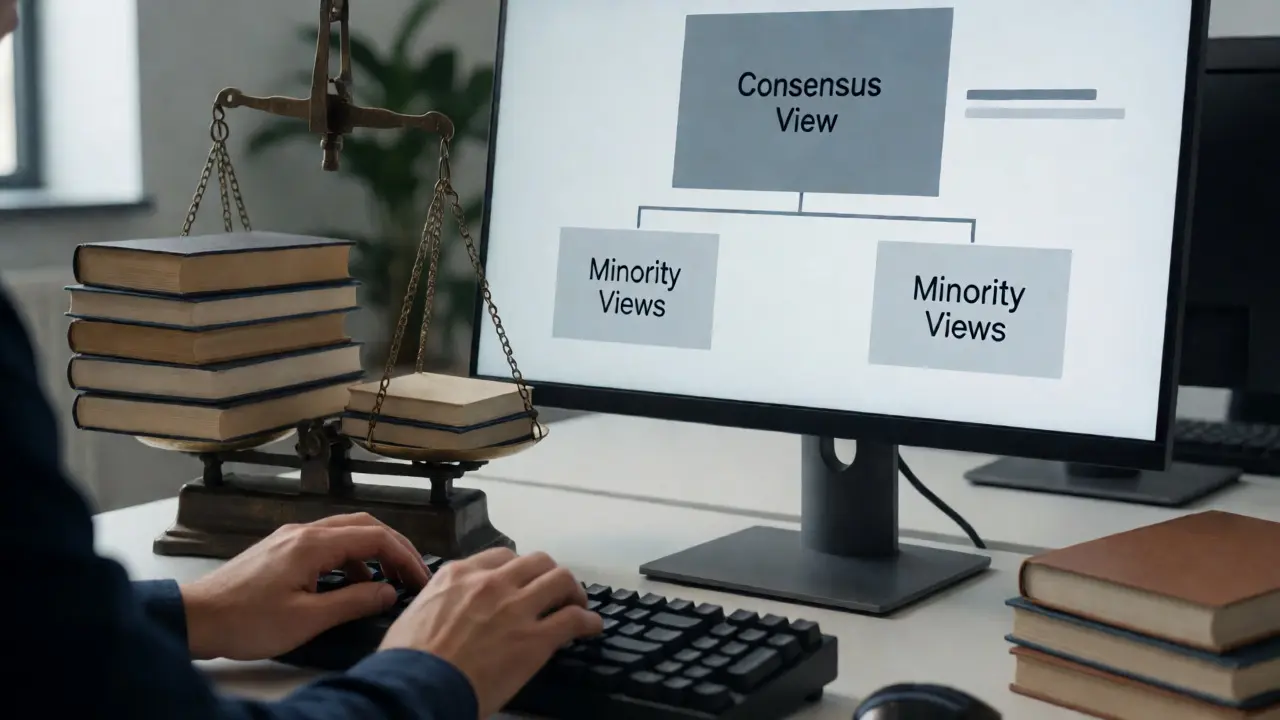
Writing about controversial topics triggers emotional responses. Proponents want to defend their ideas; skeptics want to debunk them. Both sides can fall into bias neutrality violations. The goal is to represent the majority view clearly while acknowledging minority views fairly.
Do not let the article become a battleground. Use neutral language. Instead of saying "The absurd theory of flat earth," say "Flat earth theory posits that..." Let the sources do the arguing. If a prominent scientist calls a theory "pseudoscientific," quote them directly with attribution. Do not insert your own opinion words like "bogus" or "valid" unless they are direct quotes from reliable sources.
Structure matters too. Start the article by stating the mainstream scientific consensus. Then, introduce the fringe perspective. Explain why it differs from consensus. Finally, detail the reception of the theory-has it been tested? Has it been rejected? This structure prevents the article from looking like a promotional brochure for the fringe idea.
Common Pitfalls to Avoid
Even experienced editors trip up on fringe science articles. Here are the most common mistakes that lead to deletion or long-term maintenance templates.
- Original Research: Connecting dots that aren't connected in sources. If Source A talks about gravity and Source B talks about apples, don't conclude Source A proves Source B unless a third source says so.
- Weight Imbalance: Giving equal space to a theory supported by one obscure paper and a theory supported by thousands of studies. Wikipedia uses due weight. Mainstream views get more space.
- Circular Reporting: Citing a news article that cites a press release from the fringe group. This creates a loop with no external verification.
- Undue Emphasis on Controversy: Making the article seem like the scientific community is in fierce debate when they are actually indifferent.
Remember, absence of evidence is not evidence of absence, but it is grounds for deletion on Wikipedia. If you cannot find reliable sources that treat the topic seriously, the topic likely does not belong here yet.
Practical Steps for Editors
If you are tasked with cleaning up or creating a fringe science article, follow this workflow. First, search for existing discussions. Someone may have already debated the notability. Second, gather sources before you write. Build a bibliography of independent, reliable references. Third, draft the article using a neutral tone, prioritizing the consensus view. Fourth, add citations meticulously. Fifth, request feedback through talk pages if you are unsure.
Tools like Citation Hunt can help you find missing sources, but be careful. Automated tools often suggest predatory journals. Always verify the reputation of the publishing body. A quick check against databases like Scopus or Web of Science can reveal if a journal is indexed and respected.
Ultimately, handling fringe science on Wikipedia is an exercise in intellectual honesty. You are documenting human belief systems, not validating them. By sticking to rigorous sourcing and clear notability criteria, you ensure the encyclopedia remains a trusted resource rather than a collection of unverified claims.
Can I write about my own fringe theory on Wikipedia?
Generally, no. Writing about your own work violates the conflict of interest guidelines. Furthermore, your own publications are considered primary sources and lack the independence required for notability. You need third-party sources to establish that others are taking your theory seriously.
What counts as a reliable source for pseudoscience?
Reliable sources include mainstream news organizations, academic journals, and books published by university presses. Blogs, personal websites, and self-published Amazon books are typically unreliable. The key is editorial oversight and independence from the subject.
Why was my fringe science article deleted?
Most deletions occur due to lack of notability. If the article relies solely on sources from proponents, or if the coverage is trivial (e.g., mentioned in a list), it fails the General Notability Guideline. Editors may also delete it for original research if you synthesized information not present in the sources.
How do I handle biased sources?
You can use biased sources, but you must attribute them. Instead of stating a biased claim as fact, write "According to [Proponent], ...". Balance this with sources representing the scientific consensus. Never allow a biased source to dictate the article's overall tone.
Is Wikipedia neutral on all fringe topics?
Wikipedia aims for a neutral point of view (NPOV). However, NPOV means reflecting the balance of reliable sources. Since the scientific community largely rejects many fringe theories, the article will reflect that skepticism. Neutrality does not mean giving equal weight to truth and falsehood.