Key Takeaways
- The BLP policy prioritizes the presumption of innocence and accuracy over speed.
- Reliable sources must be current, independent, and verifiable to avoid defamation.
- Editors must remove unsourced contentious material immediately, regardless of how 'obvious' it seems.
- Privacy boundaries are strictly enforced to prevent doxing and harassment.
The High Stakes of Biographies of Living Persons
In the world of online editing, the Biographies of Living Persons (or BLP) policy is the most important rule in the handbook. Unlike articles about historical figures or defunct companies, writing about someone who is still alive carries legal and ethical risks. A single unsourced sentence about a legal dispute or a personal failing can be considered defamatory. For the person involved, it's not just an edit-it's a potential hit to their career, family life, and mental health.
When breaking news hits, there is a natural urge to update a page instantly. However, Wikipedia isn't a news ticker. If a tweet claims a public figure was arrested, that isn't a reliable source. The policy requires a high threshold of evidence. If a claim is "contentious"-meaning it could harm a person's reputation-and it doesn't have a citation from a reputable news organization, it must go. There is no "wait and see" period; the material is removed immediately to prevent the spread of misinformation.
Dealing with Breaking News and the "Rush to Edit"
Breaking news creates a volatility that is dangerous for encyclopedic writing. During a crisis, the first reports are often wrong. We've seen this in high-profile events where early reports of casualties or arrests are later retracted. If an editor adds these errors to a biography, they create a "fact" that lingers in the digital record long after the news cycle has moved on.
To combat this, the community emphasizes the use of Reliable Sources. A reliable source is typically a professional news outlet with a track record of fact-checking and a clear editorial process. Social media posts, personal blogs, and press releases from the parties involved are generally not sufficient for contentious BLP claims. For example, if a CEO is accused of fraud in a viral thread, the Wikipedia entry cannot reflect this until a recognized journalistic entity like The New York Times or Reuters verifies the story with evidence.
| Source Type | Reliability Level | Usage in BLP Articles |
|---|---|---|
| Peer-reviewed journals | Very High | Gold standard for academic/medical bios. |
| Major news organizations | High | Accepted for breaking news if verified. |
| Local newspapers | Medium | Good for regional context; check for bias. |
| Social Media (X, TikTok) | Low/None | Never used for contentious claims. |
| Press Releases | Low | Used for basic facts, not for critical analysis. |
Preventing the "Slander Spiral"
What happens when a page becomes a battleground? In breaking news scenarios, you'll often see "edit wars" where one person adds a scandalous claim and another removes it. This is known as the slander spiral. When this happens, the Administrators usually step in to protect the page. This means the page is locked, and only experienced editors can make changes until the situation cools down.
The goal here is to maintain a Neutral Point of View (NPOV). Being neutral doesn't mean giving equal weight to a lie and a truth. If 90% of reliable sources say an event happened and 10% say it didn't, the article should reflect that weight. However, if the 10% are just random people on the internet, they don't get a mention. The focus is on what can be proven, not what is being whispered in the comments section of a news article.
Privacy vs. Notability: Where the Line Is Drawn
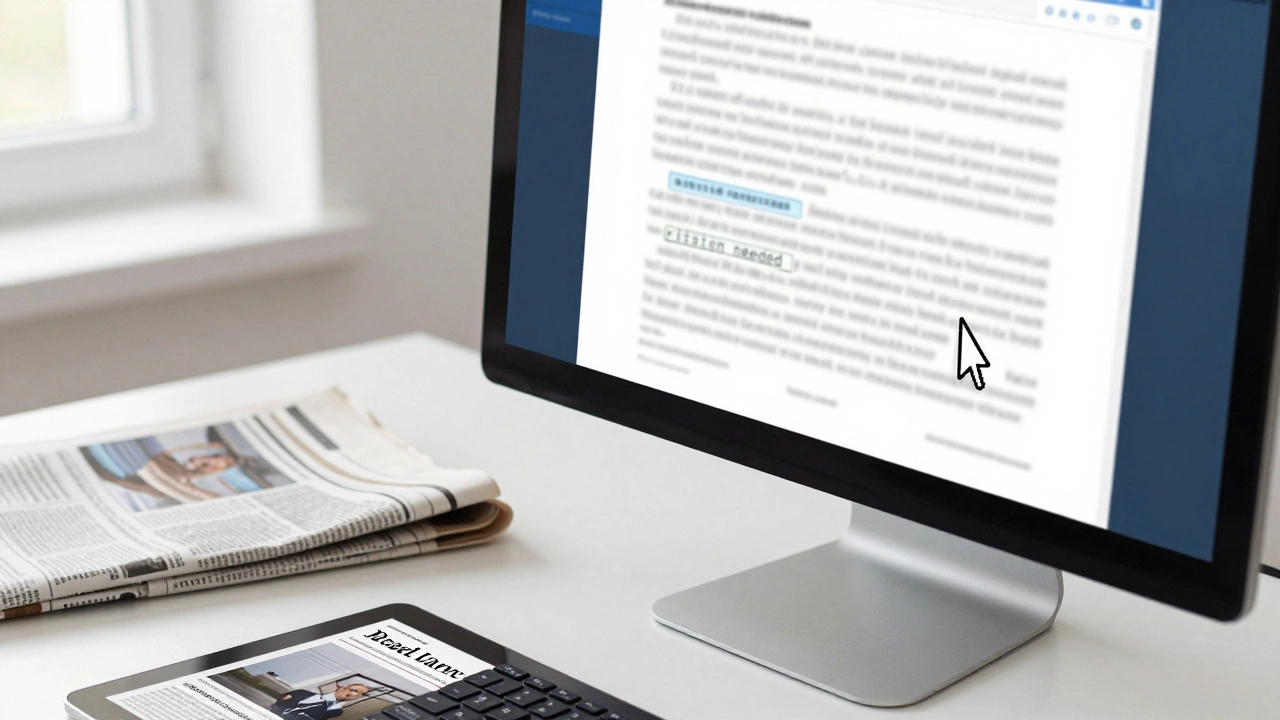
Not every person mentioned in a news story deserves a Wikipedia page. This is the concept of Notability. Just because someone is a victim of a crime or a witness in a trial doesn't make them a "notable person" in the eyes of the encyclopedia. Creating a page for a private citizen who is temporarily in the news is often a violation of their privacy and can lead to harassment.
Even for people who are already notable, there are limits to what is acceptable. Details about a person's home address, private phone numbers, or non-public health records are strictly forbidden. This is to prevent "doxing," where private information is leaked to incite real-world harassment. Even if this information is mentioned in a tabloid, Wikipedia often chooses to omit it to protect the individual from harm. The balance is always shifted toward protection when it comes to the safety and privacy of a living human being.
Practical Steps for Responsible Editing
If you find yourself wanting to update a biography during a breaking news event, follow this mental checklist to ensure you aren't accidentally committing a BLP violation:
- Is the claim contentious? If the information could hurt the person's reputation, treat it with extreme caution.
- Is the source independent? A quote from the person's own lawyer or agent is not an independent source. Look for a journalist who has vetted the claim.
- Is the source current? In breaking news, a report from two hours ago might already be debunked. Check for updates.
- Am I using a neutral tone? Avoid words like "shockingly," "disgracefully," or "obviously." Stick to the facts: "Source X reported that Y happened."
- Would I want this on my page? If the answer is "no" because it's an unverified rumor, don't post it.
The Role of the Community in Enforcement
The enforcement of these rules doesn't happen through a central corporate office but through a decentralized network of volunteers. The Watchlist feature allows editors to monitor pages of high-profile individuals. When a suspicious edit appears, these volunteers can revert it in seconds. This "rapid response" system is the only way Wikipedia can keep up with the speed of the 24-hour news cycle.
Furthermore, the Talk Pages serve as the deliberation room. Before a major change is made to a contentious biography, editors are encouraged to discuss the evidence. This prevents the "lone wolf" editor from pushing a personal agenda or a biased narrative into a biography. By forcing a consensus, the community ensures that the final version of an article is as objective and fair as possible.
What happens if I accidentally post a BLP violation?
Usually, other editors will revert the change quickly. If the violation was severe or intentional, you might receive a warning on your talk page. Repeated violations can lead to a temporary or permanent block from editing. The best thing to do is acknowledge the mistake and avoid making unsourced claims in the future.
Can I use a primary source for a breaking news update?
Primary sources, like a person's own social media account or a court transcript, are useful for verifying a quote or a specific date. However, they cannot be used to establish a contentious fact. For example, you can cite a person's tweet to show they said something, but you cannot cite that same tweet to prove they committed a crime.
Why was the page of a person in the news deleted?
This usually happens because the person does not meet the Notability guidelines. Being the subject of a news story for a few days doesn't necessarily make someone an encyclopedia-worthy figure. To prevent harassment and the "celebrity for a day" effect, Wikipedia deletes pages that don't have significant, long-term coverage from reliable sources.
How do I request the removal of a mistake in my own biography?
The most effective way is to use the talk page of the article. State clearly that the information is incorrect and provide a reliable source that proves it. While you can technically edit the page yourself, this is known as a "Conflict of Interest" (COI). It is better to suggest the change and let an independent editor verify it to ensure the edit isn't seen as an attempt to "whitewash" your history.
Is a police report considered a reliable source?
A police report is a primary source. While it's factual evidence of an accusation, it isn't a verdict. Wikipedia policy generally prefers secondary sources-like a news report detailing the outcome of a trial-rather than an initial arrest report, to avoid implying guilt before a legal conclusion is reached.
Next Steps for New Editors
If you're new to editing, start by making small, non-contentious changes. Fix a typo, update a date, or add a reference to a widely accepted fact. This helps you understand the rhythm of the community without risking a BLP violation. As you get more comfortable, you can tackle more complex sections, but always remember that when a person's reputation is on the line, it is better to be slow and right than fast and wrong.
For those who want to specialize in protecting biographies, consider joining a "WikiProject" focused on the BLP policy. These groups coordinate to clean up articles and ensure that the platform remains a place of knowledge rather than a tool for digital character assassination.