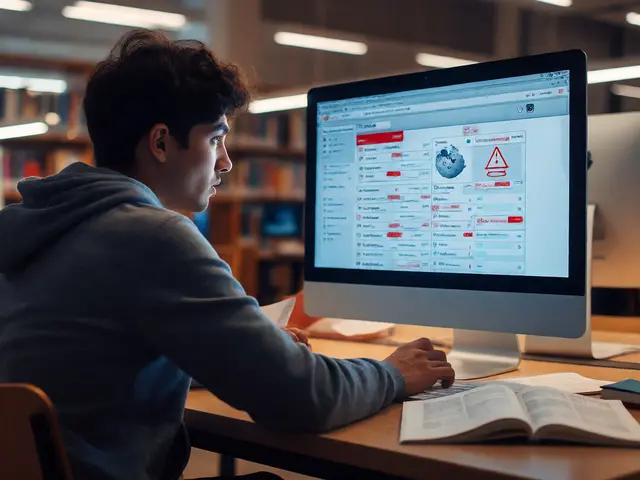
Wikipedia isn’t just a collection of facts. It’s becoming a quiet force for justice in how knowledge is shared across the world. For years, critics pointed out that Wikipedia’s content skewed toward Western, English-speaking perspectives. But in the last five years, a new kind of editing has taken root - one that doesn’t just fix gaps, but actively rebuilds them. This is solutions journalism in action, and it’s happening right on the world’s largest encyclopedia.
What Is Solutions Journalism on Wikipedia?
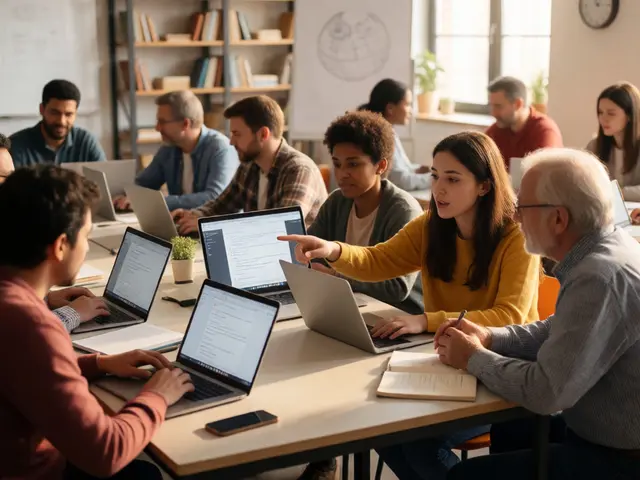
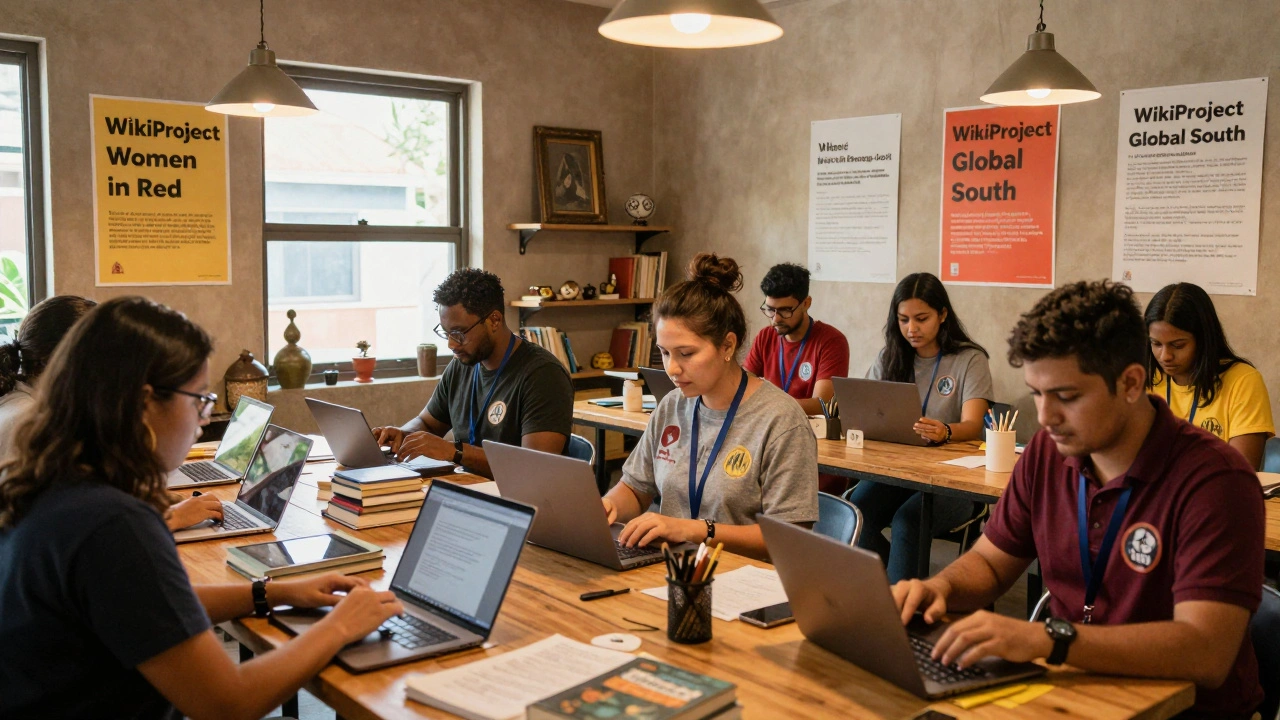
Another example is WikiProject Global South a collaborative effort to expand coverage of history, culture, and politics in Africa, Asia, and Latin America. Before this project, Wikipedia had more articles about the mayors of small towns in Sweden than about entire countries in sub-Saharan Africa. Now, volunteers from Lagos, Manila, and Lima meet weekly to train new editors, host edit-a-thons in local languages, and partner with universities to upload academic research that was locked behind paywalls.
Why Knowledge Equity Matters
Knowledge isn’t neutral. When only a fraction of the world’s population can see themselves reflected in a global reference tool, that’s not an oversight - it’s a power imbalance. A 2023 study by the Wikimedia Foundation found that only 18% of Wikipedia’s biographies are about women, and fewer than 5% are about people from Africa. In contrast, English-language articles about U.S. politicians outnumber those about all African heads of state combined by more than 10 to 1.
This isn’t just about fairness. It’s about accuracy. When Wikipedia omits key figures in global science, medicine, or environmental policy, it misleads millions of students, journalists, and researchers who rely on it as a starting point. A student in Nairobi searching for information on traditional medicine practices in East Africa might find nothing - not because it doesn’t exist, but because no one has written it down in a format Wikipedia accepts.
Solutions journalism on Wikipedia answers this by documenting real efforts to close those gaps. It doesn’t say, “Wikipedia is biased.” It says, “Here’s how people are fixing it.”
How These Initiatives Work
Knowledge equity projects on Wikipedia don’t rely on funding or corporate backing. They’re driven by volunteers who understand the system inside out. Here’s how they do it:
- Identify the gap - Volunteers use data tools like WikiGap a dashboard that tracks missing articles by region and gender to find which topics are missing or underdeveloped.
- Find reliable sources - Many communities lack English-language media coverage. Editors turn to local newspapers, academic journals, oral histories, and even community archives to build citations that meet Wikipedia’s standards.
- Train new editors - In countries like Nigeria and India, workshops are held in schools and libraries to teach people how to write for Wikipedia in their native languages - not just translate from English.
- Build partnerships - Libraries, museums, and universities now regularly donate digitized materials. The National Library of Kenya, for example, has partnered with local WikiProjects to upload thousands of historical photographs and documents.
- Measure progress - Projects track metrics like article growth, editor retention, and language diversity. The WikiProject Open Access a global network that helps editors use freely licensed academic research has added over 150,000 peer-reviewed articles to Wikipedia since 2020.
These aren’t one-off events. They’re sustained movements. In Brazil, the Wikimedistas do Brasil a national group that organizes monthly edit-a-thons and trains educators has trained over 12,000 teachers to use Wikipedia in classrooms - turning students into content creators.
Real Impact: Stories That Changed Everything
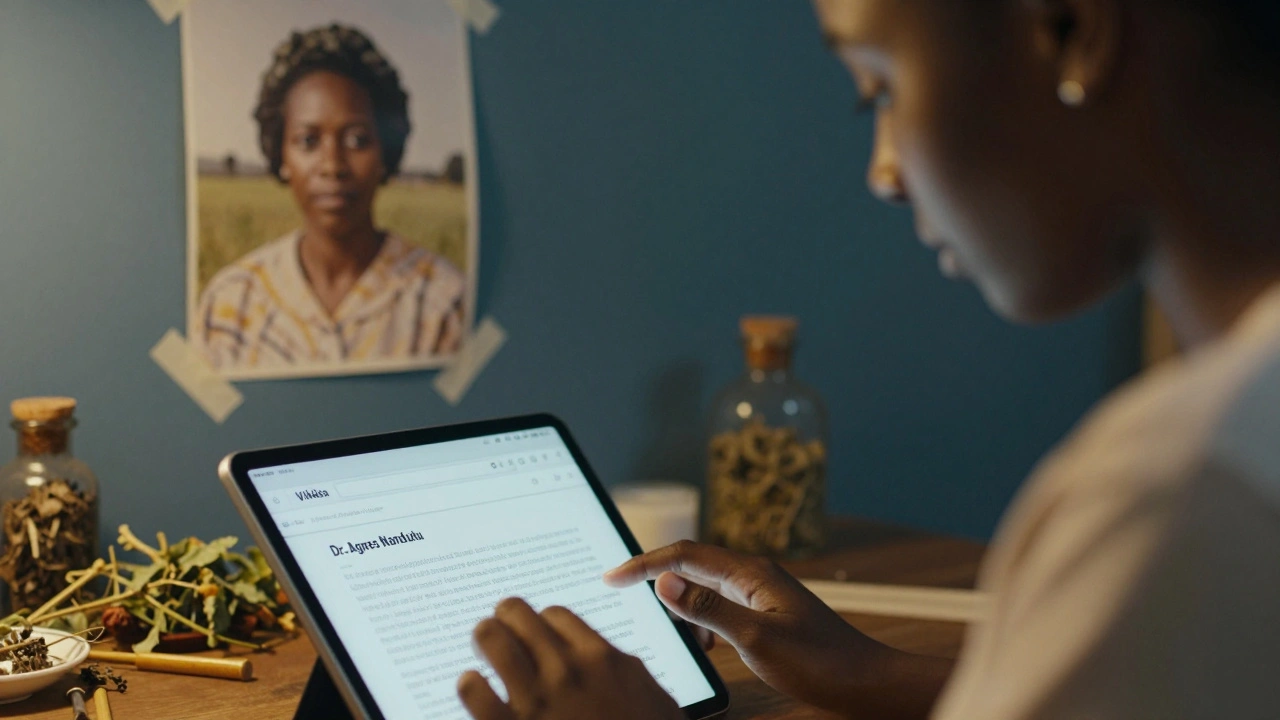
One article that went viral in 2024 was about Dr. Agnes Nandutu a Ugandan public health researcher who developed a low-cost method to detect malaria in rural clinics. Before her Wikipedia page was created, she had no online presence. After it was published, she received invitations to speak at global health conferences. Her research was cited in WHO guidelines. Her story didn’t just appear on Wikipedia - it changed her career.
In India, a group of students from a small town in Odisha created the first Wikipedia article on Kandhei Jatra a traditional puppet theater form unique to their region. Within a year, the local government began funding preservation efforts. The article became a tool for cultural revival.
These aren’t anomalies. They’re patterns. Each article adds not just information, but legitimacy. When a community sees its history, its heroes, and its innovations documented in a globally trusted source, it changes how they see themselves - and how the world sees them.
Challenges Still Facing Knowledge Equity
Progress isn’t linear. Many initiatives still struggle with the same barriers:
- Language bias - Wikipedia’s policies favor English, and many non-English sources aren’t considered “reliable” by English-speaking editors.
- Editor burnout - Volunteers often work without pay, recognition, or institutional support.
- Technical barriers - Not everyone has reliable internet, or knows how to use Wikipedia’s complex editing tools.
- Resistance - Some editors still dismiss knowledge equity efforts as “activism,” not journalism.
But the solutions are growing too. The Wikimedia Foundation now offers grants specifically for underrepresented editors. Mobile-friendly editing tools have been rolled out in 12 languages. And in 2025, Wikipedia launched its first Knowledge Equity Fund a $5 million program supporting community-led projects in Africa, Asia, and Latin America.
What This Means for Journalism
Solutions journalism on Wikipedia flips the script. Traditional journalism often highlights problems without showing how communities are solving them. Wikipedia’s model does the opposite: it shows the fix - and invites anyone to join.
Newsrooms are starting to notice. The Guardian and Reuters now partner with WikiProjects to fact-check and expand their own reporting. In 2024, the Associated Press published a story on how Wikipedia’s coverage of climate change in the Pacific Islands had improved - and credited the local editors who made it happen.
This is journalism without bylines. It’s journalism without deadlines. It’s journalism that doesn’t just report on change - it builds it.
How You Can Help
You don’t need to be a tech expert. You don’t need to live in a major city. If you know something that’s missing from Wikipedia, you can add it.
- Search for a topic you care about - say, a local environmental activist or a traditional craft from your region. If there’s no article, create one.
- Use reliable sources: government reports, university publications, verified interviews.
- Join a WikiProject like WikiProject Women in Red or WikiProject Global South.
- Teach someone else. Show a friend how to edit. Host a small session at your school, library, or community center.
Every article you write is a small act of equity. Every citation you add is a step toward a world where knowledge isn’t owned by a few - but shared by all.
What is solutions journalism on Wikipedia?
Solutions journalism on Wikipedia means documenting real, ongoing efforts to fix gaps in knowledge - especially those caused by systemic bias. Instead of just pointing out that women or Global South figures are missing from the encyclopedia, volunteers create articles about them, train others to do the same, and build systems to sustain the work. It’s journalism that shows how change is happening, not just that it’s needed.
How is Wikipedia different from traditional journalism?
Traditional journalism often reports on problems and leaves readers with a sense of helplessness. Wikipedia’s solutions journalism focuses on actions being taken to fix those problems - and invites anyone to join in. It’s collaborative, not top-down. It doesn’t need a reporter’s byline. It’s built by thousands of everyday people adding facts, sources, and stories that were previously ignored.
Why are some topics missing from Wikipedia?
Many topics are missing because Wikipedia’s content is shaped by who edits it. Historically, most editors have been from North America and Europe, and they tend to write about what they know. Sources in non-English languages or from marginalized communities are often dismissed as “unreliable,” even when they’re credible. This creates a cycle where certain voices stay invisible - until someone actively works to break it.
Can anyone edit Wikipedia to help with knowledge equity?
Yes. Anyone with internet access can create or improve an article. You don’t need to be a journalist or scholar. If you know about a local leader, a cultural tradition, or a scientific discovery that isn’t on Wikipedia, you can write about it using reliable sources. Many WikiProjects offer templates, guides, and mentorship for new editors.
What’s the biggest challenge to knowledge equity on Wikipedia?
The biggest challenge is systemic bias in sourcing and editorial norms. Wikipedia’s policies favor English-language, Western academic sources, which excludes many valid forms of knowledge - oral histories, community archives, local newspapers, and non-Western scholarship. Changing this requires not just adding content, but redefining what counts as “reliable.”
How do WikiProjects like Women in Red get funded?
Most WikiProjects are run by volunteers with no budget. But since 2020, the Wikimedia Foundation has awarded over $5 million through its Knowledge Equity Fund to support community-led initiatives in Africa, Asia, and Latin America. Grants go to local organizations that train editors, host edit-a-thons, and partner with universities - not to individuals or tech tools.
Wikipedia’s future isn’t written by algorithms or corporations. It’s written by people - teachers, students, librarians, activists - who believe knowledge should belong to everyone. And that’s the most powerful form of journalism there is.