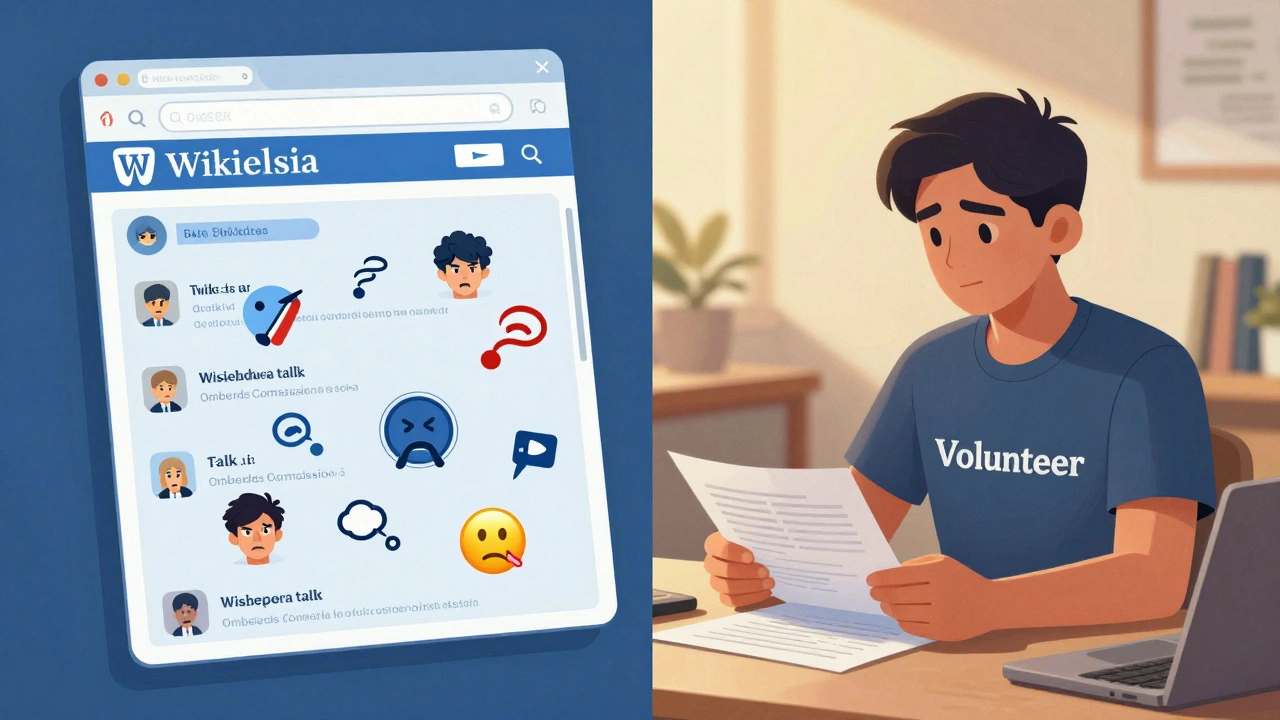
Every day, Wikipedia editors clash over article content, and sometimes those disagreements turn toxic. When community moderators can't resolve these issues, the Ombuds Commission steps in. This volunteer group handles the toughest cases-keeping Wikipedia's collaborative spirit alive. As of early 2026, the Commission has processed over 300 cases, a 15% increase from last year. Their work is crucial for maintaining trust in one of the world's largest online encyclopedias.
What is the Ombuds Commission's Mandate?
The Ombuds Commission exists to handle disputes that regular community processes can't resolve. Their mandate comes from the Wikimedia Foundation's governance policies. Specifically, they review cases involving serious community conflicts, safety concerns, or potential policy violations. Unlike other WMF teams, the Commission operates confidentially. They don't make binding decisions but provide recommendations to the Foundation's leadership. This independence is key-they're not part of the standard moderation chain but a separate oversight body.
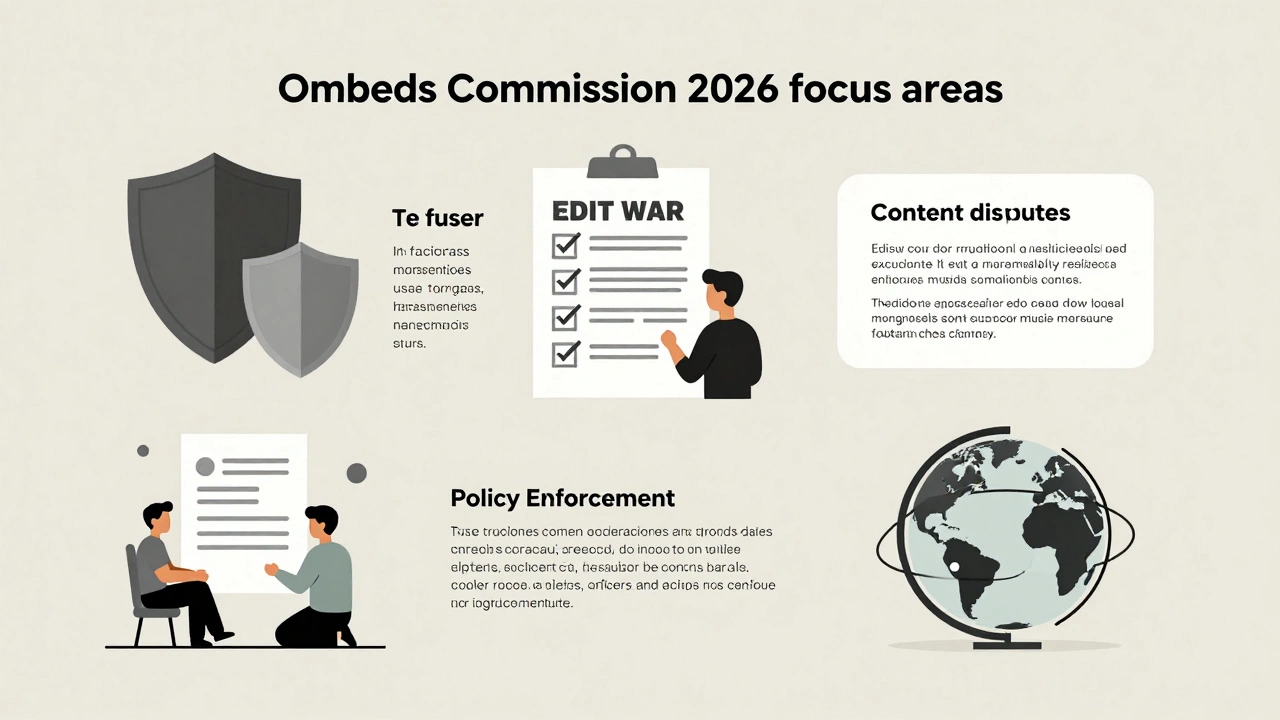
Current Focus Areas in 2026
| Focus Area | Description | Example Cases |
|---|---|---|
| Harassment and Safety | Addressing online abuse and threats | Multiple cases of targeted harassment on talk pages |
| Content Disputes | Mediating edit wars on high-traffic articles | Disputes over historical accuracy in major articles |
| Policy Enforcement | Ensuring adherence to community guidelines | Handling repeated violations of blocking policies |
| Global Collaboration | Supporting international editors | Language-specific disputes across Wikipedia editions |
How the Commission Operates
The Commission follows a strict process. Anyone can submit a request, but cases must meet specific criteria. They only handle issues that have gone through standard community channels first. Once accepted, volunteers review the case confidentially. They don't reveal identities publicly. The Commission then makes recommendations to the Wikimedia Foundation's Trust and Safety Team or Board of Trustees. Their advice isn't binding, but it carries significant weight. For example, in 2025, 82% of their recommendations were adopted by WMF leadership. This shows their influence despite being a volunteer group.
Interaction with Other WMF Bodies
The Commission works closely with other teams. For harassment cases, they coordinate with the Trust and Safety TeamWMF's dedicated team for user safety and policy enforcement. They also consult the Arbitration CommitteeWMF's formal dispute resolution body for severe cases when conflicts escalate. Meanwhile, the Community Advisory CommitteeGroup providing community feedback to WMF leadership helps the Commission understand grassroots concerns. This collaboration ensures consistent handling of sensitive issues across all WMF departments.
Real-world Case Examples
In 2025, the Commission handled a case involving a high-profile article on climate change. Editors repeatedly undid each other's edits, causing a major edit war. The Commission stepped in, reviewed the history, and recommended specific mediation steps. This prevented the article from being locked indefinitely. Another case involved a user facing harassment across multiple language versions of Wikipedia. The Commission coordinated with international teams to block the harasser and provide support to the victim. These examples show how the Commission addresses both content and safety issues effectively.

Common Misconceptions
Many people think the Ombuds Commission has direct authority over Wikipedia editors. That's not true. They don't issue bans or make final decisions. Their role is advisory. Others believe they only handle harassment cases. In reality, they address a wide range of issues-from content disputes to policy enforcement. Some also think the Commission is part of the WMF staff. It's actually a volunteer group of experienced editors who serve on a rotating basis. Understanding these facts helps clarify their unique position in Wikipedia's governance structure.
Frequently Asked Questions
How do I submit a case to the Ombuds Commission?
You can submit a case through the official Ombuds Commission page on Meta-Wiki. Cases must first go through standard community dispute resolution channels. The Commission only accepts issues that couldn't be resolved there. All submissions are confidential and reviewed by volunteers.
Is the Ombuds Commission part of the Wikimedia Foundation staff?
No. The Commission is entirely volunteer-run. Members are experienced Wikipedia editors who serve in a rotating capacity. They have no formal employment with the Wikimedia Foundation but work closely with its staff to address community concerns.
What happens after the Commission reviews a case?
The Commission provides confidential recommendations to the Wikimedia Foundation's leadership, usually the Trust and Safety Team or Board of Trustees. These recommendations aren't binding, but they're taken seriously. In 2025, 82% of their advice was implemented, showing their significant influence on policy decisions.
Can the Commission overturn community decisions?
No. The Ombuds Commission doesn't have authority to overturn decisions made by community moderators or the Arbitration Committee. Their role is to review cases and suggest improvements to WMF leadership. Final decisions always rest with the Foundation's staff or elected bodies.
How often does the Commission handle cases?
In 2025, the Commission processed 320 cases-a 15% increase from 2024. As of early 2026, they're on track to handle over 350 cases this year. This growth reflects rising awareness of their role and increasing complexity in community disputes.