Wikipedia doesn’t run itself. Behind every article you read, there’s a team of volunteers who keep the site clean, fair, and functional. These are the Wikipedia administrators-often called admins or sysops-and their work is what keeps the world’s largest free encyclopedia from falling apart. If you’ve ever seen a page locked, a user blocked, or a messy edit reverted, chances are an admin made that call.
They’re Volunteers, Not Employees
Wikipedia administrators are not paid. They don’t work for the Wikimedia Foundation. They’re regular people-students, teachers, retirees, programmers-who spend their free time maintaining the site. Many have been active for years, sometimes decades. They’re trusted by the community because they’ve earned it through consistent, thoughtful contributions.
There’s no formal hiring process. To become an admin, you must first be an active editor. You need to show you understand Wikipedia’s rules, handle disputes calmly, and make edits that improve the encyclopedia-not push personal opinions. After months or even years of solid work, other editors can nominate you for admin status. Then, the community votes. It’s not about popularity; it’s about trust.
Core Responsibilities: What Admins Actually Do
Admins have special tools regular editors don’t. But those tools aren’t for power-they’re for fixing problems. Here’s what they actually spend their time on:
- Deleting pages that violate policies-like spam, copyright violations, or blatant hoaxes.
- Protecting pages from edit wars or vandalism, especially high-profile articles like those on current events or public figures.
- Blocking users who repeatedly break rules, whether they’re trolls, bots, or well-meaning but disruptive editors.
- Restoring content after harmful edits or accidental deletions.
- Mediating disputes between editors who can’t agree on content, tone, or sourcing.
They don’t decide what’s true. That’s up to the community, based on reliable sources. Admins just make sure the rules are followed. If an article says a celebrity died in 2020 but they’re alive in 2026, an admin won’t delete it because they think it’s wrong. They’ll delete it because it’s not sourced-and that’s the policy.
Tools They Use, But Don’t Abuse
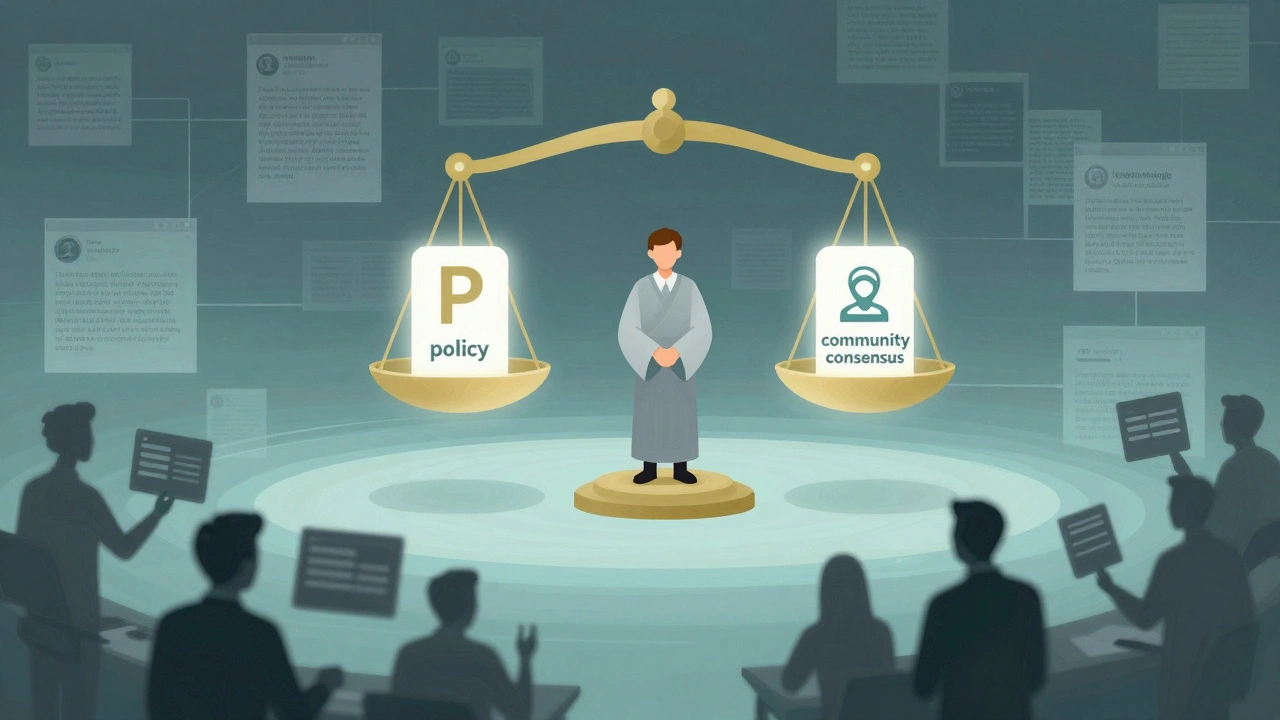
Admins have access to tools like page protection, user blocks, and deletion rights. But these aren’t weapons. Wikipedia’s guidelines say admins should use them only when necessary and in line with community consensus.
For example, a new user adds a fake quote to a politician’s page. An admin can revert it immediately. But if that same user keeps doing it, the admin might block them for 24 hours-not to punish, but to give them time to learn the rules. If the user returns and edits constructively, the block is lifted.
Abusing these tools is one of the fastest ways to lose admin status. There have been cases where admins were stripped of their privileges for using blocks to silence critics or deleting articles to favor a personal agenda. The community watches closely. Trust is everything.
They Follow Strict Policies-Not Personal Opinions
Wikipedia has over 20,000 policy pages. Admins don’t make up rules. They follow them. Key ones include:
- Neutral Point of View (NPOV): No promoting one side. All significant views must be fairly represented.
- Verifiability: Every claim must be backed by a reliable, published source.
- No original research: You can’t publish new theories, unpublished data, or personal analysis.
- Biographies of living persons: Extra care is required. Unverified claims about living people are removed fast.
An admin might personally believe a certain person is a fraud. But if that person has multiple credible news sources calling them a fraud, the admin will keep the article. If the sources are blogs and Reddit posts? The admin will delete it-even if they agree with the claim.
How They Handle Conflict
Wikipedia is full of disagreements. Two editors might argue for hours over whether a minor character in a movie deserves a mention. Admins don’t jump in to pick a winner. Instead, they guide the discussion.
They might:
- Point to the relevant policy page.
- Suggest a talk page discussion.
- Put a temporary edit restriction on the article.
- Call for a third opinion from another editor.
They’re mediators, not judges. Their goal isn’t to end the argument-they’re trying to make sure it ends with a better article.
What They Don’t Do
Many people think admins control what’s on Wikipedia. They don’t. Here’s what they absolutely cannot do:
- Write content based on their own beliefs.
- Remove content just because they dislike it.
- Privilege their edits over others’.
- Act as moderators for personal grudges.
- Make decisions without community input on major issues.
One famous case: In 2015, an admin tried to delete a page about a minor celebrity because they thought the person was “not important enough.” Other admins overruled them. Why? Because Wikipedia’s notability guidelines are based on media coverage-not personal judgment. The admin was reminded: “We don’t decide what’s important. We document what’s documented.”
The Bigger Picture: Why This Matters
Wikipedia has over 60 million articles in 300+ languages. It’s the first place millions of people go to learn about anything-from quantum physics to local history. Without admins, it would be overrun with spam, lies, and chaos.
But the system works because it’s transparent. Every edit, block, and deletion is public. Anyone can see why an admin acted. Anyone can challenge it. That’s what makes Wikipedia different from other encyclopedias. It’s not perfect-but it’s accountable.
Admins are the glue holding it together. They’re not heroes. They’re not gods. They’re just volunteers who care enough to show up, day after day, and fix what’s broken.
How to Know If an Admin Is Acting Right
If you’re unsure whether an admin’s action was fair, check the admin log. Every action they take is recorded. Look at the reason given. Was it based on a policy? Or just a personal note like “I don’t like this”?
Also, check the article’s talk page. Was there discussion before the edit? If not, the admin may have acted too quickly.
And if you think they made a mistake? You can appeal. There’s a formal process called Administrative Noticeboard where anyone can raise concerns. Admins are held to a high standard-and the community holds them accountable.
Wikipedia’s success isn’t because of its technology. It’s because of its people. And the admins? They’re just the ones who stepped up to keep the lights on.
Are Wikipedia administrators paid?
No, Wikipedia administrators are not paid. They are volunteers who contribute their time and effort to maintain the site. They are not employees of the Wikimedia Foundation and receive no salary or compensation for their work.
How do you become a Wikipedia administrator?
To become an administrator, you must first be an active and trusted editor. You need to demonstrate a solid understanding of Wikipedia’s policies, make consistent, constructive edits, and resolve disputes fairly. After gaining community trust, another editor can nominate you for admin status. The community then votes, and if approved, you’re granted admin tools. It’s not about how long you’ve edited-it’s about how well you’ve edited.
Can administrators delete any article they want?
No. Administrators can’t delete articles based on personal opinion. They can only delete pages that clearly violate policies-such as copyright violations, spam, or articles that fail to meet notability guidelines. Deletions are logged publicly, and other editors can challenge them. If a deletion is disputed, the community reviews it through formal processes like deletion discussions.
Do administrators have more influence over article content?
No. Administrators don’t have special authority over article content. They can’t push their own views or override consensus. Content decisions are made by the community through discussion and sourcing. Admins only act to enforce policies, not to determine truth or relevance.
What happens if an administrator abuses their powers?
If an administrator abuses their tools-like blocking users unfairly, deleting articles for personal reasons, or acting in bad faith-the community can report them. A formal review is held, often through the Arbitration Committee or administrative noticeboards. If misconduct is confirmed, their admin rights can be revoked. This has happened multiple times in Wikipedia’s history.