Imagine trying to build the world's largest library while half the librarians are arguing about shelf placement and the other half are worried a robot might just burn the books down. That’s roughly where The Wikimedia Foundation stands today. As we move through 2026, the organization isn't just hosting Wikipedia; it is actively engineering the future of how humans interact with free knowledge. The current research agenda isn't some dusty academic paper gathering digital cobwebs-it’s a survival guide for an era dominated by generative AI and information fragmentation.
If you’ve ever wondered why certain edits get reverted instantly or why some languages have robust articles while others remain stubs, the answers lie in this strategic roadmap. The Foundation has shifted from simply "keeping the servers on" to proactively solving complex sociotechnical problems. They are asking hard questions: How do we verify truth when AI can hallucinate citations? How do we keep volunteers engaged when the novelty wears off? And crucially, how do we make knowledge accessible to the next billion users who don’t speak English?
The Shift from Infrastructure to Intelligence
For years, the primary focus was technical stability. Could the site handle traffic spikes during elections or celebrity deaths? Today, that baseline is assumed. The new priority is Knowledge Integrity. With large language models (LLMs) scraping Wikipedia to train their own outputs, there is a growing risk of "model collapse," where AI starts feeding on its own generated content, diluting factual accuracy. The Foundation’s research now prioritizes methods to distinguish human-verified content from machine-generated noise.
This isn't just theoretical. Researchers at the Foundation are developing detection algorithms specifically tuned for wiki environments. These tools aim to flag subtle biases introduced by automated editing bots. It’s a cat-and-mouse game, but the stakes are high. If Wikipedia becomes polluted with plausible-sounding nonsense, its value as a primary source drops precipitously. The goal is to create a feedback loop where AI assists editors rather than replacing them, ensuring that the final output remains rooted in verifiable sources.
Community Health and Volunteer Retention
Let’s be honest: running a volunteer-driven encyclopedia is chaotic. You have thousands of people with different cultural backgrounds, political views, and temperaments trying to agree on neutral point of view. The Foundation’s second major pillar addresses Community Dynamics. Recent studies highlight a troubling trend: burnout among long-time editors. Newcomers often feel intimidated by complex policies, while veterans suffer from fatigue due to repetitive vandalism cleanup.
To combat this, the research team is testing new mentorship models and simplified interface designs. One promising initiative involves "graduated permissions," allowing new users to contribute safely without immediately facing the scrutiny of advanced edit filters. Data shows that reducing friction in the first ten edits significantly increases retention rates. It’s not about lowering standards; it’s about building confidence. By analyzing interaction patterns, the Foundation aims to predict which conversations are likely to turn toxic before they escalate, offering real-time mediation prompts.
Bridging the Global Knowledge Gap
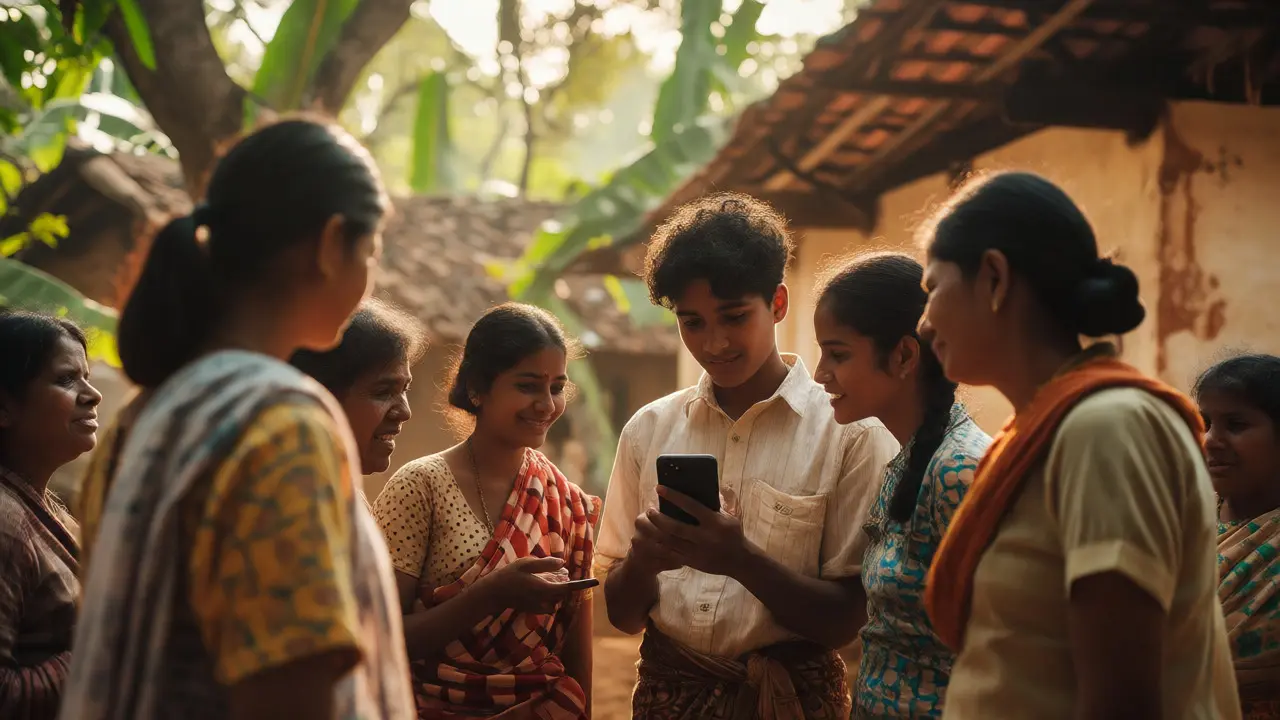
Wikipedia is massive, but it’s uneven. A user searching for local history in rural India or indigenous communities in the Amazon might find sparse coverage compared to topics centered in the Global North. This disparity is the focus of the Global Equity initiative. The Foundation recognizes that true universality requires more than translation; it requires context-aware content creation.
Research here focuses on mobile-first strategies, since most new internet users access the web via smartphones. Traditional desktop-centric editing tools fail this demographic. Consequently, the team is prototyping voice-to-text editing features and offline-capable interfaces. Furthermore, they are investigating how local cultural norms influence citation styles. In many non-Western traditions, oral history holds equal weight to written documents. Adapting verification policies to respect these epistemologies is a delicate but necessary task.
| Pillar | Primary Challenge | Current Solution Focus | Impact Metric |
|---|---|---|---|
| AI & Integrity | Model collapse & bias | Detection algorithms & hybrid editing | Accuracy rate of flagged edits |
| Community Health | Volunteer burnout | Mentorship & UX simplification | New editor retention (90-day) |
| Global Equity | Language & cultural gaps | Mobile tools & oral history support | Content diversity per region |
The Role of Technology in Verification
How do you prove something is true? Traditionally, Wikipedia relies on reliable sources. But what happens when those sources are themselves flawed or inaccessible? The Foundation is exploring Automated Fact-Checking systems that cross-reference claims against multiple databases simultaneously. This doesn't mean robots decide the truth; it means robots provide evidence so humans can decide faster.
Consider a claim about a recent scientific study. An automated tool could instantly pull abstracts from PubMed, check news coverage reliability, and flag if the study has been retracted. This reduces the cognitive load on editors. Early pilots suggest this approach cuts review time by nearly 40%. However, challenges remain. Not all fields have structured data. Art history, for instance, relies heavily on interpretation rather than binary facts. The research must therefore balance automation with nuance, ensuring that technology serves diverse disciplines equally.
Funding and Sustainability Models
None of this research happens in a vacuum. Money matters. The Foundation operates on donations, which makes long-term R&D planning tricky. Donors often prefer tangible outcomes-like server upgrades-over abstract social science studies. To address this, the leadership is publishing transparent reports linking research findings to platform growth. When donors see that improved mobile UX led to a 15% rise in readership in Southeast Asia, they understand the value of the investment.
Additionally, the Foundation is exploring partnerships with academic institutions. Universities benefit from access to vast datasets on human collaboration, while the Foundation gains rigorous methodological support. This symbiotic relationship helps validate their approaches. It also ensures that the research agenda remains grounded in peer-reviewed standards rather than corporate intuition.
Looking Ahead: What Users Should Expect
You might not notice every change immediately. Research takes time to translate into product features. However, small shifts are already visible. You may see clearer warnings about potentially biased sources or smoother integration of multimedia files. These are the fruits of the current agenda.
The ultimate goal is resilience. As misinformation spreads faster than ever, Wikipedia needs to be more than just a website; it needs to be a trusted infrastructure layer for the internet. By focusing on integrity, community, and equity, the Foundation aims to ensure that free knowledge remains free, accurate, and accessible for generations to come. It’s ambitious work, but given the scale of the challenge, it’s exactly what’s needed.
Why does the Wikimedia Foundation need a specific research agenda?
Because operating a global, volunteer-run encyclopedia presents unique sociotechnical challenges that standard software development doesn't address. The agenda focuses on solving specific problems like volunteer burnout, AI-induced misinformation, and cultural bias, which require dedicated study and tailored solutions rather than generic tech fixes.
How is AI affecting Wikipedia's research priorities?
AI poses both risks and opportunities. Risks include model collapse and increased spam. Opportunities include automated fact-checking and translation assistance. The research prioritizes creating tools that help human editors verify content faster while detecting low-quality machine-generated text to maintain accuracy.
What is meant by 'Global Equity' in this context?
It refers to efforts to reduce the disparity in content quality and quantity between the Global North and South. This includes supporting underrepresented languages, adapting tools for mobile-first users, and respecting non-Western ways of documenting knowledge, such as oral histories.
Can regular users contribute to the research?
Indirectly, yes. By participating in surveys, beta-testing new features, and providing feedback on forums, users generate the data researchers analyze. Active engagement in community discussions also provides qualitative insights into what works and what frustrates contributors.
Is the research agenda funded by advertisers?
No. The Wikimedia Foundation remains ad-free. Funding comes primarily from individual donations, grants, and institutional partnerships. This independence allows the research agenda to focus purely on public good and knowledge accessibility rather than commercial metrics.