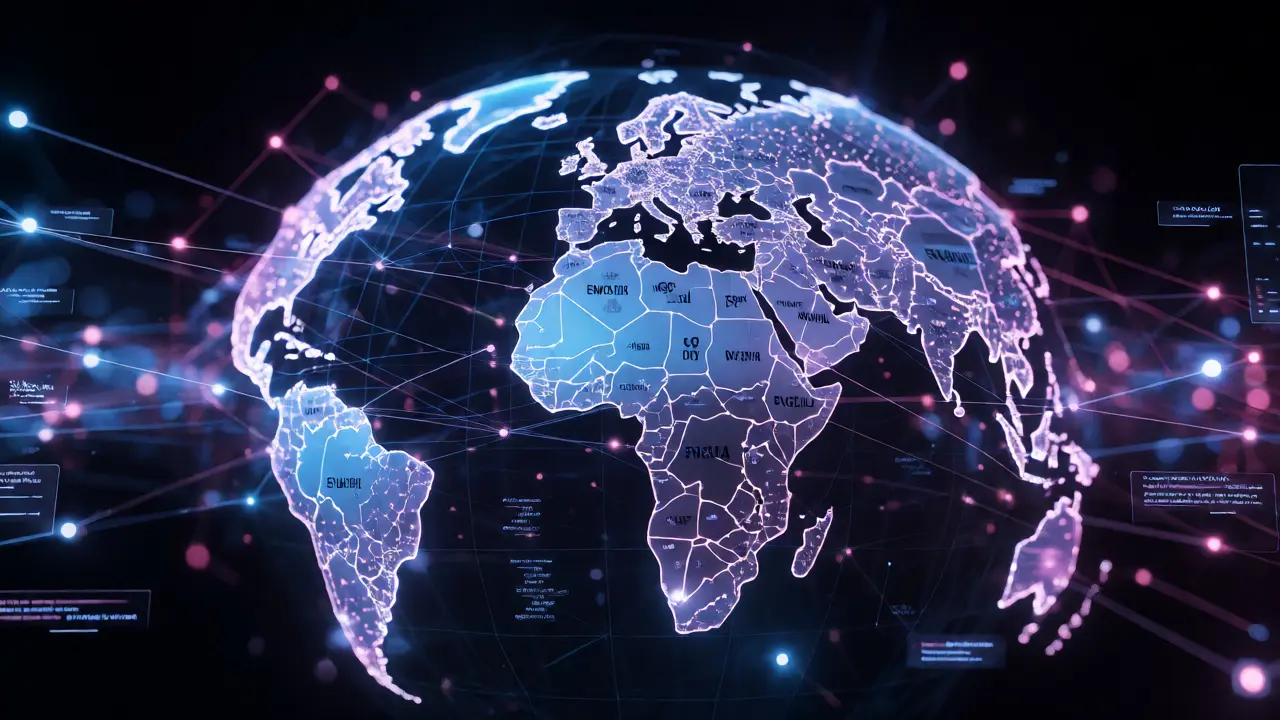
You might think of Wikipedia as a single, massive library. But it is actually a federation of over 300 separate libraries, each speaking its own language. The English version has millions of articles. The German version has its own unique history and culture embedded in its text. The Swahili edition serves a growing audience in East Africa. Here is the problem: how do you ensure that a reader in Tokyo gets the same accurate information about climate change as a reader in Toronto? You cannot just copy-paste translations. Context shifts. Nuance disappears. This is where Crosswiki Collaboration becomes essential. It is the backbone of multilingual initiatives that allow knowledge to flow freely between different language editions of Wikipedia.
If you have ever wondered why some articles are incredibly detailed in French but sparse in Indonesian, or why certain scientific concepts have standardized names across languages, you are looking at the results of this collaboration. It is not magic. It is a complex system of shared data, coordinated editing, and community trust. Let’s break down how this global machine actually works.
The Core Problem: Fragmented Knowledge
Imagine trying to write an encyclopedia entry for "Democracy." In the US, that article focuses heavily on the Constitution and two-party systems. In India, it discusses caste dynamics and parliamentary procedures. In Sweden, it highlights consensus-building models. If these three articles existed in isolation, they would tell three very different stories about the same concept. Without coordination, readers get a fragmented view of reality.
This fragmentation creates three specific issues:
- Inconsistency: Facts might contradict each other across languages due to outdated sources.
- Redundancy: Editors spend hours translating the same basic facts repeatedly.
- Isolation: Important local knowledge stays trapped within one language community.
Crosswiki collaboration solves this by creating bridges. These bridges are not just hyperlinks. They are structural connections that allow editors to see what their counterparts are doing in real-time.
Wikidata: The Shared Brain
The most significant tool enabling this collaboration is Wikidata. It is a free, collaborative, multilingual database that provides structured data for Wikimedia projects. Think of Wikidata as the central server for all Wikipedia languages. Instead of every language edition storing the date of birth for Albert Einstein separately, they pull it from Wikidata.
Why does this matter? Because it ensures consistency. If a historian discovers new evidence that changes Einstein’s birth year, they update Wikidata once. Instantly, every Wikipedia page in 300+ languages reflects that change. This is a massive efficiency win. It frees up human editors to focus on narrative and context rather than data entry.
| Feature | Traditional Isolated Editing | Crosswiki Collaborative Model |
|---|---|---|
| Data Storage | Duplicated in each language wiki | Centralized in Wikidata |
| Update Process | Manual edit per language | Single update propagates globally |
| Consistency Risk | High (versions diverge) | Low (single source of truth) |
| Editor Effort | Repetitive data entry | Focused on content creation |
Interwiki Links: The Digital Bridges
Before Wikidata, there were Interwiki Links. These are hyperlinks that connect equivalent pages in different language versions of Wikipedia. You see them in the sidebar of every article. When you click the "Français" link on an English article, you are using an interwiki link.
But here is the tricky part: matching articles across languages is hard. An article titled "Apple" in English could refer to the fruit or the tech company. In Spanish, "Manzana" usually means the fruit, while "Apple Inc." refers to the company. Automated bots try to match these, but humans must verify them. Crosswiki editors often spend time fixing broken links or merging duplicate entries. This manual curation is vital for maintaining navigation integrity.

Coordinated Projects and Edit-a-thons
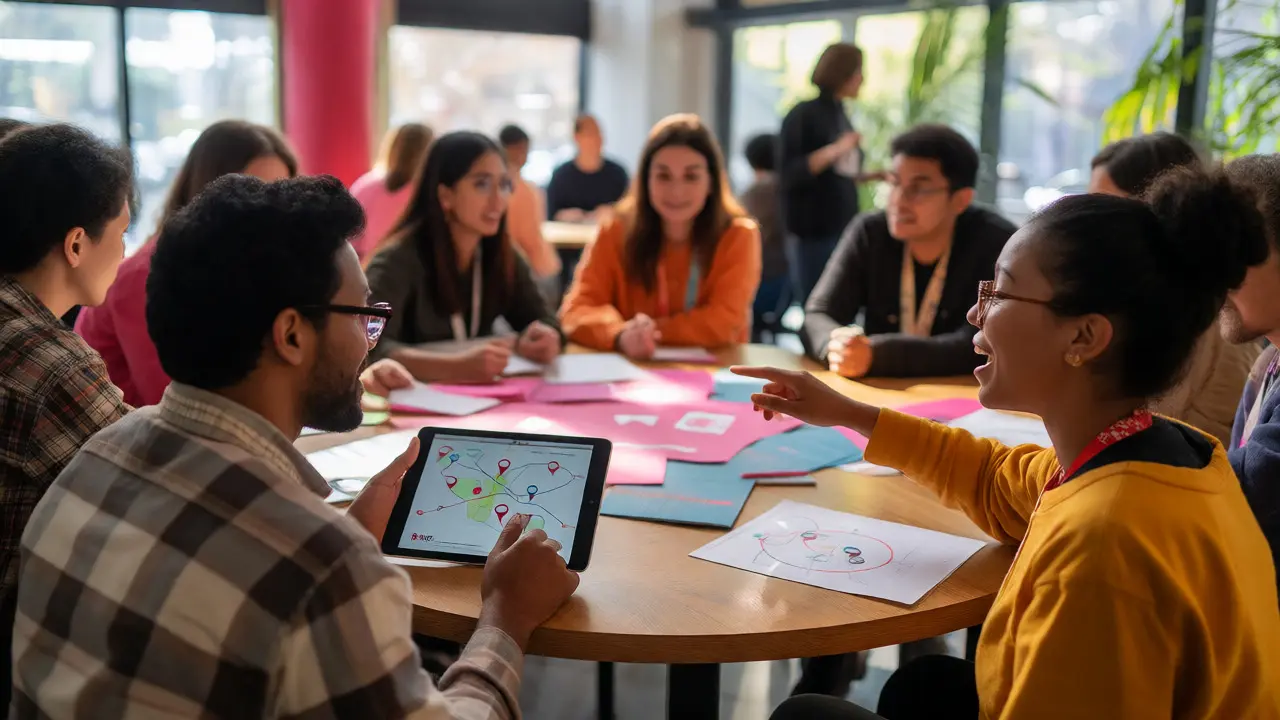
Collaboration isn’t just technical; it’s social. Many crosswiki efforts happen through organized campaigns. Take the Art+Feminism initiative. It is a campaign to improve coverage of women and gender-related topics on Wikipedia. When this event happens in New York, participants don’t just work on the English wiki. They coordinate with groups in Berlin, Buenos Aires, and Lagos.
How do they coordinate? Through shared dashboards and communication channels like Telegram or Discord. A team in Germany might create a biographical stub for a female scientist. The team in Brazil translates it, adds local context about her influence in South America, and improves the Portuguese article. The result is a richer, more nuanced profile than any single group could produce alone.
The Role of Translation Tools
Human translation is slow. That is why tools like Content Translation exist. This is a tool developed by the Wikimedia Foundation to help users translate existing articles into other languages. It allows a user to select text in English, see suggested translations, and then edit those suggestions before publishing.
Does this mean machines are writing Wikipedia? Not exactly. The tool suggests translations based on statistical models. Humans still make the final call. For example, if the English text says "The bank approved the loan," the tool might suggest "El banco aprobó el préstamo" in Spanish. But if the context was about a river bank, the translation would be wrong. Human editors catch these errors. This hybrid approach accelerates growth without sacrificing accuracy.
Challenges in Multilingual Coordination
It is not all smooth sailing. Cultural differences can cause friction. What is considered neutral tone in the US might seem dry or biased in Japan. Disputes over naming conventions are common. Should we use "Beijing" or "Peking"? "Mumbai" or "Bombay"? These debates often spill over between wikis. An editor in the Hindi wiki might argue for local spellings, while the English wiki sticks to international standards.
Another challenge is resource disparity. The English Wikipedia has thousands of active daily editors. Smaller wikis, like those for indigenous languages, might have only five. When a major news event breaks, the English wiki updates within minutes. A smaller wiki might take days. Crosswiki collaboration helps bridge this gap by allowing larger communities to support smaller ones, but it requires humility and patience from both sides.
Best Practices for Contributors
If you want to participate in crosswiki collaboration, start small. Do not try to overhaul an entire section immediately. Here is a practical checklist:
- Check Wikidata first: Before adding a fact, see if it already exists in Wikidata. If it does, cite it properly.
- Use Interwiki Links wisely: Ensure your link points to the correct topic, not just a similar title.
- Respect Local Context: When translating, ask yourself if the concept exists in the target culture. If not, explain it rather than forcing a direct translation.
- Communicate: Use the talk pages. If you notice a discrepancy between languages, leave a note. Assume good faith.
- Leverage Bots: Learn which bots handle routine tasks so you do not duplicate their work.
The Future of Global Knowledge Sharing
We are moving toward a more integrated model. Artificial intelligence is beginning to play a role in suggesting cross-language connections. Imagine an AI that reads a new scientific paper in Chinese and automatically drafts a summary for the English wiki, flagging key terms for human review. We are not there yet, but the infrastructure is being built.
Ultimately, crosswiki collaboration is about recognizing that knowledge is not owned by one language. It belongs to everyone. By working together, we build a reference work that is truly global, not just translated. It is messy, sometimes frustrating, but deeply rewarding. Every edit that crosses a border makes the sum of human knowledge slightly more complete.
What is the difference between interwiki links and external links?
Interwiki links connect pages within the Wikimedia ecosystem, specifically linking equivalent articles across different language versions of Wikipedia. External links point to websites outside of Wikimedia, such as government sites or news outlets. Interwiki links are managed centrally via Wikidata, whereas external links are manually added and maintained within each specific language wiki.
Do I need to speak multiple languages to contribute to crosswiki collaboration?
No, you do not. While knowing another language helps, many contributors work solely in their native language. You can contribute to Wikidata, which uses English labels but supports all languages, or you can use translation tools to assist with content. Community members often collaborate by verifying facts rather than translating full texts.
How does Wikidata prevent vandalism across multiple wikis?
Wikidata has robust anti-vandalism measures, including automated bots that revert suspicious edits and a community of patrollers who monitor recent changes. Since changes propagate quickly to all linked wikis, vandalism is often spotted faster because more eyes are watching the central data point compared to isolated local edits.
Can I merge two Wikipedia articles from different languages?
You cannot directly merge articles from different languages into one file because each language wiki operates independently. However, you can link them via Wikidata. If two articles in the same language cover the same topic, you can merge them locally. For cross-language topics, the goal is alignment, not physical merging of files.
Are all Wikipedia languages equal in size?
No. The English Wikipedia is the largest with over 6 million articles. Languages like Cebuano and Swedish also have high counts due to bot-generated content. Smaller wikis may have fewer than 10,000 articles. Crosswiki collaboration helps balance quality and depth across these disparities.