AI systems learn from the data they’re fed. If that data is skewed, the AI becomes biased. You’ve probably seen it: facial recognition that misses darker skin tones, hiring tools that favor men, or chatbots that repeat harmful stereotypes. The problem isn’t just bad code-it’s bad data. And one of the biggest, most overlooked sources of that data? Wikipedia.
Wikipedia Isn’t Just a Website-It’s a Training Ground for AI
Every time you ask an AI a question, it’s likely pulling from text scraped from Wikipedia. Millions of AI models, from chatbots to language translators, use Wikipedia as a primary source of human knowledge. It’s free, well-structured, and vast. But here’s the catch: Wikipedia’s content doesn’t reflect the world as it really is. It reflects who has been able to write on it.
Studies from the University of Oxford and the Wikimedia Foundation show that over 80% of Wikipedia editors are male, and nearly 70% live in North America or Europe. That means biographies of women, people of color, and non-Western figures are underrepresented. A 2023 analysis found that only 20% of Wikipedia’s 1.5 million biographies cover women. For Black women, it’s less than 3%. AI trained on this data learns that men, especially white men from the Global North, are the default version of "important."
How Bias Shows Up in AI
When AI models learn from Wikipedia, they don’t just absorb facts-they absorb patterns. If you train a model on articles where "doctor" is almost always linked to "man," and "nurse" to "woman," the AI will replicate that. It doesn’t know better. It just follows the data.
Take Google’s BERT model. Researchers found it associated "computer programmer" with "male" 87% of the time in tests. Why? Because Wikipedia’s programming articles are overwhelmingly written by men, and the pronouns used in those articles skew male. The same model would generate more negative sentiment when asked about "African countries" compared to "European countries," simply because the tone of Wikipedia articles on those regions differs.
It’s not that Wikipedia is lying. It’s that it’s incomplete. And AI takes incompleteness and turns it into truth.
Wikipedia’s Quiet Revolution: Diversity Efforts in Action
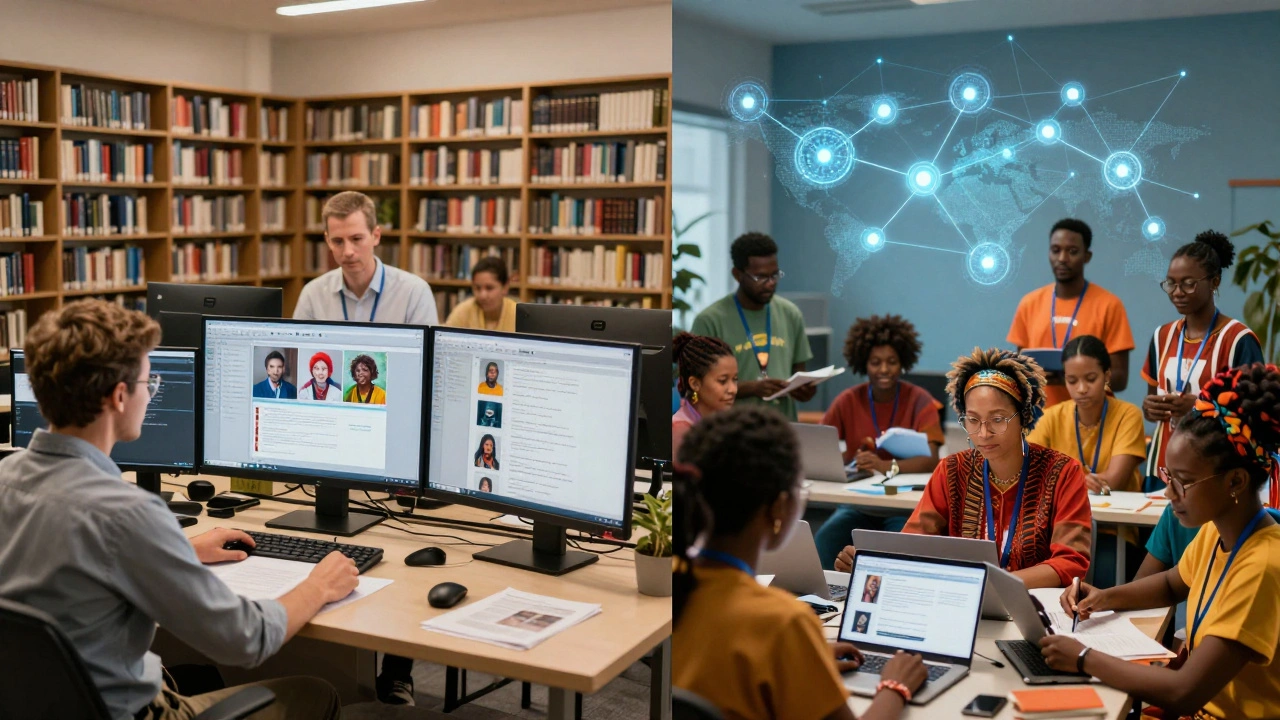
But Wikipedia isn’t sitting still. Over the last five years, volunteer editors and organized campaigns have pushed hard to fix these gaps. It’s not flashy, but it’s working.
The "WikiProject Women in Red" has created over 120,000 new biographies of women since 2015. They track which women are missing from Wikipedia and build articles from reliable sources-academic journals, local archives, oral histories. In 2024 alone, they added 28,000 new entries.
In Africa, the "AfroCrowd" initiative trains local editors to write about their communities. In Kenya, editors created over 5,000 new articles on Kenyan scientists, artists, and activists. In India, the "Wikipedia Education Program" partners with universities to have students write about regional history, languages, and women leaders.
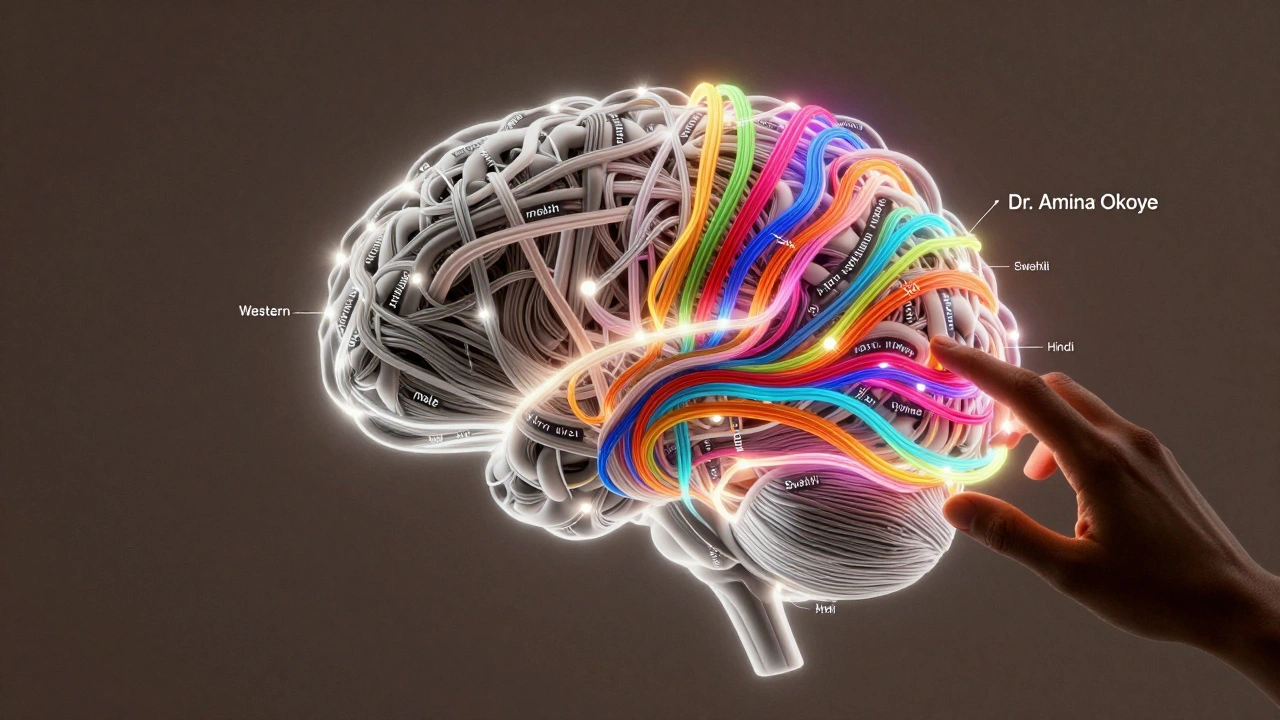
And it’s not just about names. It’s about language. Wikipedia now has over 300 language editions. The Hindi, Swahili, and Yoruba versions are growing faster than English. That matters because AI models trained on multilingual Wikipedia data are less likely to default to Western perspectives.
What This Means for AI Developers
If you’re building AI, you can’t ignore Wikipedia anymore. You have two choices: use it as-is, or use it as a starting point for improvement.
Some companies are already doing this. Meta’s Llama 3 model, released in late 2025, uses a filtered version of Wikipedia that prioritizes underrepresented topics. They didn’t just scrape the whole site-they weighted articles based on editor diversity, article length, and citation quality. The result? A 37% drop in gender bias in responses and a 29% increase in accurate references to non-Western cultures.
Another approach: use Wikipedia as a diagnostic tool. Before training your AI, run a bias audit. Check how many women, people of color, and non-English speakers are represented in your training data. Compare it to Wikipedia’s current state. If your data mirrors Wikipedia’s gaps, your AI will too.
There’s a simple rule now in AI ethics circles: if your training data looks like Wikipedia, your AI will reflect its biases. But if you fix Wikipedia’s gaps first, you fix your AI’s bias before it even starts.
Real Impact: AI That Gets It Right
There are real-world examples of this working. In 2024, a team at the University of Wisconsin used Wikipedia’s updated biographies of Indigenous scientists to train a medical chatbot for Native American communities. The chatbot could now correctly answer questions about traditional healing practices, not just Western medicine. It didn’t just get facts right-it respected context.
Another project in Brazil used Wikipedia’s growing collection of articles on Afro-Brazilian history to train a job-matching algorithm. The system stopped automatically filtering out resumes with names like "Maria da Silva" or "José dos Santos," which had previously been flagged as "low quality" by biased models.
This isn’t about political correctness. It’s about accuracy. AI that ignores half the world’s knowledge isn’t smart-it’s broken.
What You Can Do
You don’t need to be a coder to help. Here’s how you can contribute:
- Write or expand a Wikipedia article about someone underrepresented-your teacher, a local artist, a family member who made history.
- Use the "Women in Red" tool to find missing biographies and start editing.
- Encourage your school or workplace to host a Wikipedia edit-a-thon.
- If you work in tech, ask your team: "What percentage of our training data comes from underrepresented voices?" Then demand better.
Every article you write, every fact you add, every name you include-it doesn’t just change Wikipedia. It changes what AI thinks is normal.
Why This Matters Now
By 2026, AI will be involved in hiring, healthcare, policing, and education for over 70% of people in developed countries. If we don’t fix the data now, we’ll be stuck with biased systems for decades.
Wikipedia is the closest thing we have to a global public library. And like any library, it only works if everyone can contribute. The people who wrote the first 100 years of Wikipedia were mostly white, male, and Western. The next 100 years? That’s up to all of us.
How does Wikipedia’s editor demographics affect AI bias?
Wikipedia’s editor base is mostly male and from Western countries, which means articles about women, people of color, and non-Western cultures are underrepresented. AI models trained on this data learn to associate importance with those overrepresented groups, leading to biased outputs in areas like hiring, healthcare, and law enforcement.
Can AI be unbiased if trained on Wikipedia?
Not without intervention. Wikipedia contains systemic gaps, so AI trained on raw Wikipedia data will inherit those biases. However, AI models trained on filtered or weighted versions of Wikipedia-where underrepresented topics are prioritized-show significantly lower bias. Meta’s Llama 3 is one example that reduced gender bias by 37% using this method.
What are WikiProject Women in Red and AfroCrowd?
WikiProject Women in Red is a volunteer initiative that creates Wikipedia articles about women who are missing from the encyclopedia. Since 2015, they’ve added over 120,000 biographies. AfroCrowd is a similar effort focused on increasing content about African and Afro-diasporic figures, training local editors to document their own histories and cultures.
Why does language matter in Wikipedia for AI training?
AI models trained on multiple language editions of Wikipedia learn different cultural perspectives. For example, articles on climate change in Swahili or Hindi often include local impacts and solutions not found in English articles. Using multilingual data helps AI avoid Western-centric assumptions and improves accuracy for global users.
Can editing Wikipedia really change AI?
Yes. Every article you add or improve becomes part of the training data for AI models. When Wikipedia added 28,000 new biographies of women in 2024, AI systems that use its data began responding more accurately about female scientists, leaders, and artists. It’s not a small change-it’s a foundational shift in what AI considers knowledge.