Most people assume that if a site runs on Wikipedia technology, it works exactly like the encyclopedia. But Wikinews is a different beast entirely. While Wikipedia aims to be the world's free encyclopedia, Wikinews attempts to be a free news service. The core difference lies in what they actually publish: one records established facts about topics, while the other tries to report events as they happen.
This distinction matters because mixing them up leads to frustration. You won't find breaking news stories on Wikipedia, and you won't find deep historical context on Wikinews. Understanding this split helps you use both platforms correctly and appreciate the unique challenges each community faces in maintaining quality without traditional editorial boards.
The Core Mission: Encyclopedia vs. News Agency
Wikipedia is a collaborative online encyclopedia that compiles verified information from reliable sources into neutral articles. Its goal is simple: create a comprehensive reference library where every claim is backed by citations. If something isn't widely reported or documented, it doesn't belong there. It’s a snapshot of human knowledge, frozen in time but constantly updated for accuracy.
In contrast, Wikinews is an open-source news website that publishes original reporting and summaries of current events. It functions more like a wire service or a blog network than a textbook. Articles here are meant to inform readers about what is happening *now*. The structure is looser, allowing for narrative storytelling, direct quotes, and immediate reaction to unfolding situations. This makes Wikinews feel more dynamic, but also more volatile.
| Feature | Wikipedia | Wikinews |
|---|---|---|
| Primary Goal | Compile encyclopedic knowledge | Report current events |
| Content Type | Neutral, cited summaries | Original reporting, news briefs |
| Timeframe | Historical & Evergreen | Current & Breaking |
| Sourcing Rule | Strictly reliable secondary sources | Can use primary sources and own reporting |
| Longevity | Articles persist for years | Articles often become obsolete quickly |
Sourcing Rules: Where the Friction Happens
The biggest headache for editors on both sites is sourcing. On Wikipedia, the rule is strict: no original research. You can’t write "The mayor said X" unless a newspaper already published it. You must cite a third-party source. This ensures neutrality but slows down updates. A major event might take days to appear on Wikipedia because editors wait for independent verification.
On Wikinews, the rules are looser. Editors can file their own reports based on interviews, press releases, or even social media feeds, provided they clearly state the source. This allows for speed. However, it introduces risk. Without the rigid filter of third-party verification, bias can creep in more easily. Readers need to be more vigilant here, checking who wrote the piece and what their stated sources were.
Editorial Process and Community Dynamics
Both projects rely on volunteer communities, but the culture differs significantly. Wikipedia has a massive, sometimes bureaucratic, set of policies. There are committees, arbitration boards, and detailed guidelines on tone and structure. This creates stability but can make editing feel like navigating a legal document.
Wikinews has a smaller, more agile community. Decisions are made faster, and the barrier to entry is lower. You don’t need to master complex citation formats to contribute a short news blurb. This agility is great for breaking news but means consistency can suffer. One day an article might be detailed and polished; the next, it might be a raw summary with minimal formatting. The lack of strict structural templates gives writers freedom but reduces uniformity.
Content Longevity and Relevance
Think about how long an article stays useful. A Wikipedia article on "World War II" will remain relevant for centuries. It gets refined, expanded, and corrected, but its core value never expires. It’s a static reference point.
A Wikinews article on "Local City Council Vote" is only relevant for a few weeks. Once the vote is over and the policy is implemented, the story loses its immediacy. These articles rarely get archived or curated into long-form features. They serve a momentary purpose: informing the public during a specific window of time. This ephemeral nature means Wikinews struggles with building a lasting archive of high-quality content compared to Wikipedia’s ever-growing library.
Who Should Use Which Platform?
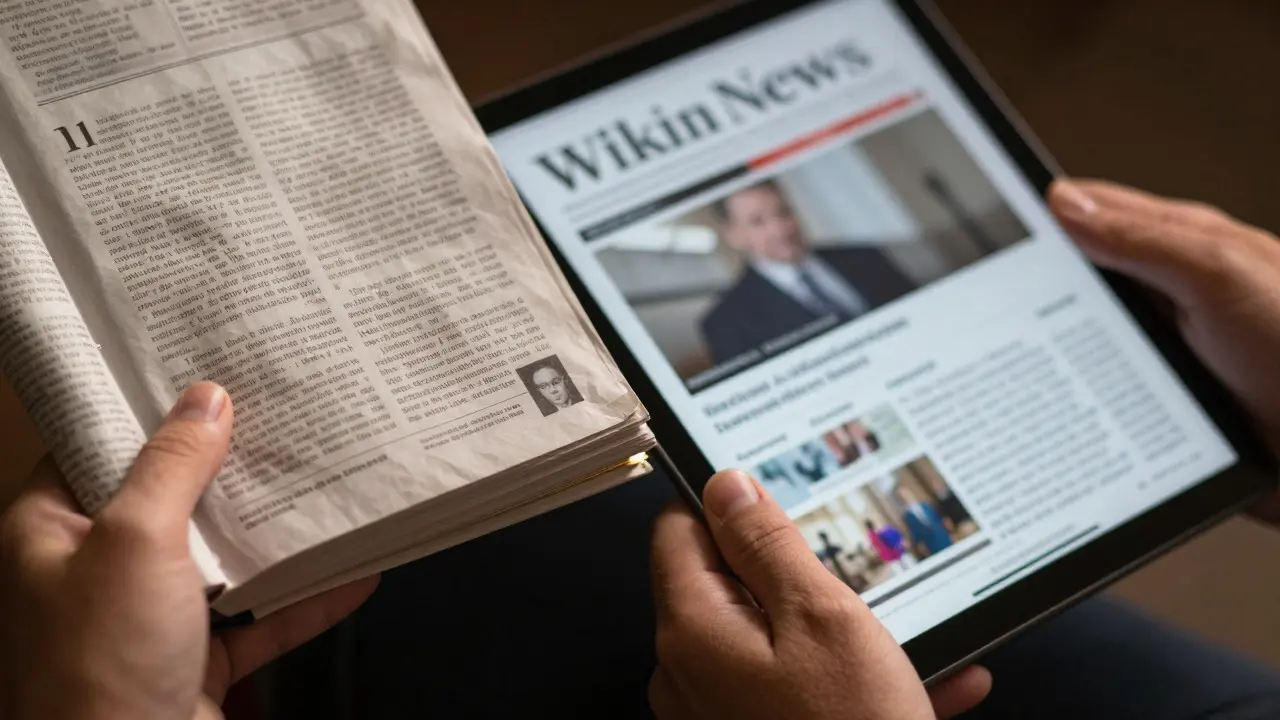
If you’re researching a topic for a school paper, job interview, or general curiosity, go to Wikipedia. It offers depth, context, and verified facts. Use it to understand the background of an issue before diving into current headlines.
If you want to know what happened in the last 24 hours, especially for niche local events or under-covered international stories, check Wikinews. It fills gaps that mainstream media might ignore. Just remember to treat it as a starting point, not the final word. Cross-reference key claims with other sources to ensure accuracy.
For journalists and researchers, Wikinews can be a goldmine for finding obscure data points or direct quotes that haven’t made it to major outlets yet. For casual readers, it’s a quick pulse check on global events without the ad-heavy clutter of commercial news sites.
Frequently Asked Questions
Is Wikinews considered a reliable source for academic work?
Generally, no. Most academic institutions prefer peer-reviewed journals or major news outlets. However, Wikinews can be used as a lead source to find primary documents or official statements. Always trace the claim back to the original primary source before citing it in formal work.
Why does Wikipedia have so many categories and tags while Wikinews seems simpler?
Wikipedia aims for universal organization, so it uses complex categorization systems to link related topics across millions of pages. Wikinews focuses on temporal relevance (dates) rather than thematic depth, so its tagging system is lighter, focusing on location and subject matter for quick retrieval.
Can I edit a Wikinews article after the news cycle ends?
Yes, but with caution. Unlike Wikipedia, where edits aim for permanent truth, Wikinews edits should respect the historical record of the report. You can fix typos or add missing context, but changing the core narrative of a past event requires careful justification to avoid rewriting history.
Does Wikinews cover local news better than Wikipedia?
Often, yes. Wikipedia tends to focus on globally significant topics due to its scale. Wikinews, being more grassroots, frequently covers municipal elections, local disasters, or regional cultural events that national outlets skip. This makes it valuable for hyper-local research.
What happens to old Wikinews articles?
They stay online indefinitely, unlike some commercial news sites that rotate out old content. However, they rarely receive further updates once the news fades. They become historical snapshots of how a story was reported at a specific moment, which can be useful for analyzing media trends or fact-checking past narratives.