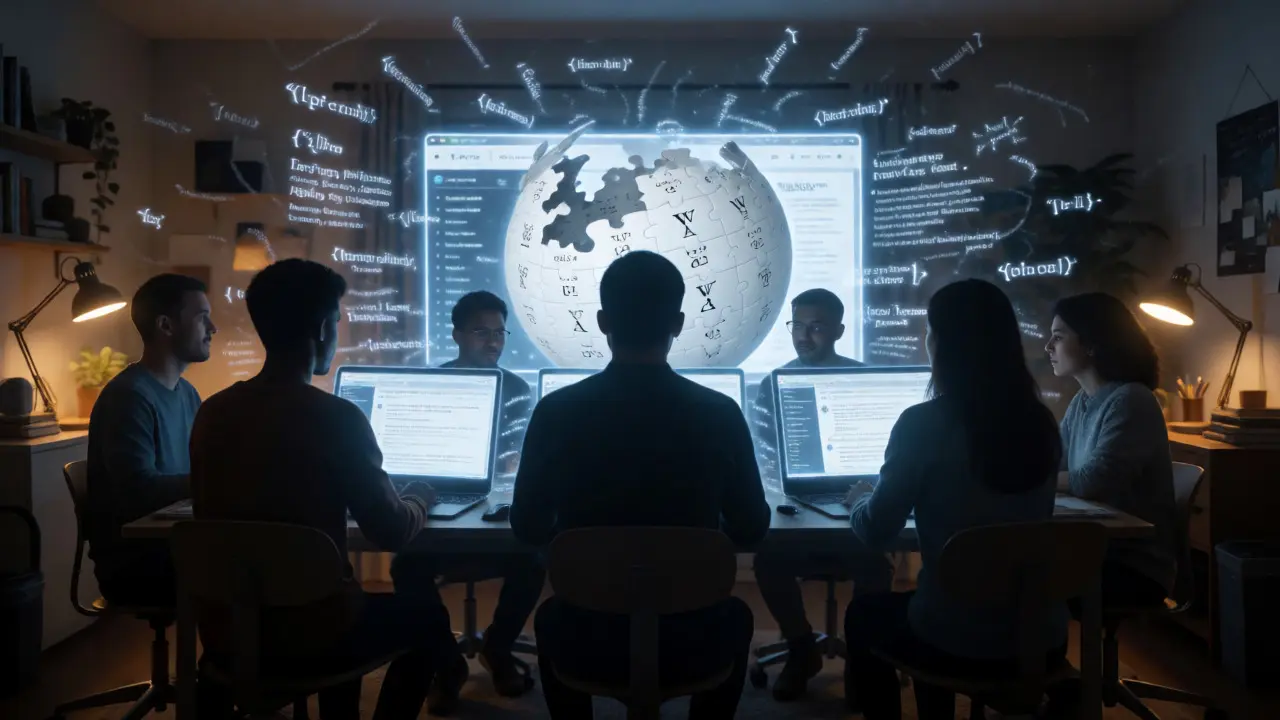
You’ve read a Wikipedia article. You probably skimmed the references, checked the infobox, and moved on. But have you ever wondered who actually wrote those sentences? It’s not a faceless algorithm or a single bored academic. It’s thousands of humans, often anonymous, fighting over commas, citations, and neutral point of view. This is First-Person Journalism in its most extreme form-not just reporting events, but documenting the messy, human process of building knowledge itself.
Traditional journalism usually hides the reporter. The goal is objectivity; the "I" disappears so the facts can speak for themselves. Wikipedia flips this script. While the final article aims for neutrality, the story of how it got there lives in the talk pages. That’s where the real narrative happens. If you want to understand modern information ecosystems, you have to look at the editors, not just the entries.
The Editor as Protagonist
In standard newsrooms, the byline is a badge of honor. On Wikipedia, the username is often a shield. Yet, these users drive the content. Consider the sheer volume of activity. As of 2026, the English Wikipedia has over six million articles, maintained by a core group of roughly 100,000 active contributors. These aren’t just casual clickers. Many spend hours daily engaging in what sociologists call "boundary work"-defining what counts as reliable knowledge.
This creates a unique journalistic genre. It’s Collaborative Writing that functions like a live documentary. When an editor deletes a section because it lacks sources, they aren’t just editing text; they are enforcing a community standard. Their narrative voice emerges in edit summaries. A summary like "Removed unsourced speculation" tells you more about the editor’s values than their profile page ever could. They are curators, gatekeepers, and occasionally, trolls.
Why does this matter? Because we consume Wikipedia without seeing the labor behind it. We treat it as a static database. In reality, it’s a dynamic social network disguised as an encyclopedia. The first-person perspective here isn’t about ego; it’s about accountability. Every change is logged. Every dispute is archived. You can trace the exact moment a consensus broke down.
Narratives from the Talk Pages
If the article is the stage, the Talk Page is the backstage drama. This is where first-person journalism truly shines. Here, editors drop the pretense of omniscience. They argue. They apologize. They cite style guides like scripture. Take the long-running debates over biographies of living persons. These aren’t just factual corrections; they’re ethical negotiations.
One recurring theme in these threads is the tension between inclusion and exclusion. An editor might write, "I removed this claim because it comes from a blog." Another replies, "But the blog quotes a primary source!" Who wins? Usually, the one with better patience and deeper knowledge of Reliable Sources. These interactions reveal the hidden rules of digital truth-making. They show us that "fact" on Wikipedia isn’t just data-it’s a socially constructed agreement.
| Role | Primary Action | Narrative Voice | Typical Edit Summary |
|---|---|---|---|
| Newcomer | Adds content, often unsourced | Eager, defensive | "Added info about X" |
| Veteran Editor | Reverts vandalism, enforces style | Authoritative, terse | "Rv: unsourced" |
| Subject Expert | Corrects technical inaccuracies | Pedantic, precise | "Fixed terminology per ISO standards" |
| Conflict Mediator | Facilitates consensus | Diplomatic, questioning | "Can we agree on this phrasing?" |
The Conflict Engine
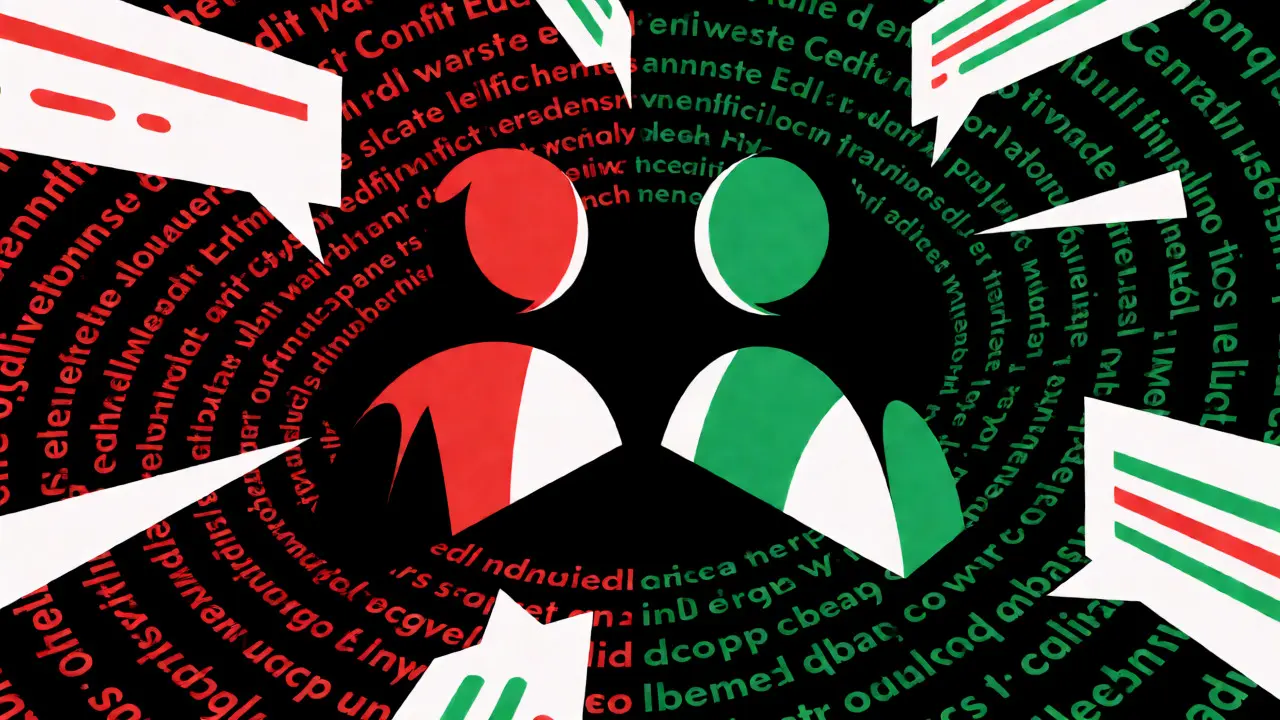
Disagreement is the fuel of Wikipedia. Without conflict, there’s no improvement. This mirrors a specific type of investigative journalism: adversarial verification. When two editors clash over a political figure’s description, they force each other to dig deeper. One side claims bias; the other demands proof. The result is usually a more nuanced, sourced paragraph.
But it’s not always pretty. Edit wars happen. Users block each other. Sometimes, personal vendettas masquerade as policy enforcement. Reading talk pages reveals the emotional toll of this work. Editors burn out. They leave. Then they return. This cycle creates a rich, if chaotic, archive of human interaction. It’s raw data on how people negotiate truth in the digital age.
Consider the concept of Neutral Point of View (NPOV). It sounds simple. Write without bias. But in practice, NPOV is a constant negotiation. What seems neutral to one culture feels biased to another. Editors must navigate these cultural landmines daily. Their narratives capture these struggles, offering insights into global perspectives that traditional media often misses.
Tools of the Trade
How do these editors manage such complexity? They rely on specialized tools that shape their workflow. Huggle, for example, is a rapid anti-vandalism tool. It allows experienced users to spot and revert bad edits in seconds. Using Huggle changes your relationship with the text. You stop reading for meaning and start scanning for patterns. Red diffs appear when something is deleted. Green means addition. Your brain learns to associate color with intent.
Other tools include Twinkle, which automates common maintenance tasks like tagging articles for cleanup. These technologies don’t replace human judgment-they amplify it. They free up mental bandwidth for the harder tasks: evaluating source reliability and crafting clear prose.
For newcomers, the learning curve is steep. The interface looks outdated. The jargon is thick. "WP:NPOV," "RS," "OR"-these abbreviations form a secret language. Mastering them is part of the initiation. Once you speak the lingo, you gain access to the community’s collective wisdom. You become part of the narrative.
Why First-Person Matters Now
We live in an era of misinformation. Trust in institutions is low. People question who controls the narrative. Wikipedia offers a transparent alternative. You can see exactly who changed what and why. This transparency builds trust, even if imperfectly. It shows that knowledge isn’t handed down from above; it’s built from below, through argument and compromise.
Journalists should pay attention. Traditional reporters often use Wikipedia as a starting point, not a source. But understanding the editorial process helps them gauge reliability. If an article has been heavily contested, it’s likely volatile. If it’s stable with few recent edits, it’s settled. Knowing this context prevents lazy citation errors.
Moreover, the skills used by Wikipedia editors-critical thinking, sourcing, concise writing-are increasingly valuable in tech and academia. Companies hire "knowledge managers" who essentially perform Wikipedia-style curation. The first-person experience of editing teaches you how to structure information for clarity and searchability.
Challenges and Criticisms
It’s not all noble quests for truth. Systemic biases persist. Studies have shown gaps in coverage regarding gender and geography. For years, women scientists were underrepresented. Editors fought to fix this, but the effort required was immense. This highlights a flaw in the model: it relies on volunteer labor. If no one cares enough to write the entry, it stays empty.
Bots also play a role. Automated scripts handle routine tasks, like fixing links. But they lack nuance. A bot might flag a legitimate edit as spam. Human oversight remains crucial. The balance between automation and human intervention is a ongoing debate within the community. It’s a microcosm of larger AI concerns in society.
Then there’s the issue of power dynamics. Administrators have extra tools. They can delete pages and block users. Critics argue this creates an elite class. Defenders say it’s necessary for order. Regardless, the hierarchy shapes the narrative. Those with admin rights influence what stays and what goes. Their decisions ripple across millions of readers.
Getting Involved
Want to join the fray? Start small. Fix a typo. Add a citation. Don’t try to rewrite an entire article on day one. Use the sandbox to practice. Read the guidelines before you post. Ask questions on help desks. Most veterans are helpful, provided you show willingness to learn.
- Create an account: Anonymous IPs get less trust. Accounts build reputation.
- Start with minor edits: Grammar fixes and link repairs are safe entry points.
- Learn the markup: Basic wiki syntax is easy to pick up.
- Respect consensus: Even if you disagree, follow the group decision.
Your contributions add to the collective memory. You become part of the story. And in doing so, you practice a rare form of civic engagement: maintaining public knowledge for free.
Is Wikipedia considered a primary source?
No. Wikipedia is a tertiary source. It summarizes secondary sources. Always check the references cited in the article for original evidence. Relying solely on Wikipedia for academic research is generally discouraged.
How do I know if an edit is good?
Good edits are verifiable, neutral, and well-sourced. Look for inline citations linking to reliable publications. Check the edit history to see if the change was controversial. If multiple editors reverted it, proceed with caution.
Can anyone edit any article?
Mostly, yes. However, highly contentious articles may be protected, requiring autoconfirmed status (a certain number of edits and days) to modify. Some articles are fully locked during heated disputes.
What is 'Edit War'?
An edit war occurs when two or more editors repeatedly undo each other's changes. This violates Wikipedia's Three-Revert Rule. If you find yourself in one, discuss the issue on the talk page instead of continuing to revert.
Are Wikipedia editors paid?
The vast majority are volunteers. The Wikimedia Foundation employs staff for development and support, but content creation is largely unpaid. Some organizations run 'edit-a-thons' to encourage participation, but individual editors rarely receive compensation.