Think about the last time you looked something up online. Did you go to a library? Probably not. You likely typed a query into a search engine and clicked on the first result, which was almost certainly Wikipedia. This massive, collaboratively written encyclopedia has become the default source of information for billions of people. But here is the twist: while most of us treat it as a starting point rather than an endpoint, academics have spent two decades dissecting its every move. If you are a student, researcher, or just someone curious about how knowledge is built in the digital age, understanding the body of academic studies about Wikipedia is crucial. It tells us more about human behavior, bias, and collaboration than any traditional textbook ever could.
This article isn't just a list of papers. It is a roadmap through the landscape of scholarly work that has analyzed Wikipedia since its launch in 2001. We will look at what researchers found when they compared Wikipedia to Encyclopedia Britannica, how they measured the reliability of articles, and why the "edit wars" on controversial pages are actually fascinating case studies in conflict resolution. By the end, you will have a clear index of the major themes in this field and know exactly where to look if you want to dive deeper into specific aspects of Wikipedia research.
The Early Skepticism and the Britannica Comparison
In the early 2000s, the academic community largely dismissed Wikipedia. The idea that random strangers on the internet could compile accurate information seemed absurd to professors who had spent their lives mastering niche subjects. The turning point came in 2005, when Nature, one of the world's leading scientific journals, published a landmark study. Researchers selected 42 science articles from both Wikipedia and Encyclopedia Britannica and asked independent experts to review them for errors.
The results shocked many. The study found that Wikipedia had only four serious errors, while Britannica had three. On average, Wikipedia entries contained about 3.9 factual inaccuracies per article, compared to Britannica’s 2.9. While Britannica was still slightly more accurate, the gap was far smaller than critics expected. This study didn't prove Wikipedia was perfect, but it proved it was good enough to be taken seriously. It shifted the narrative from "is it reliable?" to "how does it achieve this level of accuracy despite having no central authority?"
Subsequent studies expanded on this. Researchers began looking at article quality over time. They discovered that the "wisdom of the crowd" works best when there are diverse contributors with different perspectives. When a group of like-minded users edits a page, errors tend to persist. When diverse groups edit, they check each other, leading to higher accuracy. This finding alone changed how many educators approach teaching critical thinking.
Bias and Representation: Who Writes the World?
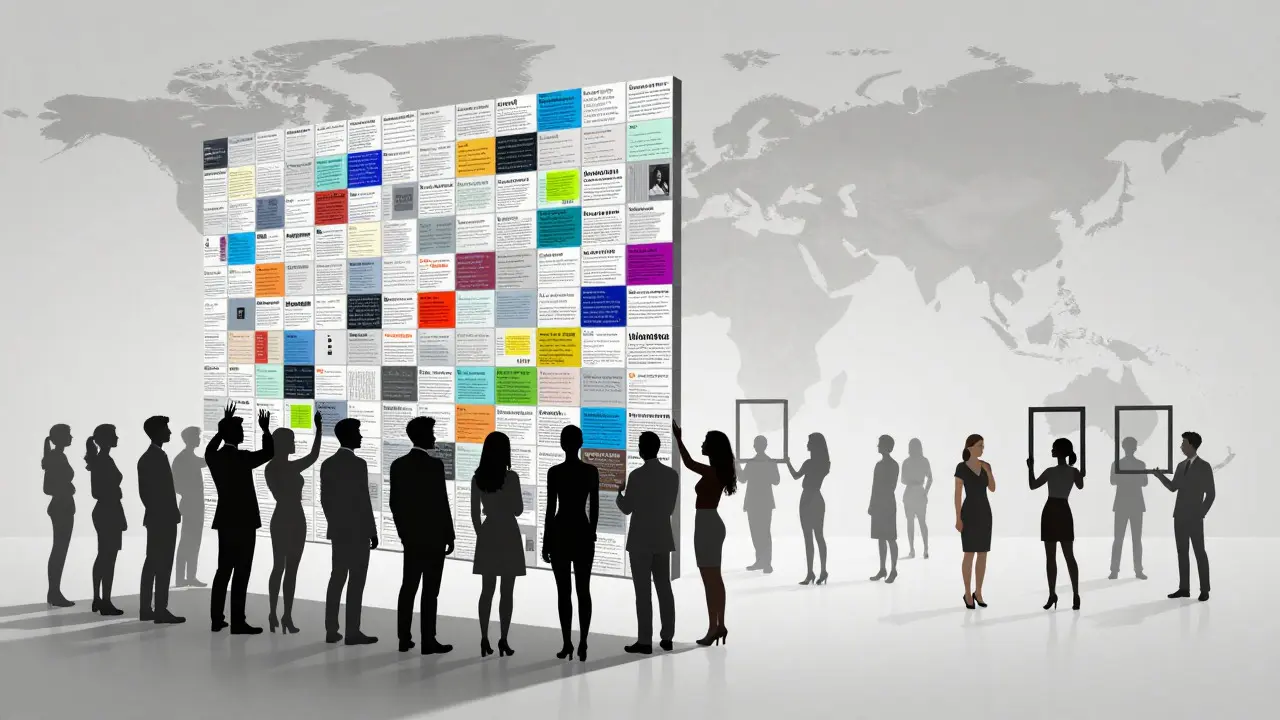
If accuracy was the first question, bias became the second. Academic studies quickly identified a significant skew in who contributes to Wikipedia. Research consistently shows that the majority of editors are male, English-speaking, and based in the Global North. This demographic reality shapes the content. Topics related to women, non-Western cultures, and minority groups often receive less coverage or are framed through a Western lens.
| Metric | Finding | Implication |
|---|---|---|
| Gender Gap | Approximately 85-90% of active editors identify as male. | Biographies of women are significantly shorter and less detailed. |
| Geographic Bias | Over 70% of edits originate from North America and Europe. | African and Asian history may lack depth or nuance. |
| Education Level | Editors disproportionately hold advanced degrees. | Technical jargon may obscure accessibility for general readers. |
One particularly striking area of study focuses on biographical articles. Researchers found that female scientists, politicians, and artists often have shorter articles than their male counterparts, even when their impact is comparable. This isn't necessarily malicious; it reflects the sources available. Historically, media coverage focused more on men, so there were fewer citations to build articles around. However, this creates a feedback loop: less coverage leads to fewer citations, which leads to shorter articles, which reinforces the perception of lesser importance.
To combat this, initiatives like WikiProject Women in Red emerged. Academics have studied these projects to see if organized editing campaigns can reduce systemic bias. The consensus? Yes, but slowly. Targeted efforts improve coverage, but structural changes in publishing and media are needed for long-term balance.
Conflict, Collaboration, and Edit Wars
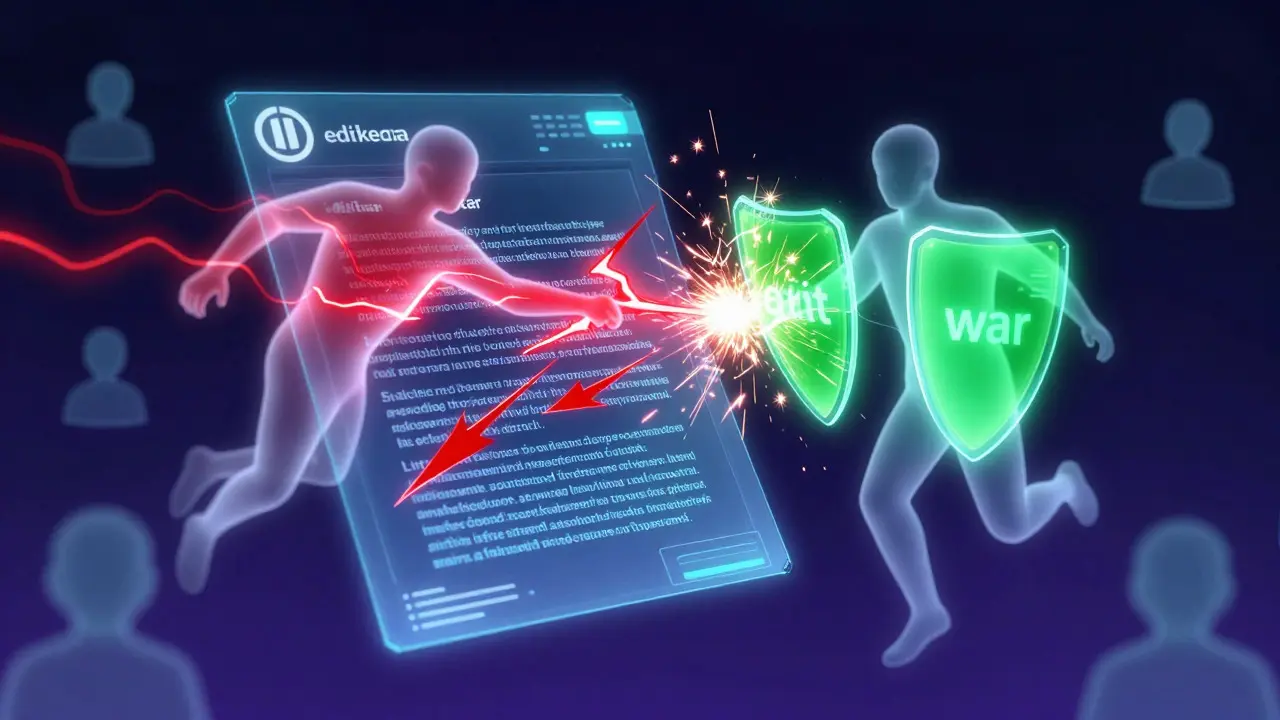
Wikipedia is not always a peaceful place. Controversial topics-like politics, religion, or recent events-often spark intense debates among editors. These disputes, known as "edit wars," involve reverting each other's changes repeatedly until a compromise is reached or administrators intervene. For sociologists and computer scientists, these interactions are gold mines.
Studies analyzing edit histories show that successful resolution of conflicts relies heavily on social norms and reputation. Editors with a history of constructive contributions are more likely to have their changes accepted. Newcomers who make aggressive edits without discussion often get reverted quickly. This mirrors real-world political dynamics: legitimacy matters.
Researchers have also examined the role of bots. Automated scripts handle routine tasks like fixing typos or updating links. Surprisingly, some studies suggest that bot edits are often more stable than human edits because they follow strict rules without emotional investment. This raises interesting questions about the future of collaborative writing. Could AI eventually replace human editors for basic maintenance? Current research suggests humans are still essential for nuanced judgment calls, but the line is blurring.
Reliability and Vandalism Detection
How does Wikipedia stay clean? One common fear is vandalism-someone changing facts for fun or malice. Academic analysis reveals that most vandalism is corrected within minutes. The sheer number of eyes watching popular pages acts as a powerful filter. Researchers developed algorithms to predict which articles are most likely to be vandalized. High-profile pages, such as those about current celebrities or breaking news, are at highest risk.
However, subtle misinformation is harder to catch than blatant vandalism. Studies focusing on medical articles found that while major errors are rare, outdated information persists longer. Because Wikipedia relies on citations, if a source becomes outdated but remains cited, the error stays. This highlights a critical limitation: Wikipedia reflects the state of published literature, not necessarily the latest scientific breakthroughs. Readers must always check the date of the references.
Wikipedia in Education: Friend or Foe?
For years, teachers banned Wikipedia from school assignments. "It's not a primary source," they would say. And they were right. But recent pedagogical research suggests banning it misses the point. Instead, educators are now using Wikipedia as a tool to teach information literacy. Students are asked to compare Wikipedia articles with peer-reviewed journals, identify biases, and even contribute to the site themselves.
Programs like the Student Editing Initiative allow university students to write or improve Wikipedia articles as part of their coursework. Studies show this improves writing skills and gives students a sense of audience beyond their professor. It transforms passive consumption of knowledge into active creation. The challenge, however, remains ensuring that student edits are neutral and well-sourced, which requires careful instructor guidance.
The Future of Open Knowledge
As we move further into the 2020s, the focus of academic studies shifts toward sustainability. Who maintains Wikipedia in the long run? Will volunteer energy dry up? Recent data shows a plateau in new editor growth, suggesting the community needs fresh approaches to recruitment. Furthermore, the rise of generative AI poses new challenges. If AI can generate summaries instantly, what is the value of curated, human-edited knowledge?
Researchers argue that the value lies in verification and context. AI might summarize, but humans provide the critical framework of what is important and how it connects. The next wave of studies will likely explore how Wikipedia integrates with semantic web technologies, making its data machine-readable and interoperable with other knowledge bases like Wikidata.
Quick Summary / Key Takeaways
- Accuracy is high: Early comparisons with Britannica showed Wikipedia is surprisingly accurate, especially for science topics.
- Bias exists: Demographic skews (gender, geography) affect coverage, particularly in biographies and cultural topics.
- Self-correction works: Popular pages are monitored closely, leading to rapid correction of obvious vandalism.
- Educational potential: Using Wikipedia in classrooms teaches critical evaluation skills better than simply banning it.
- Future challenges: Sustaining volunteer participation and integrating with AI tools are key areas of ongoing research.
Is Wikipedia considered a reliable source for academic papers?
Generally, no. Most academic institutions do not accept Wikipedia as a citable source in final papers because it is a tertiary source. However, it is excellent for background reading and finding primary sources via its references section. Always verify information against the original sources cited in the article.
Why is there a gender gap in Wikipedia editors?
Research indicates the gap stems from historical barriers in technology access, online harassment targeting women, and the nature of free-time volunteering. Initiatives like WikiProject Women in Red are actively working to close this gap by encouraging more female editors and creating articles about notable women.
How do researchers measure Wikipedia article quality?
They use metrics like length, number of citations, neutrality scores, and revision history stability. Some studies employ expert reviews, while others use algorithmic models that analyze text complexity and reference density to predict quality ratings assigned by the Wikipedia community.
Can anyone edit Wikipedia?
Yes, most articles can be edited by anyone without logging in. However, protected articles (often controversial ones) require registered accounts with a certain edit count. All edits are logged and can be reverted by other users or administrators if they violate policies.
What is the most cited academic study on Wikipedia?
The 2005 Nature study comparing Wikipedia and Britannica is arguably the most famous. It provided empirical evidence that challenged the prevailing skepticism about crowdsourced knowledge and opened the door for extensive subsequent research.
Next Steps for Researchers and Curious Minds
If you want to explore this topic further, start by browsing the Wikipedia:Research page on the site itself. It indexes hundreds of academic papers categorized by theme. Look for authors like Aaron Halfaker, who studies conflict and cooperation, or Dariusz Jemielniak, who explores the sociology of online communities. Their work provides deep insights into the human mechanics behind the encyclopedia.
For students, try editing a small article. Pick a topic you know well, find a missing citation, and add it. Watch how your change sticks or gets discussed. This hands-on experience complements the theoretical knowledge gained from reading these studies. Understanding the process makes you a smarter consumer of digital information.