Imagine typing a question into your search bar and getting an answer that feels instantly perfect. No citations, no footnotes, just a smooth paragraph generated by an algorithm. For years, Wikipedia is a free online encyclopedia edited collaboratively by volunteers worldwide, serving as the primary reference point for billions of users seeking factual information. It stands on the bedrock of verifiability and consensus. Now, with Artificial Intelligence dominating search results, Wikipedia faces a unique challenge: how to adopt these powerful tools without eroding the very trust that makes it valuable.
The core problem isn't whether AI is useful; it clearly is. The issue is perception. Readers have grown wary of "hallucinations"-plausible-sounding but factually incorrect statements generated by large language models. If Wikipedia starts using AI to write articles or summarize sources automatically, will it become just another source of unverified noise? Or can it leverage this technology to strengthen its position as the gold standard of digital knowledge?
Why Trust Is the Ultimate Currency
In the digital landscape, Digital Trust is the confidence users place in a platform's accuracy, transparency, and reliability when consuming information. For Wikipedia, this trust was built over two decades through rigorous community governance, citation requirements, and transparent edit histories. Every change is visible. Every dispute is debated in public talk pages. This radical transparency is what separates it from proprietary encyclopedias or chatbots.
However, Platform Competition has shifted dramatically. Users no longer just want information; they want convenience. When a generative AI assistant provides a quick summary, many users stop digging deeper. They don't check the source. They don't verify the claim. This creates a risk where Wikipedia becomes a backend data source rather than a destination. If the frontend (the AI) gets it wrong, does the user blame the backend? Often, yes. So, Wikipedia must ensure that if AI touches its content, the human element remains visibly dominant.
The Strategic Role of AI in Maintenance, Not Creation
The most effective strategy for Wikipedia is to use AI as a maintenance tool, not a creative one. Think about the sheer volume of work involved in keeping millions of articles up-to-date. There are broken links, outdated references, and formatting inconsistencies. These are repetitive tasks that humans find tedious but algorithms handle well.
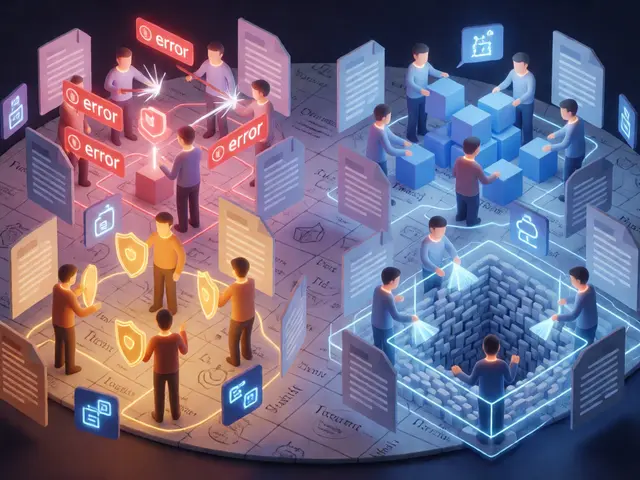
Consider the concept of Automated Quality Control, which involves using software to detect errors, style violations, or missing citations before a human even sees them. By deploying AI bots to flag potential issues, editors can focus their energy on high-value tasks like writing new sections or resolving complex disputes. This division of labor enhances efficiency without compromising the human judgment required for factual accuracy.
- Link Rot Detection: AI can scan for dead external links faster than any human team could manually.
- Citation Formatting: Algorithms can standardize how sources are cited, ensuring consistency across millions of pages.
- Vandalism Reversion: Machine learning models can identify obvious vandalism patterns and revert changes within seconds.
This approach keeps the "author" role firmly with humans. The AI acts as an editor's assistant, highlighting problems so the volunteer can make the final call. This preserves the integrity of the content while scaling the project's capacity.

Navigating the Transparency Gap
A major hurdle in leveraging AI is the "black box" problem. When a neural network generates text, it’s hard to know exactly why it chose specific words or facts. In contrast, Wikipedia’s strength lies in its open process. To maintain trust, any AI integration must be transparent.
If an AI suggests a summary for an article, it should be labeled clearly. Readers need to know that a machine helped craft that text. This isn’t about hiding the tech; it’s about managing expectations. A label like "AI-Assisted Draft" signals to the reader that human verification is still pending or complete. This transparency builds User Confidence because it acknowledges the hybrid nature of the creation process.
Furthermore, the edit history must remain intact. If an AI bot makes a change, it should be logged distinctly from human edits. This allows for easy auditing. If a mistake is found, the community can trace it back to the algorithmic suggestion rather than blaming a specific volunteer. This distinction protects the reputation of the human contributors who form the backbone of the project.
Comparing Approaches: Human-Only vs. AI-Augmented
To understand the trade-offs, let’s look at how different strategies compare in terms of speed, cost, and trust impact. The following table outlines the key differences between maintaining a purely human-edited model versus an AI-augmented workflow.
| Feature | Human-Only Editing | AI-Augmented Workflow |
|---|---|---|
| Speed of Updates | Slower, dependent on volunteer availability | Faster for routine fixes, similar for complex content |
| Error Rate | Low for facts, higher for consistency | Very low for formatting, moderate for nuance |
| Trust Perception | High, due to visible human accountability | Variable, depends on labeling and transparency |
| Scalability | Limited by volunteer burnout | High, handles massive volumes of minor edits |
| Cost Structure | High opportunity cost (time) | Lower marginal cost per edit after setup |
The data suggests that a hybrid model offers the best balance. Pure human editing is sustainable for small projects but struggles at Wikipedia’s scale. Pure AI generation risks losing the soul of the encyclopedia. The sweet spot lies in using AI for the mundane and reserving human effort for the meaningful.

Building a Governance Framework for AI
Technology alone doesn’t solve the trust issue; governance does. Wikipedia needs clear policies on how AI can be used. This includes defining which types of edits require human approval and which can be automated. For instance, changing a number in a statistical table might be safe for automation, but rewriting a controversial historical narrative definitely is not.
Creating a dedicated task force focused on Ethical AI Integration would help set these boundaries. This group could consist of technologists, editors, and readers. Their job would be to monitor the impact of AI tools on content quality and community sentiment. Regular audits would ensure that AI isn’t introducing subtle biases or drifts in tone.
Additionally, feedback loops are crucial. If readers notice that AI-assisted articles feel "off," there should be an easy way to flag them. This continuous feedback mechanism ensures that the system evolves based on real-world usage, not just technical metrics.
The Future of Collaborative Knowledge
As we move further into 2026, the line between creator and consumer is blurring. Wikipedia’s strategic response shouldn’t be to fight AI, but to harness it wisely. By treating AI as a tool for curation rather than creation, Wikipedia can maintain its status as a trusted source. The key is to keep humans in the loop for decision-making while letting machines handle the heavy lifting of maintenance.
Ultimately, trust is earned through consistency and transparency. If Wikipedia demonstrates that AI improves the quality of life for its editors without sacrificing accuracy for its readers, it will not only survive the AI wave but thrive in it. The goal is simple: make the encyclopedia more accessible, more accurate, and more resilient, all while keeping the human spirit at its core.
Will AI replace Wikipedia editors?
No, AI is unlikely to replace editors entirely. Instead, it will shift their roles from manual formatting and link fixing to higher-level content review and dispute resolution. Editors will become supervisors of AI processes rather than sole creators of every sentence.
How can readers tell if an article was written by AI?
Readers can check the edit history for bot tags or AI-assistant labels. Wikipedia plans to implement clear metadata markers that indicate when an AI tool was used to generate or refine text, ensuring full transparency for the user.
Is AI-generated content less reliable than human-written content?
Not necessarily. AI is highly reliable for factual data and formatting consistency. However, it may lack nuance in complex or controversial topics. Therefore, reliability depends on the type of content and the level of human oversight applied during the editing process.
What is the biggest risk of adopting AI for Wikipedia?
The biggest risk is a loss of perceived authenticity. If users feel the encyclopedia is becoming a black box of machine-generated text, they may lose faith in its neutrality. Maintaining visible human accountability is critical to mitigating this risk.
How does this strategy affect smaller language versions of Wikipedia?
Smaller versions benefit significantly from AI translation and summarization tools. These technologies can help bridge content gaps by converting high-quality English articles into other languages, provided that local editors review the translations for cultural context and accuracy.