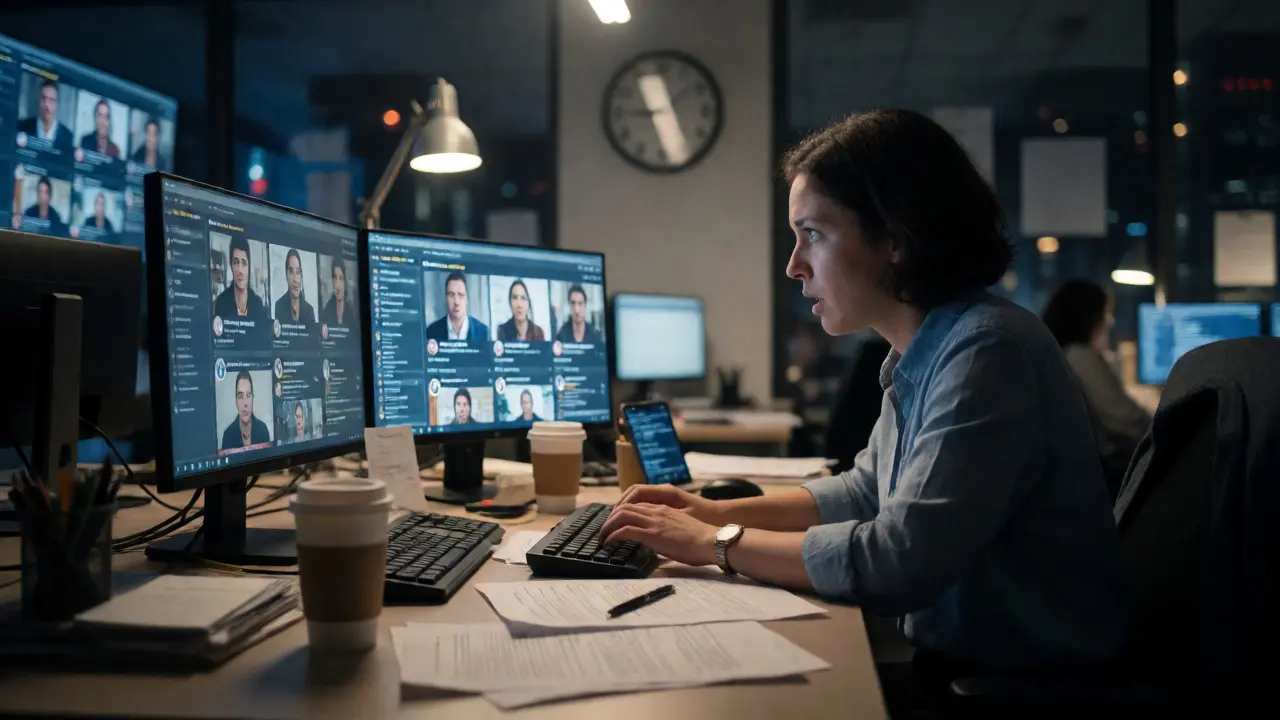
You are sitting at your desk, coffee cold, eyes glued to a live feed. A plane just went down in the Pacific, or maybe a major political figure resigned. The wire services are churning out fragments: "Reports of...", "Sources say...", "Details emerging." You have thirty seconds before you need to tweet something, and two minutes before you need a headline. Where do you look? Not Twitter, because that is chaos. Not your own memory, because panic wipes it clean. You type the name into Wikipedia is a free online encyclopedia created by volunteers that serves as a rapid-response reference tool for journalists during fast-moving events. It sounds counterintuitive, right? We were taught in journalism school never to cite Wikipedia. Yet, when the world breaks, it is often the first place professionals turn. Why?
The Speed Factor in Information Gathering
Let’s be real about time. In breaking news, speed is currency. Traditional sources like encyclopedias or even official government press releases move at the speed of bureaucracy. They wait for confirmation, legal review, and formatting. Wikipedia moves at the speed of the internet. When a celebrity dies or a natural disaster strikes, within minutes, an article exists. It might be messy. It might have typos. But it has structure. It has dates. It has context.
I remember covering a sudden resignation of a city council member here in Madison. The official statement hadn’t hit the inbox yet. My editor was yelling for background. I didn’t have time to call three different aides. I pulled up the politician’s page. There it was: their voting record summary, their previous controversies, their education history. Was every detail verified? No. But did it give me a framework to understand who this person was while I waited for the confirmed quote? Absolutely. That structural skeleton is what makes Wikipedia invaluable in the first ten minutes of a crisis.
Contextualizing the Chaos
Breaking news is rarely isolated. It is usually part of a larger narrative that the public doesn’t immediately see. If a tech CEO steps down, why does it matter? Is it related to a lawsuit from last year? Did they previously lead a failed merger? Official reports focus on the *now*. Wikipedia focuses on the *history*.
This is where the platform shines as a contextual engine. It aggregates disparate threads-legal cases, employment history, family ties, past statements-and weaves them into a single narrative. For a journalist, this saves hours of digging through archives. Instead of piecing together a timeline from five different old articles, you get a synthesized overview. This allows reporters to ask better questions. Instead of asking, "Why did he quit?" you can ask, "Does this resignation signal a shift in the company's strategy following the 2024 antitrust ruling?" That second question comes from having the background instantly available.
The Verification Paradox
Here is the catch: you cannot trust it blindly. This is the paradox every modern journalist faces. Wikipedia is both the fastest source and the least reliable one. So how do pros use it without getting burned? They don’t treat it as a source; they treat it as a map.
Think of Wikipedia as a trailhead. You follow the signs to find the primary sources. Every claim on a well-maintained Wikipedia page should have a citation link at the bottom. Smart journalists click those links. They go to the original newspaper article, the court document, or the press release cited. If the citation is missing, or if it leads to a dead link, they know the information is shaky. This process turns Wikipedia from a potential liability into a research accelerator. It points you toward the truth, even if it isn’t the truth itself.
| Method | Speed | Reliability | Best Use Case |
|---|---|---|---|
| Social Media Feeds | Instant | Low | Initial alert, raw eyewitness accounts |
| Wire Services (AP/Reuters) | Fast (5-15 mins) | High | Confirmed facts, official quotes |
| Wikipedia | Very Fast (1-5 mins) | Mixed (Needs Verification) | Background, context, finding primary sources |
| Official Press Releases | Slow (Hours/Days) | Very High | Final details, legal precision |
Navigating Vandalism and Bias
Not everyone knows that Wikipedia has a robust system of checks. While anyone can edit, changes are monitored. During high-profile events, pages often enter a state of "semi-protection," meaning only registered users with some history can make edits. This reduces random vandalism. However, bias remains a concern. Edit wars happen. Two editors might fight over whether a protest was "peaceful" or "riotous." Who wins? Often, it’s whoever has more patience or access to better sources.
Journalists learn to read between the lines. If an edit says "controversial figure," but the citation is a partisan blog, you dig deeper. If the talk page (the discussion area behind each article) is active with heated debates, you know the topic is sensitive. Reading the talk page is a pro tip many beginners miss. It reveals what the community disagrees on, which often highlights the most newsworthy angles. If editors are arguing about the date of an event, there might be conflicting reports worth investigating independently.
The Ethical Line: Citation vs. Reference
There is a strict rule in reputable newsrooms: Never cite Wikipedia in your final story. You can use it to find the story, but you must verify every fact against a primary source. This distinction is crucial. Citing means saying, "According to Wikipedia..." Using means saying, "I looked up the background on Wikipedia, found a link to a 2023 court case, read the case, and now I am citing the court documents."
This workflow respects intellectual property and journalistic integrity. It acknowledges that Wikipedia is a tertiary source-a collection of summaries-while your job is to report on primary and secondary sources. Failing to do this leads to errors that spread rapidly. Remember the fake stories that circulated after the Boston Marathon bombing? Misinformation moved faster than verification. Relying solely on unverified user-generated content without cross-referencing creates a house of cards.
When Wikipedia Fails the Test
It is not perfect. During extremely niche local events, there might be no page at all. Or worse, the page might be outdated. If a mayor served until 2020 but left office in 2024, the page might still list them as incumbent if no one updated it. This lag is dangerous. Always check the "last edited" timestamp. If the page hasn’t been touched in six months, assume the current status info is wrong.
Also, consider the language barrier. English Wikipedia is vast, but coverage of non-US events can be spotty. If you are covering a crisis in Southeast Asia, the English page might be thin compared to the local language version. Modern journalists often use translation tools to scan foreign-language wikis for broader perspectives, though this requires extra caution with nuance.
Beyond the Text: Multimedia Assets
One underrated feature is the multimedia archive. Need a photo of a building that just caught fire? Or a chart showing economic trends leading up to a crash? Wikimedia Commons, the sister project, hosts millions of freely licensed images. Finding a high-quality, rights-cleared image for a breaking story can take longer than writing the text. Wikipedia often has these assets pre-loaded and tagged correctly. Just ensure you check the license type. Some require attribution; others are public domain. Getting this wrong can lead to copyright strikes, which is the last thing you want on a busy news day.
The Future of Rapid Reference
As AI tools evolve, will Wikipedia lose its grip? Probably not soon. AI models are trained on data that includes Wikipedia, creating a feedback loop. But humans still value the transparency of seeing *who* edited *what* and *when*. An AI summary doesn’t show you the debate behind the facts. Wikipedia does. For journalists who need to understand the controversy, not just the conclusion, that transparency is irreplaceable.
So, next time you are scrambling to cover a sudden event, don’t dismiss the yellow-and-blue logo. Open it. Scan the infobox. Check the citations. Read the talk page. Use it as your compass, not your destination. It won’t replace your reporting, but it will make sure you’re asking the right questions from minute one.
Can journalists ever cite Wikipedia directly in a news article?
Generally, no. Reputable style guides prohibit citing Wikipedia as a primary source because it is a tertiary source that can change. Journalists use it to find primary sources, which they then cite. Exceptions might exist for opinion pieces discussing Wikipedia itself as a phenomenon, but not for factual reporting on external events.
How quickly does Wikipedia update during breaking news?
Updates can happen within minutes. Dedicated editors monitor news feeds and social media. However, significant changes may be reverted if they lack immediate citations. For major global events, updates are nearly real-time, but accuracy lags slightly behind speed until sources are added.
What is the 'Talk Page' and why should journalists read it?
The Talk Page is a forum attached to each article where editors discuss changes. Journalists read it to identify controversies, spot consensus issues, and find disagreements among contributors. It provides insight into the reliability and bias of the current content, helping reporters gauge how stable the information is.
Is Wikipedia reliable for biographical details of living people?
It is moderately reliable but risky. Biographies of living persons (BLP) are strictly regulated on Wikipedia due to privacy concerns. Unsourced material can be removed instantly. Journalists should always verify birthdates, titles, and recent roles against official records or interviews, as BLP pages may be overly conservative or occasionally inaccurate regarding recent achievements.
How do journalists handle copyright when using Wikipedia images?
Most Wikipedia images come from Wikimedia Commons with specific licenses (e.g., Creative Commons). Journalists must check the individual file page for the exact license terms. Some require attribution to the creator; others allow commercial use without credit. Ignoring these terms can lead to legal issues, so verifying the license is a mandatory step before publication.