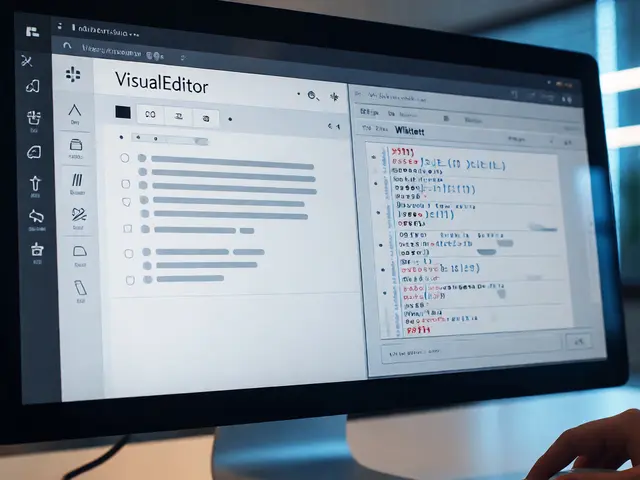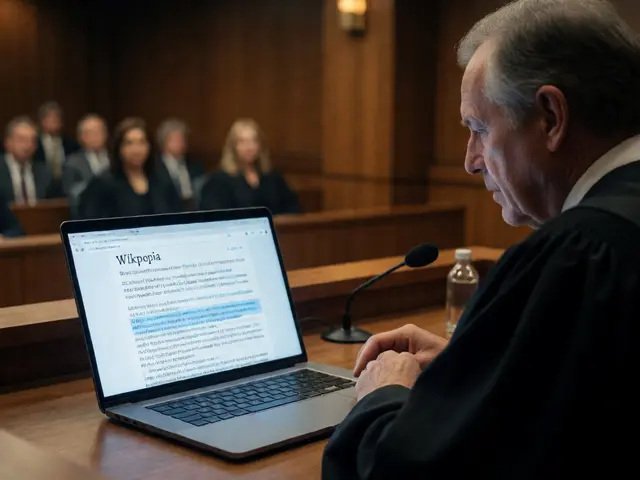
Wikipedia has been the go-to source for quick facts for over two decades. But as the volume of edits grows, and misinformation spreads faster than ever, the platform can’t rely on humans alone. Enter AI-assisted editing. Tools like ORES (Objective Revision Evaluation Service), WikiGrok, and EditBot are now quietly working behind the scenes to flag bad edits, suggest improvements, and even block vandalism before it goes live. This isn’t about replacing editors-it’s about helping them work smarter.
How AI Detects Problems Before Humans Even See Them
Every minute, over 150 edits happen on Wikipedia. Most are harmless: fixing a typo, updating a birthdate, adding a citation. But about 5% are vandalism, spam, or biased edits meant to manipulate perception. Before AI, volunteers had to manually review every flagged change. Now, AI models trained on millions of past edits can predict with 92% accuracy whether a change is likely to be reverted.
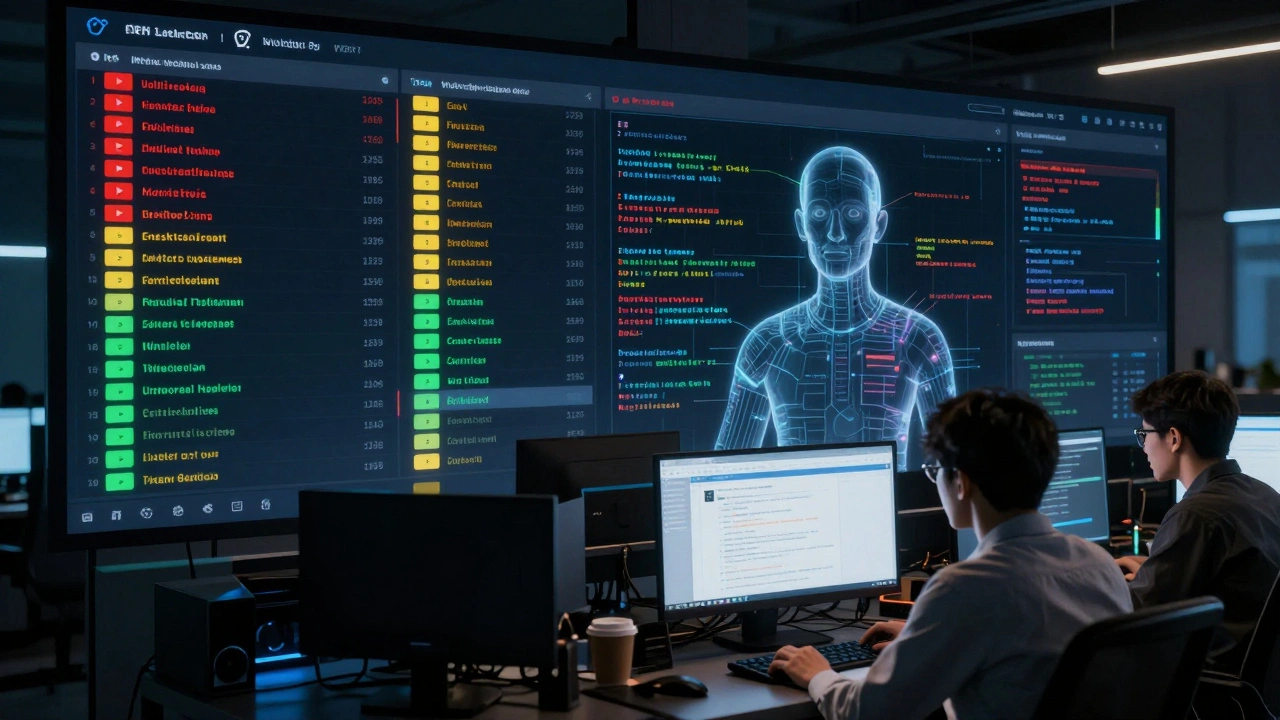
Take ORES, the backbone of Wikipedia’s AI review system. It doesn’t just look for swear words or random gibberish. It analyzes context: Does this edit match the tone of the article? Does it remove reliable sources? Does it add unsupported claims about a living person? If a user tries to change a politician’s party affiliation without evidence, ORES flags it immediately. Editors see a red dot next to the edit-no need to read the whole page.
These systems learn from real outcomes. If 9 out of 10 similar edits get reverted within 10 minutes, the model learns that pattern. It doesn’t guess. It observes. That’s why false positives are under 8%-far better than early versions from 2020.
The Guardrails: What AI Won’t Let You Do
AI doesn’t just spot problems-it blocks them. Think of it like a smart traffic light for edits. Here’s what it stops:
- Unsourced claims about living people - If you try to add "X is a convicted felon" without a court document or major news outlet citation, the system halts the edit and asks for a source.
- Copy-pasted content from commercial sites - AI scans for text matching known spam blogs or corporate PR pages. It doesn’t just check for plagiarism; it checks for intent.
- Repetitive edits by new accounts - A new user who makes 12 edits in 5 minutes, all removing negative info from a company page? AI flags the account for review.
- Language bias in neutral topics - If an edit changes "climate change" to "global warming" in a scientific article, and the context doesn’t justify it, the system suggests a neutral term.
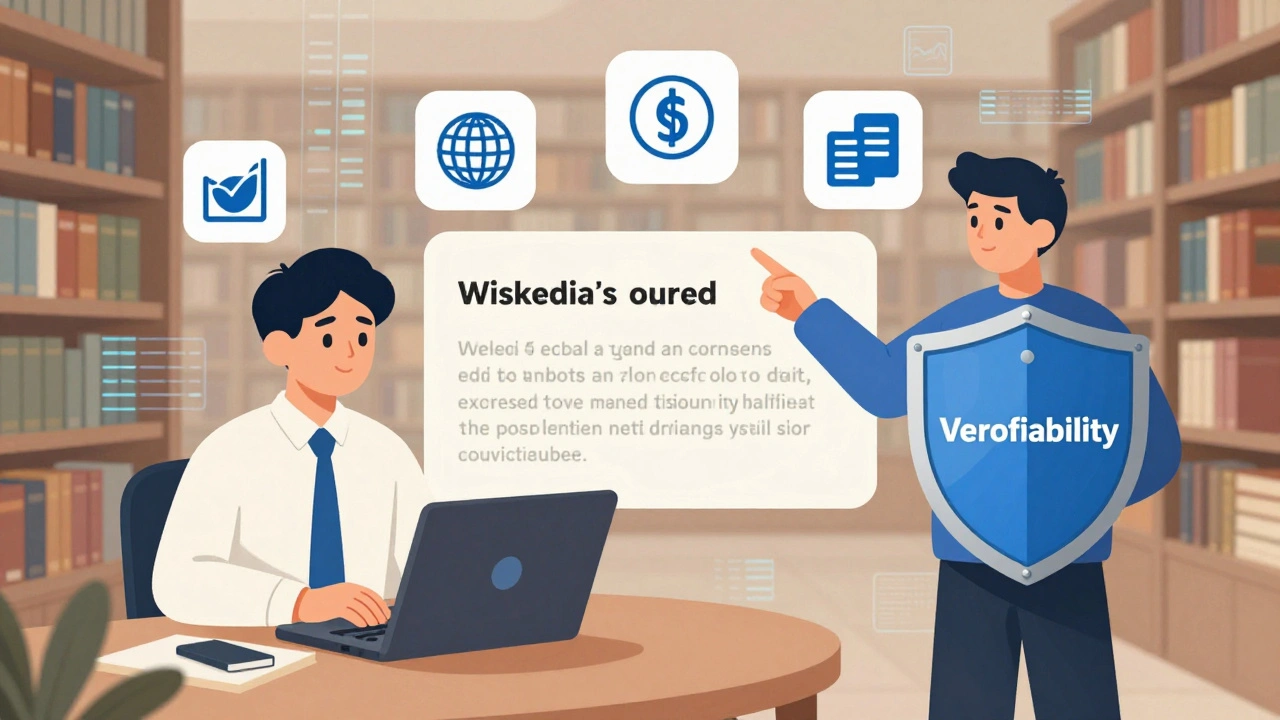
These aren’t arbitrary rules. They’re based on Wikipedia’s five core policies: neutrality, verifiability, no original research, biographies of living persons, and reliable sources. AI translates those abstract ideals into real-time enforcement.
Human Review Still Matters-Here’s How It Works
AI doesn’t make final calls. It surfaces issues. A human still approves or rejects every flagged edit. But here’s the shift: instead of scanning hundreds of edits blindly, editors now focus on the ones AI says are risky.
On the English Wikipedia, over 60% of flagged edits are reviewed within 15 minutes. That’s thanks to a dashboard that prioritizes edits by risk score. A low-risk edit might be a spelling fix. A high-risk one could be an attempt to erase a war crime conviction from a military leader’s page. Editors get a side-by-side view: the old text, the proposed change, and a summary of why AI flagged it.
Some edits get auto-approved if they’re low-risk and come from trusted users-those with 500+ clean edits over six months. This cuts down noise. But if a trusted user suddenly starts making suspicious edits? AI notices. It doesn’t trust reputation-it tests behavior.
Quality Control: The Feedback Loop That Gets Smarter
Wikipedia’s AI doesn’t sit still. Every edit, whether approved or reverted, feeds back into the system. That’s how it improves.
Here’s how the loop works:
- An edit is made.
- AI scores it for risk (0-100).
- A human reviewer approves, rejects, or modifies it.
- The outcome is logged: "reverted," "accepted," or "edited."
- The model updates its understanding: "Edits like this, when made by new users, are 73% likely to be vandalism."
This happens thousands of times a day. As a result, the system’s accuracy has improved by 37% since 2023. What used to require manual training now self-corrects. It’s not magic-it’s data.
Even small changes matter. For example, AI now recognizes when someone tries to insert a product link disguised as a citation. In 2024, it blocked over 1.2 million such attempts. That’s not just about spam-it’s about preserving trust.
What’s Next? The Next Generation of AI Editors
Wikipedia isn’t stopping here. By 2026, new tools are rolling out:
- Context-Aware Suggestion Engines - AI will suggest not just fixes, but better phrasing. If you write "The economy crashed," it might suggest "The economy contracted by 4.2% in Q1 2025, according to the Bureau of Economic Analysis."
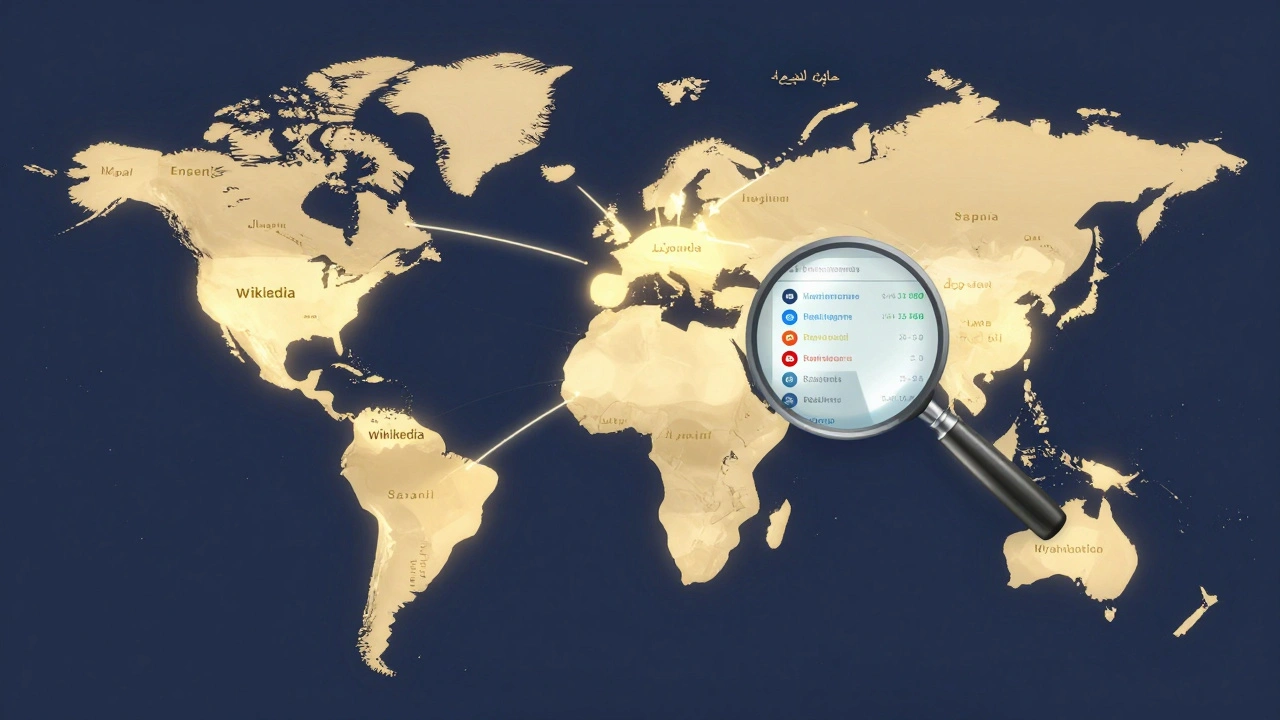
- Multi-Language Consistency Checks - If a fact changes in the English article, AI will check if it’s reflected in the Spanish, Arabic, and Mandarin versions. Discrepancies get flagged.
- Source Validation AI - Instead of just checking if a source exists, AI will analyze its credibility: Is it peer-reviewed? Does it have a history of factual errors? Is it a known propaganda outlet?
These aren’t sci-fi dreams. They’re already in beta. The goal? To make Wikipedia more accurate than ever-not by locking it down, but by giving editors superpowers.
Why This Matters Beyond Wikipedia
Wikipedia is the most-read reference site in the world. Over 1.5 billion people visit it every month. When AI helps keep it accurate, it doesn’t just help editors-it helps students, journalists, researchers, and anyone who needs trustworthy information.
Other platforms are watching. Google, Bing, and even TikTok use Wikipedia as a source for their knowledge panels and summaries. If Wikipedia becomes unreliable, so does the information millions see every day.
That’s why AI-assisted editing isn’t just a tool for Wikipedia. It’s a model for how to scale trust in an age of misinformation. It shows that technology, when built with transparency, community input, and strict guardrails, can protect truth-not erase it.
Can AI make changes to Wikipedia without human approval?
No. AI can flag, suggest, or block edits, but it cannot make permanent changes on its own. Every edit must be reviewed and approved by a human editor. Even automated bots require approval from the community before they can run. This ensures that Wikipedia remains a human-driven project, with AI as a support tool.
Do AI tools favor certain viewpoints?
Wikipedia’s AI tools are designed to enforce neutrality, not impose bias. They’re trained on historical edit patterns and policy violations-not political leanings. For example, if an edit removes negative information from a conservative politician, it’s flagged the same way it would be if it removed negative info from a liberal one. The system looks at evidence, not ideology.
How do new editors get help if AI blocks their edits?
When an edit is blocked, the editor sees a clear reason: "No reliable source cited," or "Potential conflict of interest." They’re also directed to help pages, templates, and volunteer mentors. There’s even a live chat option for first-time editors who need guidance. The goal isn’t to scare them off-it’s to teach them how to edit correctly.
Is AI editing making Wikipedia less diverse?
Actually, the opposite. AI helps reduce barriers for non-native English speakers and new contributors by catching language errors and suggesting clearer phrasing. It also helps surface gaps-like articles missing from non-Western regions-by identifying topics that are underrepresented. Tools like WikiGrok now recommend article creation based on global search trends, not just U.S. or European interest.
Can I opt out of AI review on my edits?
No. All edits on Wikipedia are subject to AI review. This is not optional-it’s part of the platform’s infrastructure to maintain quality. Even experienced editors can’t bypass it. But if you’re trusted (with a long history of good edits), your edits are prioritized for faster review and are less likely to be flagged unless they’re clearly problematic.
Final Thought: Trust Is Built, Not Given
Wikipedia’s success isn’t because it’s perfect. It’s because it’s open, transparent, and constantly improving. AI-assisted editing doesn’t threaten that-it strengthens it. By handling the repetitive, high-volume tasks, it frees up human editors to focus on the nuanced, complex, and meaningful work: digging into sources, debating policy, and building consensus.
The future of knowledge isn’t human or machine. It’s both.