
Wikipedia has always run on trust. Volunteers from around the world write, edit, and police content without pay. But as the site grew to over 60 million articles and billions of monthly visits, conflicts became harder to manage. Harassment, doxxing, and coordinated abuse started surfacing in edit wars and talk pages. In 2021, the Wikimedia Foundation introduced the Universal Code of Conduct (UCoC) to set clear behavioral standards - and in 2023, it rolled out the Enforcement Guidelines to make those standards stick.
What the UCoC Actually Says
The UCoC isn’t a list of vague ideals. It’s a binding set of rules for everyone involved in Wikimedia projects - editors, admins, developers, even donors. At its core, it says: you can’t harass, threaten, or exclude people because of who they are. That includes race, gender, religion, sexual orientation, disability, or even how someone edits.
It’s simple enough: treat others with respect. But the details matter. For example, repeatedly reverting someone’s edits because you disagree with their identity - not their content - counts as harassment. So does using personal information (like a real name or address) to intimidate an editor. Even private messages that escalate into threats are covered. The UCoC applies everywhere: Wikipedia talk pages, Wikimedia mailing lists, Discord servers used by volunteers, even offline events like edit-a-thons.
Why Enforcement Guidelines Were Needed
Before 2023, Wikipedia had local policies, but they varied wildly. A user might get banned on English Wikipedia for harassment, but face no consequences on German or Arabic Wikipedia. That created loopholes. Bad actors learned to move to less strict communities. Some editors, especially women and minorities, reported feeling unsafe but had no clear path to justice.
The Enforcement Guidelines fixed that. They created a global framework with consistent steps:
- Reports must be handled by trained volunteers, not just admins
- Every report gets a written response within 14 days
- Sanctions can include warnings, editing restrictions, or temporary blocks
- Appeals are reviewed by a neutral panel, not the original decision-maker
- Transparency: non-sensitive case summaries are published
It’s not perfect. But for the first time, there’s a repeatable process. No more “it depends on who you know.”
How It Changed Day-to-Day Editing
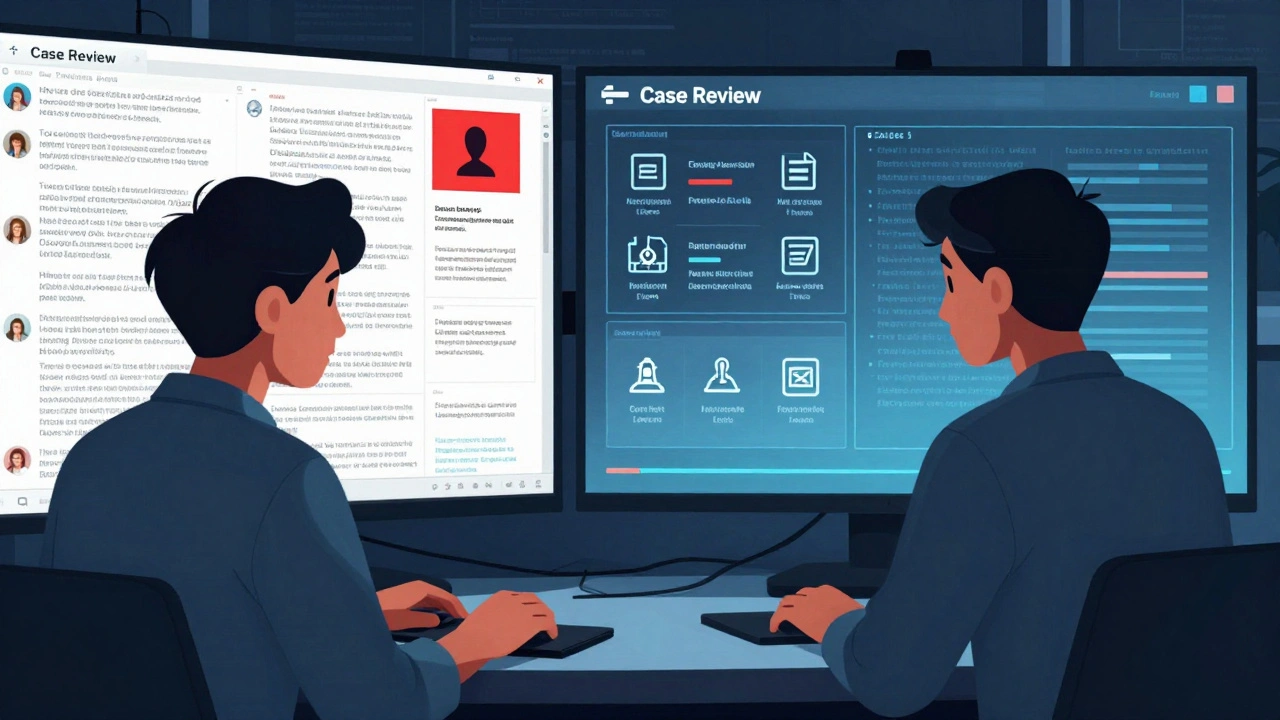
Before the guidelines, many editors avoided controversial topics. Why risk conflict if there’s no way to stop abuse? Now, there’s a system. When a user reports persistent trolling on a biography page, the Case Review Team (CRT) steps in. They don’t decide guilt - they review evidence, interview both sides, and recommend action. Admins still enforce, but now they’re guided by documented standards.
One real example: a long-time editor on French Wikipedia repeatedly mocked a trans contributor’s pronouns in edit summaries. Under old rules, it was dismissed as “edgy humor.” After UCoC enforcement, the CRT collected 37 instances over six weeks, issued a 30-day block, and required the editor to complete a training module on gender inclusion. The contributor later said they felt heard for the first time in five years.
It’s not just about punishment. The guidelines also help prevent conflict. New editors now see clear examples of acceptable behavior in onboarding materials. WikiProjects have adopted UCoC checklists. Even automated tools now flag potentially hostile language before a comment is posted.
Backlash and Criticism
Not everyone welcomed the change. Some veteran editors argued that Wikipedia’s open culture was being replaced by “cancel culture.” They claimed the guidelines punished free speech. One petition gathered over 15,000 signatures in 2022, claiming the rules were “too vague” and “biased toward progressive values.”
But data tells a different story. A 2024 internal review by the Wikimedia Foundation showed that reports of harassment dropped by 38% in the first year after enforcement. Retention rates for female and non-binary editors increased by 22%. The most common complaints? Not about censorship - but about slow response times and inconsistent training across language communities.
The real tension isn’t between free speech and safety. It’s between tradition and evolution. Wikipedia was built on radical openness. But openness without safety isn’t freedom - it’s chaos.
The Global Impact
The UCoC didn’t just change Wikipedia. It became a model. Other open projects took notice. OpenStreetMap updated its conduct policy in 2024 using UCoC as a template. The Free Software Foundation revised its guidelines. Even corporate open-source communities started asking: “If Wikipedia can do this, why can’t we?”
For non-English Wikipedias, the impact was uneven. Arabic Wikipedia struggled with translation and cultural context. In some regions, local norms clashed with UCoC’s gender and sexuality clauses. The Foundation responded by funding local translation teams and creating culturally adapted training videos. By 2025, 92% of active Wikipedias had fully integrated the guidelines.
What’s Next?
The UCoC Enforcement Guidelines are still being refined. The next phase includes:
- AI-assisted moderation tools to flag patterns of abuse before they escalate
- More direct support for vulnerable editors, including mental health resources
- Integration with Wikimedia’s new identity verification system to reduce sockpuppet abuse
- A public dashboard showing enforcement metrics by language and region
There’s no turning back. The old system - relying on goodwill and informal norms - failed too many people. The UCoC isn’t about control. It’s about making Wikipedia a place where anyone, anywhere, can contribute without fear.
Is the UCoC only about banning people?
No. The UCoC Enforcement Guidelines focus on prevention, education, and support, not just punishment. Most cases start with warnings, training, or mediation. Banning is a last resort. In fact, over 60% of first-time violations in 2024 were resolved without any block.
Can I still edit if I disagree with someone’s identity?
Yes - but only if you stick to the content. You can debate facts, sources, or wording. But you can’t attack someone’s gender, race, religion, or personal identity in edit summaries, talk pages, or messages. The line isn’t about what you believe - it’s about how you treat people while making your point.
Are the UCoC rules the same in every language version of Wikipedia?
The core principles are universal, but local communities can adapt how they’re applied. For example, in cultures where direct criticism is taboo, mediation is preferred over public shaming. The guidelines allow flexibility - as long as the outcome protects safety and inclusion.
What happens if an admin ignores a UCoC violation?
You can escalate to the Case Review Team (CRT) or the Arbitration Committee. Admins aren’t above the rules. In 2025, three admins were removed from their positions for failing to act on confirmed harassment reports. Accountability is now built into the system.
Does the UCoC apply to users who aren’t logged in?
Yes. The UCoC applies to everyone who interacts with Wikimedia projects - whether they’re anonymous, logged in, or using a sockpuppet account. IP addresses and device fingerprints are used to track repeat offenders. Anonymity doesn’t equal immunity.