
Most people think neutrality means a 50/50 split between two opposing sides. On a platform as massive as Wikipedia, that logic fails. If a scientific consensus is 99% in favor of a theory, giving the 1% dissent equal word count isn't balance; it's a distortion. To get this right, you have to stop thinking about "fairness" to the ideas and start thinking about "accuracy" to the source landscape.
What Exactly is Due Weight?
In the world of digital knowledge, Due Weight is the principle that the weight given to a specific point of view should be proportional to its prevalence among reliable sources. It is a critical component of the broader Neutral Point of View (or NPOV) policy.
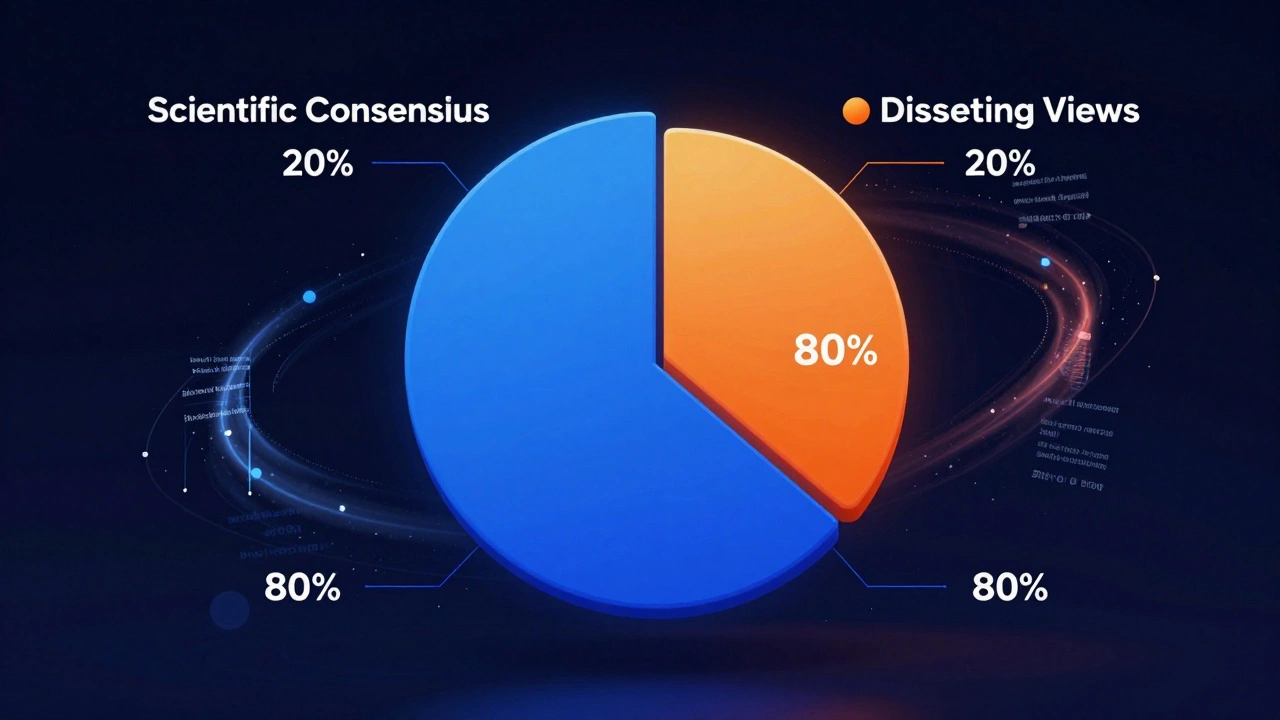
Think of it like a pie chart. If the global academic community spends 80% of its time discussing one aspect of a topic and 20% on another, the Wikipedia article should roughly reflect that same ratio. When an editor gives a fringe theory the same amount of space as a widely accepted fact, they create what is known as "false balance." This happens often in heated debates about politics or medicine, where a single loud voice is mistaken for a representative movement.
The Danger of False Balance
False balance occurs when a writer tries so hard to be "unbiased" that they end up lying by omission or over-representation. For example, if you are documenting the effects of Climate Change, you will find thousands of peer-reviewed papers confirming human-led warming and perhaps a handful of outdated reports denying it. If you write two paragraphs for the consensus and two paragraphs for the denial, you've told the reader that the scientific community is split down the middle. That is a failure of due weight.
This isn't about censoring the minority view. You can still mention that a dissenting opinion exists, but the amount of space you give it should signal its importance. A sentence mentioning a minority view is a fair representation; a whole section dedicated to it is a bias in favor of that minority view.
| Scenario | False Balance (Biased) | Due Weight (Neutral) |
|---|---|---|
| Scientific Consensus | Equal space for theory and fringe denial. | Main space for consensus; brief mention of dissent. |
| Political Debate | One quote from each side, regardless of popularity. | Coverage based on the prevalence of the arguments in news. |
| Historical Events | Giving a conspiracy theory a full section. | Referencing the theory as a footnote or minor point. |
How to Identify Source Prevalence
How do you actually determine what "weight" a topic deserves? You can't just guess. You need to look at the Reliable Sources-which usually means peer-reviewed journals, established news organizations, and academic books. If you're staring at three different sources and can't tell which is more "weighty," start by looking at the citations.
Check who is citing whom. If a theory is mentioned in a textbook but only in a personal blog elsewhere, the textbook carries the weight. If you find that Google Scholar shows 5,000 citations for Argument A and 5 for Argument B, the weight is clear. The goal is to be a mirror of the existing high-quality literature, not a judge who decides which side is "more correct." Wikipedia editors aren't supposed to do original research; they are supposed to summarize what the experts have already said.
Practical Steps for Balancing an Article
When you're editing a page and realize it's leaning too far in one direction, don't just start deleting things. Use a systematic approach to restore balance:
- Audit the Sources: List every unique viewpoint presented in the article. Find the sources supporting each one.
- Compare Volume: See how often these viewpoints appear in general searches of reputable databases. Is this a "major" point of contention or a "minor" one?
- Adjust the Architecture: If a minority view has its own heading (H2) but the majority view is just a paragraph under a different heading, the structure is biased. Move the minority view into a subsection or a single paragraph.
- Refine the Language: Use descriptors that signal weight. Instead of "Some say..." try "While a small number of critics argue X, the prevailing view among historians is Y."
This process prevents the "edit war" cycle where two people keep adding and removing the same paragraph. By basing the decision on source volume rather than personal opinion, you move the conversation from "I think this is wrong" to "The sources don't support this amount of space."
Common Pitfalls in Source Balancing
One of the biggest traps is the "Bothsidesism" fallacy. This is the belief that every single claim, no matter how absurd, deserves an equal platform in the name of objectivity. In reality, giving a flat-earther the same space as an astrophysicist isn't objective-it's a prank on the reader.
Another mistake is relying on Primary Sources alone. A person's own autobiography is a primary source. While useful, it doesn't provide "weight" because the author is biased toward themselves. To establish due weight, you need Secondary Sources-people who have analyzed the primary data and provided a synthesized conclusion. A biography written by a historian is worth more for "weight" than a diary entry from the subject.
Dealing with Controversial Topics
When you hit a topic that is actively evolving, like a current political scandal or a new medical breakthrough, the "weight" shifts quickly. This is where Verifiability becomes the primary tool. If the consensus is shifting, the article should reflect that shift in real-time, but it should do so cautiously.
Don't jump the gun. If one major newspaper breaks a story, that's a signal, but not necessarily a new consensus. Wait for the story to be picked up by other independent, reliable outlets. Once a pattern emerges in the reporting, the weight of that new information increases, and the article should be updated to reflect its new prominence.
Does due weight mean I should delete minority opinions?
No, it doesn't mean deleting them. It means sizing them correctly. A minority opinion is still a part of the conversation and should be mentioned if it's significant in reliable sources. However, it shouldn't take up 50% of the page if it only represents 5% of the expert opinion.
What if I can't find any reliable sources for a specific view?
If a viewpoint has no support in reliable, third-party sources, it generally doesn't belong in a Wikipedia article. This is the difference between a "minority view" (supported by some experts) and a "fringe view" or "unsupported claim" (not supported by experts). Without sources, there is no weight to give.
How do I handle a situation where two reliable sources disagree?
When two high-quality sources conflict, the best approach is to describe the conflict itself. Instead of picking a winner, write: "Source A argues X, while Source B maintains Y." This accurately represents the state of the knowledge on the topic.
Is "Due Weight" the same as "Neutrality"?
Due weight is a tool used to achieve neutrality. Neutrality is the goal (the end state of the article), and due weight is the method (how you decide how much space to give each point) to make sure that neutrality is based on evidence rather than an arbitrary 50/50 split.
Can a single very influential source provide a lot of weight?
Generally, no. Weight is about prevalence, not just the prestige of one author. Even if a Nobel laureate disagrees with the rest of the field, their view is still a minority view. You can mention they are a Nobel laureate to provide context, but you still shouldn't give their dissent as much space as the overwhelming consensus.
Next Steps for Editors
If you're looking to apply these concepts today, start with a "bias audit" of a page you care about. Look at the table of contents-do the headings suggest a skewed importance? If the "Criticism" section is three times longer than the "Description" section, you've found a weight problem. Try restructuring the page to prioritize the most widely accepted information first.
For those dealing with highly volatile topics, the best move is to collaborate. Use the talk pages to discuss source prevalence with other editors. Instead of arguing about who is "right," ask: "Which of these views is more common in academic literature?" Moving the goalposts from personal belief to source volume is the fastest way to resolve a conflict and create a truly neutral page.