The Signpost, Wikipedia’s community-run news outlet, publishes regular Arbitration Reports that lay bare how disputes among editors are resolved. These aren’t just internal memos-they’re public records of how the world’s largest encyclopedia handles conflict, power, and fairness. Every month, the Arbitration Committee (ArbCom) reviews dozens of cases, and The Signpost breaks down the outcomes in plain language. For editors, these reports are a roadmap. For outsiders, they’re a rare window into how a volunteer-driven project enforces rules without formal authority.
What Gets Reported?
Not every dispute makes it into an Arbitration Report. Only cases that escalate beyond mediation or that involve systemic issues are taken up by ArbCom. Common triggers include persistent harassment, coordinated editing campaigns, sockpuppetry, and violations of the three-revert rule. Some cases are simple: one editor repeatedly removes sourced content. Others are complex: a group of users from a specific region systematically edits articles about political figures, using multiple accounts to push a single narrative.
The reports don’t just say who did what. They explain why the behavior was harmful. For example, a 2025 report detailed how a user created 17 sockpuppet accounts to circumvent a site-wide ban. The report didn’t just block the accounts-it traced the pattern back to a single IP range in Eastern Europe and linked it to similar behavior on another language Wikipedia. That kind of cross-wiki insight only comes from deep archival work.
Typical Outcomes
ArbCom doesn’t hand out punishments like a court. It uses a toolkit of community-based tools. The most common outcomes are:
- Blocking: Temporary or indefinite bans from editing. About 68% of cases in 2025 resulted in some form of block.
- Editing restrictions: Users are barred from editing specific articles or topics. This is common in contentious areas like politics, religion, or biography of living persons.
- Probation: A user is allowed to edit but under close monitoring. They must submit edits for review for 30 to 90 days.
- Warning or no action: If behavior is borderline but not clearly abusive, ArbCom often issues a formal warning. About 12% of cases ended this way in 2025.
One notable 2025 case involved a long-time editor who had contributed over 12,000 edits. After a pattern of aggressive behavior toward new users, ArbCom didn’t ban them. Instead, they were placed on probation and required to complete a conflict resolution course. The editor returned six months later and became one of the most active mentors for newcomers. That’s the kind of outcome ArbCom hopes for: correction, not expulsion.
Transparency and Accountability
The Signpost’s reports are public because Wikipedia’s legitimacy depends on it. Unlike corporate platforms, Wikipedia has no CEO or legal team to make final decisions. Its authority comes from trust. So when ArbCom blocks a user, it must show its work. Every decision includes:
- Links to the specific edits under review
- Quotations from discussion pages
- References to Wikipedia policies like Assume Good Faith or No Personal Attacks
- Names of the arbitrators involved (though not their real identities)
This level of detail is rare in online communities. Reddit moderators rarely explain their bans. Twitter’s trust and safety team operates behind closed doors. But Wikipedia? You can go to the Arbitration Report from January 2025 and see exactly how a dispute over a biography of a U.S. senator was resolved, down to the timestamp of each contested edit.
What Happens After the Report?
The report isn’t the end-it’s the beginning of a new phase. Once a case is closed, the user can appeal the decision through the Appeals Committee. In 2025, 17% of blocked users filed appeals. Of those, 38% had their restrictions reduced, and 4% had them fully overturned. Appeals aren’t about re-litigating the case. They’re about asking: Did we miss something? Was the punishment proportional?
There’s also a quiet aftermath. Editors who were involved in the dispute often leave the project. Some stop editing. Others shift to less contentious topics. A 2024 internal survey found that 22% of editors who were either involved in or closely following an arbitration case reduced their activity by over 50% in the following six months. That’s a silent cost of conflict.

Why It Matters
These reports aren’t just about Wikipedia. They’re a model for how large online communities can manage behavior without central control. The principles are simple: transparency, consistency, and proportionality. ArbCom doesn’t have the power to sue or fine. Its only tools are community trust and the ability to say “you can’t edit here anymore.”
And yet, it works. Wikipedia has over 1.5 billion monthly visitors. Its core content is stable. Its editing community is massive. And it’s all held together by a system that relies on written reports, public reasoning, and the willingness of volunteers to police themselves.
The Signpost’s Arbitration Reports are the closest thing Wikipedia has to a constitution. They’re not perfect. Sometimes decisions feel inconsistent. Sometimes the language is too legalistic. But they’re there-for anyone to read, question, and learn from.
How to Read a Report
If you’re new to Wikipedia’s inner workings, here’s how to make sense of an Arbitration Report:
- Start with the summary. It’s usually one paragraph at the top.
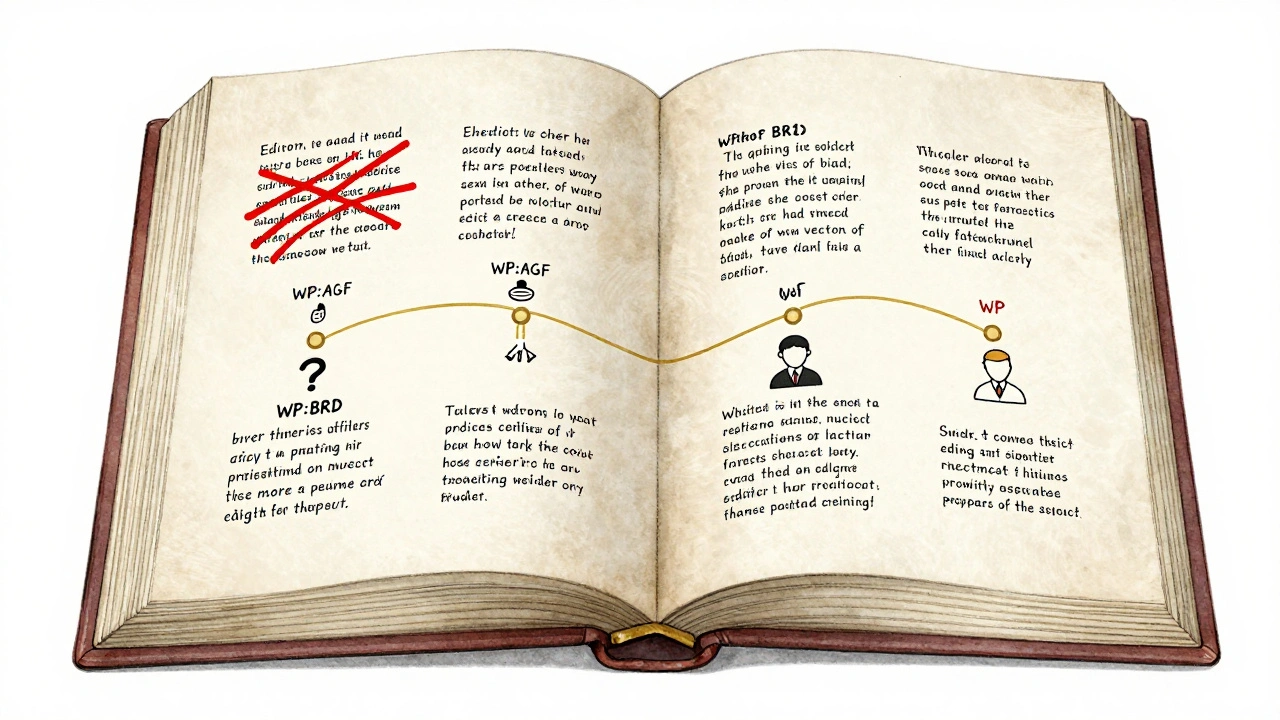
- Check the timeline. What happened before the case went to ArbCom? Often, the real story is in the months of prior edits.
- Look for policy citations. If the report mentions WP:NOTCENSOR or WP:BRD, look those up. They’ll tell you the rules that were broken.
- See who voted. The arbitrators are volunteers too. If you notice the same names across multiple reports, you’re seeing the core group that shapes policy.
- Follow the links. Every edit, talk page, and block log is hyperlinked. Click them. That’s where the truth lives.
Reading one report takes 15 minutes. Reading five changes how you see Wikipedia forever.
Are Arbitration Reports legally binding?
No, Arbitration Reports have no legal standing. They are community-enforced decisions made under Wikipedia’s internal policies. The Arbitration Committee has no power to sue, fine, or enforce actions outside of Wikipedia’s own platform. Their authority comes entirely from the consensus of the editing community, not from any government or legal system.
Can users appeal an Arbitration decision?
Yes. Users who feel their case was mishandled can file an appeal with the Appeals Committee, which is a separate group of volunteers. Appeals must be filed within 30 days of the decision. The committee reviews whether the process was followed correctly and whether the outcome was proportional-not whether the facts of the case should be re-litigated. Around 38% of appeals result in modified outcomes.
Do Arbitration Reports reveal real identities?
No. Wikipedia strictly protects user privacy. Arbitration Reports use only usernames and IP addresses. Even if a user’s real identity becomes known through external means, ArbCom will not confirm or deny it. The system is designed to focus on behavior, not personal details. Revealing real identities violates Wikipedia’s core privacy policy and can lead to removal from the committee.
How often are users permanently banned?
Permanent bans are rare. In 2025, only 8% of cases resulted in indefinite blocks. Most bans are temporary-ranging from a few days to a year. ArbCom prefers temporary restrictions because they allow for rehabilitation. Permanent bans are usually reserved for users who repeatedly violate policies after multiple warnings, or who engage in severe harassment, doxxing, or coordinated manipulation.
Who writes the Arbitration Reports in The Signpost?
The reports are written by volunteer editors from The Signpost’s news team, not by the Arbitration Committee itself. The ArbCom provides the official outcomes and case summaries. The Signpost staff then translate those into accessible, narrative-driven articles. This separation ensures that ArbCom stays focused on adjudication, while The Signpost handles public communication. The result is both accurate and readable.