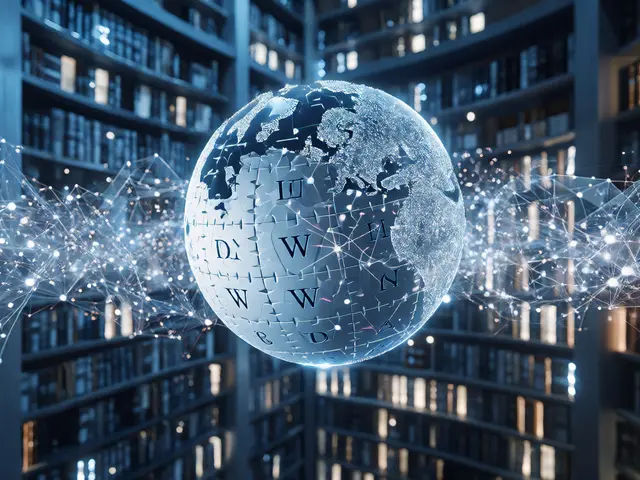
Imagine a world where Wikipedia is a free online encyclopedia written by volunteers that serves as the fifth most visited website globally updates itself in real-time. A new scientific study drops at 8:00 AM, and by 8:05 AM, every relevant article has been updated with accurate data, citations, and context. No editors had to manually type it out. This sounds like the future of knowledge, but it also raises a terrifying question: who checks if the AI is lying?
The debate isn't just about technology; it's about trust. We all rely on Wikipedia for quick facts, school projects, and professional research. But we also know its flaws-vandalism, bias, and gaps in coverage. Artificial Intelligence promises to fix these issues faster than any human team ever could. Yet, the fear remains: can we let machines write history without humans watching over them? The answer lies not in choosing between man and machine, but in understanding how they work together.
The Current Bottleneck: Why Humans Can't Keep Up
Let’s look at the numbers. As of early 2026, Wikipedia contains over 6 million articles in English alone. There are roughly 30,000 active editors contributing regularly. That means each editor is responsible for maintaining nearly 200 articles, assuming equal distribution, which is far from true. Most pages get zero edits per year, while breaking news topics get hundreds.
This imbalance creates a massive backlog. When a major event happens, such as an election or a natural disaster, human editors scramble to update pages. Often, they miss details or make mistakes due to fatigue. Meanwhile, thousands of other articles sit stagnant, filled with outdated information from five years ago. This is where Artificial Intelligence is computer systems designed to perform tasks that typically require human intelligence, such as learning, reasoning, and problem-solving steps in. AI doesn’t sleep. It doesn’t get tired. And it can process millions of sources simultaneously.
Consider the case of medical terminology. New drugs are approved constantly. Human editors often lag behind, leaving patients with potentially dangerous outdated info. An AI system could monitor FDA announcements and update drug interaction sections instantly. But here’s the catch: accuracy requires more than speed. It requires judgment. And that’s where things get complicated.
How AI Is Already Helping Behind the Scenes
You might think AI is already writing Wikipedia articles. In reality, it’s mostly working in the shadows. Tools like ORES is a tool developed by the Wikimedia Foundation that uses machine learning to predict whether an edit is likely to be constructive or destructive have been used for years to flag vandalism. If someone tries to add "Barack Obama was born on Mars" to his biography, ORES flags it immediately. Humans then review and revert it.
This is a great example of augmentation rather than replacement. The AI handles the volume; the human handles the nuance. More recently, large language models (LLMs) have started assisting with drafting. Editors use AI to summarize long papers, translate content into less-resourced languages, or suggest improvements to sentence structure. These tools save time, allowing humans to focus on higher-level decisions like sourcing and tone.
However, there’s a growing push to go further. Some researchers propose fully autonomous bots that can create new articles based on reliable sources. Imagine a bot scanning PubMed, extracting key findings, and generating a well-cited entry on a newly discovered protein. Sounds efficient, right? But efficiency isn’t the only metric that matters. Reliability is paramount.
The Hallucination Problem: Why Accuracy Matters More Than Speed
Here’s the big issue with letting AI run wild: hallucinations. Large language models sometimes invent facts. They sound confident, cite plausible-looking sources, and even mimic academic tone. But the references don’t exist, or the data is wrong. For a casual reader, this is hard to spot. For an encyclopedia, it’s catastrophic.
In 2024, a study found that when asked to generate biographies of obscure historical figures, leading AI models fabricated credentials, dates, and achievements in over 30% of cases. Now imagine those errors appearing on Wikipedia. Users wouldn’t just be misled-they’d lose trust in the entire platform. Once credibility cracks, it’s nearly impossible to repair.
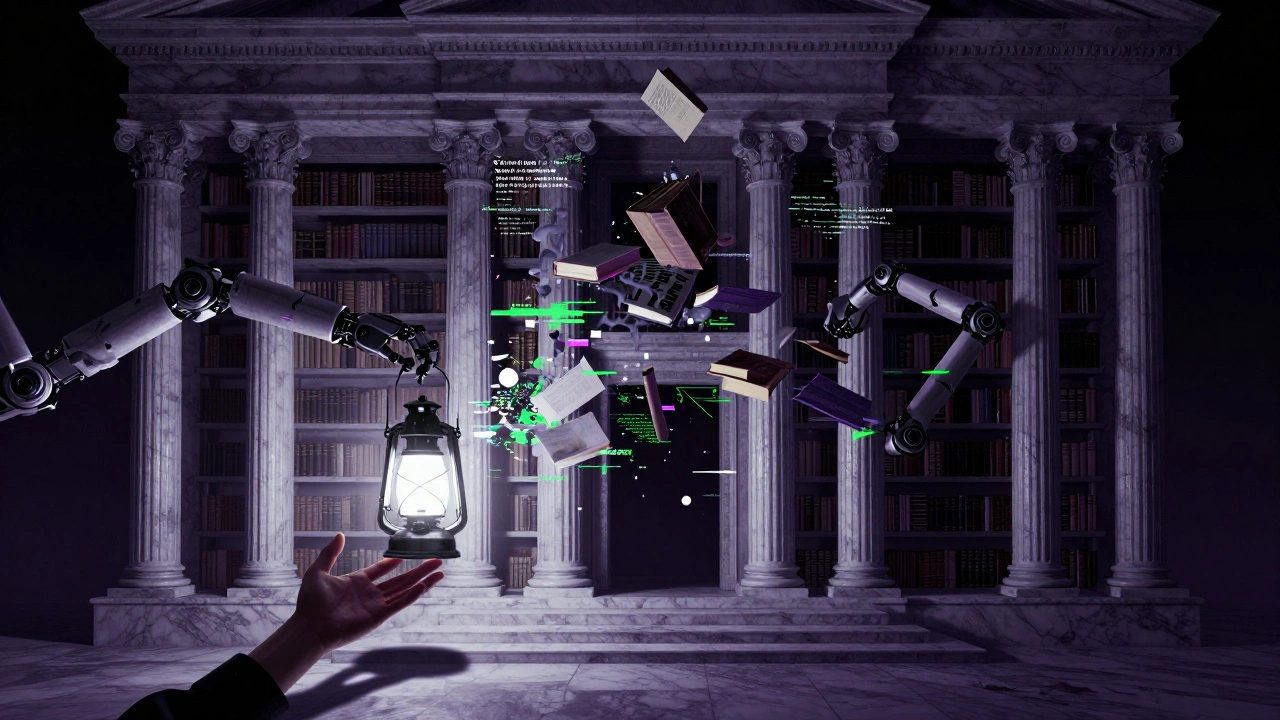
This is why human oversight remains essential. Humans bring contextual understanding. We know when something sounds off, even if we can’t explain why. We recognize sarcasm, irony, and subtle biases. AI struggles with these nuances. Until machines develop true comprehension-not just pattern matching-we need humans in the loop.
Bias Amplification: The Hidden Danger
Another critical concern is bias. AI learns from existing data, and Wikipedia itself has known biases. For instance, women and people from non-Western cultures are underrepresented. If an AI trains on current Wikipedia content, it will replicate-and possibly amplify-those imbalances.
Think about it. If an AI generates articles primarily using Western sources, what happens to global perspectives? Local histories, indigenous knowledge, and minority viewpoints get sidelined. Worse, the AI might present biased narratives as neutral truth because it lacks the cultural sensitivity to detect them.
Human editors act as corrective forces. They challenge assumptions, seek diverse sources, and ensure fairness. Without them, AI risks creating a self-reinforcing cycle of exclusion. This isn’t hypothetical. Several AI-generated summaries have been criticized for reinforcing stereotypes or omitting crucial context. We can’t afford to repeat those mistakes at scale.
The Hybrid Model: Best of Both Worlds
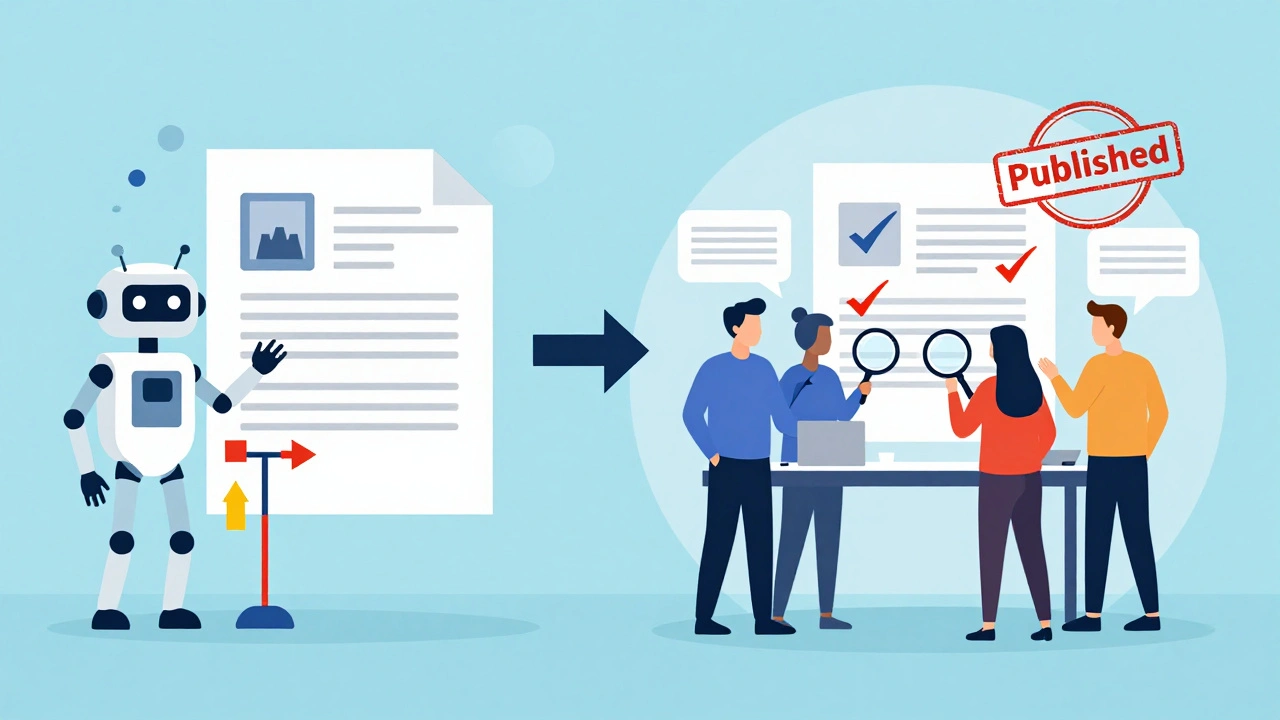
So, is the solution to ban AI entirely? Absolutely not. That would ignore its immense potential. Instead, the best path forward is a hybrid model. AI handles the heavy lifting-data extraction, translation, initial drafts-while humans provide quality control, ethical guidance, and final approval.
Picture this workflow: An AI scans thousands of news articles about a recent climate report. It extracts key statistics, identifies expert quotes, and drafts a summary. Then, a team of volunteer editors reviews the draft. They verify sources, adjust tone, and ensure balance. Finally, the article goes live. This approach combines speed with accountability.
Already, some communities are experimenting with this method. In Spanish Wikipedia, AI-assisted translations have helped expand coverage significantly. But every translated page undergoes manual review before publication. Similarly, science-focused wikis use AI to parse journal abstracts, but human experts validate conclusions. These successes show that collaboration works.
Challenges Ahead: Transparency and Accountability
Even in a hybrid system, challenges remain. One major hurdle is transparency. Readers should know when an article was AI-generated or edited. Currently, Wikipedia doesn’t disclose this clearly. Should there be labels? Watermarks? Disclosure statements? These questions need answers before widespread adoption.
Accountability is another issue. If an AI makes a mistake, who’s responsible? The developer? The editor who approved it? The platform itself? Legal frameworks haven’t caught up yet. Clear guidelines must be established to protect users and maintain integrity.
Additionally, training AI ethically requires careful curation of datasets. Not all sources are equal. Prioritizing peer-reviewed journals, official records, and reputable news outlets ensures higher-quality outputs. But curating these datasets takes effort-and resources. Who pays for that?
Conclusion: Trust Through Collaboration
Can AI improve Wikipedia without replacing human oversight? Yes-but only if we design systems that prioritize collaboration over automation. AI excels at processing vast amounts of data quickly. Humans excel at judging context, ethics, and fairness. Together, they form a powerful duo.
We’re not looking at a takeover. We’re looking at evolution. Just as calculators didn’t replace mathematicians, AI won’t replace editors. Instead, it will empower them to do more, better, and faster. The goal isn’t perfection-it’s progress. And progress requires vigilance, humility, and teamwork.
Will AI completely replace human editors on Wikipedia?
No, AI is unlikely to fully replace human editors anytime soon. While AI can handle repetitive tasks like summarization and translation, it lacks the contextual understanding, ethical judgment, and creativity needed for high-quality encyclopedic content. Human oversight remains crucial for ensuring accuracy, fairness, and reliability.
What are the biggest risks of using AI on Wikipedia?
The primary risks include hallucinations (fabricated facts), bias amplification, and loss of trust. AI may inadvertently spread misinformation or reinforce existing inequalities if not carefully monitored. Additionally, lack of transparency around AI contributions can confuse readers and undermine credibility.
How does ORES help prevent vandalism on Wikipedia?
ORES (Objective Revision Evaluation Service) uses machine learning to analyze edits and predict whether they’re likely to be constructive or destructive. By flagging suspicious changes early, it allows human editors to respond quickly, reducing the impact of vandalism and improving overall content quality.
Is AI currently being used to write Wikipedia articles?
Not directly. AI assists editors by summarizing sources, translating content, and suggesting improvements. However, final drafts still require human review and approval. Fully autonomous article creation is still experimental and faces significant technical and ethical hurdles.
Why is human oversight important in AI-generated content?
Human oversight ensures accuracy, fairness, and contextual relevance. AI lacks true understanding and can produce misleading or biased results. Humans bring critical thinking, cultural awareness, and moral judgment-qualities essential for trustworthy knowledge platforms like Wikipedia.