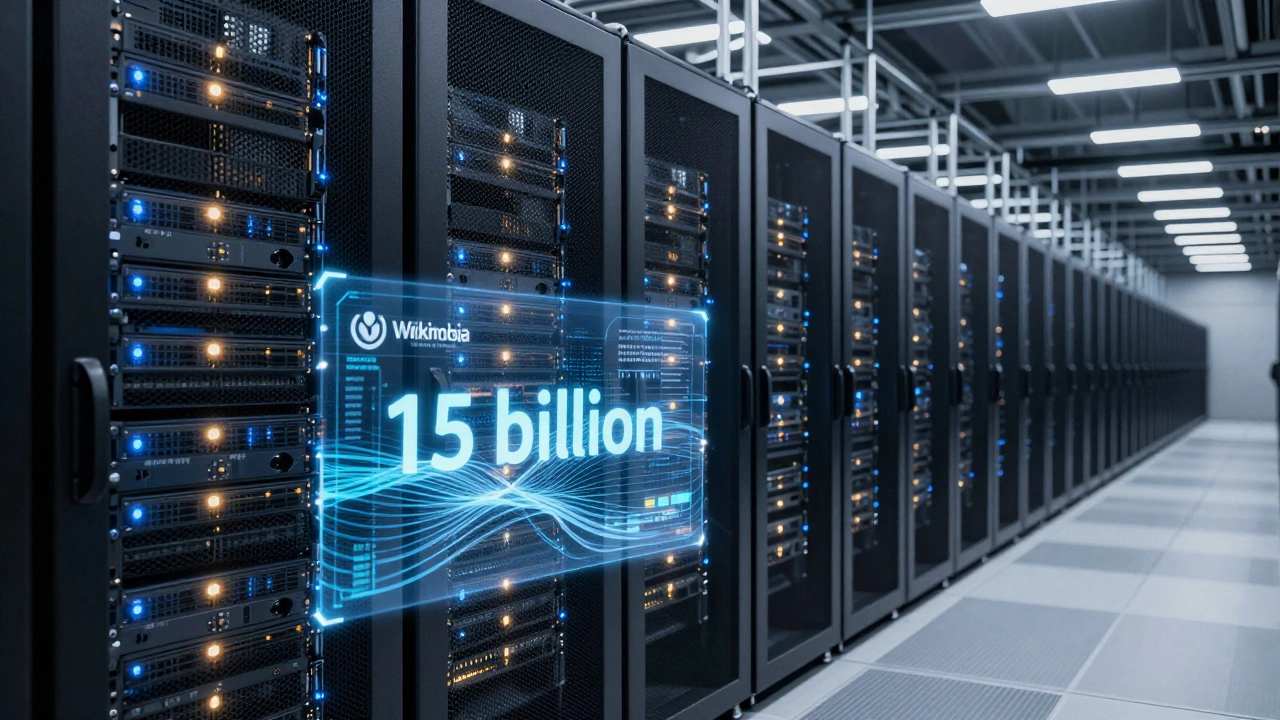
Imagine trying to serve a library that is bigger than any physical building on Earth, to billions of people, every single month. That is the daily reality for Wikipedia, which handles approximately 15 billion monthly pageviews across its various language editions. It sounds like an impossible engineering challenge. If you tried to host this traffic on a standard cloud server setup, it would crash in seconds. Yet, when you type a URL into your browser, the page loads instantly, even if you are connecting from a slow mobile network in a remote area.
This isn't magic. It is the result of decades of careful architectural evolution by the Wikimedia Foundation. They didn't just buy more computers; they built a system designed specifically for read-heavy workloads with occasional bursts of massive interest. Understanding how this works reveals why Wikipedia remains one of the most reliable sources of information on the internet, despite running on a budget that looks tiny compared to tech giants like Google or Amazon.
The Core Software: MediaWiki
At the heart of everything lies MediaWiki, the open-source wiki engine that powers Wikipedia. Unlike modern web applications that might rely on complex JavaScript frameworks or headless CMS architectures, MediaWiki is surprisingly traditional. It is written primarily in PHP, a language known for being simple and ubiquitous.
You might wonder why they stick with PHP instead of switching to something "faster" like Go or Rust. The answer is stability and community. MediaWiki has been refined since 2001. Every edge case, every security vulnerability, and every performance bottleneck has been documented and patched over two decades. Switching languages would mean rewriting millions of lines of code and risking the integrity of the content. Instead, the team optimizes the PHP execution environment itself, using tools like HHVM (HipHop Virtual Machine) in the past, and now focusing on strict typing and opcode caching to squeeze out every millisecond of performance from the existing codebase.
Distributed Caching: The Secret Weapon
If you think about how often you visit the same article twice, you realize that most requests are repeats. This is where caching becomes critical. Wikipedia uses a multi-layered caching strategy that prevents the main database from ever seeing most user requests.
- Varnish Cache: This sits at the very front of the infrastructure. When you request an article, Varnish checks if it already has a copy stored in memory. If it does, it serves it immediately without touching the application servers. For popular articles, this means the response time is measured in milliseconds.
- Memoization: Even before hitting the cache, the application layer tries to remember recent computations. If a complex template needs to be rendered, the result is stored temporarily so the next user doesn't have to wait for the calculation again.
- CDN Distribution: Static assets like images, CSS files, and JavaScript libraries are served via Content Delivery Networks. This ensures that whether you are in New York or Nairobi, you are downloading these files from a server geographically close to you.
This layered approach means that the actual database queries-the heavy lifting-are only triggered when there is a genuine miss in the cache layers. For a site with 15 billion views, this distinction between cached hits and database reads is the difference between staying online and suffering a total outage.
Database Architecture and Replication
Behind the caching layer lies the database cluster. Wikipedia runs on MySQL, specifically using a fork called MariaDB for better performance and control. The architecture here is master-slave replication.
There is one primary "master" server where all edits happen. When you save an edit, it goes to this master. However, almost everyone reading the site connects to "slave" replicas. These copies of the database are updated continuously from the master. This separation allows the system to handle thousands of reads for every single write operation.
A major challenge here is replication lag. If a breaking news event happens, thousands of people might edit the article simultaneously. The master updates quickly, but the slaves might take a few seconds to catch up. During this brief window, some users might see an older version of the page. To mitigate this, the system uses smart routing. If a user is making an edit, they are routed to a server that can guarantee they see their changes immediately, while passive readers are served from the nearest replica.
Data Centers and Global Presence
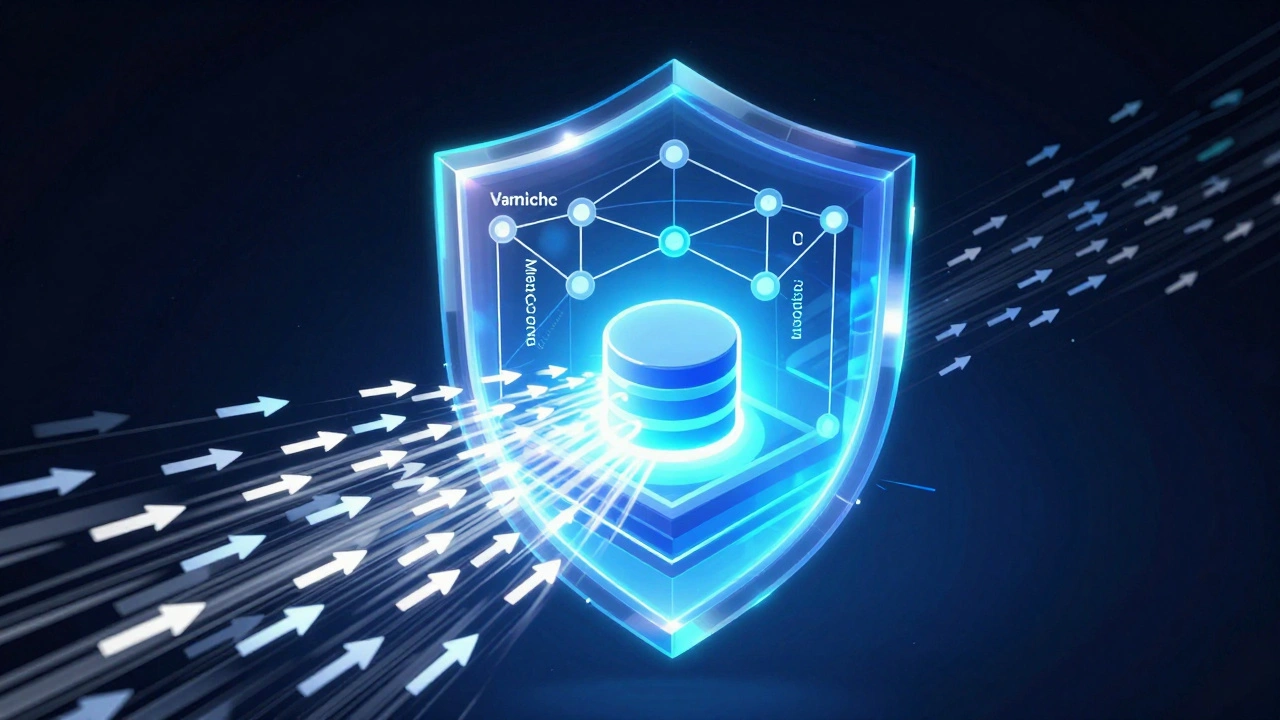
Physical location matters. The Wikimedia Foundation operates data centers in three key locations: Equinix Amsterdam (primary), Equinix Ashburn (secondary), and Digital Realty Tokyo (tertiary). This geographic distribution provides redundancy against natural disasters, power grid failures, or regional internet backbone issues.
The primary data center in Amsterdam handles the bulk of the load. If it goes down, traffic automatically shifts to Ashburn in Virginia. This failover process is tested regularly. In 2024, during a significant fiber cut incident in Europe, the automatic switchover kept Wikipedia online with minimal disruption for users outside the affected region. This resilience is not accidental; it is engineered through rigorous chaos testing, where engineers intentionally break parts of the system to ensure the rest holds up.
Handling Traffic Spikes
Wikipedia faces unique traffic patterns. Unlike social media sites that grow steadily, Wikipedia sees sudden spikes driven by current events. A political election, a natural disaster, or a celebrity death can cause traffic to specific articles to increase by 100x in minutes.
To handle this, the infrastructure relies on horizontal scaling. They don't just upgrade individual servers; they add more servers to the pool. Because the application is stateless (thanks to caching and external databases), adding new nodes is straightforward. Load balancers distribute incoming requests evenly across hundreds of application servers.
Additionally, they use predictive analytics. By monitoring search trends and news feeds, the system can pre-warm caches for likely hot topics. If a hurricane is approaching Florida, the system might proactively cache articles related to storm safety and local geography before the traffic surge hits. This proactive approach reduces the pressure on the backend during peak times.
Security and Abuse Prevention
With great openness comes great responsibility. Anyone can edit Wikipedia, which makes it a target for vandals, spammers, and bots. The technical infrastructure includes robust abuse prevention mechanisms.
AbuseFilter is a powerful tool that allows administrators to set rules for edits. If an edit matches certain criteria-like removing large amounts of text or adding suspicious links-it can be automatically blocked or flagged for review. This system processes millions of edits daily, filtering out obvious spam without human intervention.
Furthermore, the platform enforces rate limiting. If an IP address attempts to make too many edits in a short period, it is temporarily locked out. This prevents automated bots from overwhelming the system or defacing pages rapidly. Combined with CAPTCHA challenges for unregistered users, these measures protect both the integrity of the content and the stability of the servers.
Cost Efficiency and Sustainability
One of the most impressive aspects of Wikipedia's infrastructure is its cost efficiency. While exact figures vary year by year, the Wikimedia Foundation spends significantly less per pageview than commercial competitors. This is achieved through several strategies:
- Open Source Stack: Using free software eliminates licensing fees.
- Hardware Optimization: Servers are tuned for maximum longevity and efficiency. They don't replace hardware frequently unless necessary.
- Energy Awareness: Data centers are chosen partly for their energy efficiency and access to renewable power sources.
This frugality aligns with the non-profit mission. Every dollar saved on infrastructure can be redirected to supporting volunteer communities, improving accessibility, or funding research into information equity. It proves that you don't need a billion-dollar budget to build world-class technology; you just need smart engineering and a clear focus.
| Component | Technology | Primary Function |
|---|---|---|
| Web Server | Nginx | Serves static content and reverse proxies |
| Application Engine | MediaWiki (PHP) | Processes dynamic page generation |
| Caching Layer | Varnish / Memcached | Stores temporary copies of pages |
| Database | MariaDB (MySQL fork) | Stores permanent content and metadata |
| Load Balancer | LVS / HAProxy | Distributes traffic across servers |
The Future of Wikipedia's Infrastructure
As we move further into 2026, the challenges are evolving. Mobile traffic now accounts for the majority of visits, requiring lighter, faster page loads. The team is working on responsive design improvements and reducing the size of JavaScript payloads to help users on slower connections.
Another focus is artificial intelligence. While Wikipedia remains human-edited, AI tools are being integrated to help detect vandalism, summarize talk page discussions, and assist editors in finding reliable sources. These tools must be carefully implemented to maintain trust and accuracy.
Finally, there is the ongoing effort to decouple the frontend from the backend. By moving towards a more API-driven architecture, the foundation hopes to offer better experiences for third-party apps and services that rely on Wikipedia's data. This shift will allow for more flexible interfaces while keeping the core infrastructure stable and secure.
Why doesn't Wikipedia use modern cloud providers like AWS?
While cloud providers offer flexibility, they also come with high costs and potential vendor lock-in. Wikipedia's traffic pattern is predictable enough that dedicated hardware in owned or leased data centers is more cost-effective. Additionally, having full control over the physical infrastructure allows for deeper optimization and greater security customization.
What happens if the main database goes offline?
If the master database fails, the system can promote one of the slave replicas to become the new master. During this transition, editing capabilities might be temporarily disabled to prevent data conflicts, but reading the site usually continues uninterrupted due to the extensive caching layers.
How does Wikipedia handle vandalism so quickly?
Automated bots patrol recent changes constantly. They look for patterns associated with vandalism, such as blanking pages or adding profanity. When detected, they revert the changes within seconds. Human volunteers also monitor these feeds, providing a second layer of defense for more subtle edits.
Is MediaWiki used by other websites besides Wikipedia?
Yes, MediaWiki is widely used by organizations, universities, and corporations for internal knowledge bases. Its strength lies in collaborative editing and easy integration with existing IT systems, making it a popular choice beyond just public encyclopedias.
Can I contribute to the technical infrastructure of Wikipedia?
Absolutely. The Wikimedia Foundation encourages contributions to MediaWiki and related tools. Developers can submit patches, report bugs, or help optimize performance. There are active communities on GitHub and Phabricator where technical volunteers collaborate on improving the platform.