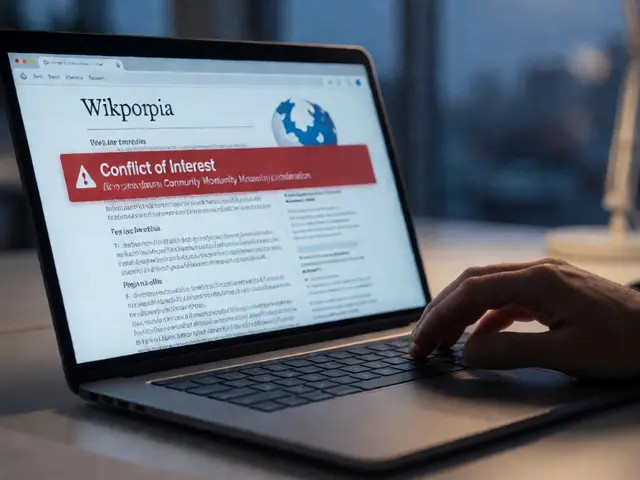
There is nothing quite as frustrating for a Wikipedia editor as watching their carefully sourced changes disappear seconds after they hit "Save." You fix a grammar error, add a citation, or correct a factual claim, only to have another user revert it immediately. Then you revert them back. They revert you again. Suddenly, you are locked in a cycle of retaliation known as Edit warring, which is the repeated reversion of edits by two or more editors over a disputed topic without attempting to resolve the underlying disagreement. It feels personal. It feels like a battle for control. But in the eyes of the community, it is just noise-and it can get your account blocked.
The core problem isn't usually the content itself; it's the method of fighting for it. When you engage in edit warring, you stop contributing to the encyclopedia and start participating in a power struggle. This drains energy from productive work and creates hostility. The goal of this guide is not just to tell you to "stop," but to give you practical, actionable alternatives that actually move the conversation forward. If you want your viewpoint represented accurately, you need to change tactics from confrontation to collaboration.
Understanding Why Edit Warring Fails
Before looking at solutions, it helps to understand why the current approach is broken. Wikipedia operates on consensus, not democracy or dictatorship. Reverting someone’s edit repeatedly signals that you believe your judgment is superior to theirs, regardless of policy. This triggers defensiveness rather than cooperation.
When you revert an edit, you are essentially saying, "I disagree." When you do it three times in a row, you are saying, "I refuse to listen." This violates the spirit of Bringing Good Faith to Disputes, a core guideline that encourages editors to assume others are trying to help, even when their methods seem flawed. Most editors who engage in warring aren't malicious vandals; they are passionate contributors who feel strongly about a topic-whether it’s local history, scientific accuracy, or biographical details. Recognizing this shifts your perspective from "enemy" to "misguided ally."">
Furthermore, edit warring rarely changes minds. It entrenches positions. The person you’re reverting becomes more determined to prove you wrong, spending hours digging up sources instead of writing new articles. Meanwhile, the article stagnates, marked with templates warning readers of ongoing disputes. No one wins except the bots that track these patterns.
Alternative 1: Communicate on the Talk Page
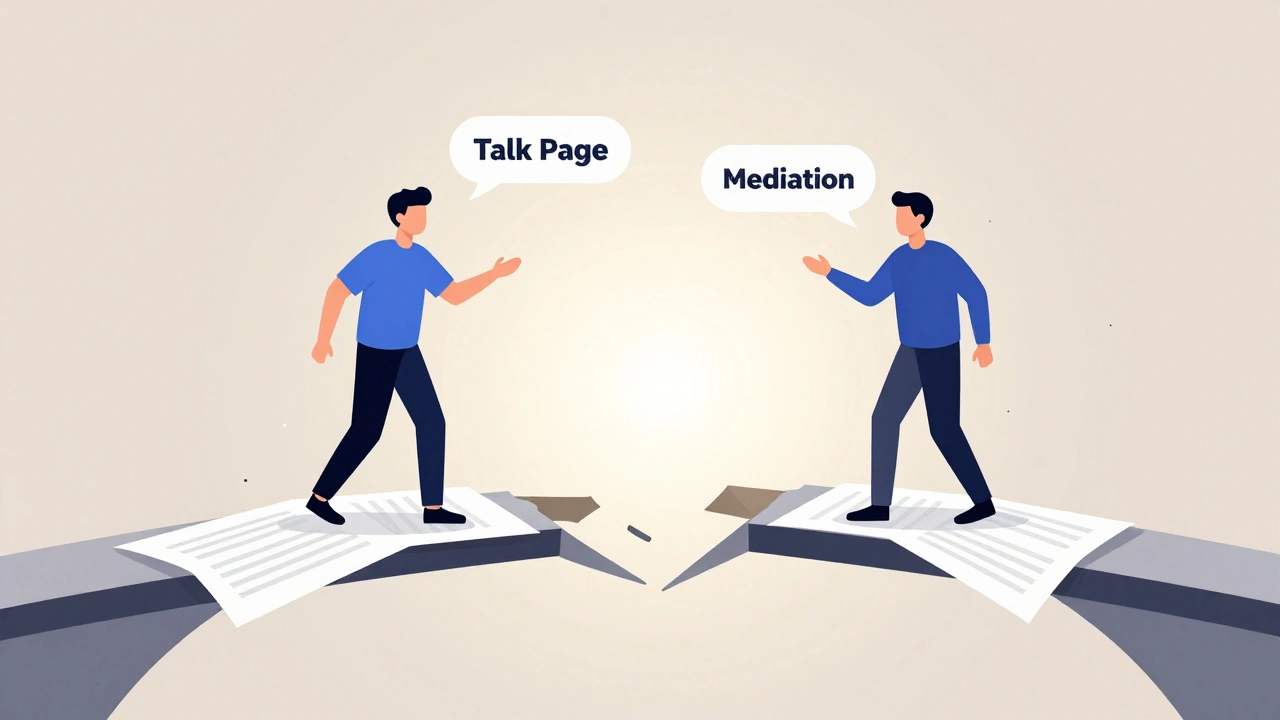
The most immediate alternative to clicking "Revert" is opening the Talk page, the discussion space associated with every Wikipedia article where editors debate content, structure, and sourcing before making changes. Instead of silently undoing someone’s work, leave a polite message explaining your concerns. Use specific language: "I reverted this section because the source provided is self-published and doesn’t meet our reliability standards. Here’s a peer-reviewed article that supports my version." This invites dialogue rather than defiance.
Talk pages are designed for exactly this kind of friction. They allow you to lay out your reasoning, cite policies, and ask questions. Often, the other editor simply didn’t realize their source was weak. A gentle explanation can defuse tension instantly. If they respond defensively, stay calm. Avoid ad hominem attacks or sarcasm. Stick to the facts and the rules. Remember, the goal is agreement, not victory.
- Be specific: Don’t say "This is wrong." Say "This claim lacks a reliable secondary source."
- Cite policy: Reference relevant guidelines like Verifiability, which requires all material submitted to Wikipedia be backed by published, reliable sources. or Neutral Point of View (NPOV), which mandates that articles present all significant viewpoints fairly and without editorial bias.
- Ask questions: "Can you find a stronger source for this?" shows willingness to collaborate.
- Avoid assumptions: Assume good faith unless there’s clear evidence of bad intent.
Alternative 2: Seek Third-Party Mediation
If talk page discussions stall, don’t escalate to reverts. Escalate to help. Wikipedia has built-in mechanisms for resolving deadlocks. One effective tool is requesting assistance from More Experienced Editors, volunteers who have contributed significantly to the project and often possess deeper knowledge of policy and community norms. You can tag them on the talk page using their username, such as @User:ExampleEditor, asking for their opinion. These editors often provide neutral perspectives that break impasses.
Another option is posting at Dispute Resolution Noticeboard, a dedicated forum where editors submit unresolved conflicts for community input. Here, multiple users review the case, offer suggestions, and sometimes propose compromises. This process removes emotion from the equation and focuses on policy compliance. It also documents your efforts to resolve the issue fairly, which protects you if accusations arise later.
For complex disputes involving sensitive topics like living persons, politics, or religion, consider reaching out to Content Experts, individuals with specialized knowledge in a particular field who volunteer to advise editors on technical accuracy. Their insights carry weight because they’re based on expertise, not opinion. Inviting an expert into the conversation can quickly validate or invalidate claims, speeding up resolution.
Alternative 3: Propose Compromises and Drafts
Sometimes, neither side is entirely right. In these cases, proposing a compromise can save time and preserve relationships. Instead of insisting on your exact wording, suggest a blended version that incorporates both viewpoints fairly. For example, if one editor wants to emphasize a scientist’s controversial theories while another downplays them, you might draft a paragraph that acknowledges the controversy while citing mainstream scientific consensus. Share this draft on the talk page and invite feedback.
You can also create a Draft Article, a sandbox environment where editors develop content outside the main namespace before moving it into live articles. Working in a draft allows you to experiment with phrasing, test citations, and refine arguments without triggering reversions. Once the draft reaches a stable state, present it to the opposing editor as a finished product. People are more likely to accept something they haven’t fought over yet.
Compromise doesn’t mean surrendering truth. It means finding the most accurate, balanced representation possible within Wikipedia’s constraints. Sometimes, that means admitting uncertainty: "While some scholars argue X, others contend Y. Current research suggests Z." This approach respects complexity and reduces conflict.
Alternative 4: Step Away and Reassess
Emotions run high during disputes. When you feel angry, frustrated, or defensive, stepping away is often the smartest move. Close the browser. Go for a walk. Sleep on it. Returning with fresh eyes helps you see the bigger picture. Ask yourself: Is this detail worth risking a block? Will anyone remember this argument in six months?
Stepping back also gives the other party space to cool down. Hot-headed exchanges rarely lead to good outcomes. After a day or two, revisit the talk page with a calmer tone. You may find the other editor has already acknowledged your points or proposed a solution. Patience builds trust.
If you realize your position is weak, admit it gracefully. Saying "You’re right, I’ll withdraw my edit" demonstrates maturity and strengthens your reputation as a cooperative contributor. Conversely, if you stand firm, do so respectfully. Consistency matters, but so does humility.
Preventing Future Conflicts
Once you’ve resolved a dispute, take steps to prevent recurrence. Add a Protection Template, a notice placed on highly contested articles to warn editors against making rapid, unverified changes. This signals that the article is under scrutiny and encourages caution. You can also request semi-protection, which restricts editing to registered users with established histories, reducing vandalism and reckless edits.
Document key decisions on the talk page. Summarize agreements clearly: "We agreed to include Source A and omit Source B due to reliability concerns." This creates a record that future editors can reference, preventing repeat debates. Over time, well-documented resolutions become part of the article’s institutional memory.
Finally, cultivate positive interactions. Thank editors who help resolve disputes. Acknowledge good-faith efforts, even when you disagree. Building rapport makes future collaborations smoother. Wikipedia thrives on community, not competition. Treat every interaction as an opportunity to strengthen that foundation.
| Strategy | Best For | Risk Level | Time Required |
|---|---|---|---|
| Talk Page Discussion | Minor disagreements, sourcing issues | Low | Hours to days |
| Third-Party Mediation | Stalemates, policy violations | Medium | Days to weeks |
| Compromise Drafts | Content balance, tone disputes | Low | Hours |
| Stepping Away | High-emotion situations, burnout | Very Low | Days |
| Article Protection | Chronic vandalism, persistent warring | High (requires admin approval) | Immediate |
What Happens If You Continue Edit Warring?
Ignoring these alternatives carries real consequences. Wikipedia enforces a strict Three-Revert Rule, which prohibits editors from reverting the same content more than three times within a 24-hour period unless authorized by an administrator. Breaking this rule can result in temporary blocks, ranging from hours to months. Repeat offenders face longer suspensions or even indefinite bans. Blocks aren’t punishments; they’re cooling-off periods meant to protect the encyclopedia from disruption.
Beyond blocks, edit warring damages your credibility. Other editors begin to view you as adversarial rather than collaborative. Requests for help go unanswered. Proposals get rejected out of hand. Your contributions may be scrutinized more heavily, slowing your progress. Worse, you contribute to a toxic culture that drives away new editors. Wikipedia needs diverse voices, not battlegrounds.
Administrators monitor edit patterns closely. Automated tools flag suspicious activity, and human reviewers investigate reports. Even if you think you’re justified, appearing unreasonable harms your standing. The burden of proof lies with those making contentious changes. Always prioritize diplomacy over dominance.
What counts as edit warring?
Edit warring occurs when two or more editors repeatedly revert each other’s changes on the same topic without discussing the issue on the talk page. It typically involves three or more reversions within a short timeframe. Even if you believe your edits are correct, engaging in this cycle violates community norms and risks disciplinary action.
Can I revert an edit once without breaking the rules?
Yes, a single revert is generally acceptable if done in good faith and accompanied by a clear explanation on the talk page. However, if the other editor reverts you back, further reversals require discussion or mediation. Never assume silence equals consent. Always communicate first.
How do I report someone for edit warring?
Report suspected edit warring at the Administrators' Noticeboard or User Abuse Notices. Include links to the relevant edits, timestamps, and any prior communication attempts. Be objective and factual. Avoid emotional language. Administrators will assess whether the behavior violates policy and take appropriate action.
Is it okay to edit war if I’m correcting obvious errors?
No. Even obvious errors should be addressed through discussion first. What seems obvious to you may not be to others. Some "errors" reflect legitimate alternative interpretations or emerging research. Correcting them via reverts alone ignores nuance and invites conflict. Explain your reasoning politely instead.
What if the other editor refuses to engage on the talk page?
If the other editor ignores your messages, document your efforts and seek third-party assistance. Post at Dispute Resolution or tag experienced editors. Do not escalate to repeated reverts. Silence doesn’t justify unilateral action. Community intervention ensures fairness and prevents escalation.
Does edit warring affect article quality?
Yes. Articles caught in edit wars often accumulate warning templates, lose stability, and deter constructive contributors. Readers encounter confusing histories and inconsistent content. Long-term, this undermines Wikipedia’s mission of providing reliable, neutral information. Resolving disputes peacefully preserves article integrity.
How long does dispute resolution take?
Resolution times vary widely. Simple disagreements may resolve in hours through talk page discussion. Complex cases involving policy interpretation or sensitive topics can take weeks or months. Patience is essential. Rushing the process increases the likelihood of mistakes and renewed conflict.
Can I appeal a block for edit warring?
Yes, you can request unblocking by contacting administrators via their user talk pages or the Unblock Request page. Clearly explain why you believe the block was unjustified, acknowledge any mistakes, and outline how you’ll avoid similar issues in the future. Demonstrating understanding improves your chances of reinstatement.