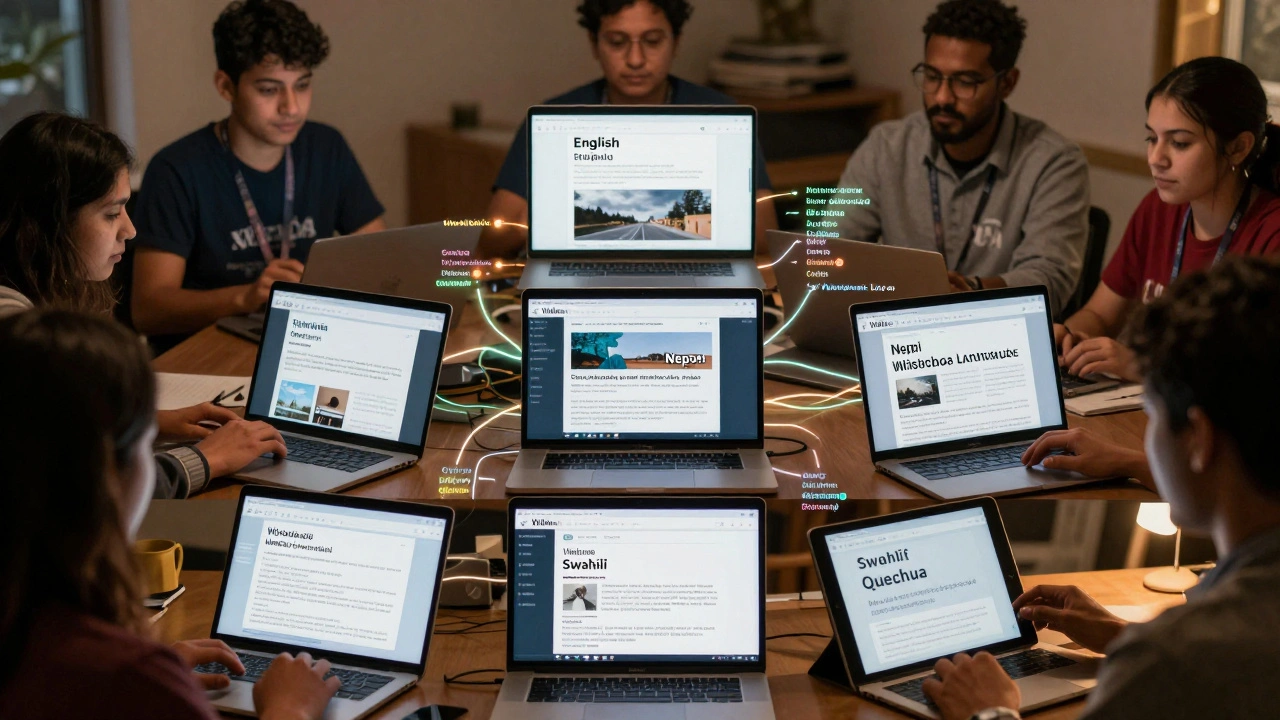
When a major event happens-like a natural disaster, a political upheaval, or a global sports final-dozens of Wikipedia language editions jump into action. But here’s the thing: they don’t work in isolation. A breaking news story on English Wikipedia doesn’t just stay in English. It ripples across hundreds of other language versions, each adapting the information for their own readers. Coordinating this isn’t automatic. It’s messy, human, and surprisingly well-organized.
How Wikipedia Handles Global Events
Wikipedia doesn’t have a central newsroom. There’s no editor-in-chief telling French, Arabic, or Swahili editors what to write. Instead, each language version operates independently, with its own community, rules, and priorities. But when something big happens-say, the 2025 earthquake in Nepal-editors on the English Wikipedia start writing a detailed article. Within minutes, volunteers on the Nepali Wikipedia notice it. They don’t just copy-paste. They translate, add local context, and correct inaccuracies.
This isn’t luck. It’s a system built on shared tools and trust. The Translating Content tool lets editors flag articles that need translation. The Recent Changes feed shows edits across all language versions in real time. And the WikiProject Global Events group, made up of volunteers from over 50 languages, meets weekly to align priorities.
The Role of Interlanguage Links
Every Wikipedia article has a sidebar with links to versions in other languages. These aren’t just decorative. They’re the backbone of coordination. When an article on the Russian Wikipedia gets updated with new casualty figures from a flood in Pakistan, the interlanguage link triggers a notification on the Urdu and English versions. Editors there check the source, verify the data, and update their own articles.
But it’s not always smooth. Sometimes, a version in a smaller language, like Quechua or Khmer, updates first with local eyewitness reports that haven’t been verified yet. The English version might wait for official sources. That’s okay. Wikipedia’s core rule-verifiability-applies everywhere. But it creates tension. Editors in low-resource languages often feel their local knowledge gets ignored. To fix this, the Wikimedia Foundation now funds translation grants for underrepresented languages during major events.
Tools That Make Coordination Possible
There are three main tools that keep this system running:
- Content Translation Tool: Lets editors translate articles with AI-assisted suggestions and side-by-side editing. It’s used over 1.2 million times a year.
- Wikidata: A central database that stores facts like dates, names, and locations. When you edit the birthdate of a politician on German Wikipedia, it updates automatically on the Japanese, Portuguese, and Hindi versions because they all pull from the same Wikidata entry.
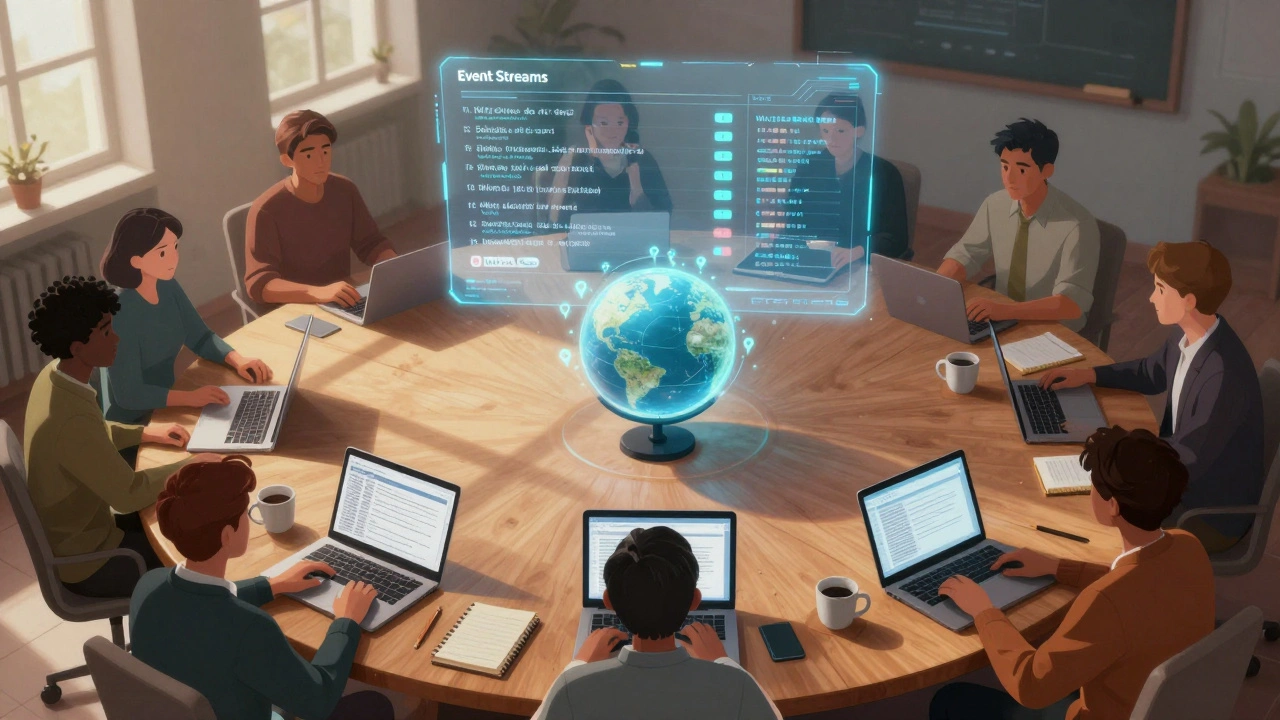
- Event Streams: A real-time feed that shows every edit made on any Wikipedia in any language. Editors can filter by topic-like “earthquake” or “election”-and see what’s changing across the network.
These tools don’t replace human judgment. They just make it faster. A volunteer in Jakarta might spot a misstatement in the English article about a protest in Myanmar. They correct it, and the change syncs to Burmese, Thai, and Indonesian versions within hours.
Challenges in Coordination
It’s not perfect. One big problem is information asymmetry. English Wikipedia has 60 million articles. Swahili has 150,000. That means English editors often dominate the conversation. When a global event happens, English-language sources are cited first-even if local media have better, more accurate reports.
Another issue is conflicting narratives. In the case of the 2024 Israel-Gaza conflict, over 40 language editions had different versions of casualty numbers, event timelines, and political framing. Some editors added context from local sources. Others stuck to Western media. Disputes spilled into talk pages and even into arbitration cases. There’s no global rulebook for this. Each community decides what counts as reliable.
Then there’s the language gap. Many global events happen in places where few people speak English. A fire in Lagos or a landslide in Papua New Guinea might be covered in detail on local language Wikipedias-but never make it to French, German, or Spanish versions because no one translates it. That’s changing. Volunteer groups like WikiProject Africa and WikiProject Southeast Asia now run monthly translation sprints to bridge these gaps.
How Volunteers Stay Organized
Coordination doesn’t happen by accident. It’s managed by a loose network of volunteers who call themselves Global Event Coordinators. These aren’t staff. They’re regular editors-teachers, students, retirees-who’ve spent years on Wikipedia. They track major upcoming events: elections, space launches, climate summits. They create templates, draft starter articles, and post alerts on community portals.
During the 2025 World Cup final, over 300 volunteers from 47 languages coordinated via a private Discord server. They shared verified sources, flagged misinformation, and assigned translation tasks. By the time the match ended, 92 language editions had updated their articles within 45 minutes. That’s faster than most news outlets.
Why This Matters
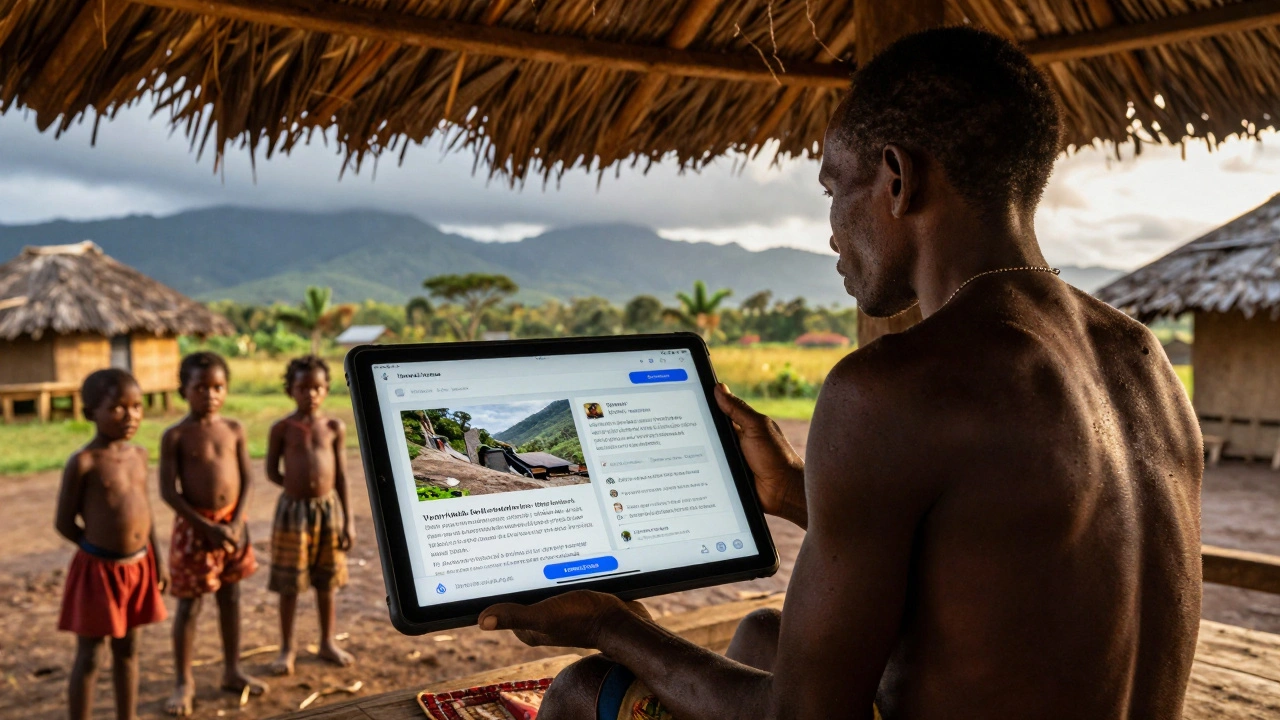
Wikipedia is the most accessed encyclopedia in the world. In places with limited internet access or unreliable media, it’s often the first-and only-source of information. When a child in rural Kenya searches for “flood in Tana River,” they’re not reading English Wikipedia. They’re reading Swahili. If the Swahili version is outdated or inaccurate because no one translated the English update, they get the wrong information.
That’s why coordination isn’t just about efficiency. It’s about equity. Every language version deserves to reflect the truth as it’s known locally-and globally. When a Ukrainian editor adds details about a refugee camp to their article, and that gets translated into Polish, Romanian, and Arabic, it’s not just editing. It’s solidarity.
What’s Next for Multilingual Coordination
The Wikimedia Foundation is testing new AI tools to auto-detect when an article on one language version should trigger a translation request on others. But they’re being careful. AI can’t understand cultural nuance. A phrase like “civil unrest” in English might mean something very different in Arabic or Mandarin.
Instead, they’re investing in community-led translation networks. More grants are going to volunteers in underrepresented languages. More training is being offered in translation ethics and source verification. And more editors are being encouraged to become “bridgers”-people who speak two or more languages and actively move information between editions.
By 2026, the goal is to cut the translation lag for major events from days to hours-even for languages with fewer than 100 active editors.
How You Can Help
If you speak more than one language, you can help right now. Go to any major event page on Wikipedia-say, the 2025 UN Climate Summit. Look at the sidebar. Find a version in a language you know. Is it missing key updates? Is it outdated? Translate a paragraph. Add a verified source. Fix a broken link. You don’t need to be an expert. You just need to care.
Wikipedia doesn’t need more editors. It needs more connectors. People who see information in one language and say, “Someone else needs to know this too.”