On Wikipedia, anyone can edit. That’s the rule. But not everyone can be trusted right away. That’s where autopatrolled status comes in. It’s not a badge you earn for being popular or writing long articles. It’s a trust signal. A quiet permission that says, you’ve shown you know how to play by the rules.
What Autopatrolled Status Actually Does
Autopatrolled status lets your edits skip the queue. Normally, every new edit by a non-autopatrolled user shows up in the Recent Changes feed, where volunteers manually check for vandalism, bias, or errors. If you’re autopatrolled, your edits disappear from that list after a few seconds. They’re treated as trusted. No one needs to review them. That’s it. No extra tools. No special privileges to delete pages or block users. Just faster, quieter editing.
Think of it like a library. Anyone can borrow a book. But if you’ve never damaged one, never stolen pages, never scribbled in the margins, the librarian stops checking your returns. You’re not above rules-you’re just not a risk.
Who Gets Autopatrolled Status?
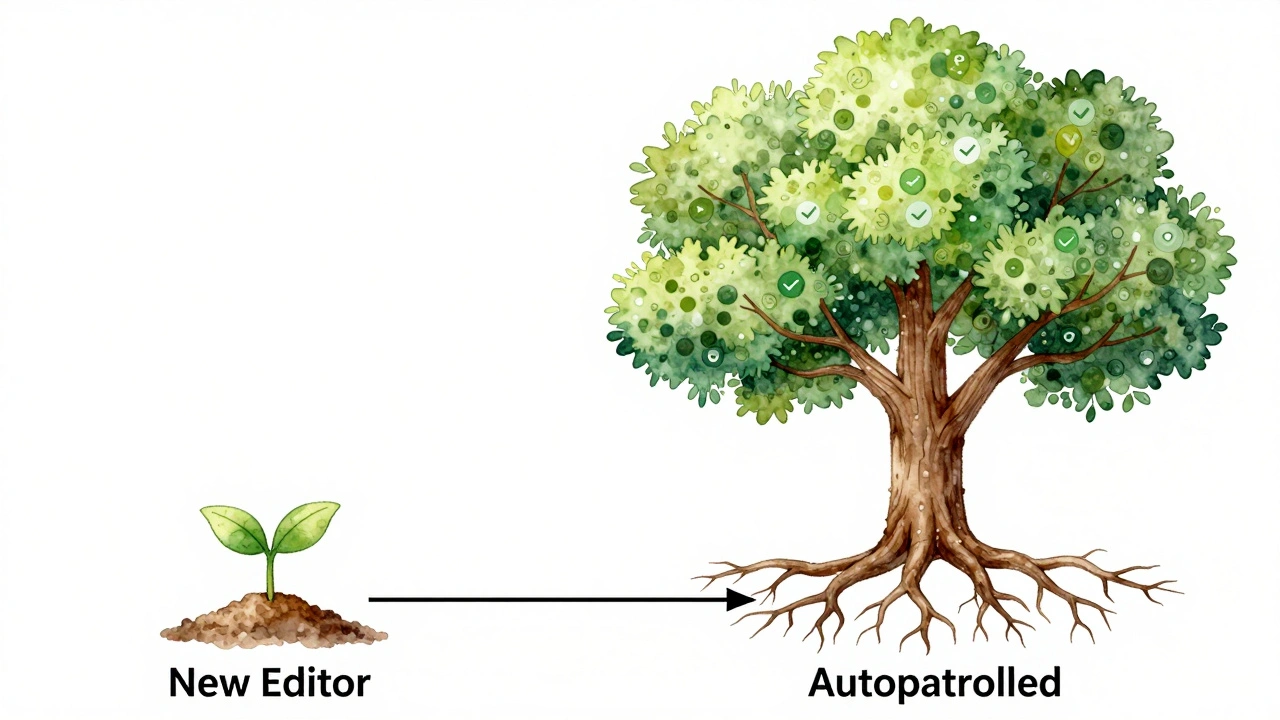
It’s not handed out. You don’t apply. You don’t beg for it. You earn it by proving consistency over time. The official requirement? You need to be an autoconfirmed user for at least 30 days and have made at least 500 edits. But here’s the catch: 500 edits alone won’t cut it.
Wikipedia’s system looks for quality, not just quantity. A user who makes 500 edits adding cat photos to articles about quantum physics won’t get autopatrolled. A user who makes 500 edits fixing grammar, adding citations, and reverting vandalism? That’s the kind of behavior that gets noticed.
Real-world example: A user in Berlin starts editing articles about public transit schedules. They fix broken links, update timetables after service changes, and revert spam links from fake tour companies. After 45 days and 520 edits, their edits stop showing up in the Recent Changes feed. No announcement. No email. Just silence-and trust.
What You Can’t Do With Autopatrolled Status
Some people think autopatrolled means you’re an admin. It doesn’t. You can’t delete pages. You can’t block users. You can’t protect articles. You can’t even change your own username. Autopatrolled is a tiny privilege, not a power upgrade.
It also doesn’t protect you from being reverted. If you add false information-even accidentally-your edit can still be undone. Other editors can still tag your edits as problematic. Autopatrolled status doesn’t make you immune. It just means your edits don’t need manual review.
And here’s something most don’t realize: autopatrolled users can lose the status. If you start making disruptive edits-adding biased claims, copying content from other sites, or repeatedly reverting good-faith changes-the system can quietly remove your status. No warning. No appeal process. It’s automated. Your edits go back into the review queue.
How the System Knows Who to Trust
Wikipedia doesn’t have humans reviewing every single edit. Instead, it uses a mix of bots and community behavior. Bots like ClueBot NG scan for obvious vandalism: random strings of letters, offensive words, or links to phishing sites. If you consistently avoid triggering those bots, you’re flagged as low-risk.
But bots aren’t the whole story. Human editors notice patterns. If you’ve made 100 edits and every single one improved an article-no reverts, no warnings, no rollback tags-you start to stand out. Editors who patrol Recent Changes begin to ignore your edits. That’s when the system notices too.
There’s no secret algorithm. But if you’ve been active for a month, made hundreds of useful edits, and never once been flagged, the system assumes you’re not a threat. It’s statistical trust. You’re not perfect. You’re just predictable.
Why Autopatrolled Status Matters
Wikipedia has over 60 million articles. Every minute, hundreds of edits happen. If every single one needed manual review, the site would collapse. Volunteers can’t check everything. That’s why trust matters. Autopatrolled users help keep the site running by reducing the workload on human patrollers.
Imagine 10,000 new edits per hour. Without autopatrolled status, patrollers would be drowning. With it, they can focus on the messy, complicated edits-the ones that look real but are subtly biased, or the ones that add half-truths dressed up as facts. Autopatrolled users let the system scale.
It’s also a way to encourage good behavior. New editors who see their edits disappear from the patrol feed feel validated. They’re not being watched. They’re being trusted. That keeps them coming back. And that’s how Wikipedia grows.
How to Get Autopatrolled Status
You don’t ask for it. You don’t nominate yourself. You don’t write a petition. You just edit-well and consistently.
- Wait until your account is autoconfirmed (after 4 days and 10 edits).
- Make real contributions: fix typos, add sources, update outdated info, revert obvious vandalism.
- Avoid edits that look suspicious: adding personal opinions, promoting websites, deleting content without reason.
- Don’t edit war. If someone reverts you, talk on the talk page. Don’t just undo them again.
- Keep editing for 30+ days. Aim for 500+ edits. Quality matters more than speed.
After that, if your edits are clean, the system will automatically grant you autopatrolled status. You won’t get a notification. You’ll just notice your edits no longer show up in Recent Changes. That’s your confirmation.
What Happens If You Lose It?
It’s rare, but it happens. Maybe you got frustrated and added a joke to a biography. Maybe you copied text from a blog and didn’t cite it. Maybe you kept reverting someone’s edits without discussion. The system doesn’t care about your intent. It cares about the pattern.
If your edits start triggering bots or getting flagged by patrollers, your autopatrolled status can be removed. Your edits will reappear in the Recent Changes feed. You’ll see your edits being reviewed again. You’ll get warnings. And if it keeps happening, you might get blocked.
There’s no appeal. The system doesn’t explain why. It just stops trusting you. The only way back is to start over-edit carefully, stay quiet, and rebuild trust over time.
Autopatrolled vs. Administrator vs. Bureaucrat
People often confuse these roles. Here’s the simple breakdown:
| Role | Can Edit Articles | Can Revert Vandalism | Can Delete Pages | Can Block Users | Can Grant Autopatrolled |
|---|---|---|---|---|---|
| Regular User | Yes | Yes | No | No | No |
| Autopatrolled | Yes | Yes | No | No | No |
| Administrator | Yes | Yes | Yes | Yes | No |
| Bureaucrat | Yes | Yes | Yes | Yes | Yes |
Autopatrolled is the most common trusted status. Most editors never go beyond it. And that’s fine. You don’t need admin powers to make Wikipedia better.
What If You’re Not Autopatrolled Yet?
If you’re still waiting, don’t get discouraged. Many editors spend months editing before they get it. Focus on small wins: fixing a broken link, adding a citation, correcting a date. Don’t chase big edits. Don’t try to rewrite entire articles on your first day. Build a track record.
Use the New Pages Feed to find articles that need help. Look for stubs with no sources. Find articles with outdated stats. These are easy wins. And they matter.
Read the Five Pillars. Understand what Wikipedia is and isn’t. That’s more important than any edit count.
Why This System Works
Wikipedia doesn’t rely on experts. It relies on patterns. The system trusts people who act like they belong-not because they’re smart or famous, but because they’ve shown up, day after day, and done the quiet, unglamorous work of keeping the site clean.
Autopatrolled status is the quiet reward for that work. It’s not about power. It’s about respect. And it’s the reason Wikipedia still works, even with millions of edits every day.
Can anyone request autopatrolled status?
No. Autopatrolled status is granted automatically by the system once you meet the criteria: 500 edits and 30 days as an autoconfirmed user. There’s no application, nomination, or appeal process.
Does autopatrolled status expire?
Not by time, but by behavior. If you start making disruptive edits, your status can be removed automatically. There’s no expiration date, but trust can be lost quickly.
Do autopatrolled users get paid?
No. Wikipedia is run entirely by volunteers. Autopatrolled status is a privilege, not a job. It comes with no pay, no title, and no official recognition beyond the system silently trusting your edits.
Can I be autopatrolled if I’m new to Wikipedia?
Yes, if you meet the requirements. Some new editors reach 500 edits in under a month by focusing on small, consistent improvements. It’s not about how long you’ve been here-it’s about what you’ve done.
What’s the difference between autopatrolled and autoconfirmed?
Autoconfirmed is the basic level-you get it after 4 days and 10 edits. It lets you move pages and upload files. Autopatrolled is the next step-you get it after 30 days and 500 edits. It lets your edits skip manual review. Autoconfirmed is about access. Autopatrolled is about trust.
Do I need to be an admin to be autopatrolled?
No. In fact, most autopatrolled users are not admins. Autopatrolled status is far more common. It’s meant for everyday editors who consistently help maintain quality, not for those who manage the site.