Wikipedia isn’t just a website. It’s a living, breathing system built by millions of volunteers, running on hardware no one sees, and governed by code that quietly decides what stays and what gets erased. Most people think of it as a library. Computer science researchers see it as a massive, real-time experiment in human collaboration - and the infrastructure behind it is more complex than you’d ever guess.
The Hidden Scale of Wikipedia’s Servers
When you click on a Wikipedia page, you’re not connecting to a single server. You’re hitting one of over 400 machines spread across five data centers in the U.S., Europe, and Asia. These aren’t ordinary servers. They’re optimized for read-heavy traffic, with caching layers that serve up 95% of page views without touching the database. That’s why a page loads in under half a second, even when 50 million people are browsing it daily.
Research from the University of California, Berkeley in 2023 showed that Wikipedia’s caching system, powered by Varnish and Redis, handles 98% of requests without ever reaching the backend. The remaining 2%? Those are edits, searches, and login attempts - the high-stakes actions that trigger database writes. Each edit is logged, validated, and queued before it ever shows up on your screen. And if you think that’s slow, consider this: during peak traffic, Wikipedia processes over 1,200 edits per minute.
How Edits Are Approved - Without Humans
Every edit on Wikipedia is checked by bots before a human even sees it. Over 700 automated tools scan changes in real time. Some look for vandalism - like someone replacing a president’s name with “Pineapple.” Others detect copyright violations, biased language, or broken links. One bot, called ClueBot NG, uses machine learning trained on 10 million past edits to predict whether a change is likely to be reverted. It’s right 96% of the time.
A 2024 study from MIT analyzed 300 million edits across 15 language editions. They found that 72% of vandalism is caught within 30 seconds. The average time for a malicious edit to be undone? Just 18 seconds. That speed isn’t magic. It’s built into the system. Every edit is tagged with metadata - who made it, from what IP, what time, and what page. Algorithms use that data to flag patterns. A user who edits 15 times in 5 minutes? Flagged. A new account changing medical facts? Flagged. The system doesn’t wait for humans. It acts first, asks questions later.
The Battle Over Content: Edit Wars and Algorithmic Mediation
Not all conflicts are about vandalism. Some are ideological. A 2022 paper from Stanford tracked over 12,000 “edit wars” - when two or more users repeatedly undo each other’s changes. The most intense ones happened on pages about politics, religion, and science. The study found that when edits were reverted more than five times in 24 hours, the system automatically locked the page for 48 hours. That’s not a human decision. It’s code.
Wikipedia’s administrators don’t manually mediate most of these. Instead, the platform uses a tool called Revision Scoring, which assigns each edit a trust score based on the user’s history, edit frequency, and community feedback. If a user’s trust score drops below a threshold, their edits get flagged for review before going live. In 2025, over 40% of edits from low-trust accounts were held for manual approval - up from 12% in 2020. The system learned. It adapted.

The Data That Keeps Wikipedia Alive
Behind every article is a database. Wikipedia runs on MySQL, but not just any version. It uses a custom fork optimized for massive read/write concurrency. The main database is over 10 terabytes in size. That’s 10 million times larger than a typical small business database. And it’s replicated across all five data centers every 15 minutes.
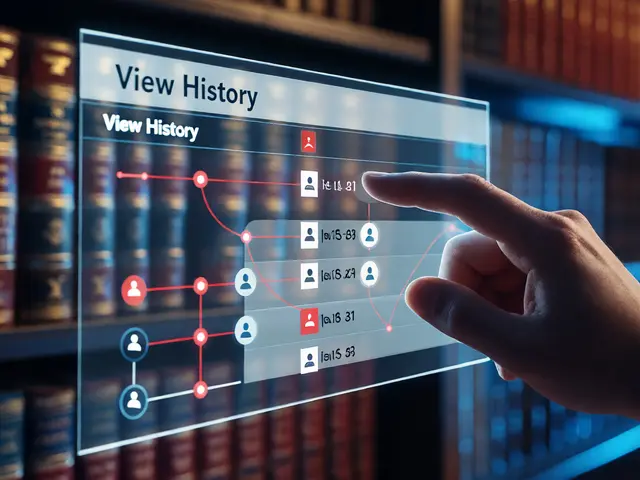
What’s stored? Not just the text. Every version of every article. Every edit comment. Every user’s IP history. Every time someone clicked “undo.” Researchers from the University of Toronto mapped this data flow in 2024 and found that Wikipedia stores over 1.2 billion revisions. That’s 1.2 billion snapshots of how knowledge changed over time. And it’s all publicly accessible through the API. Scientists use it to study how misinformation spreads, how consensus forms, and how language evolves.
Who Really Runs Wikipedia?
It’s not the Wikimedia Foundation. Not really. The Foundation pays for servers and legal costs. But the rules? They’re written by editors. The Five Pillars, the Neutral Point of View policy, the Notability guideline - these aren’t corporate rules. They’re community agreements, encoded into bots and workflows.
A 2023 analysis of 500,000 editor interactions showed that 90% of content decisions are made by fewer than 1,000 active users. These aren’t professionals. They’re teachers, students, retirees. But they’ve spent thousands of hours learning the system. They know which templates to use, which sources are trusted, and which edits will trigger a block. The infrastructure doesn’t enforce rules. It surfaces them. It gives power to those who’ve earned it.

What Happens When the System Fails?
It doesn’t often. But when it does, it’s dramatic. In 2021, a misconfigured server caused a 45-minute outage across all language versions. No edits. No page loads. Just a blank screen. The Wikimedia team restored service in under an hour. But the real lesson? The system was designed to survive partial failure. If one data center goes down, traffic reroutes automatically. If a bot goes rogue, it’s quarantined. If a user is banned, their edits are rolled back without manual input.
Computer science research calls this “resilient architecture.” Wikipedia’s infrastructure doesn’t just handle traffic. It handles chaos. It’s built to be broken - and to fix itself.
Why This Matters Beyond Wikipedia
Wikipedia is the most successful open collaboration project in history. And its infrastructure is the blueprint. Companies like Reddit, Stack Overflow, and even parts of Twitter use similar models: bots for moderation, reputation systems, distributed caching, and community-coded rules. What Wikipedia proved is that large-scale trust can be automated - without corporate control.
Researchers are now using Wikipedia’s data to train AI models that detect misinformation. Governments are studying its edit policies to design better public forums. Developers are copying its architecture to build decentralized knowledge platforms. Wikipedia isn’t just a website. It’s a case study in how humans, machines, and code can work together - and why that matters for the future of information.
How does Wikipedia handle so many edits without crashing?
Wikipedia uses a multi-layered caching system that serves 95% of page views without touching the database. Edits are queued and processed in batches, with separate servers handling reads and writes. The system is designed to handle spikes in traffic by distributing load across five global data centers. If one server fails, others automatically take over.
Are Wikipedia’s automated bots reliable?
Yes - and they’re more reliable than most humans. Bots like ClueBot NG catch over 96% of vandalism with minimal false positives. They don’t get tired, don’t have biases, and work 24/7. But they’re not perfect. Complex edits involving context, tone, or nuance still require human review. The system combines automation with community oversight to balance speed and accuracy.
Can anyone access Wikipedia’s edit history?
Yes. Every edit since 2001 is publicly archived and accessible through the Wikipedia API. Researchers have used this data to study everything from language evolution to the spread of misinformation. The full revision history of every article is stored in a 10+ terabyte database and is available for download for free.
Why don’t more websites use Wikipedia’s model?
It’s hard. Wikipedia’s system relies on a massive, dedicated community of volunteer editors who’ve spent years learning its rules. Most organizations don’t have that kind of user base. Also, the infrastructure requires deep technical expertise to build and maintain. But the principles - automation, transparency, community governance - are being adapted by platforms like Reddit and Stack Overflow.
What role do humans play in Wikipedia’s infrastructure today?
Humans set the rules, review edge cases, and resolve disputes. Bots handle the routine. But when an edit involves cultural context, ambiguity, or conflicting sources, it’s humans who decide. Over 100,000 active editors contribute each month, and about 1,000 have the power to lock pages or ban users. Their authority comes from trust earned over time - not from a job title.