
Imagine walking into a library with a million books, but every single one is only two pages long and contains no bibliography. Now imagine a library with only a thousand books, but each one is backed by exhaustive research, peer-reviewed sources, and a map of every single idea's origin. Which one do you actually trust? In the world of citation depth is the measure of how extensively and reliably a piece of information is backed by external, verifiable sources. While many platforms brag about having the most articles, that's a vanity metric. If you want a knowledge base that actually holds water, you have to care about the depth of the evidence, not the length of the list.
The Trap of the Article Count
For years, the race in platform competition has been about scale. Platforms want to show they have the "most" of everything-more users, more pages, more entries. But when it comes to an encyclopedia, a high article count can actually be a sign of a quality problem. When a platform prioritizes quantity, it often encourages "stubbing," where thousands of short, shallow articles are created just to occupy a keyword space.
Think about a typical entry on a mid-tier wiki. You might find a page for every single small town in the Midwest. They all look the same: population, area, and a generic sentence about the local industry. That's breadth, not depth. It fills a database, but it doesn't build a knowledge graph. If those entries don't link to historical records, census data, or local archives, they are essentially just digital placeholders. They don't provide insight; they just provide a destination for a search engine.
Why Depth is the Real Quality Signal
True quality in an encyclopedia isn't about how much you know, but how you can prove it. This is where we get into the mechanics of verification. A high citation depth means that for every claim made, there is a trail of breadcrumbs leading back to a primary source. When a reader sees a claim backed by a primary source (an original document or first-hand account), the trust level shifts from "someone told me this" to "this is a documented fact."
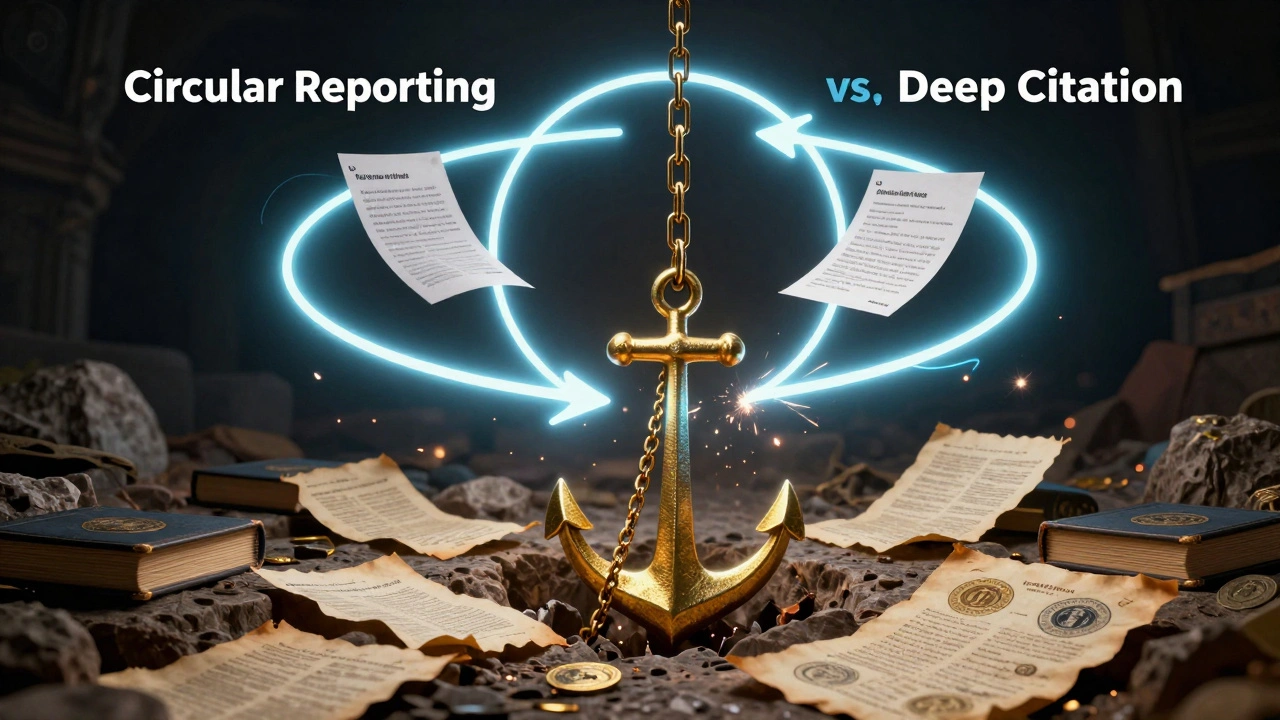
When citations are shallow, you get "circular reporting." This happens when Article A cites Article B, and Article B cites Article A. On the surface, it looks like two sources are agreeing. In reality, it's just one piece of unverified information bouncing around in a loop. Deep citation breaks this loop by forcing the information to anchor to something outside the platform-like a government white paper, a scientific study in PubMed, or a legal statute. This external anchoring is what transforms a collection of pages into a reliable authority.
| Metric | Volume-Based (Article Count) | Depth-Based (Citation Depth) |
|---|---|---|
| Primary Goal | Keyword coverage and traffic | Accuracy and trust |
| User Experience | Quick answers, high bounce rate | Comprehensive learning, high dwell time |
| Verification Method | Internal consensus (votes) | External validation (sources) |
| Risk Factor | Information decay and hallucinations | Higher barrier to entry for contributors |
The Architecture of Trust
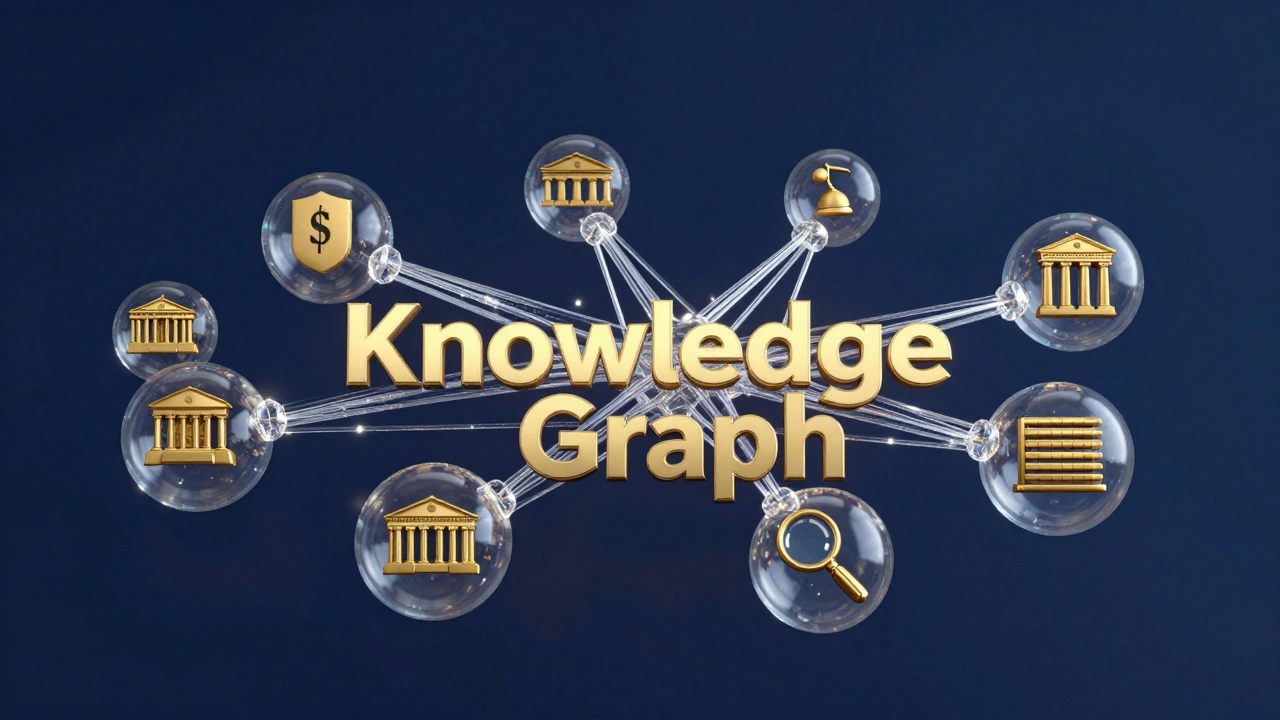
Building a deep citation structure requires a different approach to information architecture. Instead of a flat list of articles, you need a web of interconnected evidence. This means implementing a system where claims are treated as "nodes" and citations are the "edges" connecting those nodes to the real world.
Consider the difference in how a high-quality encyclopedia handles a controversial historical event. A shallow approach simply presents the most popular version of the story. A deep approach presents the event and then provides a detailed bibliography of conflicting accounts, marking which ones are based on eyewitness testimony and which are later interpretations. This doesn't just provide an answer; it provides the context of how that answer was reached. That is the essence of academic rigor applied to a digital platform.
The Economics of Platform Competition
Why do so many platforms still chase the article count? Because it's easier to measure and looks better in a pitch deck. Growing a database by 10,000 articles using AI-generated summaries takes a few hours. Increasing the citation depth of 100 existing articles requires human experts to spend weeks auditing sources.
However, the market is shifting. Users are becoming exhausted by "SEO content"-articles that are long but say nothing. We are seeing a return to the value of a curated knowledge base. When a user can't tell if a piece of information is a hallucination or a fact, they will gravitate toward the platform that shows its work. In this environment, citation depth becomes a competitive moat. You can't simply "buy" or "automate" a reputation for rigorous sourcing; you have to build it through a culture of verification.
Practical Ways to Measure Citation Depth
If you're auditing an encyclopedia or building one, stop looking at the total page count. Instead, look at these three markers:
- The Source-to-Claim Ratio: How many distinct external sources are there per 100 words? If a 2,000-word article only has two links at the bottom, the depth is low.
- Source Diversity: Does the article rely on a single domain (like other wiki pages), or does it pull from diverse entities like universities, archives, and official journals?
- Link Health: What percentage of citations lead to active, relevant pages? "Link rot" is the enemy of depth. A deep encyclopedia has a process for updating dead links.
A good rule of thumb is that any claim involving a specific number, a date, or a direct quote must have a dedicated citation. If the platform allows "general knowledge" to override specific evidence, the quality is slipping.
The Future of Digital Knowledge
As we move deeper into the era of generative AI, the value of a verifiable source is skyrocketing. Large Language Models can synthesize information, but they cannot "verify" it in the human sense. They can tell you what is commonly said, but they can't prove it with a physical document. This creates a massive opportunity for encyclopedias that double down on citation depth.
The next generation of winners in the knowledge space won't be the ones with the biggest libraries, but the ones with the most transparent ones. We are moving away from the "Oracle" model-where a platform tells you the truth-to the "Librarian" model, where the platform shows you exactly where the truth comes from. That shift is the only way to survive in an age of misinformation.
Does more articles always mean a better user experience?
No. While a high article count helps with search engine discoverability, it often leads to a fragmented user experience. Users frequently find a page that contains very little information, forcing them to jump through multiple links to find a real answer. A smaller number of deep, well-cited articles provides a more cohesive and trustworthy journey.
What is the difference between a reference and a citation?
A reference is usually a general list of works consulted at the end of a document. A citation is a specific pointer within the text that links a particular claim to a specific part of a source. Citation depth relies on the latter, as it allows the reader to verify exact facts rather than just knowing the general topic was researched.
Can AI help increase citation depth?
AI can help identify "citation gaps"-places where a claim is made without a source-but it struggles to find accurate primary sources without hallucinating. The most effective use of AI here is to assist human auditors in scanning documents for keywords, rather than letting the AI assign the citations itself.
Why is circular reporting dangerous for encyclopedias?
Circular reporting creates a false sense of consensus. When multiple articles cite each other, it looks like the information is widely corroborated. However, if the original source was incorrect or biased, that error is simply amplified across the platform, making the mistake look like an established fact.
How do I tell if a source is a "primary source"?
A primary source is a first-hand account or original document created at the time of the event. Examples include diaries, government transcripts, original research papers, or raw data sets. A secondary source is something that interprets or summarizes those primary materials, like a textbook or a news commentary.