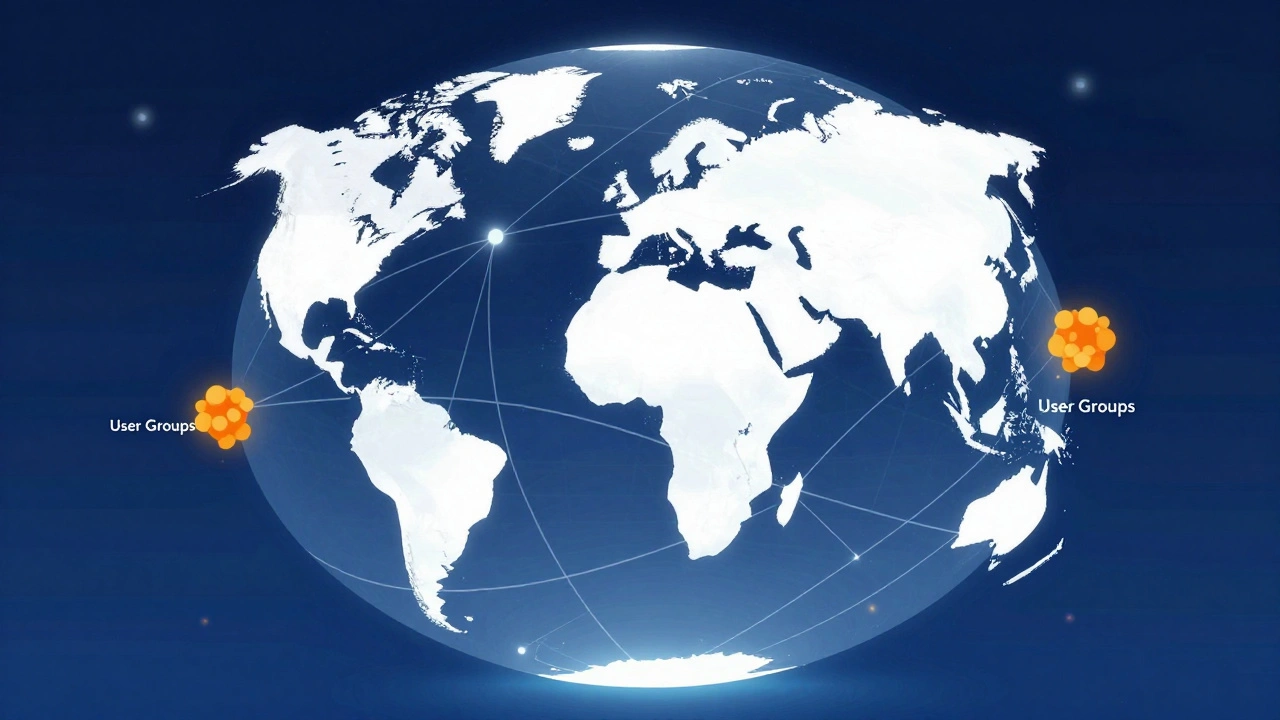
Have you ever wondered who actually keeps Wikipedia, the free encyclopedia that billions rely on, running smoothly? It isn't a small team in an office. It is a massive, decentralized network of volunteers. But behind the scenes, there is a formal structure designed to support these volunteers. This structure involves affiliate organizations recognized by the Wikimedia Foundation. These affiliates come in two main forms: Chapters and User Groups. Understanding how they work reveals the hidden engine driving one of the world's most valuable resources.
The Wikimedia Foundation does not run every local event or legal case for editors around the world. Instead, it partners with independent non-profit entities known as affiliates. These groups operate under their own legal frameworks but align with the mission of free knowledge. The relationship between the foundation and these affiliates has evolved significantly over the last decade. Today, we see a surge in new user groups forming alongside established national chapters. This shift changes how support reaches individual contributors.
What Are Wikipedia Affiliates?
At its core, an affiliate is a legally independent organization that supports the goals of the Wikimedia movement. Think of them as local branches that have more autonomy than a typical corporate branch office. They are registered as non-profits in their respective countries. Their primary job is to foster the growth and quality of free knowledge projects like Wikipedia, Wikidata, and Commons.
There are two distinct types of affiliates. First, there are Chapters. A Chapter is usually a national entity. For example, the Wikimedia Chapter in Germany represents the interests of German-speaking contributors across the entire country. They handle large-scale fundraising, legal advocacy, and government relations. Second, there are User Groups. These are smaller, often thematic or regional communities. A user group might focus on a specific city, a particular language, or even a specific topic like medicine or history. They are more agile and focused on direct community engagement.
| Feature | Chapter | User Group |
|---|---|---|
| Scope | National or broad regional | Local, thematic, or niche |
| Legal Structure | Complex non-profit corporation | Simpler association or informal group |
| Fundraising | Can raise significant funds locally | Limited fundraising capacity |
| Primary Focus | Advocacy, policy, large events | Community building, editing workshops |
| Recognition Process | Rigorous, multi-year review | Streamlined, faster approval |
The Evolution of Affiliate Recognition
The process of becoming an affiliate used to be rigid. For years, the only path was to form a Chapter. This required a high threshold of members, a robust financial plan, and a complex legal setup. While this worked for large countries, it left many vibrant communities without official support. Smaller nations, minority language groups, or specialized interest groups found it nearly impossible to get recognized.
This gap led to the creation of the User Group status. Introduced to lower barriers to entry, this model allows communities to gain recognition without the heavy administrative burden of a full Chapter. The Wikimedia Foundation now recognizes hundreds of user groups globally. This decentralization empowers local leaders to act quickly. If a community wants to organize a "Wiki Loves Monuments" contest in a single city, a user group can coordinate that efficiently without needing national-level bureaucracy.
Recent updates to the affiliation policy emphasize flexibility. The goal is no longer just to create legal entities, but to build sustainable ecosystems of support. Affiliates are now evaluated on their ability to serve their specific communities rather than meeting generic size requirements. This shift acknowledges that a dedicated group of ten editors in a rural area can contribute as much value as a larger, less active organization in a capital city.

How User Groups Support Editors
User groups play a critical role in the day-to-day life of Wikipedia editors. They provide the human connection that the online platform lacks. Editing Wikipedia can feel isolating. You spend hours writing articles about obscure topics, often facing criticism from anonymous users. User groups offer a space for mentorship and camaraderie.
Consider the activities of a typical user group. They host regular meetups, both online and offline. These gatherings allow experienced editors to guide newcomers through the complex rules of Wikipedia. They organize edit-a-thons focused on underrepresented topics, such as women in science or indigenous histories. By providing structured opportunities to contribute, user groups directly improve the content of the encyclopedia.
Moreover, user groups act as a bridge between the digital and physical worlds. They collaborate with libraries, museums, and universities. For instance, a university-affiliated user group might partner with a local library to digitize historical archives. These materials are then uploaded to Wikimedia Commons and cited in Wikipedia articles. This partnership enriches the encyclopedia with reliable, primary sources that would otherwise remain inaccessible.
The Role of Chapters in Advocacy
While user groups focus on community and content, Chapters tackle bigger structural challenges. They engage in political advocacy to protect free knowledge. In many countries, internet access is restricted or censored. Chapters work with governments and legislators to ensure that Wikipedia remains available to all citizens. They lobby against laws that threaten the neutrality of online information.
Chapters also manage significant financial resources. They run local fundraising campaigns during the annual giving season. Unlike the global banner appeals seen on Wikipedia, these local campaigns often feature cultural relevance and trust. People are more likely to donate to an organization they perceive as part of their own society. The funds raised support not only Wikipedia but also other Wikimedia projects like Wikivoyage and Wikisource.
Legal support is another key function. When editors face defamation lawsuits or harassment, Chapters often provide legal defense funds. This protection is vital for maintaining the integrity of the project. Without it, many contributors would self-censor out of fear. By standing behind their editors, Chapters reinforce the principle that truth should be accessible, regardless of political pressure.
Challenges Facing New Affiliates
Despite the benefits, forming and maintaining an affiliate is not easy. One major challenge is sustainability. Many user groups start with enthusiasm but struggle to retain members over time. Burnout is common among volunteer organizers. They juggle these responsibilities with full-time jobs and family life. To combat this, successful affiliates invest in leadership development programs. They train multiple people to share the workload, ensuring continuity if a key member steps away.
Another issue is diversity. Historically, Wikipedia's editor base has skewed toward certain demographics. Affiliates are increasingly aware of this imbalance. New user groups are explicitly formed to address gaps in representation. For example, some groups focus solely on recruiting female editors or editors from marginalized communities. They create safe spaces where these individuals can learn editing skills without facing immediate hostility. This targeted approach helps diversify the voices heard on the platform.
Funding remains a persistent hurdle for user groups. Unlike Chapters, they cannot always apply for large grants. They rely heavily on small donations and occasional sponsorships. This financial instability limits their ability to hire staff or rent office space. However, creative solutions are emerging. Some user groups partner with local businesses for sponsorship. Others use crowdfunding platforms to finance specific events. These grassroots efforts demonstrate resilience and innovation.
The Future of Affiliate Networks
Looking ahead, the landscape of Wikipedia affiliates will continue to evolve. The trend is toward greater collaboration between different types of affiliates. We see more instances of user groups partnering with Chapters to leverage each other's strengths. A user group might handle the logistics of a local event, while the Chapter provides legal oversight and funding. This synergy maximizes impact while minimizing redundancy.
Technology also plays a growing role. Digital tools enable affiliates to coordinate across borders more easily. Virtual reality meetups and AI-assisted translation services help break down language barriers. These innovations allow a user group in Brazil to collaborate seamlessly with one in Japan. Such global connections strengthen the overall movement, creating a unified front for free knowledge.
As Wikipedia matures, the need for professional support grows. Affiliates are moving beyond simple volunteering to become sophisticated organizations. They employ staff, develop strategic plans, and measure their impact rigorously. This professionalism ensures that the support provided to editors is consistent and effective. It transforms the chaotic energy of volunteerism into structured progress.
What is the difference between a Wikipedia Chapter and a User Group?
A Chapter is typically a national-level non-profit organization with broader legal and fundraising powers, focusing on advocacy and large-scale operations. A User Group is a smaller, more flexible entity that focuses on specific communities, themes, or regions, primarily engaging in direct community building and editorial support.
How can I find a Wikipedia affiliate near me?
You can search for affiliates on the Meta-Wiki website, which maintains a comprehensive list of all recognized Chapters and User Groups worldwide. You can filter by country, region, or theme to find groups relevant to your location or interests.
Do I need to be an expert editor to join a User Group?
No, you do not need to be an expert. Most User Groups welcome beginners. They often host introductory workshops and provide mentorship to help new editors learn the ropes. The goal is to grow the community, so everyone is encouraged to participate regardless of their skill level.
Why does the Wikimedia Foundation recognize affiliates?
The Wikimedia Foundation recognizes affiliates to decentralize support and empower local communities. Since the Foundation cannot manage every aspect of the global movement, affiliates provide essential legal, financial, and logistical support at the local level, ensuring the sustainability and growth of free knowledge projects.
Can a User Group raise money for Wikipedia?
Yes, but with limitations. User Groups can raise funds for their specific activities and events, such as hosting edit-a-thons or buying equipment. However, they generally cannot engage in large-scale public fundraising campaigns like Chapters can, due to stricter regulatory requirements and resource constraints.