Wikipedia doesn’t just delete bad edits. It deletes entire articles-sometimes thousands of them-because someone copied text from a book, a news site, or a blog without permission. This isn’t about typos or biased wording. This is about copyright violations, and they’re one of the most common reasons content disappears from Wikipedia overnight.
How Copyright Violations Happen on Wikipedia
Most people don’t think of Wikipedia as a place where copyright law matters. After all, it’s free, open, and full of public knowledge. But every word added to Wikipedia must be either original or freely licensed. That means you can’t paste a paragraph from a Wikipedia article you found on Google, copy a passage from a textbook, or reuse a news report-even if you cite the source.
Real examples happen all the time. In 2023, over 12,000 articles were flagged for copyright issues. One common case? Someone writes a detailed biography of a local musician and copies large chunks from the artist’s official website. Or a student adds a summary of a scientific paper they read, not realizing the journal holds the copyright. Even translating text from another language Wikipedia page counts as a violation if the original wasn’t licensed under CC-BY-SA.
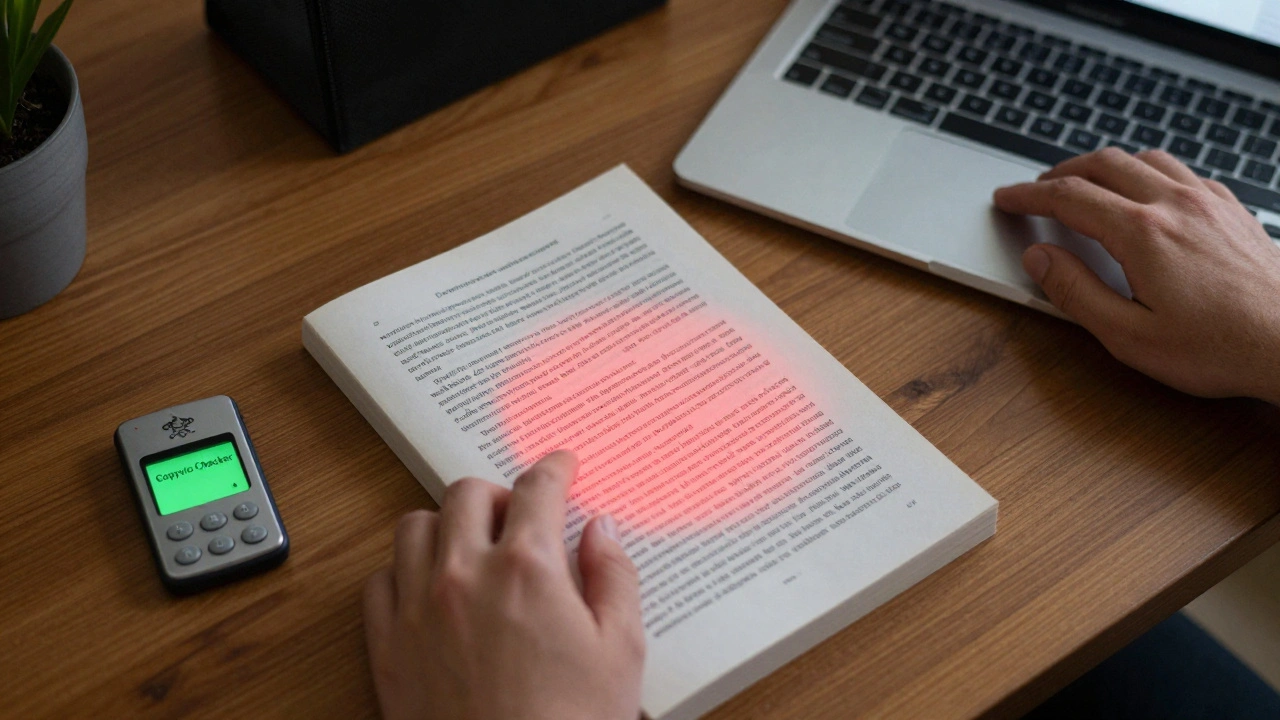
Wikipedia’s software automatically scans new edits for text matches against known sources. If it finds a 90% match with a copyrighted article, it flags it. Human volunteers then review it. If confirmed, the content gets removed. The article might be deleted entirely if it’s mostly copied material.
What Gets Deleted-And What Doesn’t
Not all copied content is treated the same. Short quotes, like a single sentence from a famous speech, are usually fine under fair use. But if you copy five paragraphs from a 200-page book? That’s a problem.
Here’s what typically triggers deletion:
- Copying entire sections from books, magazines, or websites without permission
- Reposting content from other wikis that aren’t licensed under compatible terms
- Using text from academic journals that require paid access or restrict reuse
- Translating copyrighted material without authorization
- Adding content from personal blogs or social media posts that aren’t openly licensed
What doesn’t get deleted? Facts. Dates. Names. Statistics. Those are not copyrighted. You can say “Leonardo da Vinci was born in 1452” without issue. But if you copy the exact phrasing of a Wikipedia article’s biography section? That’s a violation.
Even if you rewrite it slightly-changing a few words but keeping the same structure and flow-it can still be flagged as a derivative work. The system looks for pattern matches, not just word-for-word copies.
Why Wikipedia Takes This So Seriously
Wikipedia isn’t just a website. It’s hosted by the Wikimedia Foundation, a nonprofit that relies on donations and legal protection to operate. If Wikipedia were found to knowingly host copyrighted material, it could lose its safe harbor protections under laws like the U.S. Digital Millennium Copyright Act (DMCA). That means the foundation could be sued-and it could lose the right to host content at all.
That’s why they don’t wait. They act fast. A volunteer with access to the “Copyright Patrol” tool can delete an article within minutes of a report. No warning. No appeals process. Just gone.
And it’s not just big articles. Even tiny stubs-short entries with only a few sentences-get deleted if they’re copied. In 2024, over 3,000 articles under 50 words were removed for copyright violations. Length doesn’t matter. Originality does.
What Happens to the Deleted Content?
Deleted content doesn’t vanish into thin air. It’s stored in Wikipedia’s archive system, accessible only to administrators and trusted volunteers. You can’t see it unless you have special permissions. The public can’t view it, and search engines can’t index it.
Some deleted articles are restored if the user proves the content was originally licensed properly. For example, if someone copied text from a government website (which is public domain in the U.S.), they can submit proof and have the article reinstated. But if the source is a copyrighted blog or a paid journal? No exceptions.
Wikipedia also keeps a public log of all deletions. You can search for “deleted articles” using the “Deleted Contributions” tool, but you’ll only see the title and date-not the content. The text itself remains hidden.
How to Avoid Getting Your Content Deleted
If you want to contribute to Wikipedia without losing your work, follow these rules:
- Write everything in your own words. Even if you’re summarizing a book, don’t copy the sentence structure.
- Use only sources that are openly licensed (like Creative Commons) or in the public domain.
- When in doubt, don’t paste. Type it out manually.
- Use reliable, free sources: government publications, open-access journals, or Wikimedia Commons media.
- Check the copyright status of your source. If it says “All rights reserved,” assume you can’t use it.
There’s a simple trick: If you can’t find the original source online and verify its license, don’t use it. Better to leave out a detail than risk deletion.
What to Do If Your Article Was Deleted
If your article disappeared and you’re sure you didn’t copy anything, check the deletion log. Go to the article’s page, click “View history,” then look for a deletion notice. It will say why-usually “copyright violation” or “copied from [source].”
Here’s what to do next:
- Find the original source you used. Was it copyrighted?
- Rewrite your content completely. Use different phrasing, structure, and examples.
- Replace any borrowed text with original writing or properly licensed material.
- Submit a restoration request on the article’s talk page or through the Deletion Review process.
Don’t just repost the same text. That won’t work. The system remembers. You need to prove you’ve fixed it.
Common Myths About Copyright on Wikipedia
Many people believe false things about copyright on Wikipedia. Here’s the truth:
- Myth: “I cited the source, so it’s fine.” Truth: Citation doesn’t override copyright. You still need permission to copy.
- Myth: “It’s on the internet, so it’s public domain.” Truth: Most online content is still copyrighted-even if it’s free to read.
- Myth: “I only copied a little bit.” Truth: Even one paragraph can be enough for deletion if it’s not original.
- Myth: “Wikipedia allows fair use.” Truth: Fair use is extremely limited on Wikipedia. It’s mostly for images, not text.
The bottom line: If you didn’t write it, and you don’t have explicit permission to reuse it, don’t put it on Wikipedia.
Alternatives to Copying
Wikipedia doesn’t want you to be a copy-paste editor. It wants you to be a synthesizer. Use multiple sources. Compare viewpoints. Turn facts into clear, original explanations.
For example, instead of copying a biography from a museum’s website, read three different sources-a book, a scholarly article, and an interview. Then write your own summary. That’s how real knowledge builds.
Use tools like the Copyvio Checker to test your edits before saving. It scans for matches with known sources. If it flags something, rewrite it.
And remember: Wikipedia rewards clarity and originality-not quantity. A short, well-written, fully original article will last longer than a long, copied one that gets deleted in a week.
Can I use text from Wikipedia in my own work?
Yes, but only if you follow the license. Wikipedia content is licensed under CC-BY-SA, which means you can reuse it as long as you give credit and share your work under the same terms. You can’t claim it as your own original writing, and you can’t restrict others from using your version.
What if I didn’t know the content was copyrighted?
Ignorance doesn’t protect you. Wikipedia removes content based on the law, not intent. If you copied copyrighted material-even accidentally-it will be deleted. The best defense is to always write in your own words and verify your sources before editing.
Are government documents safe to copy?
In the United States, works produced by federal government employees as part of their official duties are in the public domain. You can copy them freely. But state and local government documents may still be copyrighted. Always check the source’s copyright notice.
Can I restore a deleted article if I fix the copyright issue?
Yes, but only if you completely rewrite the content and remove all copied material. You must submit a request through Wikipedia’s Deletion Review process and show proof that the new version is original. Re-uploading the same text-even with minor changes-won’t work.
Why doesn’t Wikipedia just ask for permission from copyright holders?
Wikipedia has millions of articles and thousands of daily edits. Asking permission for every single piece of text would be impossible. Instead, the policy is simple: only use content that’s already free to use. It’s faster, safer, and protects the project legally.