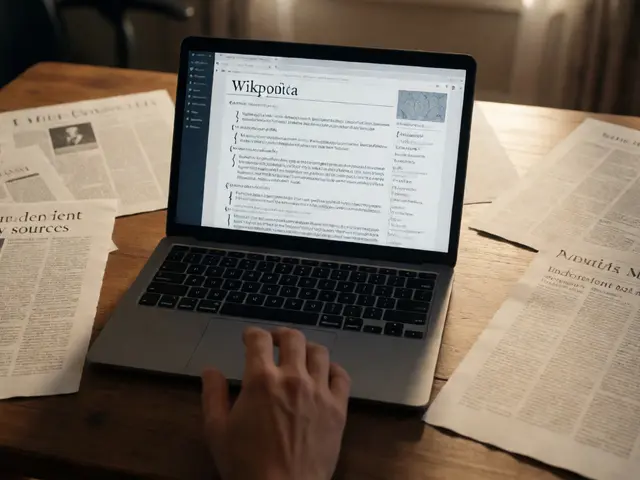
But bots aren't magic. They are precise, which means if a bot is programmed poorly, it can break ten thousand pages in ten seconds. Understanding what these bots actually do helps us see how the world's largest encyclopedia stays readable and organized.
Quick Takeaways
- Bots handle systemic errors like typos and formatting glitches across millions of pages.
- They enforce consistency using templates and category management.
- Automation is managed via strict policies to prevent accidental mass-deletion of content.
- Most bots rely on frameworks like Pywikibot to interact with the MediaWiki API.
Cleaning Up the Mess: Typo and Grammar Bots
The most common a bot ever does is what we call "clutter removal." Humans are great at writing deep insights, but we're terrible at consistent spelling. A bot can be told to look for a specific pattern-like a common misspelling of a city name-and fix it everywhere. However, this is trickier than a simple find-and-replace. If a bot blindly changes "form" to "from," it might ruin a perfectly good sentence about a legal form.
To avoid this, developers use Regular Expressions is a sequence of characters that specifies a search pattern for text matching . For example, a bot might only fix a typo if it appears at the start of a sentence or is followed by a specific word. This ensures a Wikipedia bot tasks sequence doesn't accidentally change a proper noun or a technical term.
Beyond typos, these bots handle "whitespace" cleanup. You'd be surprised how many articles end up with three empty lines at the bottom or a random space before a period. A bot scans the wikitext and trims these invisibles, making the raw code much easier for human editors to read.
The Architecture of Consistency: Template Fixes
Wikipedia doesn't just use plain text; it uses templates to display data consistently. A template is essentially a shortcut. Instead of writing a complex info-box for every single chemical element, editors use a template where they just plug in the atomic weight and symbol.
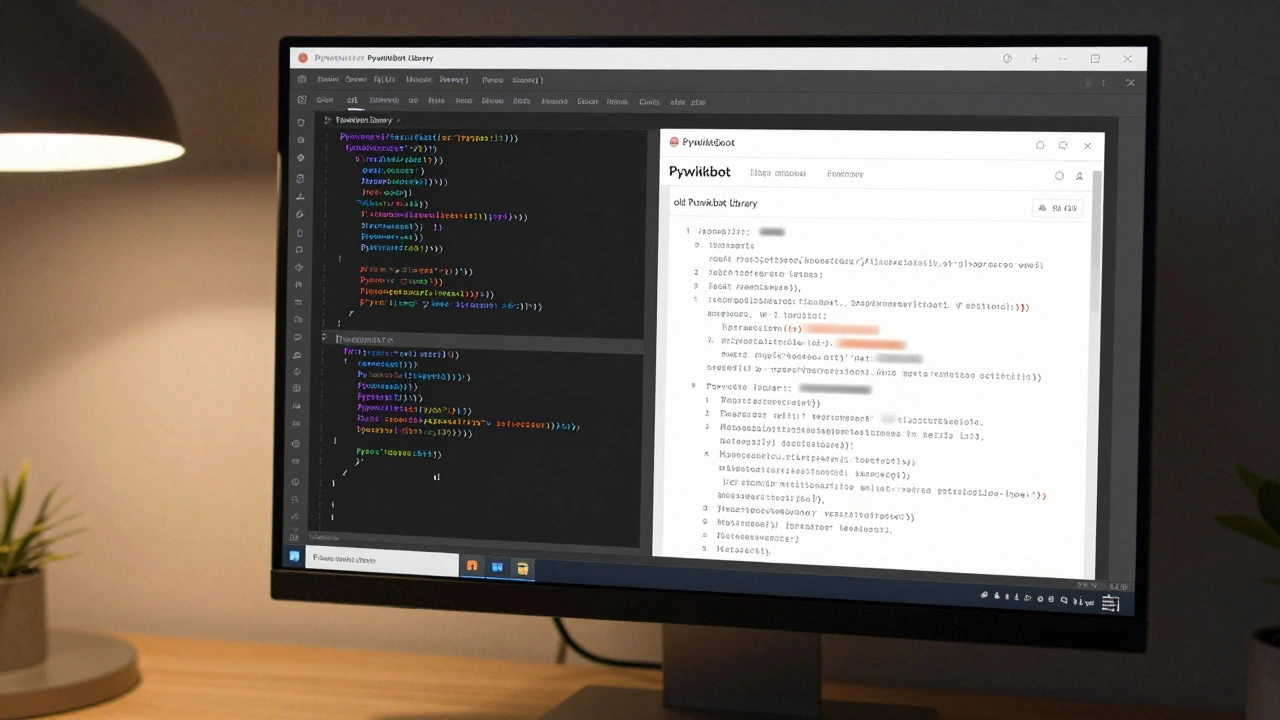
Over time, these templates evolve. Maybe the community decides that "Date of Birth" should be renamed to "Born." Doing this manually for 100,000 biographies is impossible. This is where Pywikibot is a Python-based library used to automate tasks on MediaWiki sites comes in. A Pywikibot script can iterate through every page using a specific template and swap the old parameter for the new one without touching the actual article text.
| Task Type | Manual Effort | Bot Effort | Risk Level |
|---|---|---|---|
| Parameter Rename | High (Thousands of pages) | Low (Minutes) | Low |
| Adding Missing Tags | Medium | Low | Medium |
| Replacing Obsolete Templates | Very High | Low | High |
Vandalism Control and Rapid Response
Vandalism happens in seconds. Someone might change a world leader's biography to something offensive, and within minutes, thousands of people might see it. Human patrollers are great, but they can't be everywhere. Anti-vandalism bots act as the first line of defense.
These bots don't "read" the text the way we do; they look for patterns. If a page is suddenly edited to include a list of known swear words or if 90% of the content is deleted in one go, the bot triggers. Many of these bots use MediaWiki is the open-source wiki software that powers Wikipedia APIs to instantly revert the change to the last stable version.
Some advanced bots even check the history of the user making the edit. If a brand new account with no history suddenly changes 50 pages in a minute, the bot might automatically flag the account for administrator review or temporarily block them. This saves human admins from having to manually scrub thousands of tiny, malicious edits every hour.
Managing the Map: Categories and Redirects
As Wikipedia grows, its filing system (categories) becomes a mess. You might have a category for "19th Century Scientists" and another for "Scientists of the 1800s." These are the same thing, but they create a fractured user experience.
Bots are used to merge these categories. A bot can move every page from the redundant category to the primary one and then leave a redirect. They also handle "dead-end" redirects-pages that point to another page, which points to a third page. To make the site faster and the URLs cleaner, bots flatten these chains so you get to the destination in one jump.
They also handle the "cleanup" of orphaned pages. An orphan is a page that no other page links to. While some orphans are intentional, most are accidents. Bots can identify these and tag them for human review or move them into a "Needs Links" category so editors can find them.
The Safety Net: How Bot Runaway is Prevented
The fear of a "runaway bot"-a script that enters an infinite loop and deletes the entire encyclopedia-is very real. To stop this, Wikipedia has a strict bot approval process. You can't just start a bot; you have to apply for a "Bot Flag."
Before a bot is allowed to run on the main site, the operator usually has to demonstrate the bot's effects on a "sandbox"-a private testing area. Admins check the diffs (the difference between the old and new versions) to make sure the bot isn't doing something unexpected.
Furthermore, bots are required to use User-Agent is a string that identifies the software making a request to a web server strings that clearly state what the bot is doing and who to contact if it starts behaving badly. This transparency allows the community to hold bot operators accountable.
Can a bot delete an entire article?
Generally, no. Most bots are configured with very limited permissions. Deletion usually requires administrator rights, and bots that handle deletions (like those removing spam pages) are heavily monitored and follow strict community-agreed rules.
Do bots replace human editors?
Not at all. Bots handle the "janitorial" work. They can't verify if a source is reliable, understand nuance, or write an original synthesis of information. They simply prepare the ground so humans can focus on the actual writing.
What language are most Wikipedia bots written in?
Python is the dominant language due to the Pywikibot library, though some bots are written in Lua (which runs directly on the servers for templates) or JavaScript.
How do I know if a bot edited a page?
If you look at the "View history" tab of any page, you will see the username of the editor. Bot accounts usually have "Bot" in their name or a special bot icon next to their username.
Can anyone create a Wikipedia bot?
Yes, but you need to follow the bot policy. This includes creating a separate account for the bot, testing it in a sandbox, and getting approval from the local community of editors.
Next Steps for Aspiring Bot Operators
If you're interested in automating wiki tasks, don't start by writing a script for the live site. Start by exploring the MediaWiki API documentation to understand how data is requested and sent. Set up a local installation of MediaWiki on your computer or use the public Sandbox to test your logic.
Focus on "read-only" tasks first-scripts that find errors and list them in a report rather than fixing them. Once you can prove your bot identifies the correct targets without false positives, you can move toward "write" tasks. Always keep a log of every change your bot makes, as this will be the first thing admins ask for during your approval process.