Wikipedia doesn’t run on fancy AI or proprietary code. It runs on something far more humble: MediaWiki. This open-source software powers every single page you read on Wikipedia - from the article on quantum physics to the one about your favorite local diner. If you’ve ever wondered how millions of edits happen every day without the whole thing collapsing, the answer is MediaWiki. It’s not flashy, but it’s built to handle chaos - and it’s been doing it since 2002.
What Exactly Is MediaWiki?
MediaWiki is a web-based wiki software package. That means it lets people create, edit, and organize content collaboratively on a website. It’s not just for Wikipedia. It’s used by corporations, universities, and fan communities to build internal knowledge bases. But Wikipedia is its biggest, most visible user - and the reason it exists.
The software was originally built by Magnus Manske in 2002 to replace the earlier UseModWiki software that Wikipedia was running on. By then, Wikipedia had grown too big. The old system couldn’t handle the number of pages, the edit volume, or the growing need for features like history tracking and user permissions. MediaWiki was designed from the ground up to scale. It had to work for thousands of editors at once, across dozens of languages, with minimal downtime.
Today, MediaWiki is maintained by the Wikimedia Foundation and a global team of volunteers. It’s written in PHP and uses MySQL or MariaDB for data storage. It’s free, open-source, and anyone can download and run it on their own server. That’s why you’ll find it powering sites like Fandom (formerly Wikia), WikiHow, and even internal wikis at companies like Intel and NASA.
How MediaWiki Handles Millions of Edits
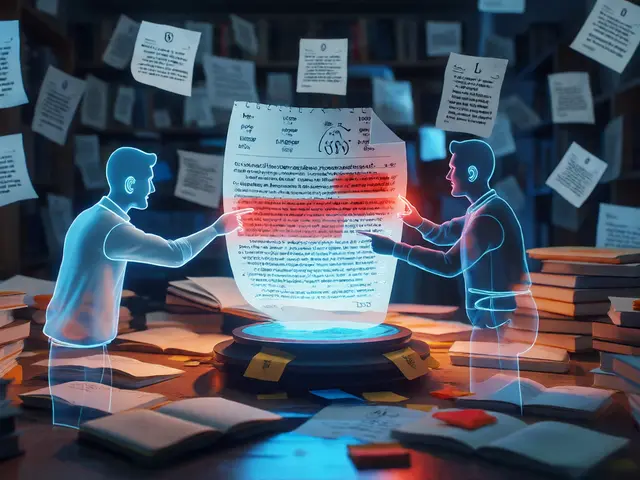
Imagine 500 people editing the same article at the same time. That happens daily on Wikipedia. MediaWiki doesn’t lock pages or force people to wait. Instead, it uses a system called edit conflict detection. When two users try to save changes to the same section, the system shows them both a merge prompt. One person’s edit goes through first. The other sees a diff - a side-by-side comparison of changes - and can manually combine their edits. No data is lost. No one gets blocked.
Behind the scenes, MediaWiki stores every version of every page. That’s why you can click “View history” and see exactly who changed what, when, and why. Each edit gets a unique ID. Users can revert changes in one click. Bots automatically undo vandalism within seconds. This entire system relies on MediaWiki’s database structure, which is optimized for fast reads and frequent writes.
Wikipedia’s servers process over 15,000 edits per minute. MediaWiki handles this by caching content aggressively. Popular pages are stored in memory. Less-used pages are pulled from disk only when needed. The software also uses a distributed architecture - meaning it runs across dozens of servers around the world, reducing load times for users in Asia, Africa, or South America.
Key Features That Keep Wikipedia Running
MediaWiki isn’t just a content editor. It’s a full platform with tools built for collaboration:
- Version history - Every edit is saved. You can compare any two versions, restore an older one, or see who made a specific change.
- User permissions - Regular users can edit most pages. Admins can delete pages, block users, and protect articles from editing. Bots have special rights to perform automated tasks.
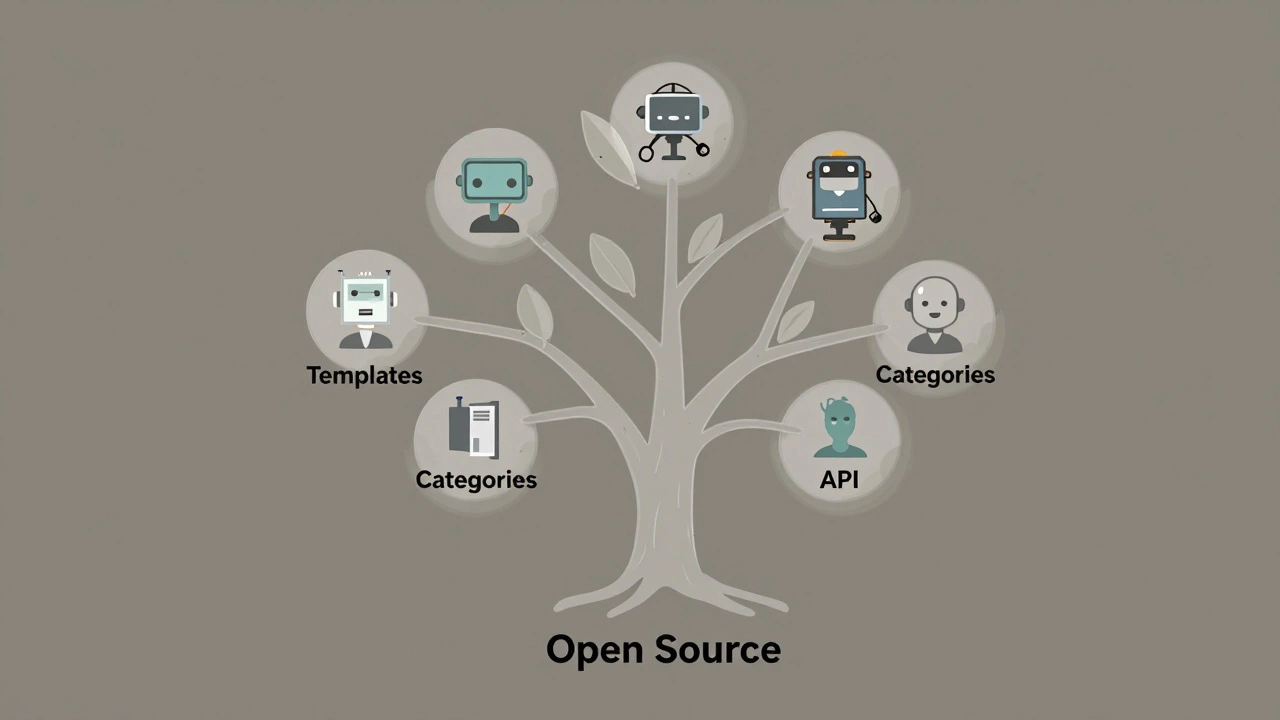
- Templates and transclusion - Reusable pieces of content (like infoboxes or citation formats) can be inserted into hundreds of pages at once. Change one template, and all pages using it update automatically.
- Categories and links - Articles are organized into categories. Internal links help users navigate between related topics. MediaWiki automatically generates link statistics and broken link reports.
- API access - Developers can pull data from Wikipedia using a public API. This is how apps, research tools, and even Google’s Knowledge Graph get their information.
These features aren’t add-ons. They’re core to how MediaWiki works. Without them, Wikipedia would be a mess. Imagine trying to find a reliable source in an article with no citations, no edit history, and no way to track who changed what. MediaWiki makes that impossible.

How Bots Use MediaWiki
Wikipedia doesn’t just rely on humans. It runs on bots - automated programs that handle repetitive tasks. There are over 500 registered bots on the English Wikipedia alone. They fix broken links, add categories, patrol vandalism, and even create new articles from structured data.
These bots don’t hack the site. They use MediaWiki’s official API. That’s important. Every bot action is logged, just like a human edit. If a bot makes a mistake, admins can roll it back. Bots can’t delete pages or block users without human approval. MediaWiki’s permission system keeps them in check.
One of the most famous bots is ClueBot NG, which detects vandalism with 99% accuracy. It reverts edits that look like spam or nonsense - often within 30 seconds of being made. Another bot, AutoEd, fixes common formatting errors like missing spaces after periods or incorrect capitalization. These bots save editors thousands of hours every year.
MediaWiki makes bot development easy. It has clear documentation, standardized interfaces, and tools like the Pywikibot library that help coders build bots in Python. The system expects automation. It’s built for it.
Why MediaWiki Isn’t Replaced
You’d think, with all the fancy tools out there - Notion, Confluence, Airtable - that Wikipedia would have switched to something newer. But it hasn’t. Why?
Because MediaWiki is the only platform that’s been battle-tested at Wikipedia’s scale. No other system can handle 1.5 billion monthly visitors, 60 million articles, and 100,000 active editors without crashing. Other tools are great for small teams. They’re not built for global, real-time, multilingual collaboration.
Also, MediaWiki is deeply tied to Wikipedia’s culture. The community has spent 20 years building workflows, templates, and norms around it. Switching platforms would mean rewriting every bot, retraining every editor, and rebuilding every automated system. The cost would be astronomical - and the risk of losing data or trust is too high.
Even when new software emerges - like the experimental Wikifunctions or Structured Data on Commons - they’re built as extensions to MediaWiki, not replacements. It’s the foundation. Everything else sits on top.
How You Can Use MediaWiki
You don’t need to be a tech expert to run your own wiki. MediaWiki is free to download. You can install it on a shared hosting plan for under $5 a month. Many web hosts offer one-click installs.
Here’s what you can do with it:
- Build a company knowledge base for onboarding new hires.
- Create a fan wiki for a TV show or video game.
- Document your family history or local community events.
- Set up a classroom wiki for group projects.
There are hundreds of extensions available to add features: math equations, maps, polls, file uploads, and even live chat. You can customize the look with themes, or keep it simple like Wikipedia’s clean design.
And if you get stuck, there’s a huge community of users and developers ready to help. The MediaWiki.org wiki has over 10,000 pages of documentation - all written by volunteers, just like Wikipedia.
What Makes MediaWiki Different
Most content platforms are designed for publishers - one person writes, others comment. MediaWiki is designed for collaboration. Everyone is an editor. Everyone can change the rules. That’s why it works for Wikipedia.
It doesn’t push you to post viral content. It doesn’t track your clicks or sell your data. It doesn’t have ads. It’s built for truth, not traffic. That’s rare.
MediaWiki doesn’t try to be everything. It doesn’t have video hosting, social feeds, or e-commerce. It does one thing: lets people build and maintain a shared knowledge base. And it does it better than anything else ever has.
Is MediaWiki the same as Wikipedia?
No. MediaWiki is the software that runs Wikipedia. Wikipedia is the website - the collection of articles, users, and policies. Think of MediaWiki as the engine, and Wikipedia as the car. You can use the same engine to power other websites, like Fandom or WikiHow.
Can I install MediaWiki on my own website?
Yes. MediaWiki is free and open-source. You can download it from mediawiki.org and install it on any server that supports PHP and a MySQL or MariaDB database. Many web hosts offer one-click installations. You’ll need basic technical skills, but there are guides for beginners.
Are bots dangerous on Wikipedia?
Not if they’re properly approved. Every bot on Wikipedia must be reviewed and granted permission by the community. Bot operators must document what their bot does, and all bot edits are publicly visible. If a bot causes harm, admins can disable it immediately. Most bots fix errors or add structure - they don’t make editorial decisions.
Why doesn’t Wikipedia use a simpler tool like Google Docs?
Google Docs doesn’t support version history for millions of users, doesn’t allow public editing by default, and can’t handle the scale of Wikipedia’s traffic. It also doesn’t let you restrict edits by user roles or build automated workflows. MediaWiki was built for this exact purpose. Google Docs is great for teams of five. Wikipedia needs to work for 500,000.
Does MediaWiki support multiple languages?
Yes. MediaWiki was designed from the start to support Unicode and right-to-left languages like Arabic and Hebrew. Wikipedia exists in over 300 languages, all powered by the same software. Translations of the interface are handled by volunteers through Translatewiki.net, a dedicated platform for localizing MediaWiki.
What’s Next for MediaWiki?
MediaWiki isn’t standing still. The Wikimedia Foundation is working on modernizing the editing experience. The VisualEditor lets users edit pages like a word processor, without learning wiki markup. That’s helped bring in new editors who found the old syntax intimidating.
They’re also improving mobile support. Over half of Wikipedia’s traffic now comes from phones. MediaWiki’s interface has been redesigned to work better on small screens. And new features like Structured Data let users add machine-readable information to images and files - making it easier for AI tools and search engines to understand what’s on Wikipedia.
But the core hasn’t changed. MediaWiki still believes in open collaboration, transparency, and community control. That’s why it’s lasted 20 years. It’s not perfect. It’s slow to update. It’s clunky in places. But it works. And for a project that depends on trust, that’s more important than polish.