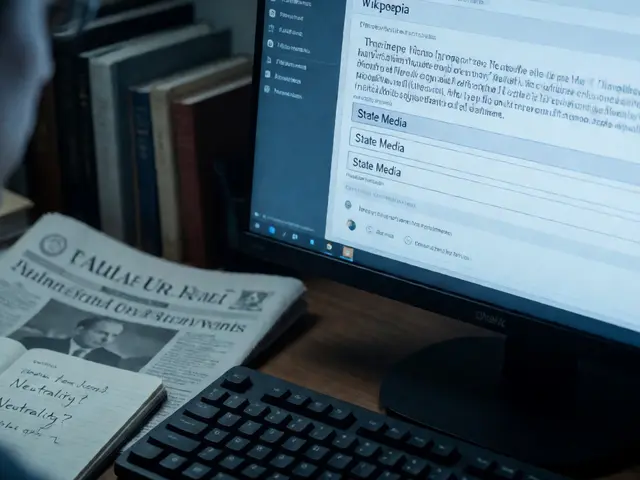
Imagine reading about the same historical event in English and then switching to the German or Japanese version of Wikipedia is a free online encyclopedia that serves as a primary source for factual information across multiple languages. You might notice that one version focuses heavily on military tactics while the other emphasizes diplomatic negotiations. This isn't an error; it's a reflection of how different cultures prioritize information. For journalists and researchers, these differences offer a unique lens into global perspectives, revealing how local contexts shape universal facts.
The Scale of Global Knowledge
To understand why these differences exist, we first need to look at the sheer volume of content available. The English edition of Wikipedia is by far the largest, hosting over 6 million articles. However, it does not dominate every topic. For instance, the French edition has significantly more detailed entries on European history and art, while the Russian edition often provides deeper coverage of post-Soviet states. This disparity stems from the number of active editors in each community. The English-speaking world contributes the most edits daily, but this doesn't mean it holds the "truth"-it simply means it has the most resources dedicated to maintaining those pages.
This imbalance creates what scholars call "editorial bias." When a topic is primarily covered by editors from one region, the narrative tends to reflect that region's values, priorities, and historical context. A journalist comparing these versions can uncover hidden assumptions that are invisible within a single-language silo. It turns the encyclopedia into a comparative tool rather than just a reference book.
How Culture Shapes Narrative
Culture influences journalism through three main channels: selection, framing, and tone. Selection refers to which facts are included. Framing determines how those facts are connected. Tone dictates the emotional weight of the text. In cross-cultural analysis, you can see all three at play. Take the entry for the French Revolution. The English version might highlight its impact on global political theory. The French version likely emphasizes national identity and civic pride. The Spanish version may focus on its influence on neighboring monarchies. Each is factually accurate, yet each tells a different story because the underlying cultural priorities differ.
Another example is the coverage of technology. The Silicon Valley is heavily documented in English, often framed around innovation and individual success. In contrast, the Chinese edition might frame similar technological developments through the lens of state policy and collective infrastructure. This isn't about right or wrong; it's about perspective. Journalists who ignore these nuances risk presenting a fragmented view of reality.
Structural Differences in Editing
Beyond content, the structure of articles varies significantly between language editions. The English Wikipedia follows a strict style guide known as "WP:STYLE," which encourages neutral point of view (NPOV) and concise lead sections. Other editions have their own guidelines. The German Wikipedia, for example, is known for its rigorous citation standards and encyclopedic depth, often resulting in longer, more academic-style articles. The Japanese Wikipedia places a strong emphasis on visual elements and infoboxes, reflecting a cultural preference for structured data presentation.
These structural choices affect how readers consume information. A reader accustomed to the dense, cited format of the German edition might find the English version too brief. Conversely, a reader used to the visual layout of the Japanese edition might find the text-heavy English format overwhelming. For cross-cultural journalism, understanding these structural norms is crucial. It helps explain why certain topics seem "underdeveloped" in one language but "comprehensive" in another-it’s often a difference in editorial philosophy, not lack of knowledge.
Case Study: The Coverage of Local Conflicts
One of the most revealing areas for comparison is the coverage of regional conflicts. Let’s look at the Kashmir dispute. The Indian Wikipedia edition naturally leans toward the Indian perspective, citing sources from Indian media and government reports. The Pakistani edition mirrors this with Pakistani sources. The English edition attempts a middle ground, but critics argue it still reflects Western geopolitical interests. By comparing these three versions side-by-side, a journalist can map out where consensus exists and where divergence occurs. This technique, known as "triangulation," allows reporters to identify biases without taking sides themselves.
Similarly, the coverage of the Arab Spring varied widely. The Arabic editions provided granular details on local protests and tribal dynamics that were often glossed over in English summaries. The English version focused on the broader implications for democracy and U.S. foreign policy. Neither was incomplete; they just served different audiences with different informational needs. Recognizing this helps journalists avoid the trap of assuming their own cultural context is the default.
Practical Tools for Comparison
You don’t need to be fluent in ten languages to conduct this kind of analysis. Several tools make cross-cultural comparison accessible. First, use browser extensions like Google Translate to get a rough sense of non-English content, though always verify key claims with native speakers or professional translators. Second, utilize the "Talk" pages on Wikipedia. These are public forums where editors debate changes. Reading talk pages in multiple languages reveals the reasoning behind editorial decisions. Third, look at the revision history. Comparing when major changes were made across editions can show how quickly different communities react to new events.
Here is a simple checklist for starting your own cross-cultural comparison:
- Select a topic with significant international interest.
- Read the English version and note the main arguments and sources.
- Switch to two other major language editions (e.g., Spanish and Mandarin).
- Identify differences in the lead paragraph, key facts, and cited sources.
- Note any missing information or unique perspectives.
- Check the Talk page for ongoing debates in each language.

Challenges and Limitations
While powerful, cross-cultural comparison has pitfalls. Language barriers remain the biggest hurdle. Nuances in translation can alter meaning, so relying solely on machine translation is risky. Additionally, some language editions have fewer editors, leading to less stable content. Smaller editions may also suffer from "edit wars" where a few dominant voices control the narrative. Finally, there is the issue of sourcing. Different countries have different media landscapes. What counts as a reliable source in the United States might be considered biased in Japan, and vice versa. Understanding these local media ecosystems is essential for accurate interpretation.
Despite these challenges, the value lies in the effort. In an era of information overload, being able to distinguish between fact and cultural framing is a critical skill. It transforms passive consumption into active analysis. Journalists who master this approach bring a richer, more nuanced voice to their reporting, helping audiences understand not just what happened, but how different parts of the world perceive it.
| Edition | Article Count | Editorial Style | Strongest Focus Areas |
|---|---|---|---|
| English | ~6.5 Million | Concise, NPOV-focused | Global events, Technology, Pop Culture |
| German | ~3 Million | Detailed, Academic, Rigorous Citations | European History, Science, Philosophy |
| Japanese | ~1.4 Million | Visual-heavy, Structured Data | Local History, Anime/Manga, Regional Geography |
| Spanish | ~2 Million | Narrative-driven, Culturally Specific | Latin American Politics, Iberian History |
Frequently Asked Questions
Is the English Wikipedia the most accurate?
Not necessarily. Accuracy depends on the topic and the quality of sources. The English edition has more editors, which helps with maintenance, but it also carries stronger Western-centric biases. For topics related to Asia, Africa, or Latin America, local language editions often provide more accurate and detailed information.
How do I find equivalent articles in different languages?
Most Wikipedia articles have links to other language versions in the sidebar. If a link is missing, you can use the search bar with the article title translated into the target language. Be aware that titles sometimes differ slightly due to translation conventions.
Does cultural bias affect scientific articles on Wikipedia?
Less so than in social sciences or history. Scientific facts are generally universal, but the interpretation of results or the highlighting of specific studies can vary. For example, a study on climate change might be framed differently depending on the economic policies of the country whose editors are contributing most to that section.
What is the best way to learn about a culture through Wikipedia?
Start with the "Culture" or "Society" sections of major cities or national entries in that language. Pay attention to the types of sources cited and the adjectives used to describe historical figures. This gives you insight into what that society values and how it views itself.
Can I edit Wikipedia in a language I don't speak natively?
It is possible but risky. Minor corrections to dates or numbers are usually safe if verified against primary sources. However, changing narrative tone or adding complex arguments requires native-level fluency to avoid introducing errors or sounding unnatural. Always check the community guidelines for that specific language edition.