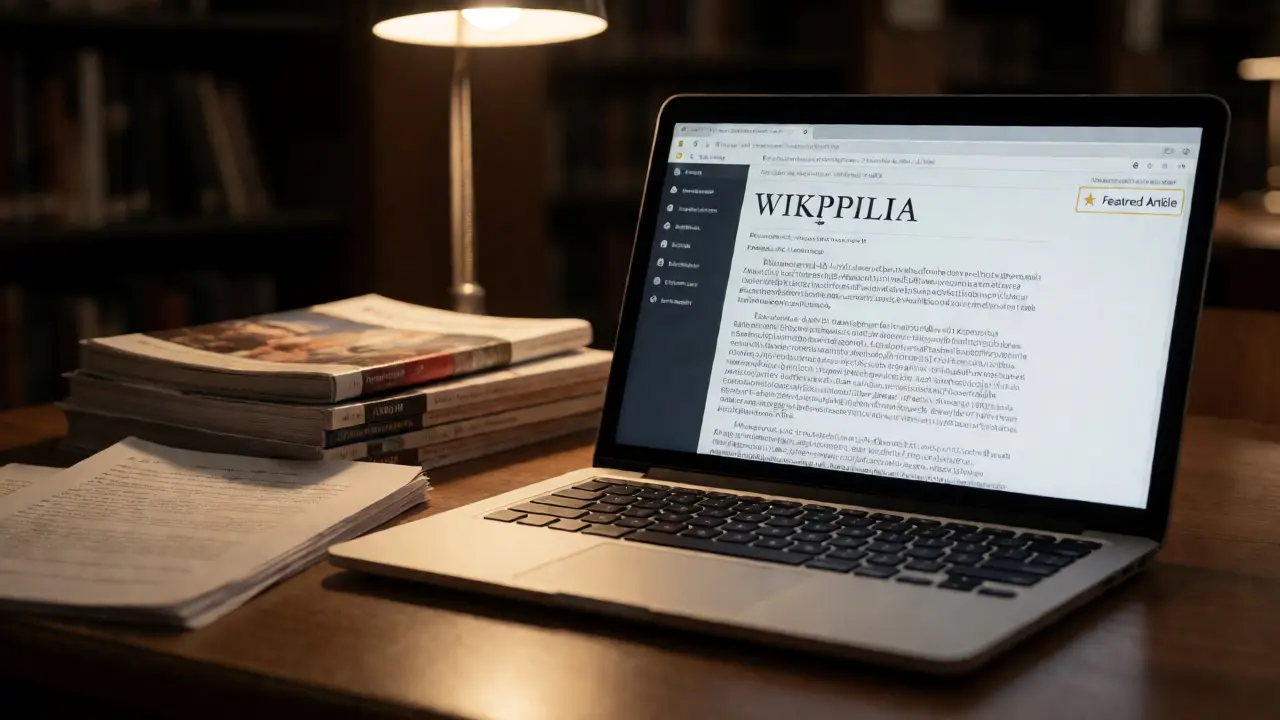
You’re staring at a blank page. The deadline is looming. You need background info fast, but your professor said, "Don't cite Wikipedia." So you ignore it? That’s a mistake. Wikipedia isn't just a rabbit hole of random facts; it’s a massive database where the top tier, known as Featured Articles, rivals professional encyclopedias in accuracy and depth. If you know how to find and use them correctly, these articles can save you hours of preliminary research without compromising your academic integrity.
Most students treat Wikipedia like a forbidden fruit-useful for quick answers but dangerous if cited directly. But here’s the thing: not all Wikipedia pages are created equal. There’s a hierarchy of quality. At the bottom, you have stubs with one sentence. At the top, you have Featured Articles. These aren't just written by anyone who logged in; they undergo rigorous review processes that mimic peer review. Understanding this distinction changes how you approach your research workflow.
What Makes an Article "Featured"?
A Featured Article is a work considered to be among the best produced by the Wikipedia community. To earn this status, an article must pass through multiple stages of scrutiny. First, it needs comprehensive coverage of the topic. Second, it requires a neutral point of view. Third, and most importantly for academics, every claim must be backed by reliable, published sources.
The process involves nomination, public review, and final approval by experienced editors. Think of it as a mini-peer-review system. Editors check citations for dead links, verify data against primary sources, and ensure the tone remains objective. If an article has the small gold star icon in the top right corner, you’re looking at content that has survived this gauntlet. This doesn't make it perfect, but it significantly raises the floor for reliability compared to a standard entry.
| Feature | Stub Article | Good Article | Featured Article |
|---|---|---|---|
| Citation Quality | Sparse or missing | Basic references | Comprehensive, verified |
| Editor Review | Minimal | Community feedback | Rigorous multi-stage review |
| Academic Utility | Low (background only) | Moderate (leads to sources) | High (reliable overview) |
| Stability | Volatile | Generally stable | Very high stability |
Finding the Gold Standard
How do you actually find these gems? You don't have to guess. When you search for a topic, look for the blue plus sign (+) next to the title in the sidebar or the gold star icon. Clicking the star takes you to the Wikipedia:Featured articles page, which lists every article that has achieved this status. You can browse by subject area, which is incredibly useful when you’re starting a broad literature review.
Another trick is using the "Random article" feature set to "Featured articles only." This sounds like a party trick, but it helps you discover well-curated topics you might not have considered. For example, if you're studying climate change, browsing featured articles under "Earth Sciences" might reveal specific case studies or historical events that provide concrete examples for your paper, rather than just general concepts.
The Citation Strategy: Don't Cite, Mine
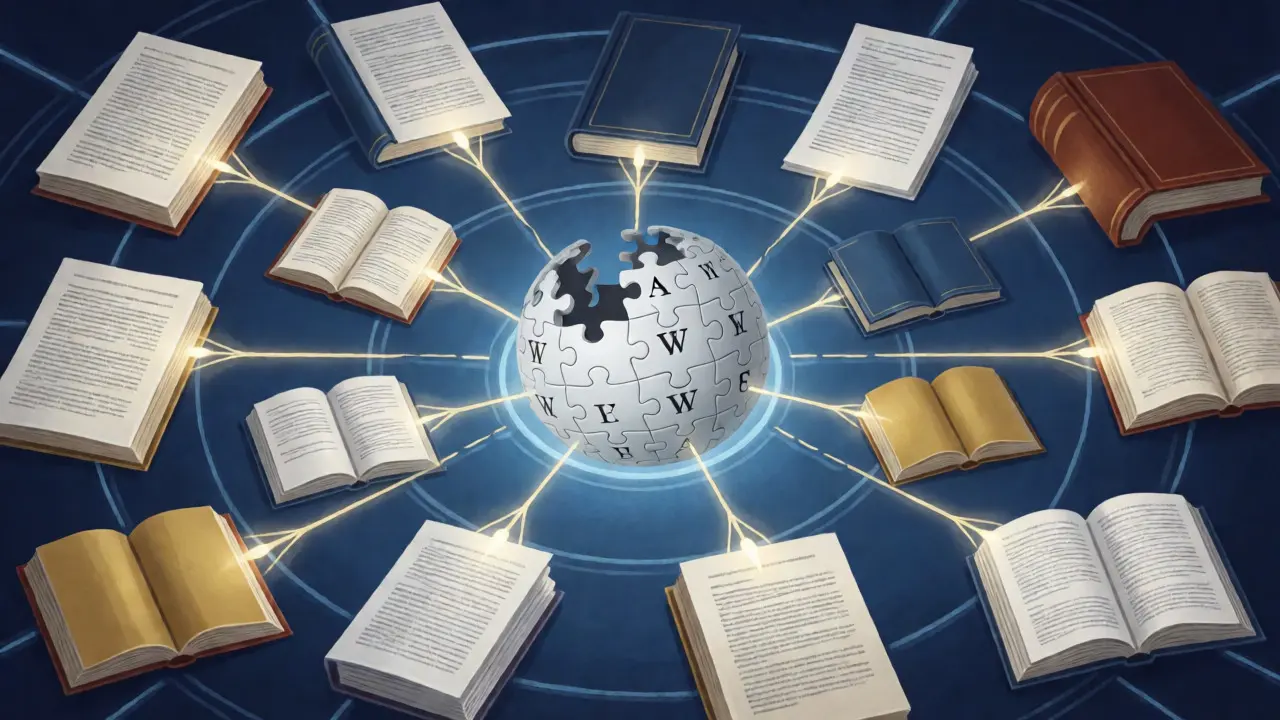
Here is the golden rule for academic use: Never cite Wikipedia directly. Instead, use it as a source-mining tool. Featured articles are essentially curated bibliographies. They aggregate hundreds of books, journal articles, and news reports into one readable summary. Your job is to follow the trail.
Scroll down to the "References" section. Look for sources marked as academic journals or reputable news outlets. Open those original documents. Read them. Quote them. Cite them. By doing this, you’re using Wikipedia for what it’s best at: discovery and synthesis. You’re letting the community’s editors do the heavy lifting of finding relevant literature, so you can focus on analyzing it. This method turns a "forbidden" resource into a powerful research assistant.
Consider this scenario: You need to write about the economic impact of the 2008 financial crisis. A standard web search gives you blog posts. A Featured Article on the "2008 Financial Crisis" will list reports from the Federal Reserve, academic papers from economists like Krugman or Stiglitz, and data from the World Bank. You grab those primary sources. Now your bibliography looks professional, even though you started on Wikipedia.
Evaluating Reliability Beyond the Star
Even with a gold star, you need to stay critical. Wikipedia is dynamic. An article that was featured last year might have degraded if new information emerged or if vandalism slipped through. Check the "History" tab. Look at recent edits. If there’s been a lot of back-and-forth recently, proceed with caution.
Also, consider the recency of the sources. In fields like medicine or technology, a Featured Article based on sources from 2015 might be outdated today, in 2026. Always cross-check key statistics with current databases. Use Wikipedia to understand the consensus or the history of a debate, but verify current data points independently. This hybrid approach balances efficiency with rigor.

When Not to Use It
Are there times you should avoid Wikipedia entirely? Yes. If you are writing a PhD dissertation on a niche topic, the Featured Article might lack the depth you need. Niche topics often don't get enough attention to reach "Featured" status. In these cases, go straight to specialized databases like JSTOR or PubMed.
Additionally, avoid using Wikipedia for controversial or rapidly evolving political issues where bias accusations are common. Even reviewed articles can reflect the dominant perspective of their editor base. If your argument hinges on a subtle nuance of policy, read the original legislative text or court rulings instead. Wikipedia summarizes; it doesn't always capture the fine print.
Pro Tips for Efficient Research
- Use the Talk Page: Every article has a "Talk" tab. This is where editors discuss disagreements. Reading this can give you insight into contested points, which is great for writing nuanced arguments.
- Check External Links: The external links section often contains official websites, archives, and datasets that are hard to find via search engines.
- Save the Version: If you rely on a specific paragraph, note the date and time of the version you read. Wikipedia changes, and citing a static snapshot protects you if the content shifts later.
- Combine with Google Scholar: Search the title of the Featured Article plus "site:wikipedia.org" to see if other scholars have referenced the same overview in their own papers. If they did, it’s a good sign the synthesis is respected.
Ultimately, treating Wikipedia as a library catalog rather than a book itself unlocks its potential. It’s a map, not the territory. The Featured Articles are the most detailed maps available for free. Use them to navigate toward the real sources, and you’ll find your research becomes faster, broader, and surprisingly robust.
Can I cite Wikipedia in my bibliography?
Generally, no. Most academic institutions discourage citing Wikipedia because it is a tertiary source that can change over time. Instead, use the references listed within the article to find and cite the original primary or secondary sources.
How many Featured Articles exist on Wikipedia?
As of 2026, there are approximately 7,000 to 8,000 Featured Articles across all language editions, with the English Wikipedia hosting the largest number. This represents a tiny fraction of total articles but covers the most significant topics comprehensively.
Are Featured Articles more accurate than Good Articles?
Yes, typically. While both meet high standards, Featured Articles undergo a stricter review process focusing on prose style, neutrality, and completeness. Good Articles are solid but may lack the exhaustive sourcing or polished narrative flow of Featured ones.
Who writes Featured Articles?
They are written by volunteer editors, ranging from casual contributors to subject matter experts. The key factor is not just who writes it, but the community review process that validates the content against reliable sources before granting the status.
Does Wikipedia remove Featured Article status?
Yes. If an article falls out of compliance with standards-such as losing key sources or becoming outdated-it can be demoted to "Good Article" or regular status through a reassessment process initiated by any user.