Wikipedia doesn’t run on magic. It runs on code, volunteers, and a stack of tools built specifically to keep millions of edits flowing without breaking. At the heart of this system are two critical pieces: Phabricator is an open-source project management and bug tracking system used by the Wikimedia Foundation to coordinate development tasks, report bugs, and manage code reviews. Also known as Phabricator (Wikimedia instance), it was adopted in 2014 to replace older systems and now handles over 15,000 active tasks annually. Developers, translators, and volunteers use it daily to track changes to Wikipedia’s software, from mobile app updates to anti-vandalism bots.
Behind every edit on Wikipedia - whether it’s fixing a typo, adding a citation, or rebuilding a template - there’s a team of engineers and volunteers working in the open. The tools they use aren’t off-the-shelf software. They’re custom-built, community-driven, and designed for scale. If you’ve ever wondered how Wikipedia stays up, stays accurate, and stays free, the answer lies in these platforms.
What Phabricator Actually Does for Wikipedia
Phabricator isn’t just a bug tracker. It’s the central nervous system for Wikimedia’s technical work. Every change to Wikipedia’s codebase - from the search algorithm to the mobile editor - starts as a task in Phabricator. Volunteers report bugs, developers claim them, and testers verify fixes. The system tracks every step: who worked on it, when it was merged, and which version of the software it landed in.
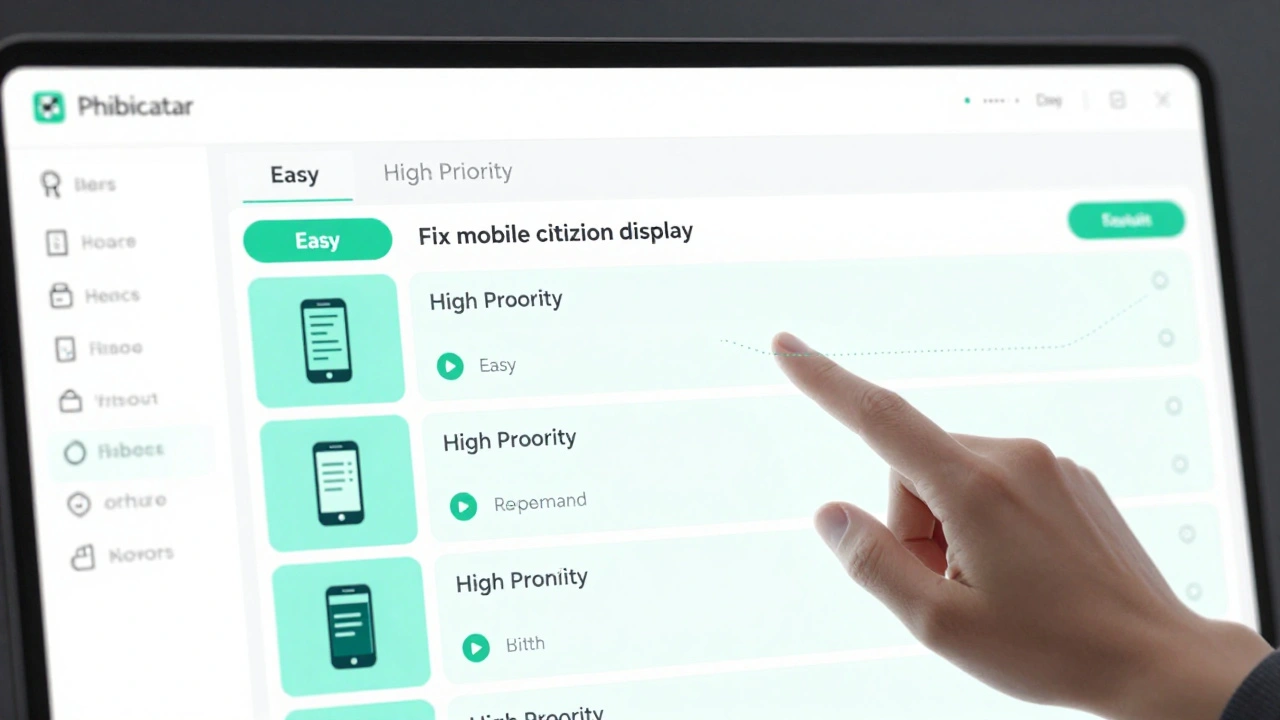
For example, if a user notices that citations aren’t displaying correctly on mobile devices, they create a task. That task gets tagged with keywords like Mobile, Citations, and High Priority. A developer from Germany might pick it up, write a patch, and upload it for review. Another volunteer from Brazil tests it on an Android phone. Once approved, the code gets merged into the next software release. All of this happens in public, visible to anyone with an internet connection.
Phabricator also handles code reviews. Instead of private emails or Slack threads, every change is posted as a Differential - a public diff that anyone can comment on. This transparency prevents mistakes, shares knowledge, and lets newcomers learn how professional code gets reviewed. In 2025, over 8,000 code changes were reviewed and merged through Phabricator. Most of them came from unpaid volunteers.
How Contributors Actually Get Involved
Wikipedia’s software isn’t built by a company. It’s built by people - thousands of them - who log in, find a task, and fix it. The process is simple: go to phabricator.wikimedia.org, create an account, and start browsing tasks. You don’t need to be a programmer. There are tasks for translators, designers, testers, and even people who just write clear bug reports.
Here’s how a typical contributor might get started:
- Find a task labeled Easy or Good for Newcomers - these are tagged for beginners.
- Read the description. If it’s about fixing a typo in a message, you can edit it directly in the interface.
- Click Claim Task so no one else works on it.
- Follow the instructions. Some tasks need you to install a local copy of Wikipedia’s code. Others just need you to test a feature on your phone.
- Submit your work. If it’s code, you’ll upload a patch. If it’s a report, you’ll add comments with screenshots.
- Wait for feedback. Someone will review it. If it’s good, it gets merged. If not, you’ll get help to improve it.
One volunteer from Indonesia started by fixing punctuation errors in interface messages. Six months later, they were leading a team that translated the entire mobile app into Bahasa Indonesia. That’s the power of the platform: anyone can grow.
The Other Side: Wikimedia’s Contributor Platforms
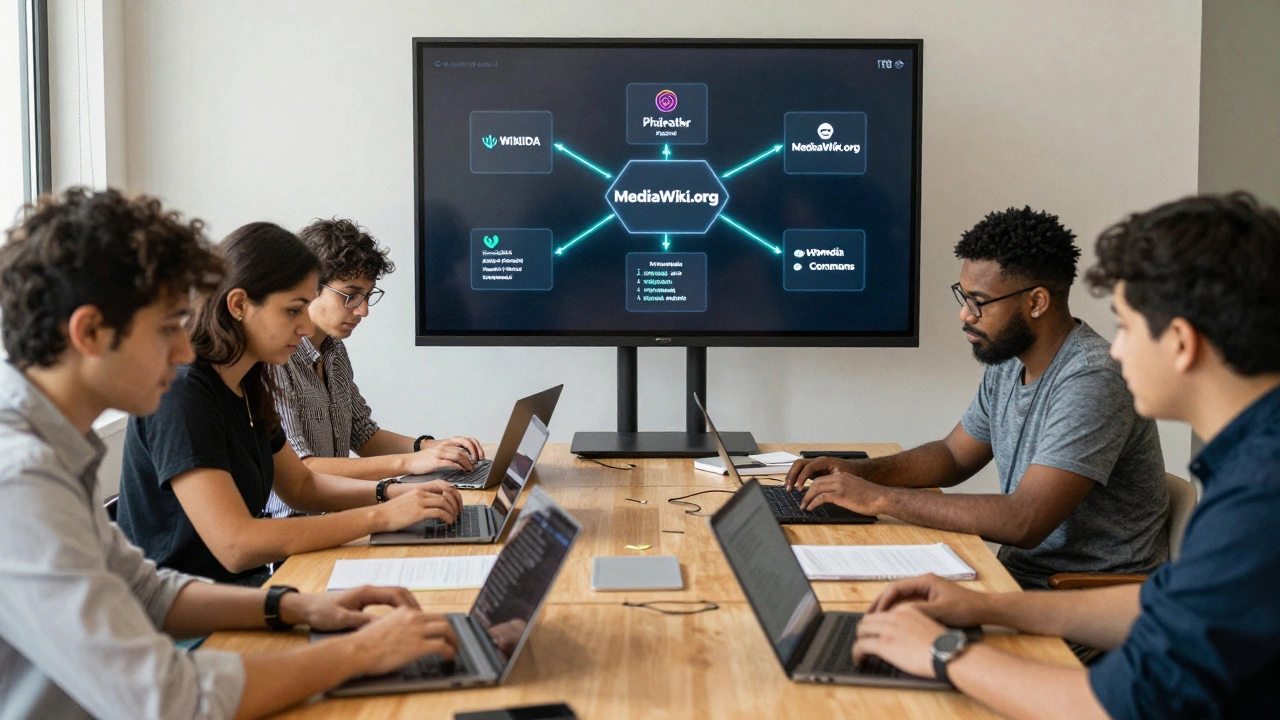
Phabricator handles the code. But what about the people? Wikipedia has dozens of platforms that support different kinds of contributions:
- Wikimedia Gerrit - The code repository where all changes are stored before being merged. It’s built on Git and integrates directly with Phabricator.
- MediaWiki.org - The central wiki for documentation. Every tool, extension, and API has a page here. It’s where developers write tutorials and share best practices.
- Wikimedia Commons - Not just an image library. It’s also a platform for contributors who build tools to manage media, like bots that auto-tag photos or scripts that fix metadata.
- WikiProject tools - Community-driven dashboards for organizing edits. For example, WikiProject Medicine uses custom bots to flag articles that need citations from peer-reviewed journals.
- Wikidata - The structured data backbone. Many Wikipedia tools now pull data from Wikidata, meaning a fix in one place updates hundreds of articles.
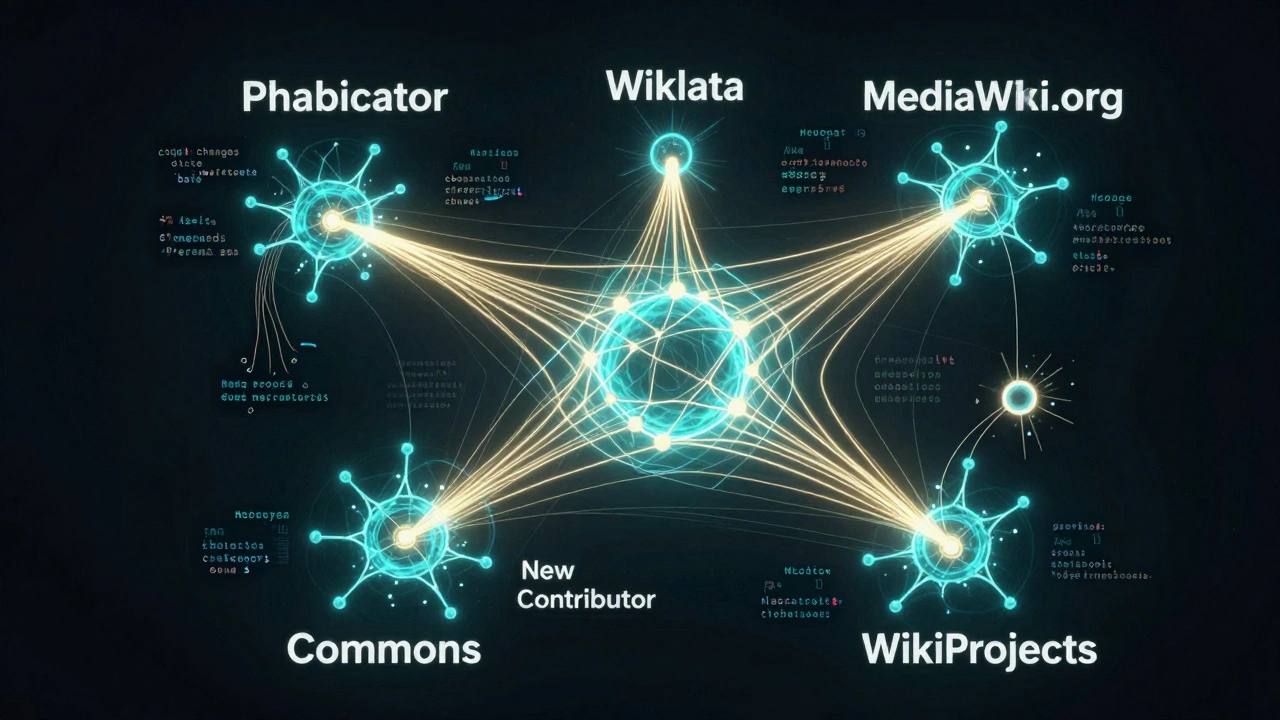
These platforms aren’t separate. They talk to each other. A task in Phabricator might trigger a bot on Wikidata to update a fact. A change in MediaWiki.org gets mirrored into the live Wikipedia codebase. This interconnectedness is what keeps Wikipedia running smoothly.
Why This Matters Beyond Wikipedia
Wikipedia’s tools are open source. That means anyone can use them. Phabricator was originally built by Facebook, but Wikimedia made it better - and now organizations like Mozilla, KDE, and even local governments use it. The same goes for MediaWiki, the software that powers Wikipedia. It’s used by over 100,000 sites worldwide, from corporate intranets to school wikis.
The real innovation isn’t the code. It’s the culture. Wikipedia’s platforms are designed for collaboration, not control. You don’t need permission to contribute. You don’t need a job title. You just need to care enough to fix something. That’s why, despite having no full-time developers for most of its history, Wikipedia has one of the most active open-source communities on Earth.
What You Can Do Today
If you’ve ever thought about helping Wikipedia, here’s where to start:
- Visit phabricator.wikimedia.org and search for tasks tagged Easy.
- Try fixing a typo in a message. It takes 5 minutes. You’ll get credit, and your name will show up in the commit history.
- Join the Wikimedia Developers mailing list or the IRC channel #wikimedia-dev on Libera Chat. People are friendly.
- Look at the Community Tech team’s annual wishlist. Every year, volunteers vote on the top 10 tools they want built. In 2025, one of the top requests was a better citation tool for mobile users - and it’s now in development.
You don’t need to be a coder. You just need to notice something broken - and care enough to fix it.
Is Phabricator only for programmers?
No. Phabricator is used by translators, testers, designers, and anyone who reports bugs. You can help by writing clear bug reports, testing new features on your phone, or translating interface messages into your language. Many tasks don’t require coding at all.
How do I get started if I’ve never coded before?
Start with a "Good for Newcomers" task in Phabricator. These are labeled clearly and often involve fixing punctuation, updating documentation, or testing features. The Wikimedia team provides step-by-step guides and mentors who answer questions. Many first-time contributors fix their first bug in under an hour.
Can I contribute without creating an account?
No. All contributions to Phabricator, MediaWiki, and other Wikimedia platforms require an account. This ensures accountability and helps prevent vandalism. Creating an account is free and takes less than a minute. You can use your real name or a pseudonym.
Are there any deadlines or time commitments?
No. Contributions are entirely voluntary. You can spend five minutes or five hours. There are no deadlines, no quotas, and no pressure. Many contributors work on tasks during their lunch break or on weekends. The system is designed to fit around your life.
What happens if my fix gets rejected?
You’ll get feedback - not criticism. Volunteers and developers are trained to give helpful, respectful comments. If a patch doesn’t work, they’ll explain why and suggest how to improve it. Most successful contributors had their first few attempts rejected. That’s how you learn.