Imagine searching for a local historical figure or a traditional recipe in your native tongue and finding nothing but blank pages. For speakers of many of the world's languages, this is daily reality. While English dominates the internet, Emerging Wikipedias are community-driven efforts to create encyclopedic content in languages with fewer than 100,000 articles on the main platform. These projects aren't just about translation; they are about building original knowledge bases that reflect local cultures, histories, and scientific contributions often ignored by major global platforms.
The Gap in Global Knowledge
Wikipedia is a free online encyclopedia created and maintained by volunteers worldwide, but its structure heavily favors high-resource languages like English, German, and French. As of recent counts, these three languages hold over half of all articles. Meanwhile, languages such as Swahili, Yoruba, or Quechua have significantly fewer entries. This disparity creates a digital divide where information isn't just harder to find-it simply doesn't exist in the user's preferred language.
The challenge isn't just technical; it's cultural. Many underserved languages lack standardized digital fonts, robust input methods, or even consistent orthography. For example, writing in Indigenous Australian languages requires specific Unicode support that wasn't fully available until recently. Without these foundations, editors face friction at every step, from typing to saving.
How Emerging Wikipedias Work
Building an emerging Wikipedia involves more than copying text from English. It requires a dedicated team of editors who understand both the subject matter and the linguistic nuances of their target language. The process typically follows a few key steps:
- Infrastructure Setup: Ensuring the MediaWiki software supports the language's script (e.g., right-to-left scripts like Arabic or complex scripts like Devanagari).
- Core Article Creation: Starting with foundational topics like geography, history, and science to provide a skeleton for the site.
- Community Engagement: Recruiting local editors through schools, universities, and cultural organizations.
- Quality Control: Establishing guidelines for citations and neutrality, which can be tricky when sources are primarily oral or local.
The Wikimedia Foundation is the non-profit organization that hosts Wikipedia and provides grants and tools to support these language-specific projects. They offer funding for conferences, tool development, and editor training specifically aimed at boosting low-resource language editions.
Tools That Make Translation Easier
You don't need to be a professional translator to contribute. Several tools lower the barrier to entry for new editors:
- TranslateWiki: An extension that allows you to view the source article in one language while editing in another. It highlights sections that haven't been translated yet, making it easy to pick up where others left off.
- Machine Translation APIs: Integrated into the editing interface, these provide rough drafts that editors can refine. While not perfect, they save hours of manual typing.
- Mobile Apps: The official Wikipedia app now supports offline reading and basic editing features, crucial for regions with unstable internet connections.
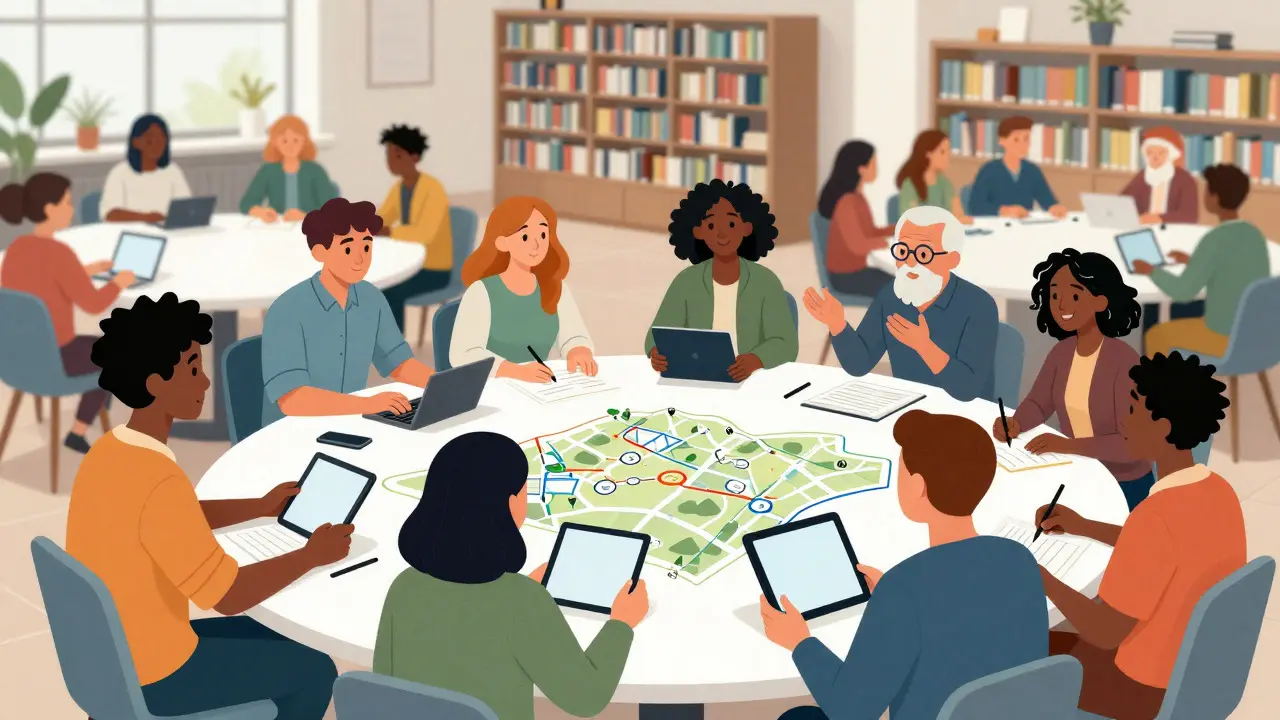
These tools transform the workflow from a solitary act of writing into a collaborative assembly line. One editor might translate a section on botany, while another checks the citations against local academic papers.
Challenges Beyond Translation
Translation is only half the battle. The other half is dealing with "missing knowledge." In many underserved languages, there are no existing written sources for certain topics. Editors must often interview elders, digitize local archives, or write original articles based on field research. This turns Wikipedia editing into a form of community journalism.
Another hurdle is maintenance. High-resource languages have thousands of active editors who fix errors and update facts. Emerging Wikipedias often rely on a small core group. If those editors lose interest, the project stalls. To combat this, many communities focus on gamification-creating competitions, badges, and local meetups to keep momentum going.
| Feature | High-Resource (e.g., English) | Emerging (e.g., Swahili) |
|---|---|---|
| Article Count | 6+ million | 10,000 - 50,000 |
| Active Editors | Tens of thousands | Hundreds to low thousands |
| Primary Content Source | Existing literature & web | Translation + Original Research |
| Technical Support | Mature tooling | Basic tooling, growing fast |
| Main Challenge | Maintenance & Neutrality | Growth & Infrastructure |
Why It Matters for Digital Equity
Access to information in your own language is a fundamental aspect of digital equity. When educational materials, legal documents, and health advice are only available in foreign languages, it excludes vast populations from participating in the digital economy. Emerging Wikipedias bridge this gap by providing reliable, neutral information that students, professionals, and citizens can trust.
For developers and tech companies, this also means better data. Natural language processing models trained mostly on English struggle with low-resource languages. A rich, well-structured corpus from an emerging Wikipedia helps improve AI accuracy for everyone, including speech recognition and machine translation services.
Getting Involved
You don't need to live in the country where the language is spoken to help. If you speak two languages, you can start translating today. Here’s how to begin:
- Pick a language edition with fewer than 50,000 articles.
- Create an account on that specific subdomain (e.g., sw.wikipedia.org).
- Use the TranslateWiki tool to find "stubs" or incomplete articles.
- Start with simple topics like biographies of famous people or geographical locations.
- Join the local talk page to connect with other editors and ask for feedback.
Every article adds value. Even a short, accurate entry is better than none. As these communities grow, they become self-sustaining ecosystems of knowledge that reflect the diversity of human experience.
What defines an "emerging" Wikipedia?
An emerging Wikipedia is generally defined as a language edition with fewer than 100,000 articles. These projects are actively working to build infrastructure, recruit editors, and create original content rather than just maintaining existing translations.
Do I need to be a native speaker to edit an emerging Wikipedia?
Ideally, yes, because nuance and idiomatic expression are critical. However, bilingual speakers with strong proficiency in the target language are highly valued. Native speakers often focus on quality control, while bilinguals handle the heavy lifting of translation.
How are citations handled in languages with few written sources?
Editors often cite local newspapers, university repositories, government websites, and even verified oral histories. The goal is to use the most reliable available source, even if it's not a peer-reviewed international journal.
Can I help without knowing a second language?
Yes. You can help with technical tasks like fixing broken links, improving image descriptions, or developing tools that support multiple languages. Technical contributions are vital for the sustainability of these projects.
Is the content on emerging Wikipedias reliable?
Reliability varies by topic, just like on any Wikipedia. However, emerging editions often have stricter community oversight because the editor pool is smaller. Always check the references provided in each article to verify claims.