Journalists reach for Wikipedia every day. They use it to check facts, find background, and track down sources. But too often, they walk away with the wrong idea: that Wikipedia is unreliable, biased, or just a bunch of random edits. That’s not just wrong-it’s costly. When reporters misunderstand how Wikipedia works, they miss real stories, misquote sources, or worse, write pieces that reinforce myths about the site. The truth? Wikipedia is one of the most transparent, well-documented, and rigorously moderated reference tools on the planet. And if you want journalists to see that, you need to give them a clear, simple, and credible way to understand it: a fact sheet and a media kit.
Why journalists get Wikipedia wrong
Most journalists don’t have time to dig into Wikipedia’s policies. They see a page with anonymous edits and assume chaos. They hear about controversies-like the 2005 Seigenthaler biography incident-and assume the whole system is broken. They don’t know that over 90% of edits on major articles are made by registered users who follow strict guidelines. They don’t know that every change is logged, every source is cited, and every dispute is publicly archived.Wikipedia isn’t perfect. But it’s not the wild west. It’s a living reference library built by volunteers who spend hours verifying citations, cleaning up vandalism, and debating content on talk pages. The site has over 66 million articles in 300+ languages. It’s used by 1.5 billion people monthly. And yet, many newsrooms still treat it like a last-resort Google result.
What a Wikipedia fact sheet should include
A good fact sheet doesn’t try to convince journalists Wikipedia is flawless. It tells them how it actually works-clearly, concisely, and without jargon. Here’s what belongs on it:- How edits are made: Most edits come from registered users. Anonymous edits are flagged and reviewed. Vandalism is usually reverted within minutes.
- How reliability is enforced: Every claim must be backed by a published, credible source. Editors remove unsourced content. Articles are tagged if they lack citations.
- How disputes are handled: Talk pages are public. Editors debate changes openly. Disputes escalate to mediation or arbitration if needed.
- What’s not allowed: Original research, opinion, advertising, and unpublished material are strictly prohibited.
- Who runs it: Wikipedia is run by the Wikimedia Foundation, a nonprofit. No corporation owns or controls it.
- How to cite it: Wikipedia is not a primary source. Journalists should use the citations listed at the bottom of each article.
Include real examples. Show a before-and-after of a disputed article. Show how a fact was added after a reliable source was cited. Show how a misleading edit was reverted. Concrete proof beats abstract claims every time.
What a media kit should offer
A fact sheet answers questions. A media kit gives journalists tools they can use right away.A media kit for Wikipedia should include:
- High-res logos: Official Wikipedia and Wikimedia Foundation logos in PNG, SVG, and EPS formats.
- Press releases: Annual summaries of traffic, editor trends, and major milestones (like hitting 10 million articles in English).
- Expert contacts: Names, titles, and email addresses of Wikimedia Foundation communications staff and experienced editors willing to speak to reporters.
- Case studies: How journalists have successfully used Wikipedia in reporting. For example, the Washington Post used Wikipedia’s citation trail to trace the origin of a false claim about a political candidate. The Guardian partnered with Wikipedia editors to fact-check election-related articles.
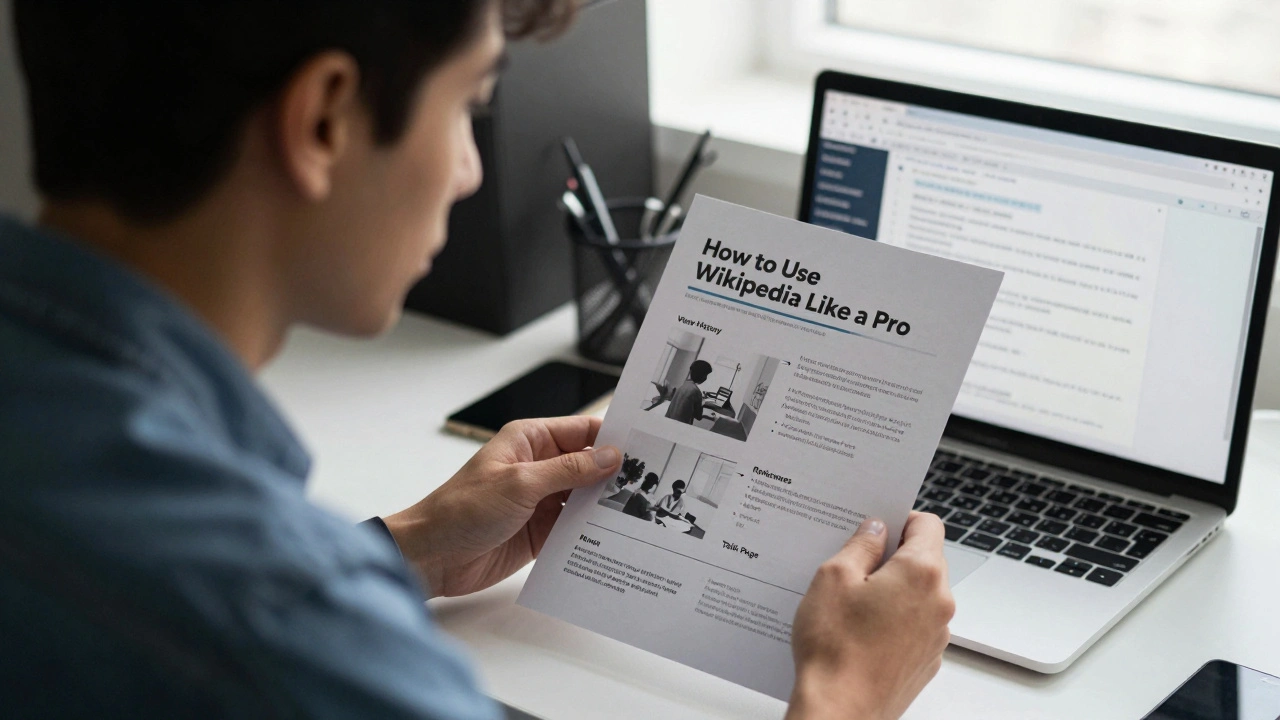
- Quick-start guide for reporters: A one-page PDF titled “How to Use Wikipedia Like a Pro.” It tells them how to check edit history, find reliable sources, identify stubs vs. featured articles, and spot vandalism.
Don’t make it look like a corporate brochure. Make it look like something a journalist would save on their desk. Clean layout. No fluff. No buzzwords. Just facts, links, and tools.
What to avoid
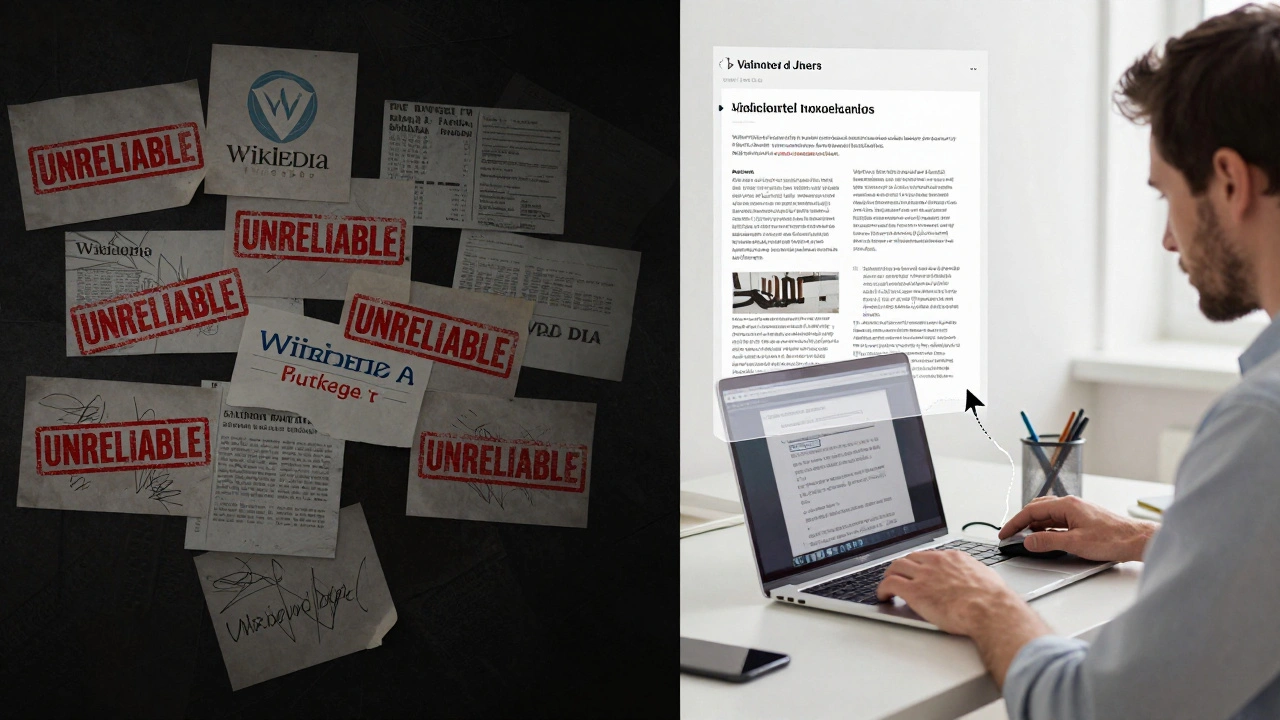
Avoid these common mistakes when creating materials for journalists:- Don’t say “Wikipedia is reliable.” Say “Wikipedia articles are built on published sources, and every edit is traceable.”
- Don’t dismiss criticism. Acknowledge past problems. Explain how they were fixed. Transparency builds trust.
- Don’t use Wikipedia jargon. No “semi-protection,” no “CSD,” no “AfD.” Say “locked article,” “deleted draft,” “deletion discussion.”
- Don’t assume they know how to read an article’s history. Show them. Include screenshots with arrows pointing to “View history,” “Talk page,” and “References.”
- Don’t make it a one-time thing. Update your media kit every year. Add new case studies. Include recent traffic stats. Journalists notice when materials feel outdated.
Real-world impact: When it works
In 2023, the New York Times published a piece on misinformation in political campaigns. The reporter didn’t cite Wikipedia-but they used it to trace the origin of a viral claim back to a 2018 forum post. That post was then linked to a Wikipedia article that had been edited three times over six months, each edit adding a source. The reporter used those sources to verify the claim’s falsehood. That’s how Wikipedia should be used: as a starting point, not an endpoint.Another example: In 2024, a regional newspaper in Ohio was preparing a story on a local politician’s past. They found conflicting information online. One Wikipedia article had been flagged for needing more citations. The reporter contacted a Wikipedia editor through the site’s “Contact us” page. Within 48 hours, the editor provided three archived news articles and a public record link that clarified the timeline. The story ran with accurate details-and credited the Wikipedia editor.
These aren’t outliers. They’re repeatable. But only if journalists know how to reach out and what to look for.
How to distribute your materials
Don’t just post your fact sheet on your website. Put it where journalists already are:- Email it to local and national newsrooms. Include a short note: “Here’s how to use Wikipedia accurately in your reporting.”
- Share it with journalism schools. Many journalism programs still teach students to avoid Wikipedia. Change that.
- Submit it to press associations like SPJ (Society of Professional Journalists) or the Poynter Institute.
- Link to it in your organization’s press releases if you’re a library, university, or nonprofit that frequently gets media inquiries.
Make it easy. Give them a direct link. No login. No form to fill out. Just click and download.
Why this matters now
In 2026, misinformation spreads faster than ever. Journalists are under pressure to publish quickly. They’re drowning in noise. Wikipedia, if understood correctly, can be their quiet ally-not their enemy.When a journalist uses Wikipedia the right way, they don’t just get a fact. They get a trail. A source. A timeline. A community of people who care enough to correct errors. That’s not just useful-it’s powerful.
Wikipedia isn’t asking for love. It’s asking for understanding. And the best way to give that is through clear, practical, and honest materials made for people who write for a living.
Frequently Asked Questions
Can journalists cite Wikipedia directly in their articles?
No. Wikipedia is a secondary source. Journalists should use the original sources listed in Wikipedia’s references. If a claim on Wikipedia is backed by a peer-reviewed journal, a government report, or a reputable news outlet, go to that source and cite it directly. Wikipedia helps you find the real source-it shouldn’t be the source itself.
Are Wikipedia editors anonymous?
Some are, but most aren’t. Over 70% of edits to major articles come from registered users who have created accounts. Anonymous edits are common on less popular pages, but they’re closely monitored. Any suspicious edit is quickly flagged and reverted. The system doesn’t rely on anonymity-it relies on transparency. Every edit is logged, and anyone can see who made it and when.
Is Wikipedia biased?
Wikipedia has policies that require neutral point of view (NPOV). That doesn’t mean every article is perfect-but the system is designed to correct bias over time. If an article leans too far one way, editors from different perspectives will challenge it. The result? Most high-traffic articles reflect a consensus built from multiple reliable sources. Studies from Stanford and MIT have shown that Wikipedia’s accuracy matches or exceeds that of traditional encyclopedias on factual topics.
How do I know if a Wikipedia article is trustworthy?
Check three things: First, look at the references. Are they from reputable publishers? Second, check the edit history. Has the article been stable for months, or is it being constantly edited? Third, look for quality tags. Articles labeled “Featured Article” or “Good Article” have gone through formal review. Avoid articles with banners like “Citation needed” or “This article needs more sources.”
Can I contact a Wikipedia editor for an interview?
Yes. The Wikimedia Foundation has a public media contact team. You can also reach out to editors directly through their user talk pages. Many experienced editors are happy to speak with journalists, especially if you’re writing about how Wikipedia works, not trying to get them to comment on a specific topic. Always disclose your intent and respect their time.
Why doesn’t Wikipedia allow original reporting?
Because Wikipedia’s goal is to summarize what’s already been published, not to break news. Original reporting requires verification, sourcing, and accountability that volunteers can’t provide under the current model. That’s why journalists still have a vital role. Wikipedia helps you find the story. You still have to tell it.