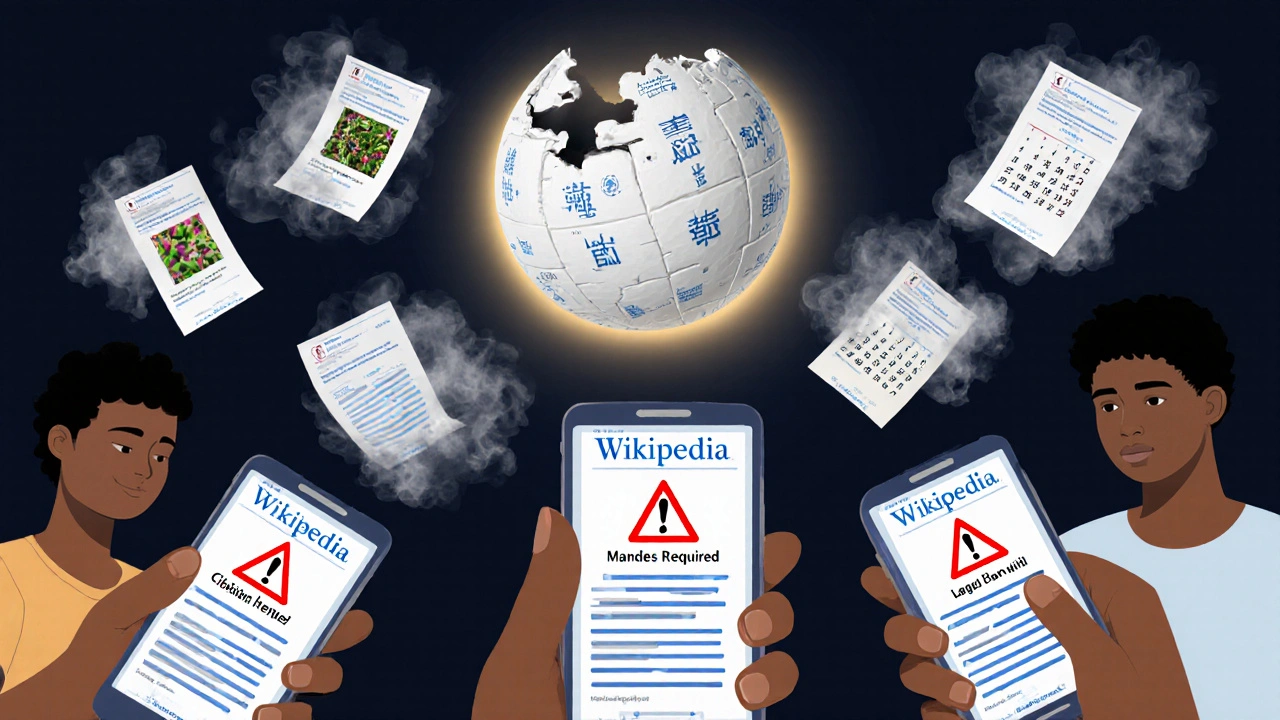
Wikipedia claims to be the free encyclopedia anyone can edit. But if you look closely at what’s actually on the site, you’ll notice something strange: the stories that get told, the details that get included, and even the depth of coverage often depend on where the editor lives. A person in Berlin is far more likely to write about German rail systems than someone in Lagos. A student in Tokyo will add more about Japanese cherry blossoms than someone in Lima. This isn’t just about interest-it’s about access, language, and power. The result? A massive, invisible geographic bias that shapes what the world thinks it knows.
Who Writes Wikipedia?
Over 70% of Wikipedia’s active editors come from just ten countries, according to a 2023 Wikimedia Foundation report. The top three: the United States, Germany, and Japan. Together, they account for nearly half of all edits. Meanwhile, entire continents like Africa and South Asia contribute less than 5% of total content. That doesn’t mean people there don’t care. It means they often can’t edit.
Why? Internet access is only part of it. In many regions, reliable broadband is rare. In others, the cost of data makes editing a luxury. But even where internet is available, there’s a cultural gap. Wikipedia’s norms-like citing academic journals, following strict neutrality rules, and using formal citation styles-are shaped by Western academic traditions. Someone in rural India or rural Nigeria might know their local history inside out, but if they can’t find peer-reviewed sources in English or French, their knowledge won’t make it onto the page.
What Gets Left Out?
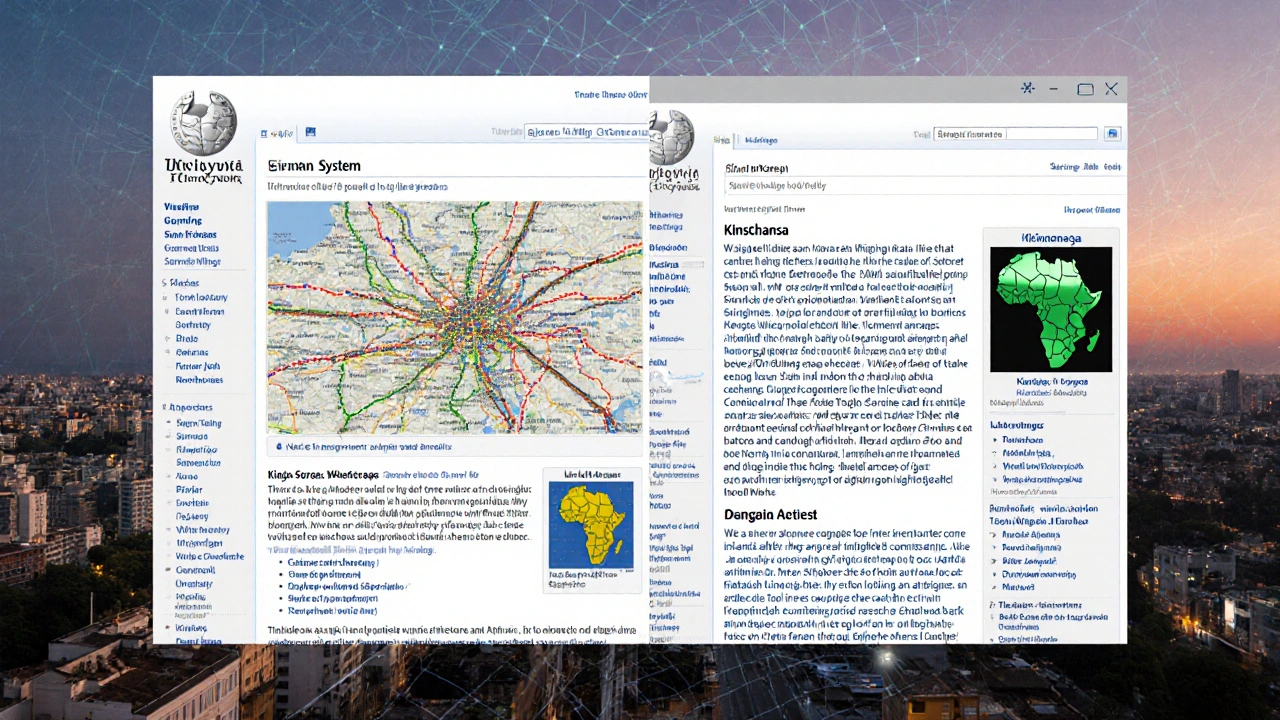
Look up a major city in the Global South-say, Kinshasa, Dar es Salaam, or Medellín-and you’ll find pages that are thin, outdated, or written by outsiders. Compare that to a mid-sized European city like Münster or Lille. Those pages are dense with maps, timelines, population stats, cultural events, and even local slang. The difference isn’t about importance. It’s about who’s writing.
Even well-known global topics suffer. The Wikipedia page on the 1994 Rwandan genocide has over 50 references and detailed sections on international response, legal trials, and media coverage. But the page on the 1972 Nigeria-Biafra famine, which killed over a million people, has far fewer citations, less context, and no interactive map. Why? Because researchers in Europe and North America wrote the first drafts-and they focused on what they could access.
Another example: traditional medicine. Over 80% of Wikipedia’s entries on herbal remedies come from Europe and North America, even though over 75% of the world’s population relies on traditional medicine. The knowledge of Ayurveda in India, Unani in Pakistan, or Kampo in Japan is either missing or buried under Western-centric interpretations.
Language Is a Barrier, Not a Bridge
Wikipedia has over 300 language editions. But the content isn’t evenly distributed. The English version has over 66 million articles. The Swahili version has about 150,000. The Hausa version? Around 20,000. That’s not because English speakers are smarter. It’s because English has more contributors, more funding, and more institutional support.
Here’s the catch: many people in Nigeria, Ghana, or Kenya speak Hausa or Swahili as their first language. But they’re expected to edit in English to reach a global audience. So they don’t edit at all. Meanwhile, the English version becomes the default version of truth-even for topics that have no real connection to English-speaking cultures.
Even when local language pages exist, they’re often not linked to the English version. That means someone searching for information on the Igbo New Year festival in English will find nothing. But if they search in Igbo? There’s a page-written by a single person in Enugu, with no citations, no images, and no way for the rest of the world to find it.
How This Affects Real-World Knowledge
Wikipedia isn’t just a website. It’s the first result on Google for 9 out of 10 searches. Teachers use it to prepare lessons. Journalists fact-check with it. Medical students read it for quick references. When the information is skewed, the consequences are real.
Studies show that medical information on Wikipedia is more detailed for diseases common in wealthy countries. For example, the page on Type 2 diabetes includes diet plans, drug names, and clinical trial data. The page on Chagas disease-a parasitic illness affecting 6-7 million people, mostly in Latin America-has far less detail, no treatment algorithms, and no mention of community-based prevention programs.
Even history gets rewritten. The page on colonialism in Africa is dominated by European perspectives. The African scholars who wrote about resistance movements, local governance, and cultural survival are rarely cited. Instead, Western historians like David Livingstone or Hilaire Belloc appear as primary sources. That’s not history. That’s a colonial echo chamber.
Who’s Trying to Fix It?
Some groups are pushing back. The WikiAfrica project has trained hundreds of librarians, historians, and students across 20 African countries to edit Wikipedia in local languages. In India, the WikiProject India has added over 200,000 articles on regional festivals, folk music, and village histories. In Latin America, the Wikimedia Foundation has partnered with universities to host edit-a-thons focused on indigenous knowledge.
But these efforts are small. They rely on volunteers. They get little funding. And they’re often ignored by the core Wikipedia community, which still prioritizes English-language quality metrics over geographic diversity.
There’s also a technical problem: Wikipedia’s tools aren’t built for non-Western users. The edit interface assumes you have a mouse, a keyboard, and high-speed internet. It doesn’t account for people editing from smartphones with low data plans. It doesn’t support typing in many scripts. It doesn’t offer voice-to-text editing for oral cultures.
What Can Be Done?
Fixing geographic bias isn’t about adding more editors. It’s about changing the system.
- Wikipedia needs to stop treating English as the default. Local language versions should be promoted equally.
- Academic citations should accept oral histories, community archives, and local publications-not just journal articles.
- Editing tools need redesigning for mobile-first, low-bandwidth environments.
- Funding should go to local organizations, not just Western universities.
- Wikipedia’s leadership needs more people from the Global South-not as token contributors, but as decision-makers.
Imagine a version of Wikipedia where the most detailed page on the Mande griot tradition comes from a village in Mali. Where the best article on the Quechua calendar is written by a farmer in Peru. Where the history of the Congo’s independence is told by Congolese historians, not British academics. That’s not a fantasy. It’s possible-if we stop assuming that knowledge only counts when it’s written in English, by people who live in the Global North.
Why This Matters Beyond Wikipedia
This isn’t just about one website. It’s about who gets to define reality. When knowledge is shaped by a narrow slice of the world, everyone else is left with a distorted mirror. We think we know the world because we’ve read it on Wikipedia. But we’re only seeing half the picture.
The geographic bias in Wikipedia reflects a deeper truth: the internet wasn’t built for everyone. It was built by those who already had power, money, and access. And now, that imbalance is being locked into the digital record.
If we want the internet to be a true global commons, we need to stop celebrating Wikipedia as a neutral source. We need to see it for what it is: a reflection of who gets to speak-and who gets left silent.
Why does Wikipedia have more content about Europe than Africa?
Wikipedia’s content mirrors where its editors live. Over 70% of active contributors come from just ten countries, mostly in Europe and North America. These editors naturally write about what they know best-local history, culture, and institutions. Meanwhile, many African countries have fewer internet users, less access to academic sources in English, and fewer people trained in Wikipedia’s editing norms. This creates a cycle: less content leads to less visibility, which leads to fewer people editing.
Is Wikipedia’s bias intentional?
No, it’s not intentional. Wikipedia’s policies aim for neutrality. But neutrality doesn’t mean equality. The rules were designed by Western academics and assume access to English-language journals, stable internet, and formal education. These assumptions unintentionally exclude people without those privileges. The bias comes from the system, not the people.
Can local languages fix Wikipedia’s bias?
Yes, but only if they’re treated as equals. Many African and Asian language editions have rich local knowledge, but they’re rarely linked to the English version. Google and other search engines prioritize English content, so even if a Swahili page on a Tanzanian festival is detailed, most users will never see it. To fix this, Wikipedia needs to promote all language versions equally-not just as backups, but as primary sources of truth.
Do academic citations really exclude non-Western knowledge?
Yes. Wikipedia’s citation rules require reliable, published sources. But in many parts of the world, knowledge is passed down orally, recorded in community archives, or published in local newspapers-not in peer-reviewed journals. When editors dismiss these sources as "unreliable," they’re not being objective. They’re enforcing a Western standard that erases other ways of knowing.
What can I do to help reduce Wikipedia’s geographic bias?
Start by editing in your own language. If you know local history, culture, or traditions, add them-even if they’re not cited in academic journals. Support local Wikimedia chapters. Advocate for institutions to train people in your region to edit. And when you use Wikipedia, check the language version. You might find richer, more accurate information in a non-English edition.