The internet’s largest free encyclopedia has always run on a simple premise: anyone can edit. But as Wikipedia is the world's most visited online encyclopedia, powered by volunteer editors and hosted by the Wikimedia Foundation grows into a cultural institution with billions of monthly visitors, that simple premise faces complex challenges. Who really decides what stays on the site? How do we protect against coordinated manipulation while keeping the doors open to new contributors?
In May 2026, these questions are louder than ever. The Wikimedia Foundation is the non-profit organization that hosts Wikipedia and other free knowledge projects is currently navigating a period of intense debate regarding proposed structural changes to its leadership model. At the center of this storm is the concept of a "Global Council." This isn't just bureaucratic jargon; it represents a fundamental shift in how one of the most important information sources on the planet is governed.
If you have ever edited a page, reported vandalism, or simply relied on Wikipedia for research, these proposals affect you. They touch on transparency, power dynamics, and the future viability of the movement. Let’s break down what these proposals actually mean, why they matter, and what might happen next.
The Current Governance Landscape
To understand why a Global Council is being proposed, we first need to look at how things work today. For years, the Wikimedia ecosystem has operated through a decentralized model. The Wikimedia Foundation provides the servers, the legal protection, and some staff support. However, the content itself is shaped by volunteers-editors, administrators, and bureaucrats-who enforce policies based on consensus.
This system has strengths. It allows for rapid adaptation to local contexts. A dispute in the German-language Wikipedia can be resolved differently from one in the Japanese edition, respecting cultural nuances. But it also has glaring weaknesses. Decision-making is often opaque. Power tends to concentrate among long-term volunteers who may not represent the diverse global audience that reads the site. When crises hit-such as mass disinformation campaigns or internal conflicts over neutrality-the response can be slow or inconsistent.
Critics argue that the current structure lacks accountability. There is no single body responsible for the strategic direction of the entire movement. Instead, decisions are fragmented across various committees, language editions, and thematic affiliates. This fragmentation makes it difficult to address systemic issues like gender bias in content or the marginalization of editors from the Global South.
What Is the Proposed Global Council?
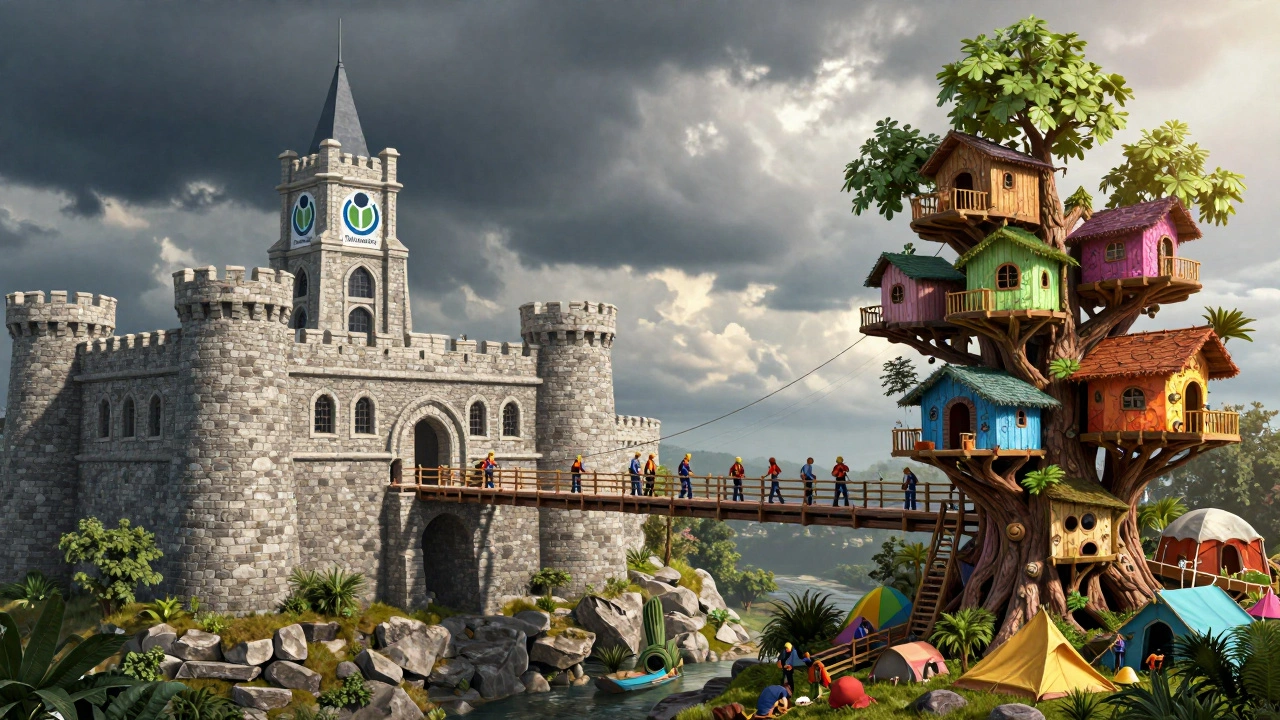
The proposal for a Global Council aims to create a more unified governing body. Think of it as a bridge between the centralized resources of the Wikimedia Foundation and the distributed energy of the volunteer community. The council would likely consist of representatives elected or appointed from different regions, language communities, and stakeholder groups.
Key attributes of the proposed council include:
- Broad Representation: Ensuring voices from underrepresented regions, such as Africa, Southeast Asia, and Latin America, have a seat at the table.
- Strategic Oversight: Providing guidance on high-level policy decisions that affect all Wikimedia projects, not just English Wikipedia.
- Conflict Resolution: Acting as an appellate body for disputes that cannot be resolved locally, ensuring fairness and consistency.
- Resource Allocation: Advising on how funds and technical resources are distributed to support growth and sustainability.
Proponents argue that this structure will make the movement more resilient. By formalizing representation, the council could prevent any single group from dominating the narrative. It could also streamline decision-making, allowing the movement to respond faster to emerging threats like AI-generated misinformation.
Implications for Wikipedia Editors
For the average editor, the introduction of a Global Council might seem distant. You’re here to write articles about history, science, or pop culture. Why should you care about governance? The answer lies in the daily experience of editing.
First, consider policy enforcement. Currently, rules vary significantly between language editions. A topic considered notable in English Wikipedia might be deleted in another language due to stricter sourcing requirements. A Global Council could help harmonize core principles, reducing confusion for multilingual editors and improving content quality across the board.
Second, think about harassment and safety. Online harassment remains a major barrier to participation, particularly for women and marginalized groups. Local communities often struggle to handle cross-wiki harassment effectively. A centralized body could establish clearer protocols and provide better support for victims, creating a safer environment for everyone.
Third, there is the issue of innovation. New tools and features, such as improved citation managers or AI-assisted editing aids, require coordination. A Global Council could prioritize development efforts that benefit the widest range of users, rather than letting popular language editions dictate the roadmap.
Concerns and Criticisms
Despite the potential benefits, the proposal is not without its detractors. Many long-time volunteers fear that a Global Council could lead to bureaucratization. They worry that decision-making will become slower and less responsive to local needs. "We don’t need another layer of management," some argue. "We need more trust in our communities."
Another concern is the risk of centralizing power too much. If the council is dominated by a small elite, it could stifle the grassroots spirit that has driven Wikipedia’s success. Critics point to past failures where top-down initiatives failed because they ignored community feedback. They want guarantees that the council will remain accountable to the editors, not the other way around.
There are also practical questions. How will members be selected? Will they serve fixed terms? What happens if they disagree with the Wikimedia Foundation’s board of trustees? These details are still being hashed out, and uncertainty fuels skepticism.
| Feature | Current Decentralized Model | Proposed Global Council Model |
|---|---|---|
| Decision Speed | Variable; often slow for global issues | Potentially faster for strategic priorities |
| Local Autonomy | High; each language edition sets its own rules | Moderate; aligned with global standards |
| Representation | Uneven; dominated by active, long-term volunteers | Structured; aims for geographic and demographic balance |
| Accountability | Low; unclear lines of responsibility | Higher; defined roles and reporting mechanisms |
| Complexity | Simple to join, complex to navigate globally | More structured, potentially higher barrier to entry |
The Role of the Wikimedia Foundation
The Wikimedia Foundation plays a critical role in this transition. As the legal entity behind Wikipedia, it holds significant influence. The foundation’s board of trustees has the final say on many operational matters, but it relies heavily on community input to guide its strategy.
In recent years, the foundation has faced pressure to be more transparent and inclusive. Donors and partners want assurance that their contributions are used effectively. Readers demand accurate and unbiased content. A Global Council could serve as a sounding board for the foundation, helping it align its actions with community values.
However, tensions exist. Some volunteers view the foundation as out of touch, prioritizing institutional stability over editorial freedom. Others see the foundation as a necessary shield against external pressures, such as government censorship or corporate interference. Finding the right balance is key to the success of any new governance structure.

Impact on Other Wikimedia Projects
While Wikipedia gets most of the attention, the Wikimedia Movement includes a family of free knowledge projects including Wikidata, Commons, and Wikivoyage encompasses several other vital platforms. Wikidata is a freely editable database of structured data that supports Wikipedia and other applications, for instance, serves as the backbone for much of the structured data on the web. Its growth has been explosive, driven by developers and researchers who rely on its APIs.
A Global Council would need to consider the unique needs of these projects. Wikidata users, for example, are often more technical and less concerned with traditional editorial norms. Wikimedia Commons is a repository of free-use media files including images, sound, and video deals with complex copyright issues that vary by jurisdiction. A one-size-fits-all approach won’t work. The council must be flexible enough to accommodate different workflows and cultures.
Moreover, smaller projects like Wikisource is a library of free content written works that can be read, changed, and shared or Wikivoyage is a free travel guide that anyone can edit might feel overshadowed by Wikipedia’s dominance. Ensuring equitable resource distribution and visibility will be a major challenge for the new leadership structure.
Looking Ahead: Next Steps
The path forward is not set in stone. The proposals for a Global Council are still in the discussion phase. Community consultations are ongoing, with feedback collected from thousands of editors worldwide. This process is messy, noisy, and sometimes frustrating-but it is also democratic.
If you are involved in Wikimedia projects, now is the time to engage. Read the proposals. Join the discussions on mailing lists and talk pages. Vote in upcoming surveys. Your voice matters, especially if you come from an underrepresented background. The goal is not just to build a better council, but to strengthen the entire movement.
For those outside the community, stay informed. Watch how these debates unfold. Support organizations advocating for free knowledge. Understand that the health of Wikipedia depends on robust, fair, and inclusive governance. In a world increasingly flooded with misinformation, a well-governed Wikipedia is more important than ever.
What is the Global Council in the context of Wikipedia?
The Global Council is a proposed governing body designed to provide unified leadership and strategic oversight for the entire Wikimedia Movement. It aims to bridge the gap between the Wikimedia Foundation and the volunteer community, ensuring broader representation and more consistent decision-making across all projects.
Why is the Wikimedia Foundation proposing changes to its leadership?
The Wikimedia Foundation is proposing changes to address issues of transparency, accountability, and representation. The current decentralized model has led to inconsistencies in policy enforcement and has struggled to include diverse voices from the Global South and other underrepresented regions. A more structured leadership model aims to mitigate these risks.
How will the Global Council affect regular Wikipedia editors?
Regular editors may see changes in how policies are enforced and how conflicts are resolved. The council could standardize certain rules across language editions, improve harassment protections, and prioritize development of tools that benefit all users. However, day-to-day editing and local community autonomy are expected to remain largely intact.
Is the Global Council already established?
As of May 2026, the Global Council is still in the proposal and consultation phase. It has not yet been formally established. The Wikimedia Foundation and the community are actively discussing the structure, membership criteria, and powers of the council before any final implementation.
What are the main criticisms of the Global Council proposal?
Critics argue that a Global Council could lead to bureaucratization, slowing down decision-making and reducing local autonomy. There are also concerns about centralizing power too much, potentially stifling the grassroots nature of the movement. Skeptics want assurances that the council will remain accountable to the volunteer community.