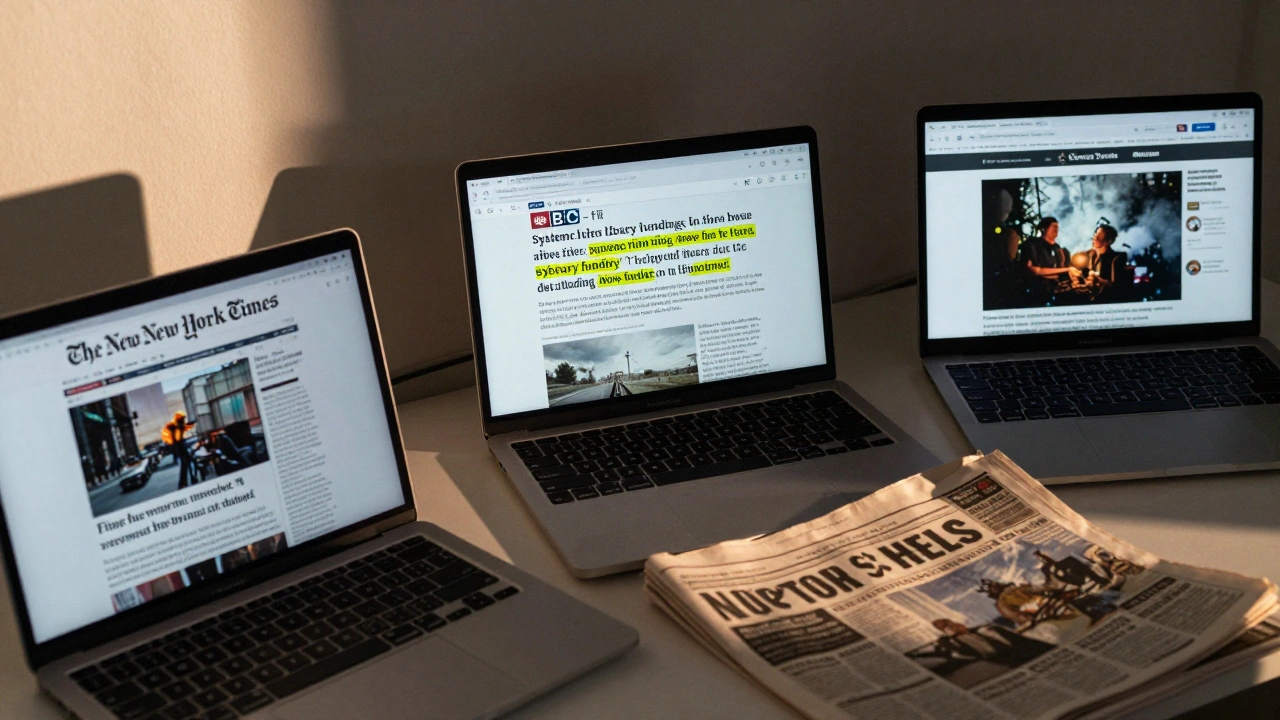
Ever scroll through Wikipedia after a major event-like a plane crash, a protest, or a sudden celebrity death-and wonder why some incidents get a page while others vanish into obscurity? It’s not random. Wikipedia doesn’t just archive everything that happens. It has rules. Tough ones. And if you’re trying to create a page for a recent incident, you’re not just writing an article-you’re arguing with a community that’s seen it all before.
What Even Counts as Notable?
Wikipedia’s notability rule for incidents isn’t about how big the event felt to you. It’s about how much independent coverage it got after the fact. A single tweet, a viral TikTok, or even a headline in one local paper? That’s not enough. You need multiple, reliable, and non-promotional sources that talk about the incident as a subject in its own right-not just mention it in passing.
Think of it this way: if a fire burns down a house in Milwaukee, and only the local news covers it once, no Wikipedia page. But if that same fire sparks a national debate about housing safety, gets picked up by The New York Times, BBC, and Reuters, and leads to a congressional hearing? Now you’ve got something. The incident becomes a topic, not just a headline.
This isn’t about popularity. It’s about significance. Wikipedia’s editors don’t care if 10,000 people tweeted about it. They care if five reputable news outlets spent real time reporting on it, analyzing it, or investigating its causes. And those sources have to be separate. One newspaper quoting another doesn’t count. Each source must have independently decided this event mattered enough to cover.
How Many Sources? How Much Depth?
There’s no magic number, but here’s what works in practice:
- At least three independent, high-quality sources
- Each must go beyond a brief mention-no one-liners
- They should cover the incident’s impact, context, or consequences
- At least one should be from a major national or international outlet
For example, when a small town library caught fire in 2024, local media covered it. But when the fire revealed systemic underfunding of public libraries across five states, and The Guardian ran a multi-part series, NPR did an investigative podcast, and the Library of Congress issued a public statement-that’s when a Wikipedia page was created. The fire itself wasn’t notable. The systemic issue it exposed was.
Don’t fall into the trap of thinking “everyone knows about this.” If it’s only covered by fan sites, blogs, or social media influencers, it won’t pass. Wikipedia editors are trained to spot promotional content. If a source is affiliated with anyone involved-like a company press release, a nonprofit’s fundraising page, or a fan-run memorial site-it’s useless for proving notability.
Timing Matters-But Not Like You Think
People often ask: “Can I create the page right after the incident?” The answer is: technically yes, but practically, no.
Wikipedia’s notability standard is designed to filter out noise. That means waiting. You need time for coverage to develop. A breaking news alert isn’t enough. It takes hours, sometimes days, for reliable sources to verify facts, dig into context, and produce meaningful reporting.
Most successful incident pages are created 24 to 72 hours after the event. That’s when the first wave of in-depth reporting lands. Trying to create a page within an hour? You’ll get flagged as a “rush job” and deleted. Waiting a week? You might miss the window if the story fades.
Look for signs: Are multiple outlets publishing follow-ups? Are experts being quoted? Are official bodies releasing statements? If yes, you’re in the sweet spot. If not, wait. Or better yet-don’t create it at all.

What Kinds of Incidents Usually Pass?
Some patterns show up again and again in successful pages:
- Incidents that trigger policy changes (e.g., a workplace accident leading to new OSHA regulations)
- Events with documented casualties or injuries covered by multiple credible sources
- Disasters with economic or environmental impact beyond a local area
- Public protests or civil unrest that gain national attention and analysis
- Incidents involving public figures that have broader societal implications (not just celebrity gossip)
Here’s a real example from late 2025: a drone crashed into a school bus in rural Ohio. No one was hurt. Local news ran a short story. But then the FAA launched an investigation, the National Transportation Safety Board held a public hearing, and Wired published a deep dive on how commercial drone regulations are outdated. Within 48 hours, a Wikipedia page was created and stood for months.
On the flip side: a viral stunt where someone jumped off a bridge in Chicago? Got 5 million views on YouTube. Zero Wikipedia page. Why? Because no major outlet covered it as a meaningful event. It was entertainment, not news.
What Gets Rejected Every Time?
Here’s what editors see too often-and instantly delete:
- Incidents covered only by tabloids or clickbait sites
- Events tied to private individuals with no public impact
- Local events with no national or thematic relevance
- Stories based on rumors or unverified social media claims
- Pages created by people directly involved (e.g., a victim’s family member trying to memorialize them)
One editor told me: “I’ve seen 300 pages about car crashes. Only 12 survived. Why? Because 288 were just crashes. The 12? They exposed broken traffic systems, corruption in road funding, or a pattern of negligence by a government agency.”
Wikipedia isn’t a graveyard for every tragedy. It’s a library of things that changed something.
How to Actually Create the Page (If You Should)
If you’ve confirmed the incident meets the criteria, here’s how to proceed:
- Collect your sources. Save links to at least three independent, high-quality articles. Don’t rely on headlines-save the full text.
- Write neutrally. No emotional language. No “tragic,” “heartbreaking,” or “shocking.” Stick to facts: who, what, when, where, why, how.
- Structure it like a news report: summary first, then details, then context and aftermath.
- Use citations. Every claim must link to a source. No exceptions.
- Submit it. Don’t self-promote. Don’t mention your role. Let the content speak.
Expect pushback. That’s normal. Wikipedia’s deletion process is brutal. If your page gets tagged for deletion, don’t argue. Improve it. Add more sources. Clarify the significance. Then resubmit.
Why This Rule Exists
Wikipedia isn’t a news site. It’s an encyclopedia. That means it’s built to last, not to react. A news article about a fire expires in days. A Wikipedia article about how that fire changed fire codes? That lasts for decades.
Without notability thresholds, Wikipedia would be flooded with temporary noise. Imagine 10,000 pages about every viral video, every minor accident, every social media trend. It would be useless.
The rule protects quality. It forces editors to ask: Did this event matter beyond the moment? Did it change something? If yes, it belongs. If not, it doesn’t.
What If You’re Wrong?
You’ll probably be wrong the first time. Most people are. That’s okay. Wikipedia’s system isn’t designed to be perfect on the first try. It’s designed to be self-correcting.
If your page gets deleted, read the reason. Was it lack of sources? Add them. Was it too promotional? Rewrite it. Was it too soon? Wait and come back later.
And if it still doesn’t pass? Accept it. Not every event deserves a permanent record. Sometimes, the most respectful thing you can do is let it fade into memory-without forcing it into a system that wasn’t built for that.
Can I create a Wikipedia page for a recent incident right after it happens?
Technically, yes-but practically, no. Wikipedia requires independent, reliable coverage that develops over time. Most incident pages are created 24 to 72 hours after the event, once multiple reputable sources have published in-depth reports. Creating a page too early often leads to deletion because sources aren’t yet available.
Do social media trends count as proof of notability?
No. Viral tweets, TikTok videos, or memes don’t count as reliable sources. Wikipedia requires coverage from independent, editorially controlled media-like newspapers, magazines, broadcast news, or academic journals. Social media may signal public interest, but it doesn’t prove notability under Wikipedia’s guidelines.
What if a major outlet covers the incident but only in one sentence?
A one-sentence mention isn’t enough. Notability requires substantive coverage-meaning the incident is the central focus of the article, not just a passing reference. For example, if a newspaper runs a 300-word analysis on the causes and consequences of the event, that counts. If it’s buried in a roundup list titled “Top 10 News Items Today,” it doesn’t.
Can I use press releases or official statements as sources?
No. Press releases, government announcements, and official statements are primary sources and don’t count toward notability. They can be used to verify facts within the article, but they can’t be the basis for establishing that the incident is notable. You need independent journalism that interprets or investigates the event.
What’s the most common reason incident pages get deleted?
The most common reason is lack of independent, substantive coverage. Many people assume that because an event was widely discussed online or involved a public figure, it deserves a page. But Wikipedia editors look for evidence that multiple reputable news organizations treated the incident as newsworthy in its own right-not just as a footnote.