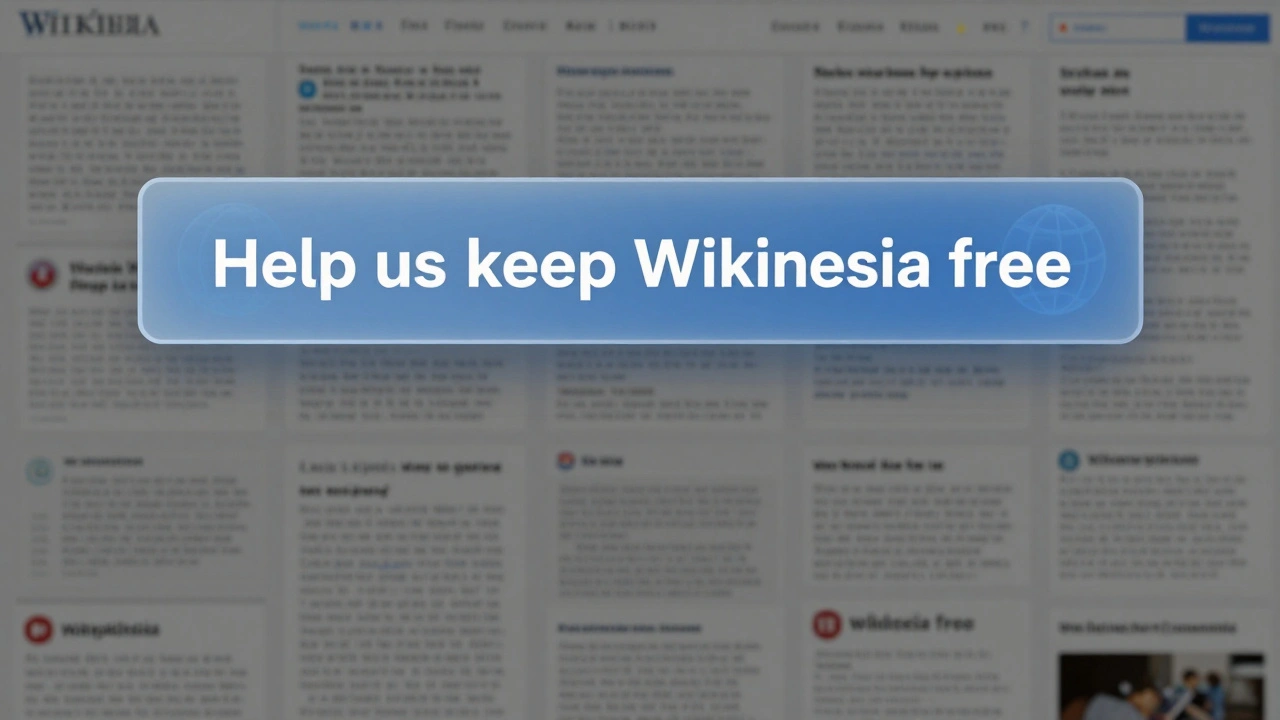
Ever seen a banner at the top of Wikipedia asking you to donate, take a survey, or learn about a new feature? Those aren’t random ads. They’re CentralNotice banners - carefully controlled messages that appear across thousands of Wikipedia pages. But who decides what goes on them? How do they get approved? And who makes sure they don’t turn Wikipedia into a billboard? The process is stricter than you think.
What Is a CentralNotice Banner?
A CentralNotice banner is a system used by the Wikimedia Foundation to display temporary messages across Wikipedia and its sister sites. These banners appear at the top of pages for users in specific regions, languages, or device types. They’re not editable by regular editors. Only authorized teams can create or change them.
Most banners you see are fundraising appeals. But they’re also used for user research, policy announcements, and emergency alerts - like during natural disasters or elections. In 2023, over 12 million unique banners were shown to users worldwide. Almost 90% of those were donation requests.
Unlike regular Wikipedia content, these banners don’t follow the same editing rules. They’re not subject to peer review or consensus debates. But they’re still tightly governed. That’s because Wikipedia’s reputation depends on trust. If users start seeing biased, misleading, or commercial messages, they’ll lose faith in the site.
Who Controls CentralNotice?
The Wikimedia Foundation’s Communications team handles CentralNotice. They work with the Fundraising team, Legal, and the Community Engagement team. But they don’t act alone. Every banner must go through a formal review process that includes input from volunteer editors.
There’s no single person with final say. Instead, there’s a committee made up of Foundation staff and elected community representatives. This group meets weekly to review pending banner requests. They look at language, tone, targeting, and whether the message aligns with Wikipedia’s core values.
Volunteers from the Wikipedia:CentralNotice a community-maintained policy page that outlines the rules for banner content and approval page have veto power. If enough editors raise concerns - say, a banner feels too pushy or targets a sensitive demographic - the request gets pulled or rewritten.
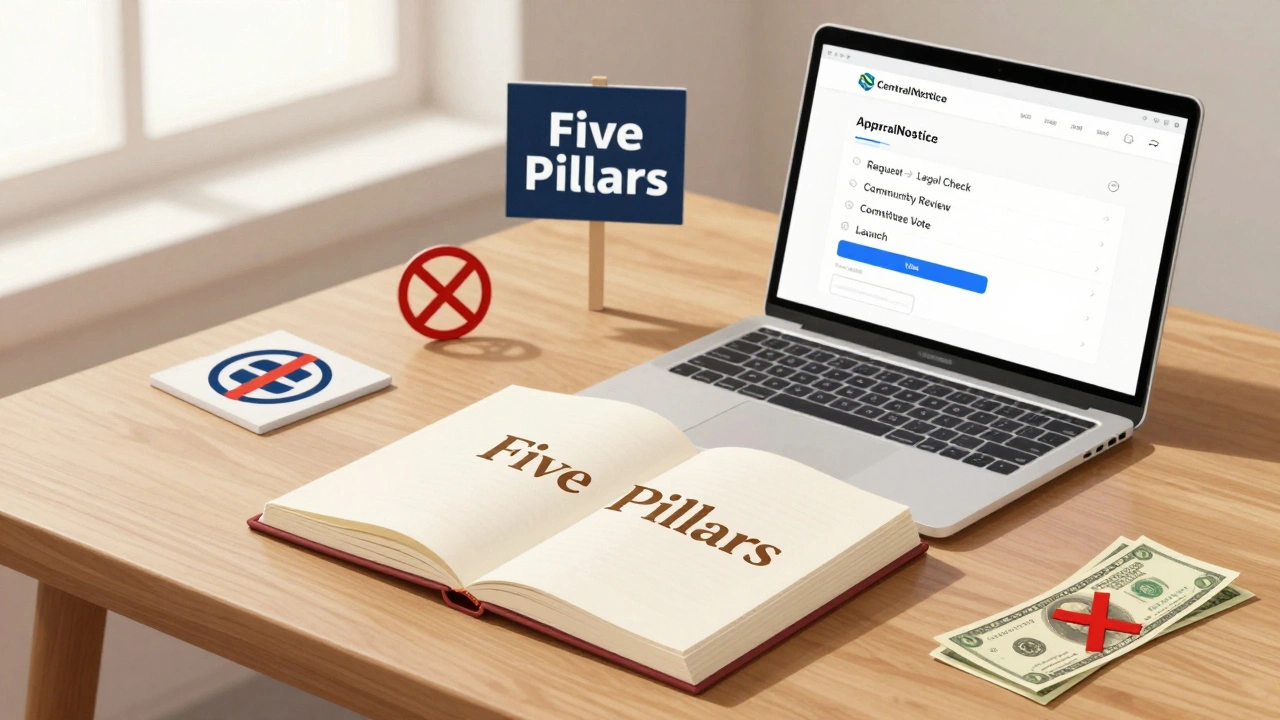
The Approval Process Step by Step
Getting a banner live takes at least 10 days. Here’s how it works:
- Request submission: A team (usually Fundraising or Communications) fills out a form with the message, target audience, duration, and design mockup. They must justify why the banner is necessary and how it supports Wikipedia’s mission.
- Legal and accessibility check: The Legal team reviews the text for compliance with international laws - like GDPR in Europe or COPPA for users under 13. The Accessibility team ensures the banner works with screen readers and doesn’t use color combinations that confuse people with visual impairments.
- Community review: The request is posted on the CentralNotice talk page. Volunteers have 5 business days to comment. Common objections include: "This sounds like a sales pitch," "Why are we targeting users in India with this message?" or "This conflicts with our neutrality policy."
- Committee vote: The review committee votes. A simple majority approves. If it fails, the requester can revise and resubmit. No banner can go live without this step.
- Testing and scheduling: Once approved, the banner is tested on a small group of users. If performance looks good and feedback is neutral, it rolls out globally or regionally.
Emergency banners - like those during a war or pandemic - skip some steps but still require Legal and Community review within 24 hours. There’s no shortcut for commercial messages. Ever.
What’s Not Allowed
Wikipedia bans certain types of banners outright. Here’s what never gets approved:
- Any message promoting a product, service, or brand - even if it’s "educational."
- Political endorsements or partisan messaging, even from nonprofit organizations.
- Messages that encourage users to leave Wikipedia for another site, unless it’s another Wikimedia project.
- Language that implies Wikipedia is a business, a corporation, or a profit-driven entity.
- Targeting based on race, religion, gender identity, or sexual orientation.
In 2022, a request to promote a mental health app was rejected because it "implied Wikipedia endorses third-party services." Another request to push a climate change petition was denied because it "crossed the line from awareness into activism."
The rules aren’t arbitrary. They’re rooted in Wikipedia’s Five Pillars the foundational principles that guide all content and operations on Wikipedia, especially neutrality and independence.
How Volunteers Influence Decisions
Even though most users don’t know it, volunteer editors have real power here. The CentralNotice committee includes 3 elected community members who serve one-year terms. They’re not staff. They’re editors like you - people who’ve spent hundreds of hours improving articles.
These volunteers review every banner request. They ask hard questions: "Why are we asking users in Brazil for money when our donation rate there is 0.2%?" or "Does this message make us look like a charity begging for cash?"
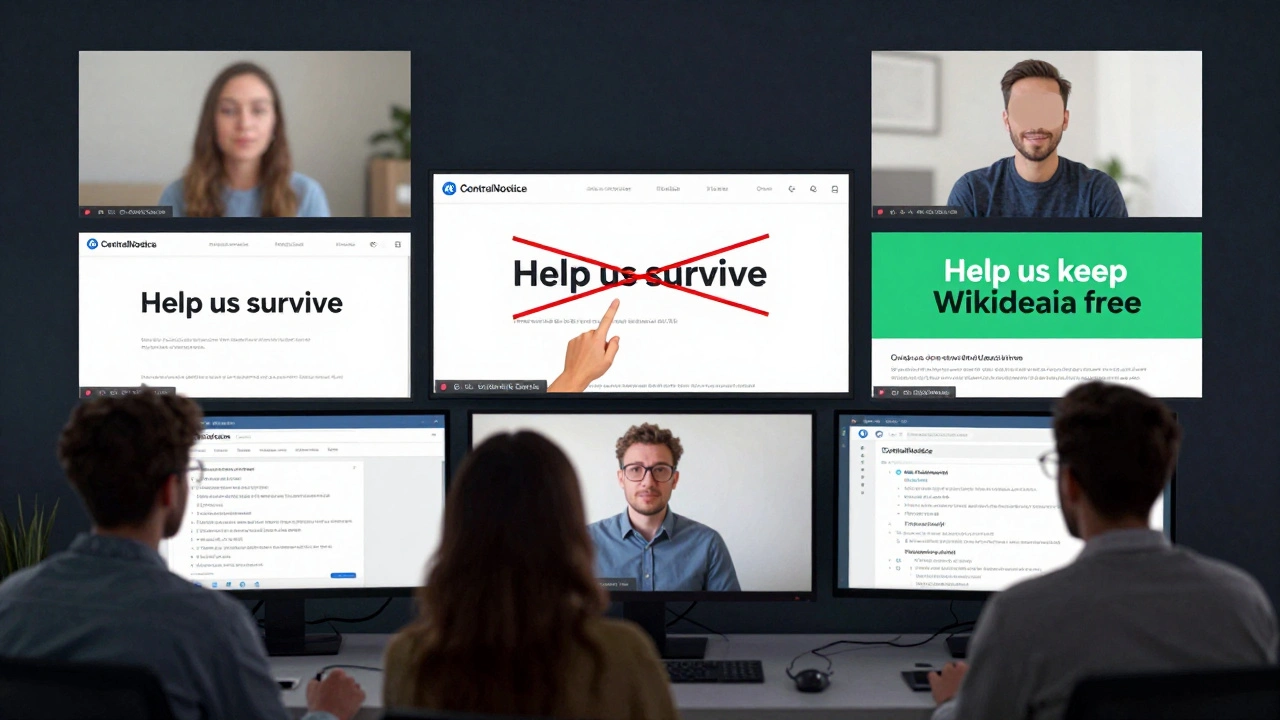
In 2024, a donation banner that used the phrase "Help us survive" was changed to "Help us keep Wikipedia free" after community feedback. The original version felt too desperate. The revised version aligned better with Wikipedia’s identity as a public good.
Some banners are rejected because they’re too similar to ads. The committee uses a simple test: "Would a reader think this is an ad if they saw it on a news site?" If the answer is yes, it’s out.
Transparency and Accountability
Everything about CentralNotice is public. All banner requests, comments, and decisions are archived on Meta-Wiki, a separate site for Wikimedia governance. Anyone can search for past banners and see why they were approved or rejected.
The Wikimedia Foundation publishes quarterly reports on banner performance - not just how much money they raised, but how many users reported them as intrusive or misleading. In 2024, less than 0.3% of users flagged banners as problematic. That’s lower than most nonprofit email campaigns.
There’s also an annual review of the entire CentralNotice policy. Volunteers can propose changes. In 2023, a proposal to allow banners for Wikipedia education programs was approved after a 6-month pilot. That’s how the system evolves - slowly, carefully, and with community input.
Why This Matters
Wikipedia is one of the most trusted websites in the world. A 2024 Reuters Institute survey found that 72% of users trust Wikipedia more than mainstream news outlets. That trust isn’t accidental. It’s built on strict rules - even for banners.
If Wikipedia let companies buy ad space or let activists push agendas, it would become just another website. The CentralNotice system exists to protect its integrity. It’s not about stopping messages - it’s about making sure every message serves the public, not private interests.
This system works because it balances two things: the need to fund Wikipedia’s operations, and the need to stay neutral. It’s not perfect. But it’s transparent, accountable, and driven by people who care more about the encyclopedia than the money behind it.
Can anyone create a CentralNotice banner?
No. Only authorized teams within the Wikimedia Foundation can submit banner requests. Regular users and editors cannot create or modify banners. Even volunteer organizers need to go through the official approval process if they want a message displayed.
Do CentralNotice banners affect Wikipedia’s neutrality?
They’re designed not to. Banners can’t promote products, political causes, or third-party services. All messages must align with Wikipedia’s Five Pillars, especially neutrality and independence. Even fundraising banners avoid emotional manipulation and focus on the idea of keeping Wikipedia free and open.
How often are banners rejected?
About 15-20% of banner requests are rejected or sent back for revision. Common reasons include sounding too commercial, targeting sensitive groups, or conflicting with existing policies. Rejections are public and explained in detail on Meta-Wiki.
Can I see past banner approvals?
Yes. All banner requests, comments, and decisions are archived on Meta-Wiki. You can search by date, topic, or language. This transparency is part of why Wikipedia maintains public trust.
Do CentralNotice banners make money for Wikipedia?
Yes - over 90% of banners are fundraising appeals. In 2024, these banners helped raise more than $150 million globally. That money funds servers, staff, and tools that keep Wikipedia running. But the goal isn’t profit. It’s sustainability.
What Comes Next
The Wikimedia Foundation is testing new ways to make banners less intrusive. One idea is to show them only to users who haven’t donated in the past two years. Another is to let users opt out of banners for 30 days with a single click.
There’s also talk about expanding CentralNotice for non-donation messages - like alerting users about new tools, upcoming elections, or Wikipedia’s 25th anniversary. But every change will still go through the same strict review.
Wikipedia doesn’t need to be flashy. It doesn’t need to chase clicks. It just needs to stay trusted. And that’s why every banner, no matter how small, goes through the same careful process - because the encyclopedia’s value isn’t in its ads. It’s in its integrity.