Every Wednesday, around 10 a.m. UTC, a quiet but critical process begins that keeps Wikipedia running smoothly for over 1.5 billion monthly users. It’s not a manual update. It’s not a server reboot. It’s the MediaWiki deployment train-a tightly scheduled, automated system that pushes new code to Wikipedia and all its sister sites. This isn’t just tech magic; it’s a well-oiled machine built on discipline, testing, and trust.
What Is the MediaWiki Deployment Train?
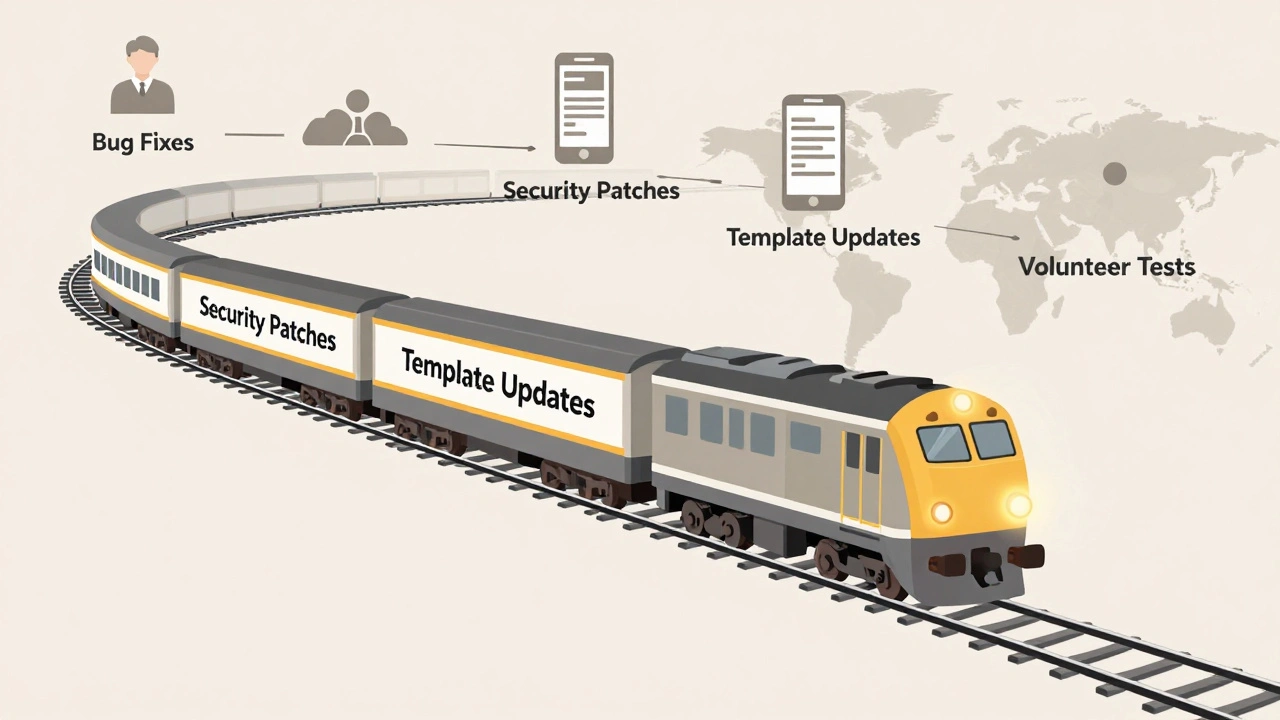
The MediaWiki deployment train is a weekly release cycle that delivers new features, bug fixes, and security patches to Wikipedia and other Wikimedia projects like Wiktionary, Wikiquote, and Wikimedia Commons. It’s called a "train" because, like a real train, it runs on a fixed schedule-every Wednesday-and every code change must board at the right station or miss the ride.
MediaWiki is the open-source software that powers Wikipedia. Unlike commercial websites that deploy changes multiple times a day, Wikipedia prioritizes stability over speed. A single bug can break editing for millions. So instead of random updates, the Wikimedia Foundation uses a strict, predictable rhythm. Each change goes through a sequence of test environments before reaching production.
The Train Schedule: A Week in the Life of a Deployment
The deployment train follows a fixed weekly timeline. Here’s how it works:
- Monday - Code freeze. No new code is accepted for the upcoming week’s train. Developers finalize changes and submit them to the Gerrit code review system.
- Tuesday - Code is grouped into a "branch" (a versioned snapshot). This branch is called the "train branch" and includes all approved changes for the week.
- Wednesday - The deployment day. The train leaves the depot. First, it rolls out to the "beta cluster," a test version of Wikipedia used by developers and power editors. Then, at 10 a.m. UTC, it deploys to all Wikimedia sites using the "deployment tool" (scap).
Each deployment is logged publicly. Anyone can check the deployment changelog to see exactly what changed. No surprises. No hidden updates.
Why Weekly? Why Not Daily?
Why not deploy every day? Because Wikipedia isn’t a startup app. It’s a global public resource. A broken edit button, a misrendered template, or a security flaw could affect millions of readers and editors at once.
Weekly deployments create a "safety buffer." They allow time for:
- Testing changes on beta sites with real user data
- Monitoring logs for unexpected errors
- Rolling back changes if something breaks
Before the train system was introduced in 2012, deployments were chaotic. One engineer might push a fix on Tuesday, another on Thursday. Bugs piled up. Fixes broke other fixes. The train system brought order. It reduced deployment-related outages by over 70% in its first year.
Who Runs the Train?
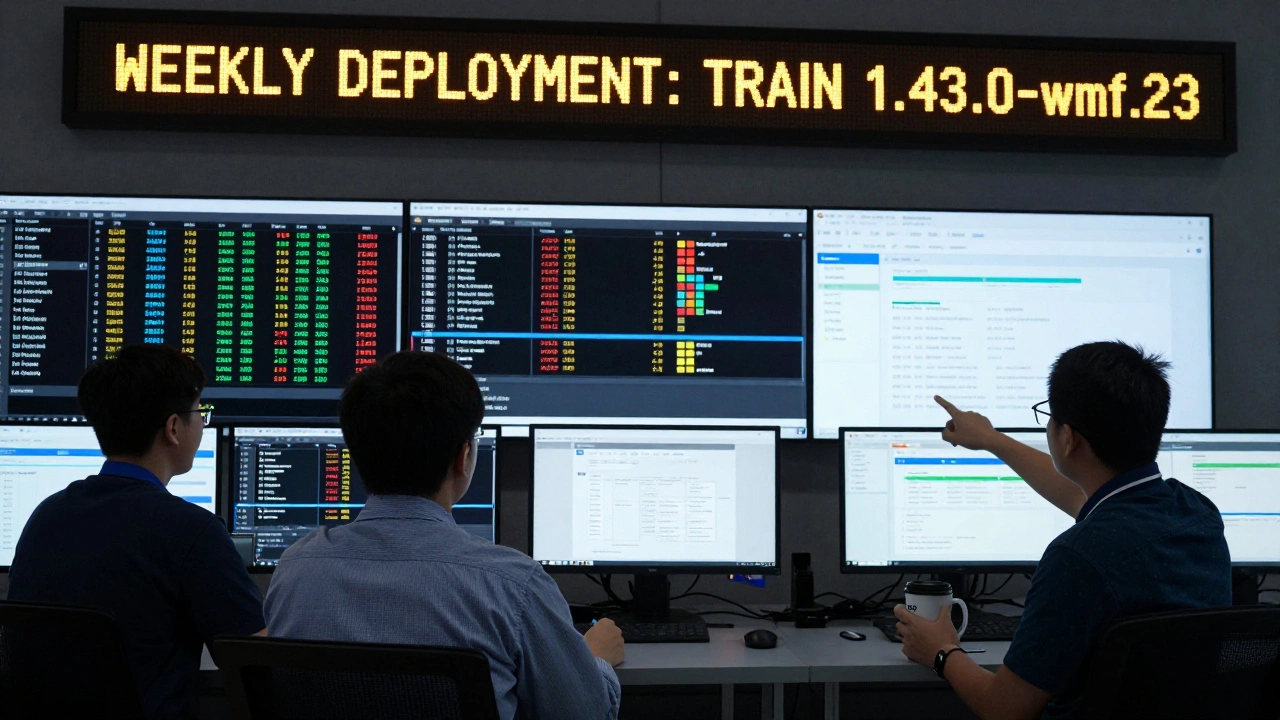
The deployment train isn’t automated from start to finish. It’s guided by a small team of engineers from the Wikimedia Foundation’s Release Engineering group. These engineers aren’t coders-they’re orchestras. They:
- Verify that each change passes automated tests
- Coordinate with volunteer developers who wrote the code
- Monitor deployment logs in real time
- Roll back changes if errors spike above 0.5%
They use tools like Scap (a deployment tool built for MediaWiki) and Phabricator (a task tracker) to manage the flow. Every change is tagged with a "train number"-like "1.43.0-wmf.23"-so everyone knows exactly what’s live.
How Do Volunteers Fit In?
Wikipedia’s power comes from its volunteers. And they’re not left out of the deployment process. The Wikimedia Foundation runs a "deployments newsletter" every Monday. It lists every change coming up. Volunteers who edit templates, bots, or gadgets read it closely. If a change might break their tools, they test it on beta sites and report issues before deployment.
For example, in early 2024, a change to how image captions rendered caused thousands of templates to display incorrectly. A volunteer noticed it on the beta site and flagged it. The team rolled back the change before it reached live Wikipedia. That’s the train working as intended.
What Happens If Something Breaks?
Even with testing, things go wrong. When they do, the train has a built-in emergency brake.
If a deployment causes a spike in errors-say, users can’t save edits-the deployment team immediately rolls back the entire week’s changes. This isn’t a partial fix. It’s a full undo. The system reverts to the last known stable version (usually the previous week’s train). Then, engineers investigate. They isolate the bad code. They fix it. And they try again the next week.
Rollbacks happen about once every 6-8 weeks. That’s rare. But when they do, they’re fast. Most rollbacks complete in under 15 minutes.
What’s Next? The Future of the Train
The deployment train isn’t static. It’s evolving. In 2025, the Wikimedia Foundation began testing a "canary deployment" model. Instead of pushing changes to all sites at once, they now roll them out to a small subset of wikis first-like the Portuguese or Indonesian versions. If no errors appear, the change spreads to the rest.
This is a big step. It means faster delivery for non-critical updates. But the core train remains. Why? Because Wikipedia’s reliability isn’t optional. It’s the foundation.
Why This Matters to You
You might not think about how Wikipedia loads so fast or why it rarely crashes. But that reliability? It’s built on this train. Every time you click "Edit," every time you read a well-formatted infobox, every time a vandal is blocked-there’s a chain of code that got here because of a disciplined, weekly deployment process.
Other platforms chase speed. Wikipedia chases trust. And the MediaWiki deployment train is how it delivers both.
What is the MediaWiki deployment train?
The MediaWiki deployment train is a weekly, scheduled process that pushes code updates to Wikipedia and other Wikimedia sites. It runs every Wednesday and ensures all changes are tested, reviewed, and rolled out in a controlled way to prevent disruptions. Each update is grouped into a versioned branch, tested on a beta site first, then deployed to live servers.
Why does Wikipedia only update once a week?
Wikipedia prioritizes stability over speed. With over 1.5 billion monthly users and millions of active editors, even small bugs can cause widespread issues. Weekly deployments allow time for testing, monitoring, and rollback if something breaks. This system reduced deployment-related outages by over 70% after it was introduced in 2012.
Who manages the deployment train?
The Release Engineering team at the Wikimedia Foundation manages the deployment train. They coordinate with volunteer developers, verify code changes, monitor deployment logs, and handle rollbacks if errors occur. They use tools like Scap and Phabricator to track and execute each weekly update.
Can volunteers see what’s coming in the next deployment?
Yes. Every Monday, the Wikimedia Foundation publishes a deployment newsletter listing all changes scheduled for the week. Volunteers who build bots, templates, or gadgets use this to test changes on the beta site and report issues before deployment. This collaboration keeps Wikipedia’s tools working reliably.
What happens if a deployment breaks Wikipedia?
If a deployment causes a spike in errors-like users being unable to save edits-the team immediately rolls back the entire week’s changes to the previous stable version. Rollbacks typically take under 15 minutes. Engineers then investigate the issue, fix the code, and try again on the next train. This has happened about once every 6-8 weeks since the system began.