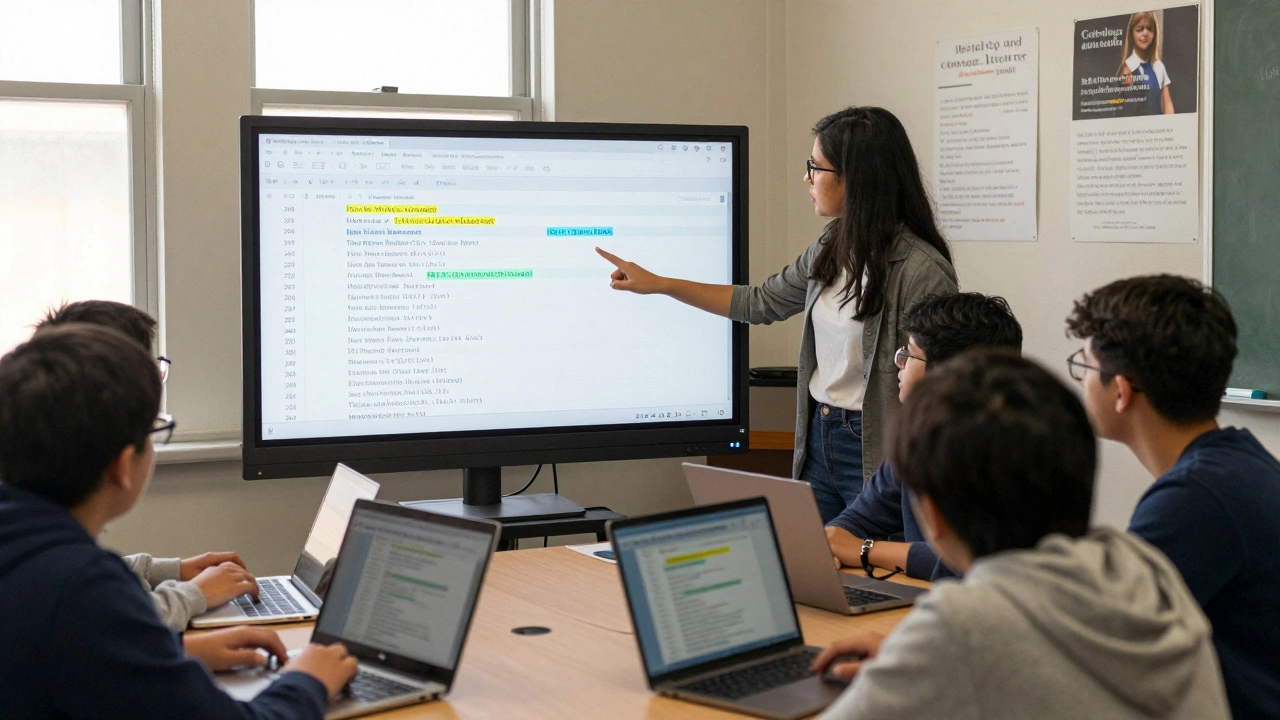
Wikipedia isn’t just a place to check facts before dinner. It’s a living, changing library that 2 billion people use every month. And yet, many teachers still tell students to avoid it like a bad habit. That’s outdated. The real question isn’t whether to use Wikipedia-it’s how to use it right.
Stop Telling Students to Avoid Wikipedia
When you ban Wikipedia, you’re not teaching students to be careful with sources. You’re teaching them to hide their research. Students will still use it-they always do. The goal isn’t to stop them. It’s to turn their casual browsing into critical thinking.
A 2023 study from Stanford’s Graduate School of Education tracked 1,200 high school students using Wikipedia for a history project. Those who were taught how to read Wikipedia’s edit history and citation chains scored 42% higher on source reliability assessments than those who were told to avoid it entirely. The difference wasn’t access-it was instruction.
Wikipedia isn’t perfect. But neither is any textbook. And unlike textbooks, Wikipedia shows you how knowledge gets made. That’s the real lesson.
Teach the Edit History, Not Just the Article
Every Wikipedia page has a story behind it. Click the “View history” tab. You’ll see who changed what, when, and why. That’s where the learning happens.
Try this: Give students a controversial topic-like climate change, vaccination, or the American Civil War. Ask them to find the oldest version of the page. Then scroll forward. What got added? What got removed? Who edited it? Did someone add a source? Did someone delete it?
One teacher in Milwaukee had her 8th graders compare the Wikipedia page on the Tulsa Race Massacre from 2010 to 2025. In 2010, the article was three paragraphs long and called it a “riot.” By 2025, it was 12 sections long, cited 87 sources, and used the term “massacre” consistently. The students didn’t just learn history-they learned how public understanding changes over time.
Use Talk Pages to Show Debate in Action
Most students think Wikipedia is a single voice. It’s not. It’s a debate room. Every major article has a “Talk” page where editors argue about wording, sources, and bias.
Find a topic with active discussion-like “gender identity” or “artificial intelligence.” Open the Talk page. Read the first five threads. You’ll see people citing peer-reviewed journals, arguing over neutrality, and retracting claims when challenged.
Turn this into a classroom exercise: Have students pick one edit dispute. Write a one-page summary: Who’s arguing? What’s their evidence? Who won? Why? It’s not about agreeing with one side-it’s about seeing how knowledge is negotiated.
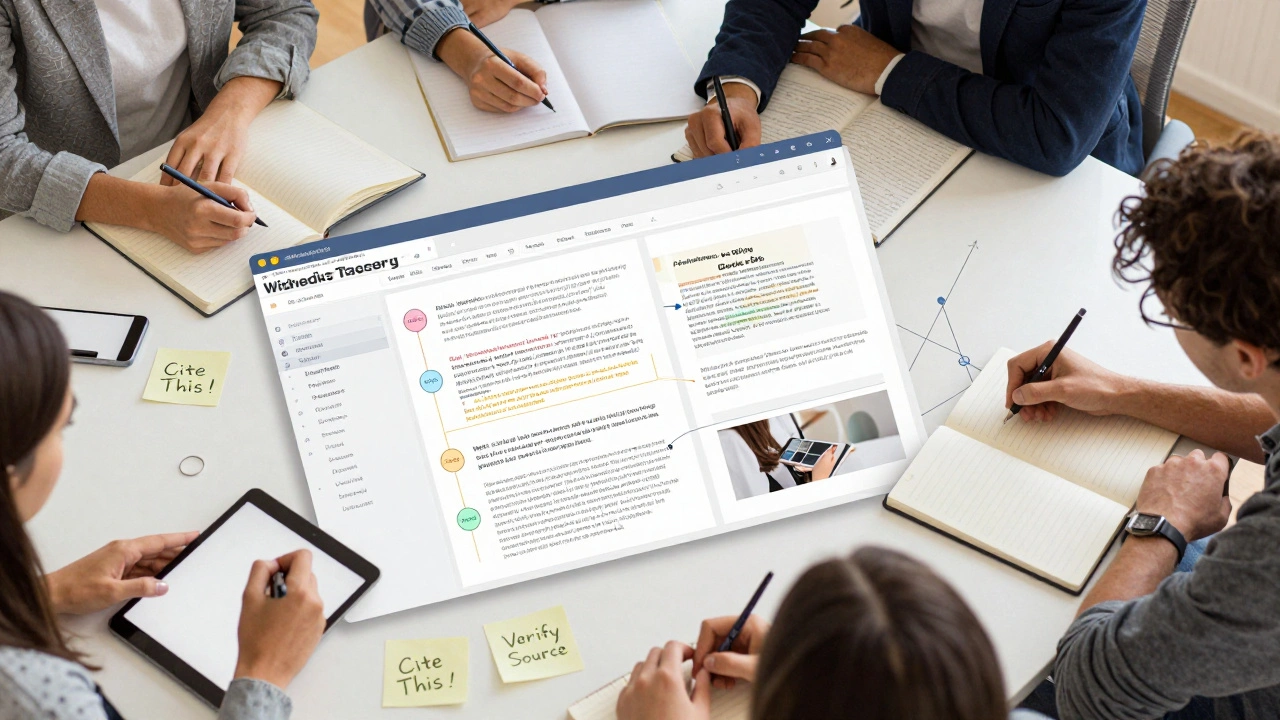
Assign Wikipedia Editing as a Project
Students don’t just learn from Wikipedia. They can improve it.
The Wikipedia Education Program has been used in over 2,000 colleges and 500 high schools since 2010. Students don’t just write essays-they write actual Wikipedia entries. And they’re graded on accuracy, sourcing, and clarity.
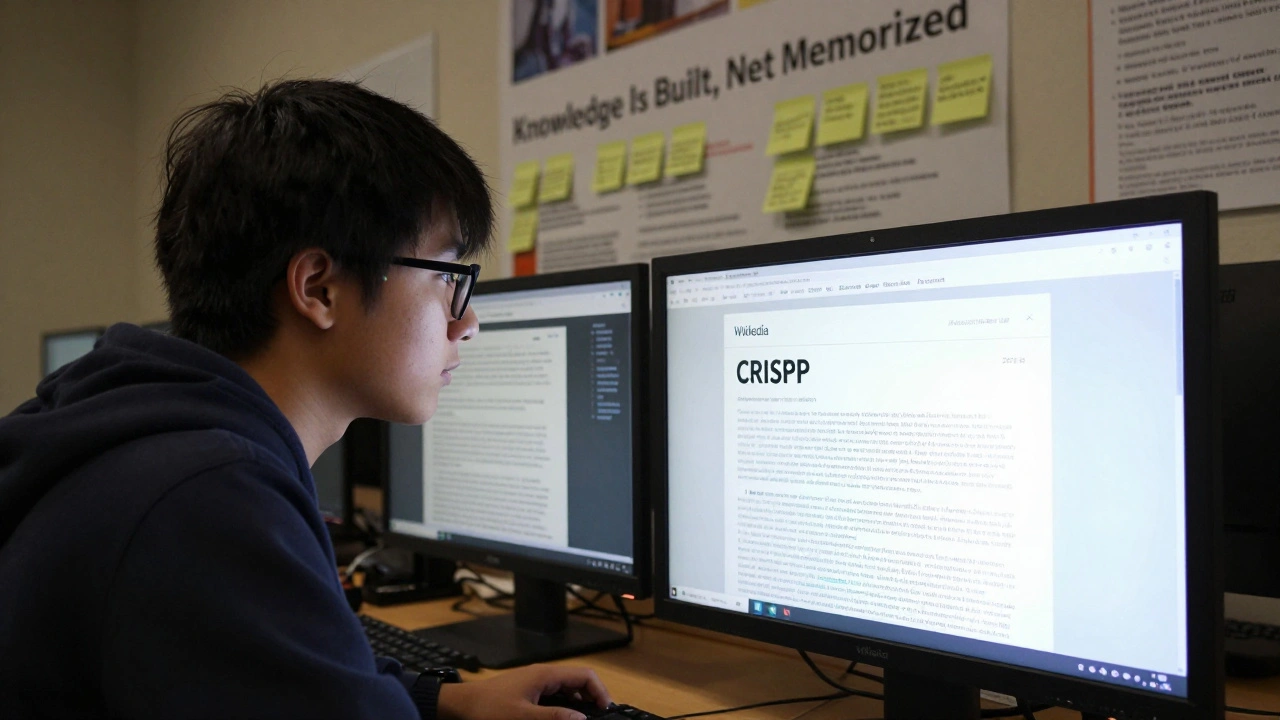
A teacher in Portland had her AP Biology class fix missing citations on the “CRISPR” page. They didn’t just copy-paste. They found peer-reviewed papers, formatted references in APA style, and added explanations for non-experts. One student’s edit was later cited by a university textbook.
Start small: Have students add one properly sourced fact to a stub article. Or fix a broken link. Or translate a short section into another language. Editing isn’t about perfection-it’s about responsibility.
Teach Source Chains, Not Just Citations
Wikipedia’s citations are gold. But most students don’t know how to follow them.
Here’s a simple method: Pick any claim on a Wikipedia page. Click the superscript number. That takes you to the source. Read the source. Then ask: Is this a journal? A book? A news article? Is it peer-reviewed? Who wrote it? When? Does it match what Wikipedia says?
Try this: Give students three Wikipedia claims. One from a reliable source. One from a blog. One from a corporate website. Ask them to trace each back. Then rank them by trustworthiness. They’ll start noticing patterns-like how academic sources often link to other academic sources, while blogs rarely do.
After a few rounds, students stop asking, “Can I use Wikipedia?” and start asking, “Where did this idea come from?” That’s the shift you want.
Use Wikipedia to Fight Misinformation
Students are bombarded with misinformation. TikTok videos, YouTube shorts, Instagram posts-all claiming to be “facts.” Wikipedia can be their shield.
Teach them the “Wikipedia check”: When they see a bold claim online, they go to Wikipedia first. Not to copy it, but to see how the topic is structured. What sources does Wikipedia use? What’s the consensus? What’s missing?
A high school in Chicago ran a month-long project called “Myth vs. Wiki.” Students found viral claims-like “5G causes COVID” or “The moon landing was faked”-and compared them to Wikipedia’s version. They wrote reports showing how misinformation spreads, how Wikipedia corrects it, and why the truth takes time to settle.
Students didn’t just learn about science. They learned how to spot manipulation.
Build a Classroom Wiki Culture
Wikipedia isn’t just a tool. It’s a mindset. One that values collaboration, transparency, and revision.
Try this: Create a class wiki using MediaWiki or even a simple Google Site. Assign each student a topic to research and write. Require them to cite at least three sources. Let them edit each other’s work. Add a “discussion” section for feedback.
Over time, students start caring about clarity, accuracy, and fairness-not just grades. They learn that knowledge isn’t something you memorize. It’s something you build together.
Common Pitfalls to Avoid
Not all uses of Wikipedia in class work.
- Don’t let students cite Wikipedia as their only source. It’s a starting point, not an endpoint.
- Don’t assume all edits are equal. Teach them to check edit timestamps and user history.
- Don’t skip the citation check. If a Wikipedia article has no references, it’s not reliable-even if it looks polished.
- Don’t ignore bias. Wikipedia tries to be neutral, but gaps in editor diversity mean some topics are underrepresented. Point that out.
The goal isn’t to make Wikipedia the final word. It’s to make students the final word-by teaching them how to find, question, and build knowledge themselves.
Wikipedia Isn’t the Answer. It’s the Question.
Wikipedia doesn’t teach students what to think. It teaches them how to think.
When you use Wikipedia the right way, you’re not replacing textbooks. You’re replacing silence with curiosity. You’re replacing fear of mistakes with the courage to revise. You’re replacing passive reading with active participation.
That’s not just good teaching. That’s how real learning happens.