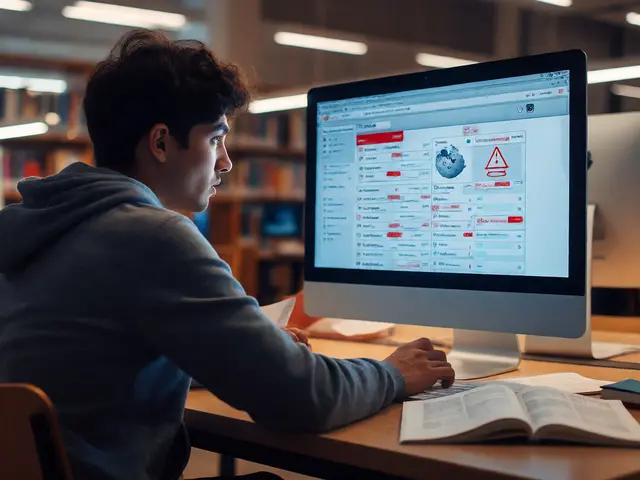
You’ve probably scrolled past a Wikipedia article in Spanish that felt slightly off compared to the English version. Maybe the tone was stiffer, or a key fact was missing. That disconnect isn’t just annoying for readers; it erodes trust. When we talk about global topics, accuracy and uniformity across languages are non-negotiable. But how do you keep a narrative coherent when dozens of people in different time zones are writing it?
The answer lies in the role of multilingual editors. They aren’t just translators who swap words from one language to another. They are guardians of context, ensuring that a story about climate change in Brazil reads with the same authority and clarity as its counterpart in Germany. If you’re managing content for a platform with international reach, understanding this dynamic is crucial for maintaining credibility.
Why Literal Translation Fails Global Audiences
Let’s get one thing straight: translation is not editing. A machine can translate "It's raining cats and dogs" into French perfectly well, but if your audience expects an idiom about pouring rain, the literal phrase feels alien. In journalism and encyclopedic writing, the stakes are higher. You’re dealing with facts, cultural nuances, and legal implications.
Consider the term "freedom." In American English, it often carries connotations of individual liberty. In some European contexts, it might lean closer to social welfare or collective rights. A direct translation misses this nuance. Without a human editor who understands both cultures, you end up with text that is technically correct but culturally tone-deaf. This leads to what I call "semantic drift," where the meaning slowly shifts away from the original intent as it moves through languages.
Multilingual editors catch these drifts early. They ask questions like, "Does this metaphor work here?" or "Is this reference too local for our global readers?" Their job is to bridge the gap between linguistic accuracy and cultural resonance.
The Core Functions of a Multilingual Editor
So, what does this role actually look like day-to-day? It’s less about grammar checks and more about strategic alignment. Here are the primary responsibilities:
- Contextual Adaptation: Adjusting examples so they resonate locally without changing the core message. For instance, replacing US dollar figures with local currency equivalents while noting the conversion rate.
- Tone Standardization: Ensuring the voice remains consistent. If the English article is objective and dry, the Japanese version shouldn’t suddenly become overly polite or flowery unless that’s the standard for that language’s journalistic style.
- Fact Verification: Cross-referencing sources. Sometimes, a source cited in English has a better equivalent in the target language. An editor spots this and updates the citation.
- Terminology Management: Maintaining a glossary of approved terms. This prevents one editor from using "AI" and another from using "artificial intelligence" in the same section, which confuses readers.
These tasks require deep knowledge of both the subject matter and the target culture. It’s why automated tools alone can’t replace them. AI can handle syntax, but it struggles with intent.
Building a Unified Editorial Workflow
If you want consistency, you need a system. Random acts of editing won’t cut it. Successful platforms use a centralized workflow where multilingual editors have clear guidelines and access to shared resources.
Start with a Style Guide. Not just one, but a master guide that includes language-specific addendums. The master guide defines the brand voice-say, neutral, factual, and accessible. Then, the French addendum might specify that passive voice is preferred in formal reporting, while the English addendum favors active voice. This structure gives editors a framework rather than leaving them guessing.
Next, implement a feedback loop. When a multilingual editor spots an ambiguity in the source text, they should flag it back to the original author. Often, the issue isn’t with the translation but with the original writing being too vague. Fixing the source improves all subsequent translations. This collaborative approach turns editing into a quality assurance step for the entire content pipeline.
| Feature | Automated Translation | Multilingual Editor |
|---|---|---|
| Speed | Instant | Hours to Days |
| Cultural Nuance | Low (Literal) | High (Adapted) |
| Consistency Across Languages | Inconsistent | Standardized |
| Cost per Word | Very Low | Moderate to High |
| Error Rate | High for complex concepts | Low |

Case Study: Handling Sensitive Global Issues
Let’s look at a real-world scenario. Imagine a breaking news story about a political protest in France. The initial report comes out in English. Within minutes, teams in Spain, Italy, and Japan begin translating it.
Without coordination, the Spanish team might emphasize the economic causes, reflecting local interest in inflation. The Japanese team might focus on the police response, aligning with domestic concerns about public order. Both are valid angles, but now you have three different narratives under the same headline. Readers comparing them might think the outlets are biased or inaccurate.
A multilingual editor steps in to harmonize these perspectives. They ensure that while local details remain, the core facts-the date, the location, the number of participants-are identical across all versions. They might also add a brief note explaining why certain aspects are highlighted in specific regions, adding transparency rather than confusion.
This process doesn’t erase local relevance; it frames it within a global context. It tells the reader, "Here is the universal truth, and here is how it looks from your perspective." That balance is hard to code but easy for a skilled human to achieve.
Tools and Technologies Supporting Multilingual Teams
You don’t need expensive software to start, but having the right tools helps scale. Most modern content management systems (CMS) support multi-language plugins. These allow editors to see side-by-side comparisons of the source and target texts. Seeing discrepancies visually speeds up the review process significantly.
Another useful tool is a Translation Memory (TM). This database stores previously translated segments. If a phrase like "United Nations Security Council" appears again, the TM suggests the approved translation. This ensures terminology stays consistent over years, not just days. It also saves time, allowing editors to focus on the tricky parts rather than re-translating common phrases.
However, technology is just an enabler. The human element remains critical. Tools can suggest, but they cannot judge. Only a person can decide if a joke falls flat in German or if a legal disclaimer needs tweaking for UK law versus US law.

Common Pitfalls to Avoid
Even with good intentions, teams often stumble. Here are the most frequent mistakes I’ve seen in global publishing:
- Ignoring Local Search Intent: People search differently in different languages. Using keywords directly translated from English might miss high-volume local queries. Multilingual editors often advise on SEO adjustments alongside copy edits.
- Over-Localizing: Changing too much can make the content feel disconnected from the global brand. If every article feels like it was written by a different author, you lose brand identity. Stick to the core voice.
- Lack of Access to Source Context: Editors working in isolation often lack background info. Providing them with links to interviews or raw data helps them make informed decisions.
- Underestimating Review Time: Quality takes time. Rushing the final edit leads to errors that damage credibility faster than poor design ever could.
Measuring Success in Multilingual Content
How do you know if your multilingual editing is working? Don’t just look at traffic numbers. Look at engagement metrics specific to each language segment.
Check bounce rates. If users leave immediately after reading the first paragraph in Portuguese, maybe the tone is off. Monitor correction requests. Are readers pointing out factual errors? That’s a sign your verification process needs tightening. Track user comments. Positive feedback about clarity and relevance is a strong indicator of successful adaptation.
Ultimately, success means your global audience trusts your content as much as their local counterparts do. That trust is built word by word, edit by edit.
Do multilingual editors only translate text?
No. While translation is part of the process, their main role is adaptation and quality control. They ensure cultural relevance, tone consistency, and factual accuracy across different linguistic markets.
Can AI replace multilingual editors entirely?
Not yet. AI is excellent for speed and basic syntax, but it lacks the cultural intuition and contextual understanding required for nuanced journalism or complex global topics. Human oversight is still essential for high-stakes content.
What is semantic drift in translation?
Semantic drift occurs when the meaning of a text changes subtly as it is translated or edited across languages. This can happen due to cultural differences, idiomatic expressions, or ambiguous source wording, leading to inconsistent messaging.
How do editors maintain consistency across multiple languages?
They use centralized style guides, translation memory tools, and regular cross-team communication. Flagging ambiguities in the source text and establishing approved terminology lists are also key strategies.
Why is tone important in global content?
Tone affects reader trust and comprehension. A mismatch in tone can make content seem unprofessional or culturally insensitive. Consistent tone reinforces brand identity and ensures the message is received as intended globally.